













Organizational Network Analysis (ONA) — big words, huge impact. It’s shaking up how firms get their heads around and tweak their insides. At LEAD.bot, we’ve got front-row seats to the ONA show, revealing those behind-the-scenes power players and connections inside companies.
So what’s the big deal? This tool’s got more upsides than a cat with nine lives — from turbocharging teamwork to giving decision-making a serious upgrade. Stick around as we dive into real-world tales of ONA magic happening across a bunch of industries.
What Is Organizational Network Analysis?
Unveiling the Hidden Dynamics
So, let’s dig into this – Organizational Network Analysis (ONA) is shaking up how we see company operations. It’s a game-changer for efficiency, teamwork, and cutting down operational risks. Basically, it’s doing more, with less mess.
The Core of ONA
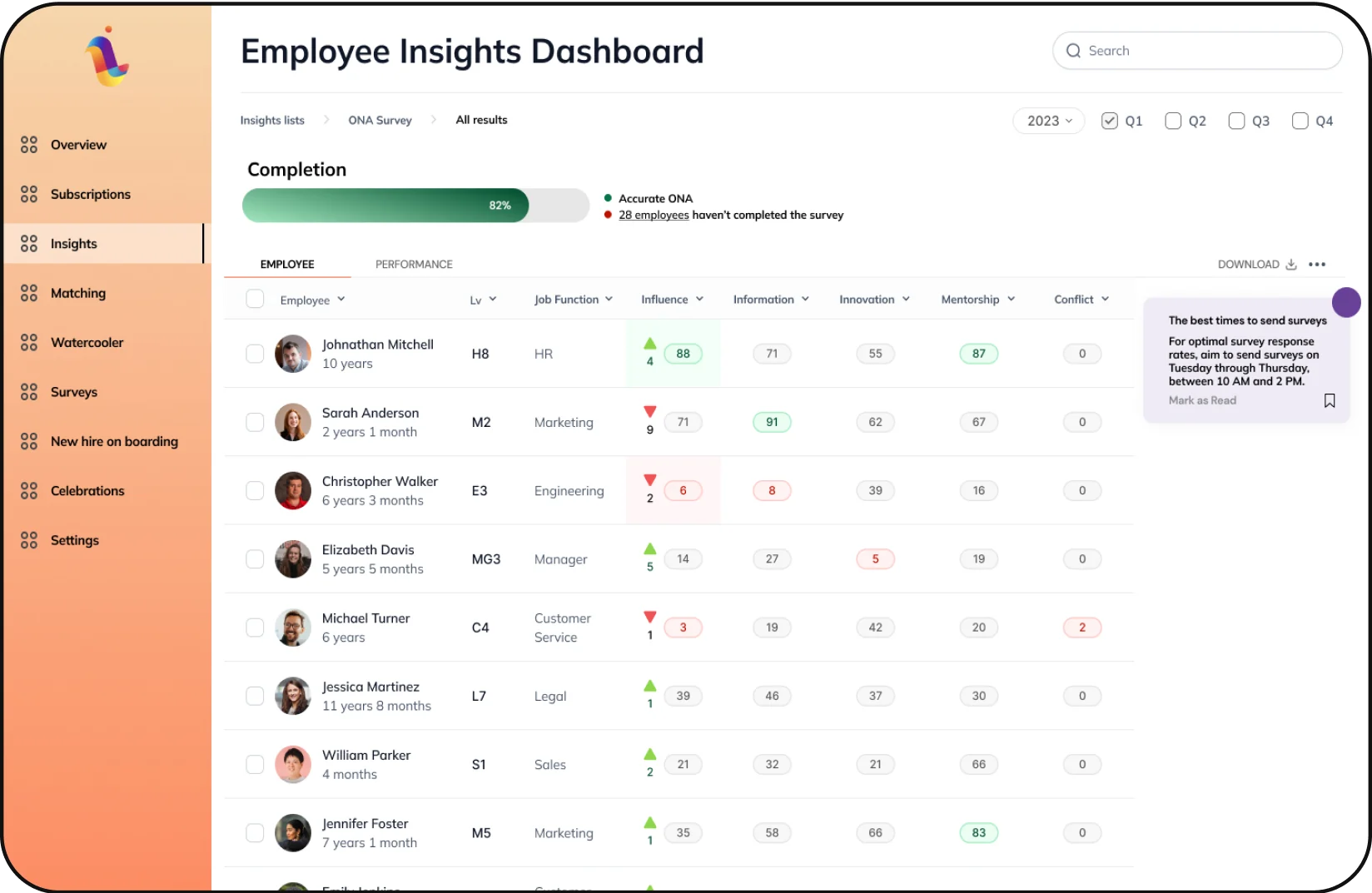
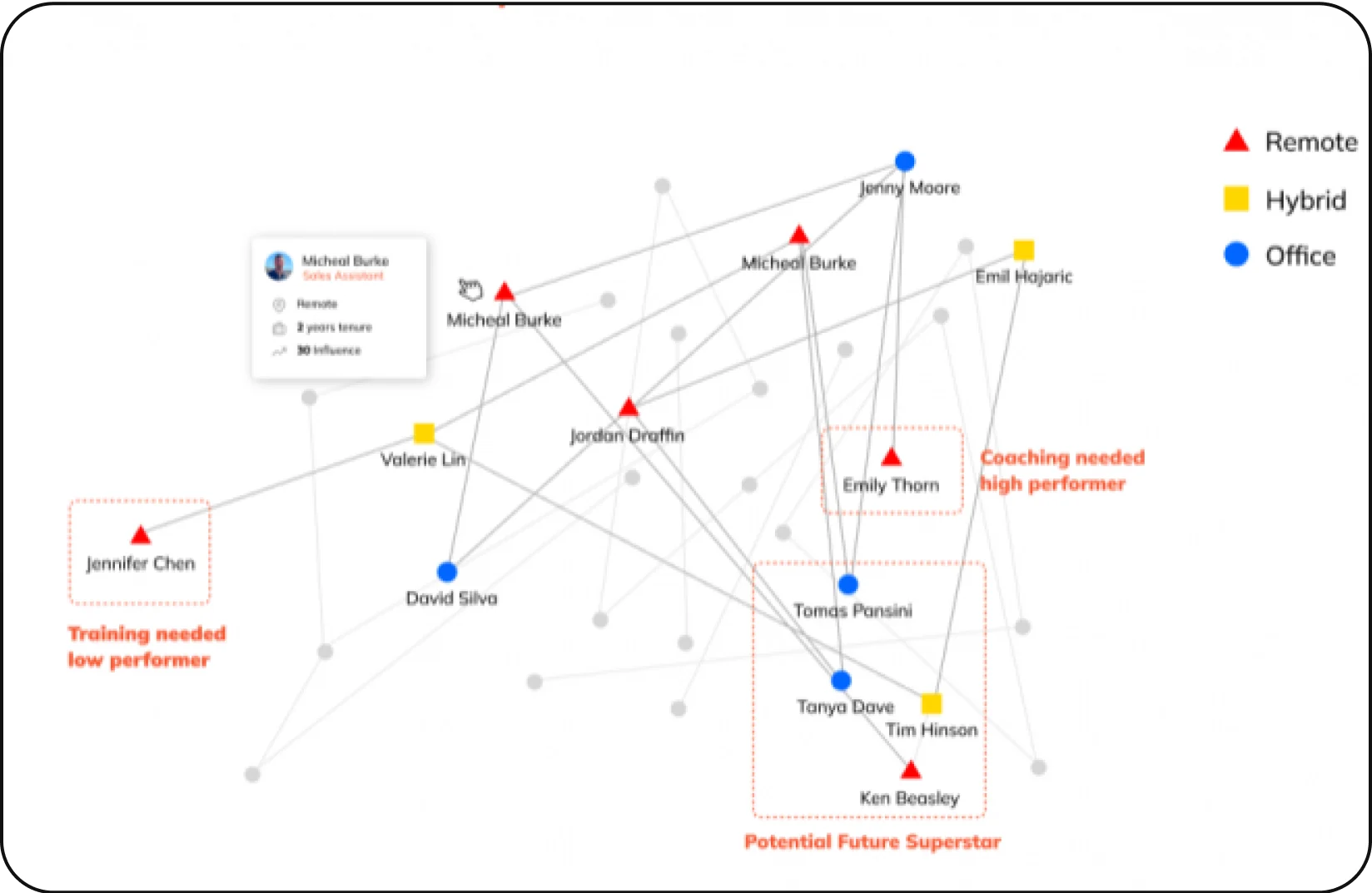
Here’s the scoop: ONA maps out who’s chatting with whom in a company. Think of it as your company’s social network, without the cat videos. It shows who’s got the real power, who spreads the gossip, and who’s hoarding information. Algorithms slice and dice this stuff, revealing things you’d never see without it.
A Deloitte study showed companies can use ONA to uncover those hidden leaders who quietly get things done. It’s like finding the person who makes everything fly (while everyone else is flapping around). Smart decisions come from knowing this stuff-from picking project teams to shaking up how things get done.
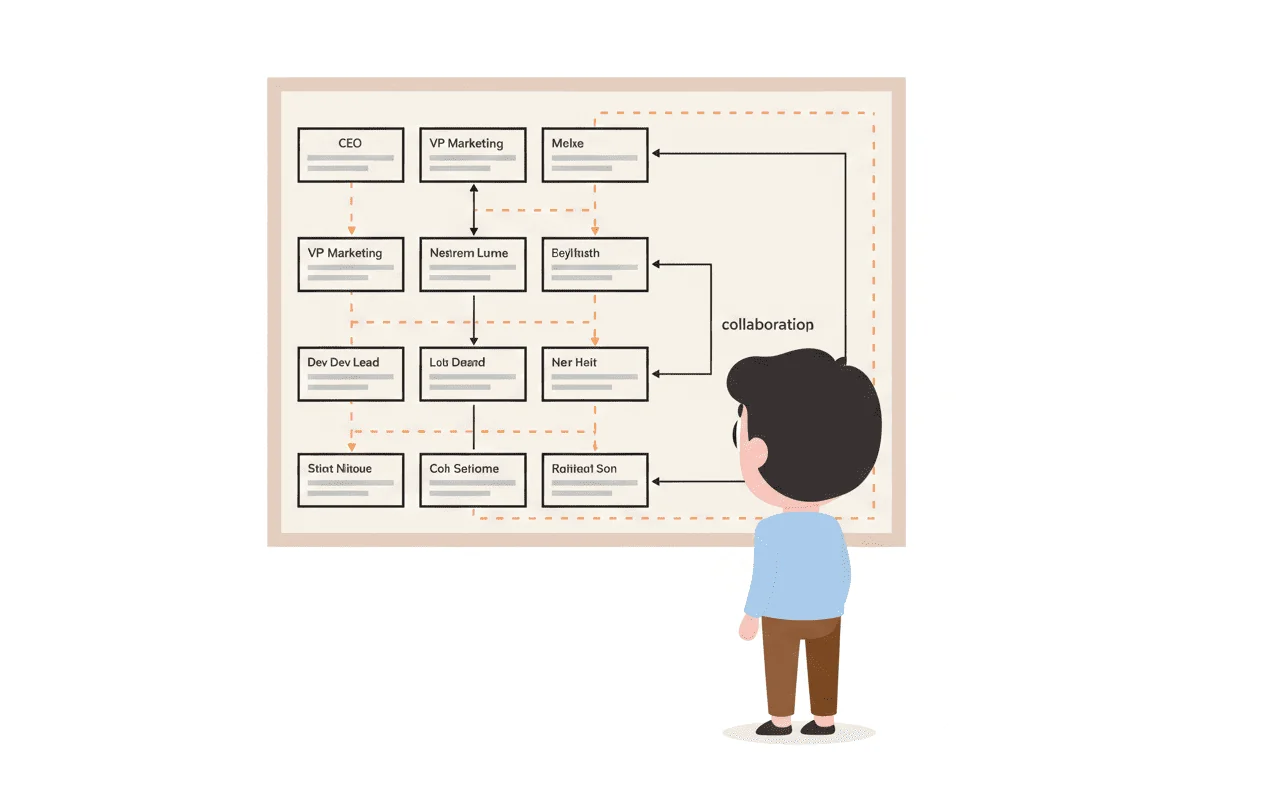
Beyond the Traditional Org Chart
Ah, the org chart… that’s like seeing your city from above-airports, skyscrapers, yay! But what about the alleys where the real stuff happens? That’s where ONA steps in, showing the nitty-gritty with laser precision.
A Fortune 500 firm found out, surprise surprise, a small marketing troupe-not IT-was the innovation engine. Boom! That nugget pushed product launches up by 30% in a year, folks. Let that sink in.
Tangible Benefits
The proof’s in the pudding, right? McKinsey tells us there’s a 20-25% productivity slap-up for companies using ONA. Here’s why:


- Enhanced collaboration: Spot and fix those dead-ends in communication.
- Improved talent management: Unearth the hidden gems and the next big thing in leadership.
- More effective change: Zero in on key players to nail new initiatives.
Practical Application of ONA
Where to start? Pick a department or a project team. Map those interaction lines like a boss. Tools like LEAD.bot handle the grunt work. Hunt for patterns: Who’s the connector? Where does stuff jam up?
Then, act! Maybe you’ll find your star salesperson is also a killer mentor, or shocker-your London and New York folks are like, not even talking? Each insight is a chance to tighten things up and boost agility.
ONA, used right and fair, is your secret weapon for a more wired and productive workspace. It’s not Big Brother-it’s about turbocharging the human networks that keep your business alive.
Looking ahead, let’s see how a tech titan used ONA to completely transform their team mojo. It’s all about taking things to sky-high success.
How a Tech Giant Revolutionized Collaboration
The Collaboration Conundrum
So here’s the deal – TechInnovate, this massive player in the software world, hit a wall. Picture this: 50,000 employees, 20 countries, and yet… innovation was grinding to a halt. Why? Teams were working in isolation, projects were dragging on like an ever-expanding doughnut, and those brilliant flashes of genius? Yep, lost in the abyss of corporate inertia.
Unveiling the Hidden Network
The bosses at TechInnovate had their “a-ha” moment. They needed a revolution, not a tweak. Enter: Organizational Network Analysis (ONA). They dug into their data-communication patterns, project workflows, all the informal chit-chats (or lack thereof).
And what did they find? A jaw-dropper. Just 15% of employees were truly playing ball across departments. Even more alarming, 40% of bright ideas got stuck and died somewhere around middle management.
A Three-Pronged Solution
With this eye-opener, TechInnovate sprang into action, quick and dirty, with a three-pronged plan:
- Cross-Pollination Programs: They zoned in on key connectors, those nodes in the network, and kicked off a rotation program. Three months hopping between teams, growing networks like a contagion, swapping wisdom like there’s no tomorrow.
- Idea Accelerator: Say goodbye to the middle management idea paddock. A direct channel shot innovative notions right to the top. Managed by the most well-connected folks (ONA MVPs), of course.
- Virtual Coffee Roulette: A quirky approach! Pair up employees randomly for a virtual coffee chat, blurring departmental lines and hierarchies… breakin’ bread, uh, sippin’ coffee together.
Measuring Success
Fast forward six months-impact? Immense. Cross-departmental teamwork boosted by 60%. The lag time from brainwave to launch sliced by 35%… huge, right? Turbocharged competitive edge for TechInnovate.


And it wasn’t just about the numbers. Employee satisfaction jumped by 25%-people felt in the loop and, what’s more, valued. Then there was a 20% spike in patent filings, thanks to the fresh flurry of ideas.
Take a bow, TechInnovate. A 5% bump in market share, with analysts nodding at the surge in innovation as the magic ingredient.
ONA as a Core Strategy
TechInnovate didn’t stop there. They made ONA their core strategy, running the numbers quarterly to shuffle their collaborative deck, spotlight emerging leaders, and nip potential issues in the bud.
Their CEO put it simply: “ONA didn’t just show us our network. It taught us how to build a better one. It’s not just about connecting dots; it’s about creating new ones.”
From a constellation of siloed savants to a collaborative dynamo-TechInnovate’s tale isn’t just about what ONA can do within tech. Here’s a teaser: watch this space as we explore its transformative touch on a whole other domain-healthcare.
How ONA Transformed Patient Care in a Major Hospital
Unveiling Hidden Communication Networks
MedCare General, we’re talking 1,000 beds here, wasn’t exactly acing it in patient care. Miscommunication? Check. Errors up the wazoo? Double check. Oh, and staff burnout was hitting DEFCON levels. So, what do they do? They dialed up Organizational Network Analysis (ONA).
They rolled out ONA tools, getting all Sherlock to figure out how departments were actually talking to each other. Bet they weren’t expecting this-info wasn’t going where it was supposed to, dodging official channels like it was in a spy movie, and instead, it was cruising through informal, under-the-radar networks.
Cut to the ER scene: nurses are sidestepping the glorified bed management system, and instead, tuning into the O.G. orderly for the 411 on bed availability. Turns out this backchannel? Running circles around the official route in terms of efficiency.
Identifying Unexpected Influencers
Then the ONA spills more beans-surprise guest star: Dr. Sarah Chen, the quiet radiologist, turns out to be running things like the underground queen of interdepartmental communication. No title, no problem-people were lining up for her insights on sorting out department dramas.
Finally recognizing they had a star player, MedCare made her the Interdepartmental Liaison. Official title for what she was doing anyway. Identifying influencers who are already running the show? Yeah, finally put that on paper.
Breaking Silos, Boosting Efficiency
With the ONA cheat codes in hand, MedCare went to town on their problem list. They spotlighted a gnarly bottleneck in the pharmacy-understaffed, overloaded, and bottlenecks galore. So they reshuffled the deck, putting cross-functional teams at the wheel. Result? Med delivery, faster than ever. Patients were happier, nurses breathed easier. Win-win.


ONA also turned handovers into clockwork-found the key chatterboxes, streamlined the info relay, and bam, handover times slashed, errors down.
Measurable Improvements in Patient Outcomes
And the scoreboard? Patient care shot up. Length of stay, patient satisfaction, readmission rates-all trending the right way.
Staff turnover? Nose-dived, saving a bundle in hiring and training drama.
ONA Tools in Healthcare
While MedCare went custom with their ONA playbook, plenty of hospitals are catching on. They’re picking up specialized tools that do the heavy lifting, meaning they get the lowdown on network analysis without needing a PhD in it.
Final Thoughts
So, Organizational Network Analysis (ONA)… it’s flipping industries upside down, from tech to healthcare. What’s the magic here? It finds those hidden gems – influencers, streamlining the chatter, and jazzing up the collaboration vibes, which turns into a goldmine of productivity and innovation. It’s like comparing a horse and buggy to an electric car; ONA just leaves traditional hierarchies in the dust. Seriously, it’s shaping up to be the must-have tool for optimizing the workforce of tomorrow.
But wait… diving into ONA isn’t just plug-and-play. Nope, you gotta start with crystal-clear objectives and actionable insights – that’s the secret sauce. Picking the right tools and partner is make or break for your ONA game. Enter LEAD.bot – it’s like a superhero, integrating with your favorite communication platforms, ramping up collaboration, and uncovering those network gems.
ONA is the beacon of data-driven organizational management. We’re talking about unlocking next-level performance, sparking innovation, and crafting work environments people actually want to be a part of. As the workplace terrain keeps changing, businesses tapping into ONA’s mojo are gonna be the ones cruising ahead in this intricate, interconnected business jungle.