

How to Reduce Proximity Bias With Employee Connection Programs
Proximity bias happens when the people who are most visible get more trust, context, and opportunity than people who work elsewhere. You reduce it by making team connection intentional: clear employee matching, repeatable onboarding buddies, cross-functional conversations, and simple check-ins that help managers see how collaboration actually spreads.
Why proximity bias shows up even on good teams
Hybrid work does not create proximity bias from scratch. It exposes the informal shortcuts that already shaped decisions: who sits near the manager, who hears context first, who gets pulled into quick conversations, and who feels safe asking for help. When those moments happen unevenly, remote employees and distributed teams can look less engaged even when they are doing strong work.
The fix is not to force everyone into more meetings. More meetings often make visible people even more visible. The better move is to design connection paths that give every employee a fair way to meet teammates, find knowledge, and build trust outside their immediate circle.
That is where a structured employee connection program helps. Instead of hoping casual interaction happens, you decide which relationships matter: new hire to buddy, manager to peer mentor, team member to hidden expert, regional employee to cross-functional partner. Then you use a consistent rhythm so the program keeps running inside the tools people already use.
Start with the collaboration moments that matter
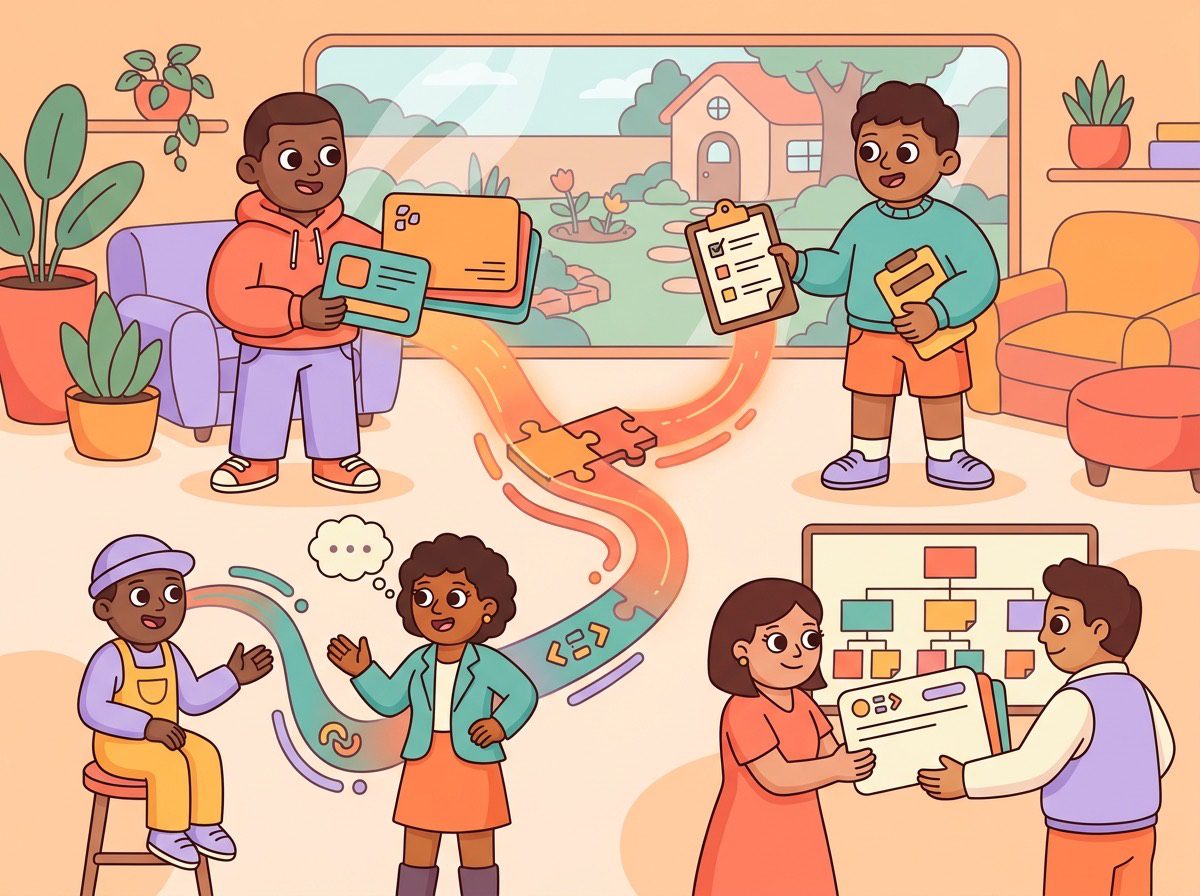
Before choosing a tool or program format, name the moments where proximity bias hurts your organization most. For many people teams, the pattern shows up in five places:
- new hires who only build relationships with their direct manager
- remote employees who miss informal context from office conversations
- regional teams that repeat work because they do not know who has solved a similar problem
- high-potential employees who lack sponsor relationships across departments
- managers who rely on the same visible employees for every cross-team project
Once you name the moment, the matching logic becomes more practical. A new hire does not need a random coffee chat. They need an onboarding buddy who understands the role, a knowledge contact outside their team, and a low-pressure check-in rhythm during the first weeks. A remote employee does not need another large town hall. They need recurring access to people who can share context, answer questions, and include them in collaboration patterns.
If you are building this from scratch, start with one use case. LEAD.bot works inside Slack and Microsoft Teams, so people teams can run employee matching, onboarding buddies, mentoring, and knowledge sharing without asking employees to adopt another daily destination.
Use employee matching to widen trust paths
Random pairing can create friendly moments, but it rarely solves proximity bias on its own. The stronger approach is purposeful employee matching. You decide what each connection should accomplish, then match people based on role, department, location, interests, skills, or program goals.
For example, if remote engineers rarely meet customer-facing teams, create a cross-functional matching cycle that pairs engineers with customer success peers once a month. If new managers are over-relying on nearby teammates, match them with experienced managers from another region. If knowledge is trapped in one location, match employees with hidden experts who can explain how work really gets done.
This is also where people teams should avoid overcomplicating the program. The goal is not a perfect social graph. The goal is enough structure to make useful relationships happen repeatedly. A simple program with clear matching rules, lightweight reminders, and a visible participation rhythm will beat an ambitious plan that requires manual coordination every week.
For a deeper buying checklist, see LEAD.app’s guide to choosing an employee matching app for teams.
Make onboarding buddies part of the same system
New hire onboarding is one of the fastest ways to see whether your connection program works. If a new employee only meets their manager and immediate team, they learn the org chart but not the organization. They may not know who has context, where decisions happen, or how to ask for help without feeling behind.
An onboarding buddy program gives them a safer trust path. The buddy can explain norms, introduce hidden experts, and translate informal practices that are hard to capture in a handbook. That matters even more in hybrid teams because the new hire may not overhear the casual context that office-based employees collect naturally.
LEAD.bot supports onboarding buddy programs as part of broader employee connection work, not as a standalone social perk. That means people teams can connect new hires to mentors, peers, knowledge owners, and cross-department partners with one consistent program model. See the LEAD.app guide to onboarding buddy programs that build knowledge flow for a practical setup path.
Measure connection without making it feel forced
Proximity bias is partly a visibility problem, so measurement matters. But the measurement should not turn human connection into surveillance. Start with simple operational questions: Are remote employees being matched into cross-team conversations? Are new hires meeting people beyond their direct team? Are the same departments always connecting with each other, while others stay isolated?
Pulse surveys can add a useful employee voice layer. Ask whether employees know who to go to for help, whether they feel included in cross-team work, and whether they have enough informal context to do their job well. Pair that with participation data from connection programs and you get a clearer picture of organizational network health.
The important part is to look for gaps, not to rank individuals. If one region is disconnected, create a matching cycle with another region. If new hires report low confidence after week two, add a buddy check-in before week one ends. If knowledge sharing is uneven, build a recurring expert-introduction program. LEAD.bot also includes pulse surveys and relationship intelligence, so people teams can connect program activity to real organizational patterns.
Keep the program lightweight enough to last
The biggest risk with proximity-bias initiatives is that they become a campaign: energetic for one quarter, then forgotten. A durable program needs ownership, a cadence, and a low admin burden. Choose one or two connection programs, define who participates, set the matching frequency, and write the follow-up prompts before launch.
Then keep improving the program based on what employees actually use. If pairings feel too broad, add more matching criteria. If people enjoy the meetings but do not build useful work relationships, tighten the use case around onboarding, mentoring, or knowledge sharing. If managers still default to the same visible employees, use cross-team matching to widen their view of talent.
Proximity bias shrinks when trust is not left to chance. With structured employee matching, onboarding buddies, knowledge sharing, and pulse check-ins, you can help every employee build the relationships they need to contribute fully—whether they work from the office, home, or another region. LEAD.bot gives people teams a practical way to run those programs inside Slack and Microsoft Teams, so connection becomes part of how work happens instead of another initiative to remember.