So, let’s talk business basics. Employee engagement — it’s the secret sauce that directly hits your bottom line. Seriously, companies that have high-flying engaged teams score 23% more profitability and ramp up productivity by 18%. That’s according to Gallup, and who am I to argue with them?
But here’s the rub — most organizations can’t seem to get past those flat, uninspired satisfaction surveys. It’s like trying to fire up a jet engine with a book of matches. At LEAD.bot, we’re onto something else. We think actionable insights into employee engagement are the real deal. It’s all about grasping what really drives performance and keeps people from jumping ship in today’s chaotic work jungle.
What Makes Employee Engagement Actually Work
Employee engagement – it’s not about the office party vibes or mandatory fun days. Nope. It’s about a deeper emotional stake… the kind that delivers actual business oomph. Gallup tells us just 31% of U.S. employees are in this engagement club.
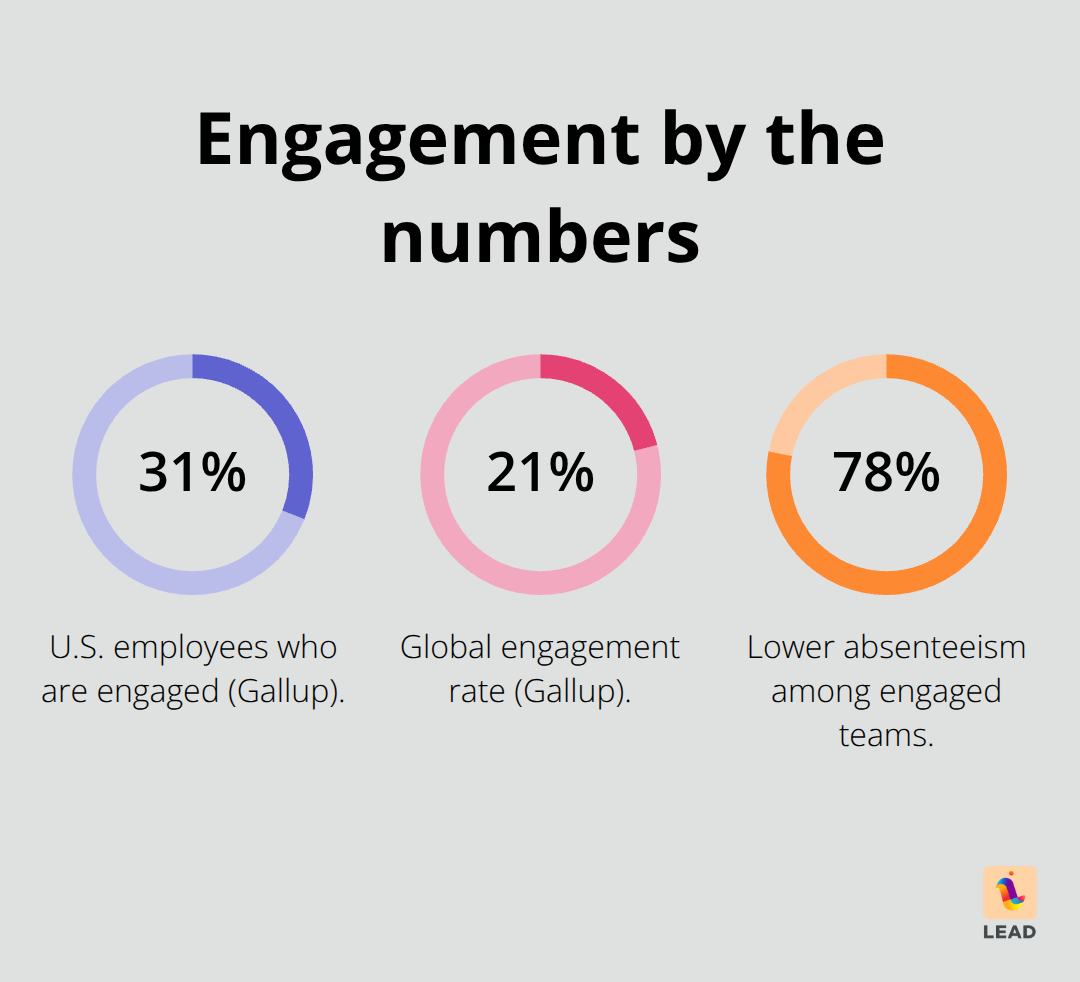
Globally? A grim 21%. And here’s the kicker: this emotional link isn’t just for show. Engaged teams rock 78% less absenteeism, churn 21% less in high-turnover spots, and boast 64% fewer safety hiccups. And if you’re wondering about the dollars and cents – disengaged workers? They bleed the global economy to the tune of $8.8 trillion every year.
The Engagement Performance Connection
The gap between teams that are engaged and those that aren’t? Obvious. Firms with the engagement magic see 10% more customer loyalty and ride out economic storms better.
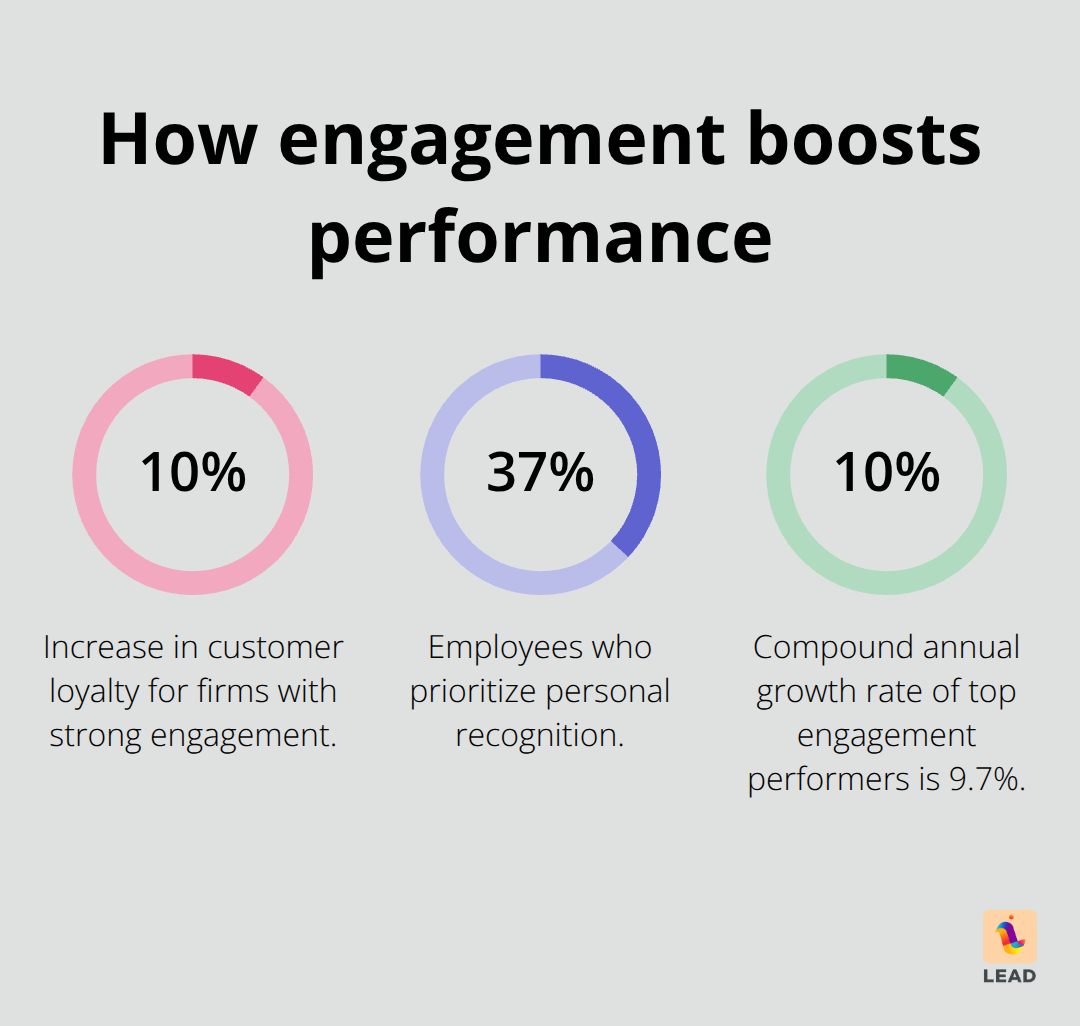
Microsoft’s 2022 Work Index flags work-life balance and confidence in management as big motivation hitters. Oh, and 37% of the crew want personal recognition as their top pat-on-the-back. These aren’t just warm fuzzies – they’re solid performance signals. The big leagues, with their top-notch employee engagement, enjoy a 9.7% compound annual growth rate… blowing their less-peppy rivals out of the water.
Why Satisfaction Surveys Miss the Mark
Here’s the classic blunder: chasing satisfaction instead of real engagement. Satisfaction? It means your team likes their pay and perks. Engagement? That’s the extra mile when the going gets tough. Eagle Hill Consulting says 77% of folks reckon a solid culture boosts their A-game, yet 68% would bail if they felt hung out to dry. The chasm between mere satisfaction and true engagement? Why 51% of workers worldwide are still checked out even with decent conditions.
The Real-Time Feedback Revolution
Pulse surveys and real-time feedback – that’s your ticket to capturing the emotional skin in the game. Beats the dusty old annual satisfaction forms that gather cobwebs. The orgs that get into this feedback groove see engagement scores jump – and snuff out problems before they turn into a staff exodus. Swapping yearly fireside chats for ongoing dialogues? It’s how you lay down the blueprint for a workplace culture that thrives.
How Do You Build Engagement That Actually Sticks
Let’s talk managers… because they run the show. Gallup says that managers account for 70% of the variance in team engagement. This isn’t about turning your office into a cheerleader fest – it’s about real advocacy for your crew. Start with weekly one-on-ones that dig into career dreams, not just project checklist snooze-fests. Ask straight-up what fires up each person and what drains them. Microsoft’s Work Index shows that management confidence is a major driver – so transparency… it’s a must-have in today’s playbook.
The Growth Conversation Framework
Here’s the deal – those development chats? Monthly, not yearly. Zoom in on skill gaps the employees flag, not what you’ve decided from the top down. Eagle Hill Consulting found that 80% of the workforce thinks new skills will up their engagement game. Set specific 90-day project-tied goals. Toss in stretch assignments that lean into career lattices versus the old-school promotion ladders (think growth pathways, and watch those engagement scores take off because people start feeling their future matters).
Recognition That Moves the Needle
Generic pats on the back? Meh. The 37% looking for personal shout-outs need something with punch. Pinpoint the behaviors and impact within 48 hours of the win. Use team gatherings to show how individual efforts tackle real issues. Frequent feedback bumps productivity by 12.5%, say Gallup folks, but only when it links today’s actions to tomorrow’s outcomes. So, skip the yearly nods – make recognition real-time and tied to results that have skin in the game for your org’s success.
Manager Development That Works
Managers – they need the right gear for these convo marathons. Companies that back manager development see a 17% boost in productivity when the team clicks into gear. Train managers to tailor their leadership mojo to different team dynamics (especially in hybrid formats where connecting is an intentional move). Focus on trust-building and support across all tiers – this nurtures an environment where engagement isn’t forced, it just… happens. And think about spaces where workers can let off steam (like creative outlets through informal collabs).
With these engagement keystones in your toolbelt, next up is measuring what really counts to mark your progress and scope out areas for amping up the game.
What Metrics Actually Predict Engagement Success
Let’s cut through the dashboard noise… those vanity metrics that look shiny but, let’s face it, give you zilch for results. At the heart of truly understanding engagement? Yep, it’s the Employee Net Promoter Score. Pose this one: how likely is your team to recommend the workplace to, say, their buddies-on a neat 0–10 scale.
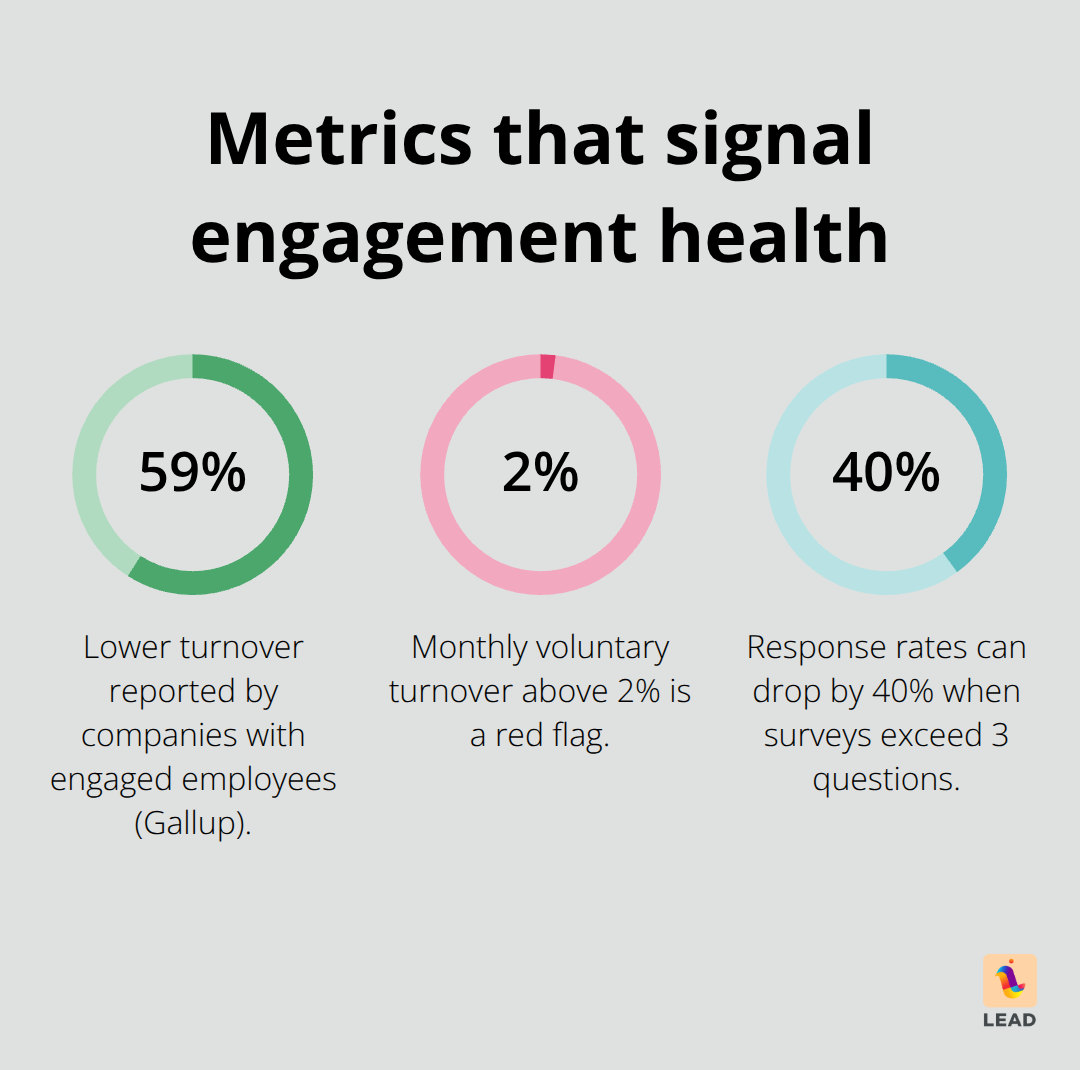
Over 50? You’re golden. Below 10? Uh-oh, you’ve got a headache brewing. And if you’re into deep dives, Gallup’s Q12 digs into 12 juicy factors predicting team outcomes. Forget quarterly-track voluntary turnover monthly. Over 2% a month? That’s a blinking red alert. Absenteeism isn’t just about counting sick days; it’s waving a flag about disengagement. Companies with an engaged crew report 59% less turnover-thanks, Gallup-and it turns budget-friendly, fast.
Real-Time Pulse Tools That Work
Ditch the annual snoozefests in favor of quick, weekly 2-question pulse checks zipping through mobile apps. Why? Frontline folks are 3x more likely to engage when surveys hit their pocket. Drill down with questions like: do employees back their manager’s calls? Spot growth chances this month? These pulse tools shine through Slack and Teams, catching feelings just when you need them. Think of the Employee Net Promoter Score as your monthly compass, not a one-time gig. When folks walk out, exit interviews unlock vital turnover insights-over 45 million Americans jumped ship in 2021, making this gold for retention tactics.
Analytics That Drive Action
Data without action is like a Ferrari with no fuel-pointless. Map those engagement scores to productivity rates every month, and spot the patterns. High-flyers dive into network analysis to reveal influence webs and collaboration gaps, directing engagement hits where they’ll explode with impact. Internally, eyeball communication rates-email opens, intranet buzz, meeting vibes. Organizational network analysis? It’s the x-ray vision for finding your hidden champions and influence maps-perfect for surgical engagement moves. Prioritize leading indicators like manager check-in frequency and shout-outs, not those behind-the-times retention stats.
Survey Design That Gets Results
Design pulse surveys laser-focused on actions, not wishy-washy feelings. Try this: “How often did your manager give you helpful feedback this week?” beats the pants off “Do you feel supported?”. Concrete questions equal actionable insights. Limit surveys to 3 questions tops-go over and watch response rates nosedive by 40%. Smart timing is critical: hit it around project finishes or team shifts when emotions peak, and feedback is potent. More organizations are wielding performance appraisal and historical data to forecast future star players.
Final Thoughts
Alright, here’s the skinny: managers are the linchpin of engagement-accounting for a whopping 70% of engagement variance. They’re the secret sauce to boosting team morale and performance. The numbers? They don’t lie-engaged teams crank out 23% higher profits and boost productivity by 18%, while slashing turnover by an impressive 59%. Yet, only 31% of American workers feel jazzed about their jobs. It’s like leaving a stack of cash on the table.
How do we turn this around? Start with those good old weekly one-on-ones, but-here’s the kicker-keep it about growth, not just ticking off boxes or status updates. And let’s get techy with it… real-time pulse surveys via mobile apps to catch the mood while it’s fresh. Focus on the leading indicators, like how often managers check in and toss around kudos (instead of the yawn-inducing lagging metrics telling yesterday’s news).
Now, why does this matter? Because the ripple effect of consistently engaging your workforce is transformative. Firms at the top of their engagement game hit a spicy 9.7% compound annual growth rate, doubling the performance of their snoozing competitors. At LEAD.bot, we get that engagement is way more than just surveys-it’s about actionable workforce insights that navigate the maze of human networks, where the real meat of knowledge exists, and trust is built with data-driven strategies.