
Employee pulse surveys—seriously, these things are changing the game in the hybrid work scene. At LEAD.bot, we’ve seen how these rapid-fire, frequent check-ins can flip the script on workplace dynamics.
But hang on… are they always the best move? In this post, let’s chew over the ups and downs of employee pulse surveys, so you can decide what’s really worth it for your organization.
What Are Employee Pulse Surveys?
Quick Snapshots of Workforce Sentiment
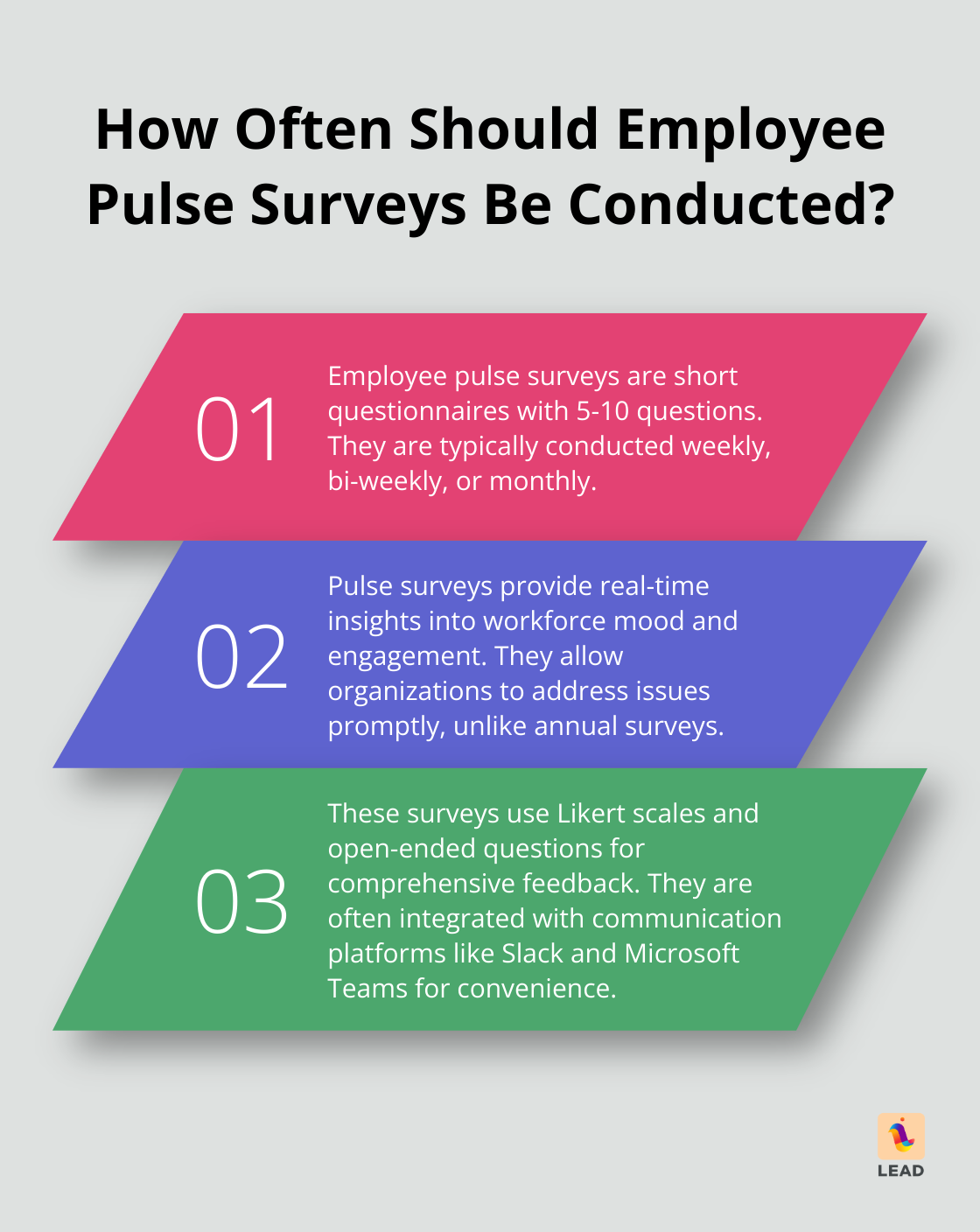
So, employee pulse surveys give organizations these nifty real-time insights-like instant Polaroids of workforce mood, engagement, and their all-around well-being. We’re talking short questionnaires (5-10 questions, tops) that show up on your screen either weekly, bi-weekly, or monthly. It’s like getting the news today, not waiting for the year-end wrap-up.
Frequency: The Key Differentiator
Here’s where pulse surveys flex their muscles-it’s all about the regularity, right? With these bad boys, organizations can nip issues in the bud before they blossom into headaches. Less drama. More action. Forget those snooze-fest annual surveys… frequent touchpoints are where it’s at.
Adaptability in Changing Times
Oh, adaptability-it’s like the Swiss Army knife of surveys. Remember the COVID-19 rollercoaster? Companies had to pivot on a dime, tweaking those pulse surveys to gauge the real vibes on remote work, safety, mental health-all that jazz. Flexibility… well, it’s the secret sauce that lets them keep pace with whatever curveball comes next.
Beyond Simple Yes or No
Let’s talk about going beyond the binary. Effective pulse surveys? They go deeper. Likert scales that span from “strongly disagree” to “strongly agree” and toss in some juicy open-ended questions for good measure. It’s like getting both the numbers and the spicy details-the whole spectrum of employee experiences right there.
Integration with Communication Platforms
Now, here’s where it gets savvy-modern pulse survey tools (cue names like LEAD.bot) play nice with your team chat apps like Slack and Microsoft Teams. Talk about convenient. It’s so much easier when you can ping your feedback right from where you chat all day. Boosts participation rates? Absolutely. Employees can chime in without leaving their turf.
Stay tuned… up next, we’re delving into how organizations can really cash in on those pulse survey gold mines.
Why Pulse Surveys Are Game-Changers
Real-Time Insights Drive Agile Decision-Making
Annual surveys are like driving while staring at the rearview. Pulse surveys? It’s all about the live stats on your org’s health. According to Qualtrics, those companies dabbling with pulse surveys are 11.5% more likely to jump into action on employee feedback. This real-time scoop is gold for managers – they can make savvy calls before things snowball.
Boosting Employee Engagement and Retention
Giving feedback chances left and right makes employees feel like their voices resonate. Engaged companies are the Spartans on the battlefield, says Gallup. Those nifty pulse surveys? They’re not about stacking up data – they’re carving out a culture of speak up and be heard. Employees get happier, and whaddya know, they stick around longer.
Tracking Trends for Strategic Planning
Pulse surveys are the crystal ball for spotting trends over time. Analytics got your back, helping you catch those mood swings among employees so you can nip mishaps in the bud. This kind of trend-hunting is key for mapping out strategies, lining up your talent with those big-picture dreams.
Higher Response Rates, Better Data
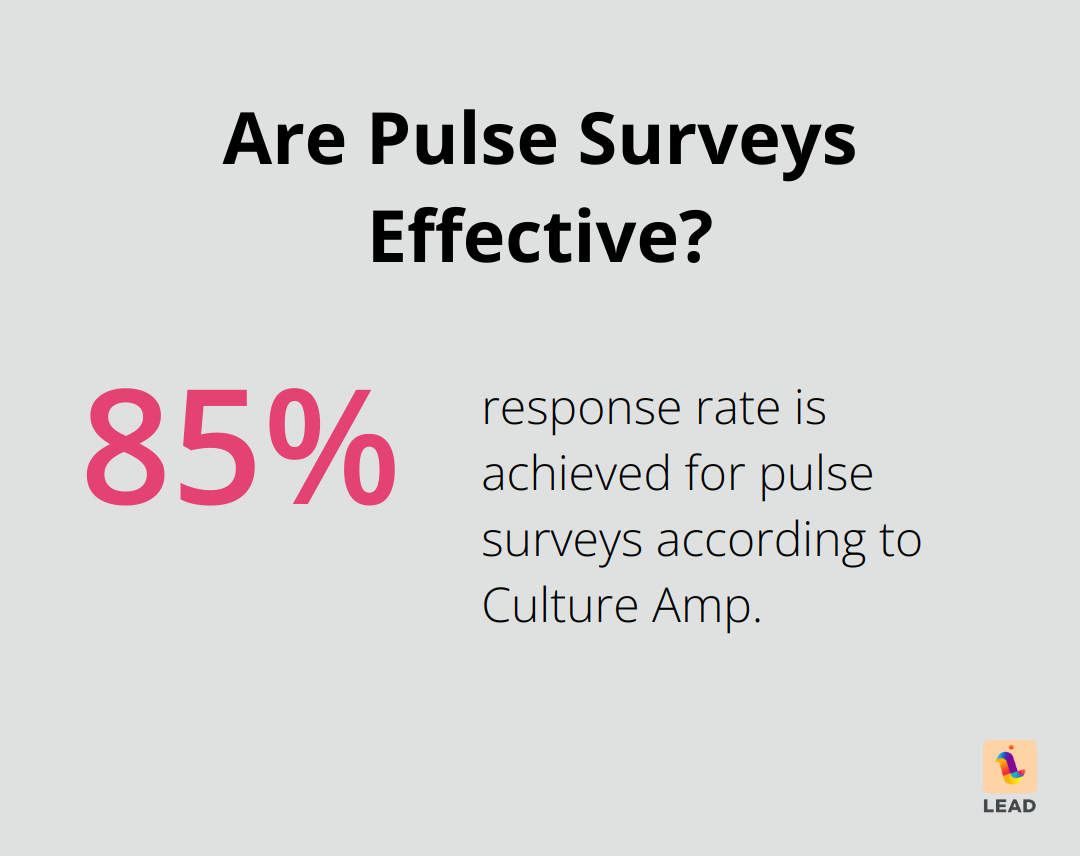
Yearly surveys often feel like a chore from the get-go. But pulse surveys? Quick, frequent…they’re more of a casual chat. Culture Amp shows these little surveys get a solid 85% response rate, leaving the annual surveys’ measly 30-40% in the dust. More answers mean you’re seeing your org in 4K clarity.
Rapid Response to Emerging Issues
In today’s go-go-go biz world, waiting on that annual survey is like sending smoke signals in the era of WhatsApp. Pulse surveys let you spot and squash issues on the fly. When COVID-19 struck, pulse surveys had companies checking the pulse on employee jitters about remote work and safety gear – leading to nimble policy moves.
The mojo of pulse surveys is in shifting orgs towards being nimble, real-time-reactive entities ready for whatever. But, pulling off these surveys without a hiccup means you’ve got to be aware of the fine-print challenges. Let’s peel back the layers on potential bumps and surprises organizations might face when diving into the world of pulse surveys.
The Hidden Costs of Pulse Surveys
Survey Fatigue: A Real Concern
Okay, let’s talk about survey fatigue-it’s a real thing. You bombard employees with surveys and boom, they’re overwhelmed. Survey fatigue, folks, is something organizations can’t ignore. The play here? Be smart, be strategic. Design your approach so it fits like a glove. Craft questions to engage, not enrage. Oh, and weaving these surveys into everyday tools like Slack and Microsoft Teams? Genius move. It’ll lighten the load on employees.
Data Overload: Too Much of a Good Thing
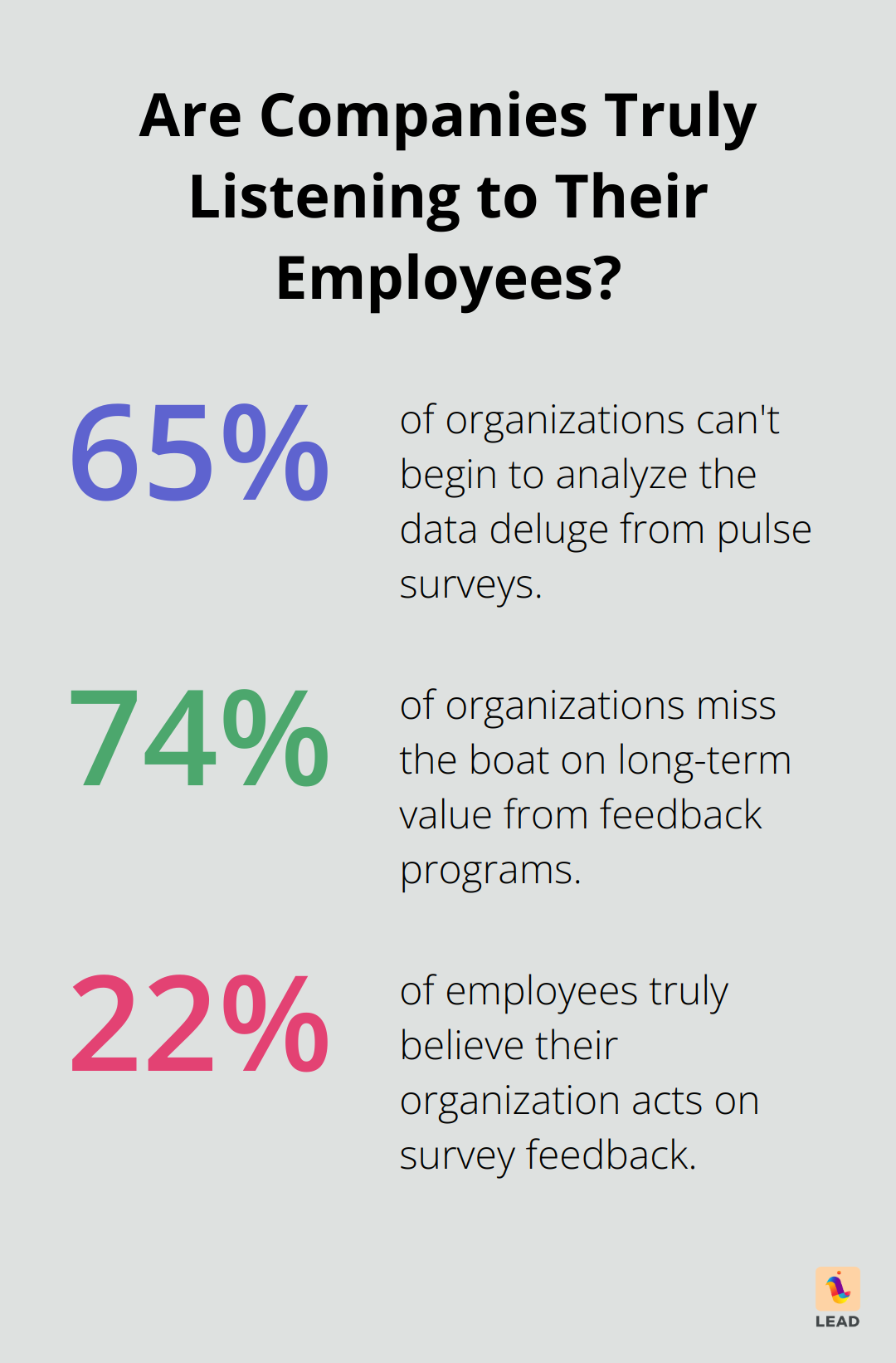
Here’s a shocker-the data deluge from these pulse surveys? It’s real, and it’s intense. Deloitte says a whopping 65% of organizations can’t even begin to analyze this tidal wave of data. Without the right tools, those golden nuggets of insight get lost in the static. Time to pony up for top-tier analytics. Make sense of the chaos, find order in the madness, and turn it all into actions that matter.
Short-Term Focus: Missing the Big Picture
People, listen up-obsessing over short-term blips? That’s a trap. Gartner says a staggering 74% of organizations miss the boat on long-term value from these feedback programs. Keep your eyes on the horizon. Mix those frequent pulse surveys with big-picture, thorough surveys. Balance is key, folks. Balance.
Misinterpretation: Context Matters
Misreading survey results is like seeing ghosts in the shadows. It could be a crunch time on a project causing those engagement dips-not a full-blown systemic meltdown. Organizations need to cross-check survey data with other metrics. Add a dash of qualitative feedback to get the real scoop on employee vibes. Context is king.
The Action Gap: Insights Without Implementation
Here’s the hard truth-the toughest challenge is taking insights and actually doing something with them. Gallup found only 22% of employees truly believe their organization acts on survey feedback. Ignoring this is a trust killer. We’ve got to bridge that gap. Nail down clear action plans post-survey and keep communication lines buzzing about progress. That’s how you keep the employee trust bank fully stocked.
Final Thoughts
Employee pulse surveys-think of them like a dashboard for your workplace vibes-are the go-to for real-time insights and, let’s be honest, a bit of a morale booster in the hustle and bustle of modern work. But here’s the rub: you’ve got to tackle the usual suspects like survey fatigue (yawn) and drowning in data (help!). Balance is key-mix it up with frequent check-ins that actually lead to action and integrate these surveys into existing systems like butter melting on toast.
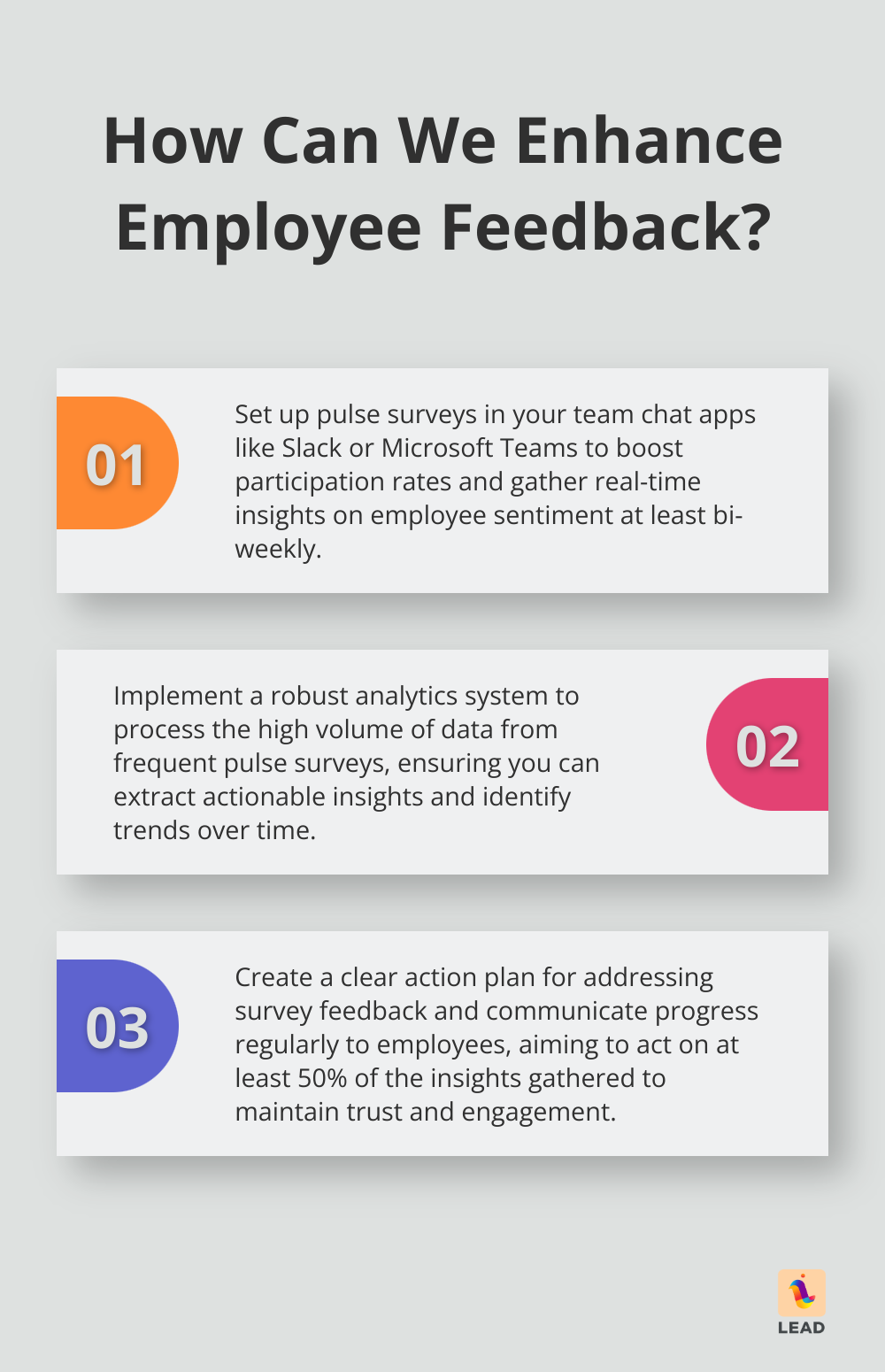
The secret sauce? Craft questions that hit home. Use robust analytics (not the smoke-and-mirrors kind) to transform insights into action steps. Enter LEAD.bot-a nifty tool that syncs with Slack and Microsoft Teams, keeping feedback as fluid as DMs, and voilà, participation skyrockets. Show your team their input actually translates to real-life changes. Trust me, that’s how you build trust and keep the engagement ball rolling.
In this brave new world of hybrid work, pulse surveys are the glue holding teams together-virtual high-fives, if you will. Managers get the 411 they need to inspire productivity from any zip code. It’s about nurturing a culture that’s all about constant improvement, using tools that amplify feedback in real-time, driving innovation, and ultimately, success in this ever-evolving business terrain.