Skip to content

LEAD

  • Products

    Products

    LEAD.bot for Slack & Microsoft Teams

    Sunrize App for Slack

    Use Cases

    Knowledge Transferring

    • Inclusive Peer Learning & Mentorship
    • Optimize Workforce Collaboration
    • New Hire Onboarding

    Employee Engagement

    • Pulse Survey
    • Birthday and Anniversary Celebration
    • Viture Watercooler

    Knowledge Management

    • Knowledge Network Insights
    • Subject Matter Expert Finder

    Solutions

    Streamline your network analysis with our tailored approach. Our experts will work with you to identify the optimal solution that best fits your needs.

    Contact Sales
  • Customer Stories
  • Integrations
  • Pricing
    • LEAD.bot for Teams Pricing
    • LEAD.bot for Slack Pricing
  • Resources
    • Blog
    • Customer Stories
    • Alternatives
  • FAQ
    • FAQ: LEAD.bot for Microsoft Teams
    • FAQ: LEAD.bot for Slack
  • Try LEAD.bot for Free
    Start With Slack
    Start with Teams
Feb102025
Employee Engagement TacticsKnowledge Management

Once upon a time, the office was the beating heart of productivity. Teams gathered in person, exchanging ideas across conference tables and bouncing off one another in the shared space of a physical office. But then, the world shifted. Remote work became the norm, and the very concept of “the office” was upended.

At LEAD.bot, we’re witnessing the next chapter of this story — companies are now caught in a delicate dance. They’re trying to strike the perfect balance between the freedom of remote work and the vibe of in-person collaboration. It’s a bit awkward, like two partners learning a new routine. But, this dance is vital for the future of work.

As the hybrid model takes shape, it’s forcing teams to rethink everything: communication, collaboration, and how to keep the energy and creativity flowing across a variety of work setups. More remote meetings, more digital tools, more flexibility — it’s like trying to keep track of multiple storylines in a Netflix anthology.

But don’t worry, we’ve got your back. We’ve been observing the bumps in the road, and in the next part of this story, we’ll walk you through the biggest challenges hybrid work presents — and offer some practical advice to help your team not just survive, but thrive, in this constantly shifting narrative.

Why Hybrid/Remote Work Is Here to Stay

The Hybrid Work Revolution

The office is no longer just a physical space; it’s now a concept. Hybrid work has surged from the fringes of corporate culture to become the new norm. Picture it: the flexibility of working from your couch, coupled with some occasional face-to-face interaction at the office. It’s clear that hybrid work is here to stay. A 2024 survey by Quixy revealed that 44% of employees prefer a hybrid working model, while 48% lean towards permanent remote work. Executives are catching on fast, with 68% planning to make the hybrid shift.

What does this mean? It’s simple: hybrid work isn’t just a trend—it’s the future. Companies that fail to adapt to this shift will quickly find their talent pool looking elsewhere for those sweet, sweet perks.

The Win-Win Scenario

Hybrid work offers employees the kind of flexibility most only dream of. Want to balance work and life beyond your cubicle? Check. Hate sitting in traffic? Double-check. Fancy working from a beach in Bali? Why not! On the other side, employers aren’t complaining either. Productivity is on the rise, office costs are shrinking, and suddenly, the global talent pool is within reach.

Take a Stanford study, for example: remote workers are showing a 13% productivity boost compared to their office-bound peers. Makes you question who’s really getting the job done, right?

The Numbers Don’t Lie

Hybrid work is rapidly becoming the standard in today’s business landscape. A 2021 survey by PwC revealed that 55% of employees desired to work remotely at least three days a week, and 68% of executives were already preparing for this shift. This marked a significant change in attitudes toward flexible work compared to pre-pandemic norms.

Fast forward to 2025, Upwork’s “Future Workforce Pulse Report” projects that 22% of the American workforce (36.2 million people) will be working remotely, representing an 87% increase from pre-pandemic levels. This shift reflects a clear and sustained move toward hybrid and remote work models over the years.

The data shows that while initial pandemic-era flexibility may have felt temporary, it has become an enduring feature of the workplace. Hybrid/Work from home is not just a fleeting trend but the foundation of the future of work. Companies slow to embrace this reality risk falling behind, as top talent gravitates toward organizations offering the flexibility and autonomy they value.

Navigating the Hybrid Landscape

While hybrid work presents exciting opportunities, the flipside is that execution isn’t a walk in the park. Success lies in mastering three key elements: effective communication, robust technology, and a strong company culture. Clear and consistent communication becomes non-negotiable in a hybrid model. Companies need protocols to ensure everyone—whether remote or in-office—has a voice. Tools like Slack and Microsoft Teams are pivotal, enabling real-time collaboration and keeping everyone on the same page.

A successful hybrid setup also depends on a tech stack that works seamlessly across locations. Equipping teams with cloud-based tools for project management, like Asana or Trello, and video conferencing platforms such as Zoom is essential to bridging the physical divide. At the same time, company culture acts as the glue. Hybrid work can challenge the sense of camaraderie and belonging, so fostering inclusivity through regular check-ins, virtual events, and hybrid-friendly policies is vital to making remote employees feel as integral to the team as those in the office.

The Key to Success: Adaptability

Adaptability isn’t just a buzzword—it’s the cornerstone of success in the ever-evolving workplace. The hybrid work model is no longer an experiment; it’s the new standard shaping the future of business. Firms that rise to the occasion are those that adjust their sails to the hybrid breeze, embrace cutting-edge technology, and prioritize their people. By doing so, they position themselves to ride the post-pandemic wave with confidence, turning disruption into opportunity and challenges into triumphs.

But as we embrace the hybrid/work from home model, it’s clear there are headaches to address. From maintaining productivity to ensuring team cohesion, the road isn’t without its bumps.

Hybrid/Remote Work Hurdles

The Communication Conundrum

Hybrid work—sounds dreamy, right? In theory, sure, it’s a utopia. Reality check: it’s not all sunlit meadows and unicorns. Let’s dig into the weeds of what trips teams up in this brave new work world. Ever feel like you’re embroiled in a never-ending game of telephone with your team? You’re not flying solo. A hefty 78% of companies have the gadgets and gizmos for remote team chatter, plus 71% dig 1:1 meetings. But hold the phone, it’s not just about having the whiz-bang tools; it’s about wielding them like a maestro.

Slack and Microsoft Teams are solid stuff, but spoiler alert, they can’t read minds. So, here’s the deal, teams need crystal-clear comms playbooks. When do you chat, email, or wave at a screen? Lay down these ground rules and watch info slip-ups dwindle.

While hybrid work offers numerous advantages, it also presents challenges that can hinder team effectiveness. A significant concern is the sense of isolation; approximately 23% of remote workers identify loneliness as their primary struggle. Additionally, one in three remote workers reports that they stay home too often because they don’t have a reason to leave, which can exacerbate feelings of isolation. Research from McKinsey’s workplace insights supports this approach.

These statistics underscore the importance of addressing the human element in hybrid work models. While technology facilitates remote operations, fostering genuine connections and supporting employees’ well-being are crucial for long-term success.

The Culture Clash

Think culture’s all about beanbags and dress-down Fridays? While those guilty pleasures are fun, the real deal is that culture is the secret sauce that binds teams together and fuels collaboration. But how do you keep that magic alive when half the squad is dialing in from their recliners?

For starters, executives can boost trust by showing genuine confidence in their team’s abilities, rather than handing down trust like it’s a decree from the ivory tower. Building a strong culture in a hybrid world requires more than just virtual happy hours or digital games. It’s about crafting shared experiences and embedding values that transcend physical and geographical boundaries.

This might mean spotlighting employees’ wins across locations, creating rituals that connect the team (like kick-off meetings or story-sharing sessions), and fostering an environment where every voice feels heard. When teams genuinely feel part of something bigger, culture doesn’t just survive—it thrives.

Tech Troubles

When working from the office, navigating work challenges often feels more seamless. You know exactly whom to reach out to for support, and face-to-face interactions with leads, seniors, or managers help build stronger personal connections. These personal interactions aren’t just about solving immediate problems—they’re also about fostering team culture and creating opportunities to align on collective goals, like enhancing technical stacks or tackling organizational challenges together. Additionally, the office environment naturally facilitates meeting new people from other teams, which can lead to fresh collaborations and insights. Unfortunately, these interactions are significantly harder to replicate in a remote setting.

Remote work also comes with its own set of hurdles, especially around IT issues. For instance, during my time working from home at my previous organization, I faced a frustrating challenge when my laptop’s charger port broke. Repairing it would have been costly, so I turned to the IT team for a replacement. While they were supportive and agreed to replace the laptop, the process took 15 days due to back-to-back holidays.

In the meantime, I had to rely on my old personal laptop. This meant depending on remote access tools, which severely limited my efficiency and scope of work. Not being physically present to resolve such issues or to seek help more directly highlights how the lack of personal interaction and immediate access to resources can be a significant disadvantage in remote or hybrid settings.

The Work-Life Blur

Nearly 48% of remote workers frequently find themselves working beyond traditional hours, blurring the lines between their professional and personal lives. This erosion of boundaries makes it increasingly difficult to disconnect and recharge. While employees must set personal limits, managers play a crucial role in respecting off-hours and fostering a culture that prioritizes disconnection. Some companies are taking proactive measures, such as introducing ‘no meeting’ days, to create uninterrupted focus time and help employees regain a healthier work-life balance. Establishing these boundaries is essential and requires a collaborative effort from both employees and managers to truly succeed.

Overcoming hybrid/remote work hurdles is the first step toward crafting strategies that make hybrid/remote work truly thrive. Lets find out how Lead.bot helps with this.

How to Make Hybrid/Remote Work Actually Work
Supercharge Your Communication

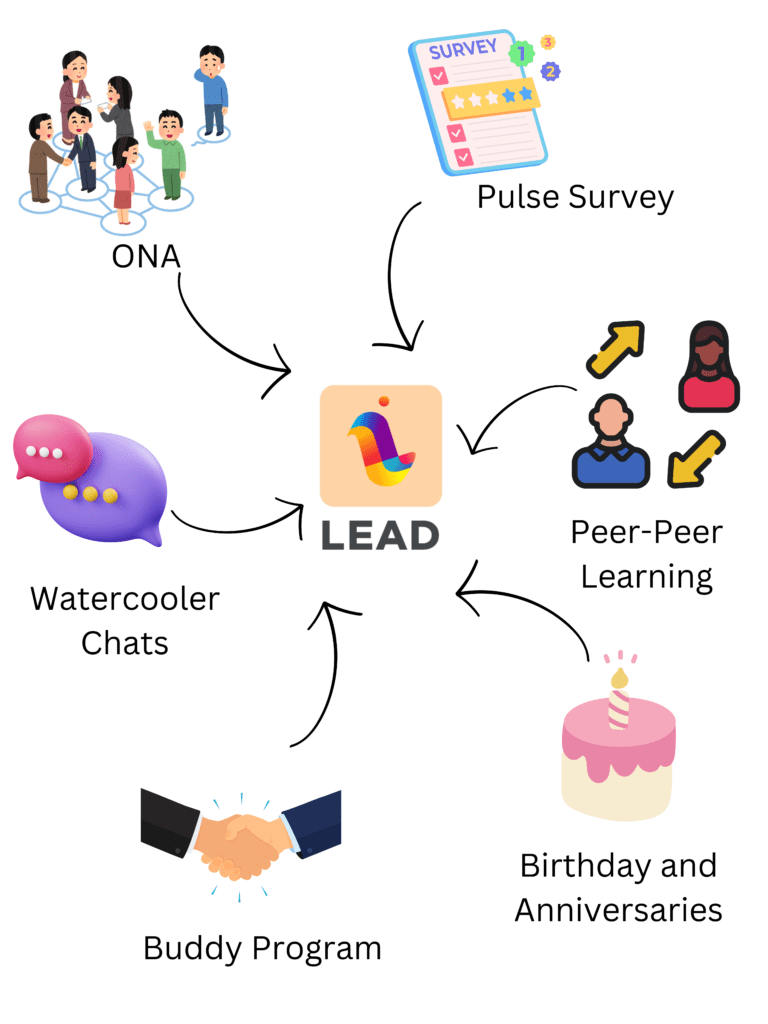
In a remote setup, effective communication is everything. While tools like Slack and Microsoft Teams are indispensable, Lead.bot elevates them by fostering informal interactions, such as virtual coffee chats and watercooler conversations, that go beyond project-specific discussions. These casual touchpoints keep teams connected on a human level, nurturing trust, understanding, and collaboration—a critical foundation for remote work success.

Build a Cohesive Team

Team building in a remote environment might seem challenging, but tools like Lead.bot make it not just possible but seamless. By connecting employees across departments and locations, Lead.bot fosters meaningful relationships and cultivates a strong sense of belonging. Its features, such as 1:1 and group introductions, buddy pairing for new hires, and structured mentorship programs, ensure teams remain engaged and collaborative.

For example, the Project Buddy Matching feature pairs colleagues working on similar projects, encouraging knowledge sharing and boosting team performance. It doesn’t stop there—Lead.bot also supports mentoring by matching employees with mentors based on their skills, goals, or projects, creating opportunities for professional growth and strengthening team dynamics. This isn’t just beneficial for experienced employees—it’s a game-changer for new hires, helping them acclimate quickly and effectively. To further support onboarding, Lead.bot facilitates regular check-ins at 30, 60, and 90 days with managers, offering a structured approach to communication and smoother integration.

Adding a personal touch, Lead.bot celebrates milestones like work anniversaries and birthdays, reinforcing a sense of community. By blending inclusivity, collaboration, and thoughtful mentoring, Lead.bot transforms remote workplaces into vibrant, well-connected ecosystems where employees can thrive.

Fostering Alignment with Data-Driven Insights

In a remote setup, aligning expectations across teams and individuals can be challenging. Lead.bot’s ONA (Organizational Network Analysis) and customizable pulse surveys provide valuable insights into employee needs, workload, and morale, making it easier for managers to understand team dynamics and performance expectations. With these tools, managers can assess the alignment between employee and manager expectations, ensuring that no one is left in the dark regarding work priorities or personal development goals.

Lead.bot’s customizable pulse surveys are particularly powerful in tailoring feedback to different employee groups. For new employees, the survey can focus on their unique challenges, such as feeling isolated or needing support with mentoring. Questions like, “Are you feeling connected with the team?” or “Do you need any guidance or mentorship?” ensure that new hires feel supported in their integration. For experienced employees, the pulse surveys can address issues like burnout or work-life balance. Questions such as, “Are you feeling overwhelmed with your workload?” or “Do you need better work-life balance?” help identify potential stressors and provide the support needed to maintain a healthy, productive environment.

By leveraging these insights, managers can take action based on real-time feedback, ensuring alignment and providing timely support. This data-driven approach allows companies to balance productivity and employee satisfaction, fostering a remote work environment where both individual and team well-being are prioritized.

Final Thoughts

Hybrid work is more than a passing trend—it’s the foundation for the future of collaboration and productivity. As teams adapt to this new way of working, they’re mastering the art of communication across physical and virtual spaces, embracing flexibility, and prioritizing work-life balance. Tools like LEAD.bot are pivotal in this transition, offering powerful features like virtual coffee chats, buddy programs, and pulse surveys to keep teams connected, engaged, and aligned. The future of work is here, and with the right strategies and tools, teams can thrive in this dynamic, inclusive, and adaptable environment.

Summary

Hybrid/Remote work is the future, offering flexibility to employees and giving employers access to a global talent pool. However, as teams transition to this model, they face challenges in communication, maintaining company culture, and balancing work-life dynamics. LEAD.bot helps address these challenges with the following features:

  • Buddy Program: Pairs new hires with experienced colleagues for seamless onboarding and mentorship.
  • ONA (Organizational Network Analysis): Identifies team dynamics and collaboration gaps to improve team cohesion.
  • Customizable Pulse Surveys: Collects real-time feedback from employees:
    • For new hires: Focuses on isolation and mentorship support.
    • For experienced employees: Addresses burnout and work-life balance issues.
  • Watercooler Chats: Encourages informal, spontaneous conversations that help maintain a sense of connection in remote teams.
  • Peer Learning: Facilitates knowledge sharing and collaborative learning opportunities within teams.
  • Mentorship: Provides structured mentorship to guide both new and experienced employees in their growth and development.
  • Virtual Coffee Chats: Provides opportunities for casual discussions, strengthening relationships and trust.
  • Birthday and Anniversary Celebrations: Acknowledges personal milestones, reinforcing a sense of community and connection.

LEAD.bot is the missing piece in your hybrid/remote work strategy. While tools like Slack, Microsoft Teams, and Asana handle task-based communication and project management, LEAD.bot focuses on the human side of work. It ensures teams stay connected, engaged, and aligned, even when they’re not in the same room. By combining LEAD.bot with the strategies you’ve outlined—supercharging communication, building cohesion, optimizing your tech stack, setting clear expectations, and embracing flexibility—you can create a hybrid work environment that truly delivers the best of both worlds.

Categories: Employee Engagement Tactics, Knowledge ManagementBy Alyssa at LEADFebruary 10, 2025
Tags: collaborationcommunicationcompany culturehybrid teamshybrid workremote employee

Author: Alyssa at LEAD

Post navigation

PreviousPrevious post:Network Organizational Structure: Pros and ConsNextNext post:Excel Change Management During M&A

Related Posts

Why Random Coffee Chats Fail at Scale (And What Works Instead)
March 9, 2026
How to Effectively Train and Manage Hybrid Teams
October 3, 2025
Top Hybrid Collaboration Tools for Modern Teams
September 29, 2025
Hosting a Successful Virtual Coffee Morning
September 22, 2025
Maximizing Value from Your Virtual Coffee Session
September 19, 2025
Virtual Coffee Break Invitation Email Best Practices
September 18, 2025

LEAD

hi@lead.app

Facebook-f X-twitter

LEAD.bot

  • Optimize Workforce Collaboration
  • New Hire Onboarding
  • ONA-powered Engagement Survey & Insights
  • Inclusive Peer Learning & Mentorship
  • Birthday & Anniversary Celebration
  • Inclusive Peer Learning & Mentorship
  • Optimize Workforce Collaboration
  • New Hire Onboarding
  • Pulse survey
  • Birthday and Anniversary Celebration
  • Virtual watercooler
  • Knowledge Network Insight
  • Subject Matter Expert Finder

Governance & Compliance

  • Terms of Service
  • Privacy Policy
  • Trust at LEAD
  • Terms of service
  • Privacy Policy
  • Trust at LEAD

FAQ

  • LEAD.bot for Microsoft Teams
  • LEAD.bot for Slack
  • LEAD.bot for Microsoft Teams
  • LEAD.bot for Slack

@2025 Lead, Inc.

SCHEDULE A DEMO


Request A Demo

Request Demo

To learn more or request a demo, feel free to contact us.

[contact-form-7 id=”10″]

The video will automatically play once you fill out this form.

video

[contact-form-7 id=”1364″]