Companies are hemorrhaging $31.5 billion every year because of lousy knowledge sharing—IDC tells us. It’s like a faulty GPS leading them nowhere. Most organizations? They’re tangled up in a mess of scattered info and clunky knowledge transfer processes.
Over here at LEAD.bot, we witness this chaos day in, day out. Enter enterprise knowledge management systems (cue superhero music). These systems can revolutionize how your organization captures, stores—and crucially—shares vital info across teams and departments.
What Are Enterprise Knowledge Management Systems
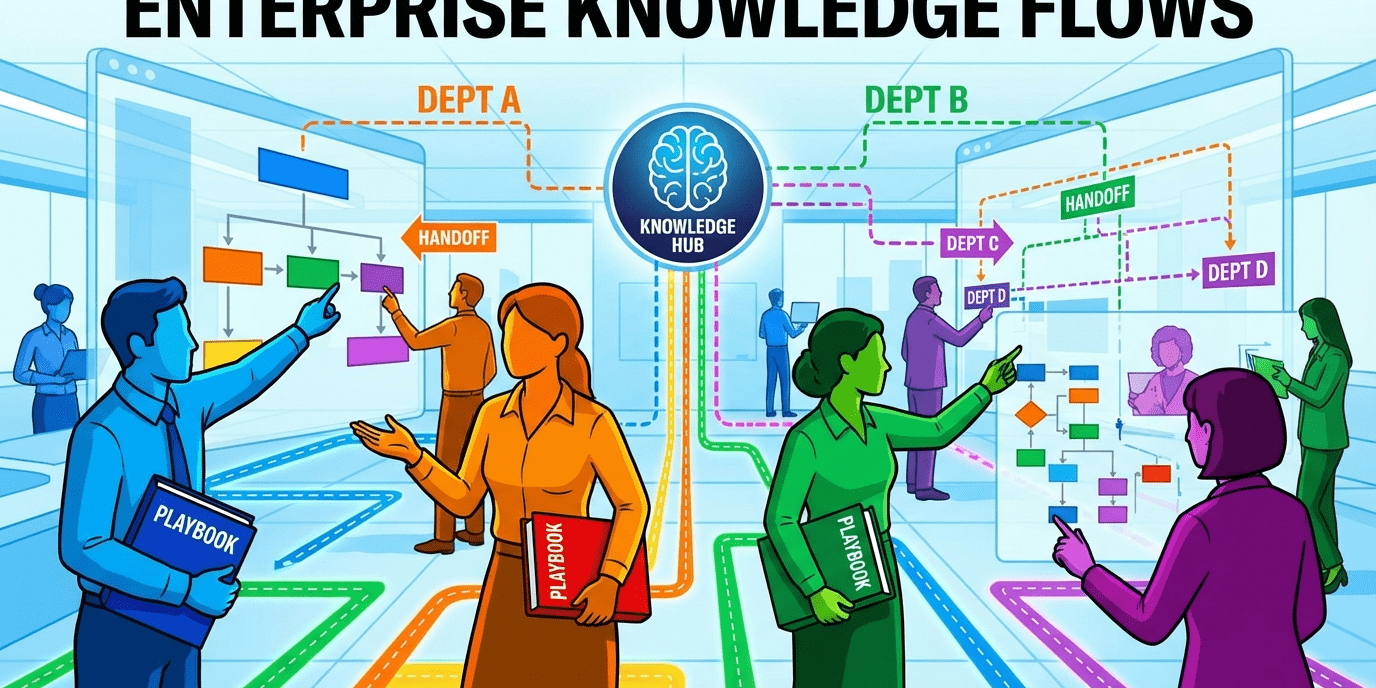
So, what’s the deal with enterprise knowledge management systems? Think of them as your organization’s central hub-the ultimate info depot. They scoop up, organize, and spread knowledge like butter across your corporate toast. Imagine turning scattered documents, those nuggets of wisdom stashed in people’s heads, and random expertise pockets into a streamlined resource engine fueling business success. Research throws us a solid: firms nailing knowledge management are seeing huge productivity spikes and-no surprise here-that translates into hefty cost cuts.
The Three Knowledge Types That Matter
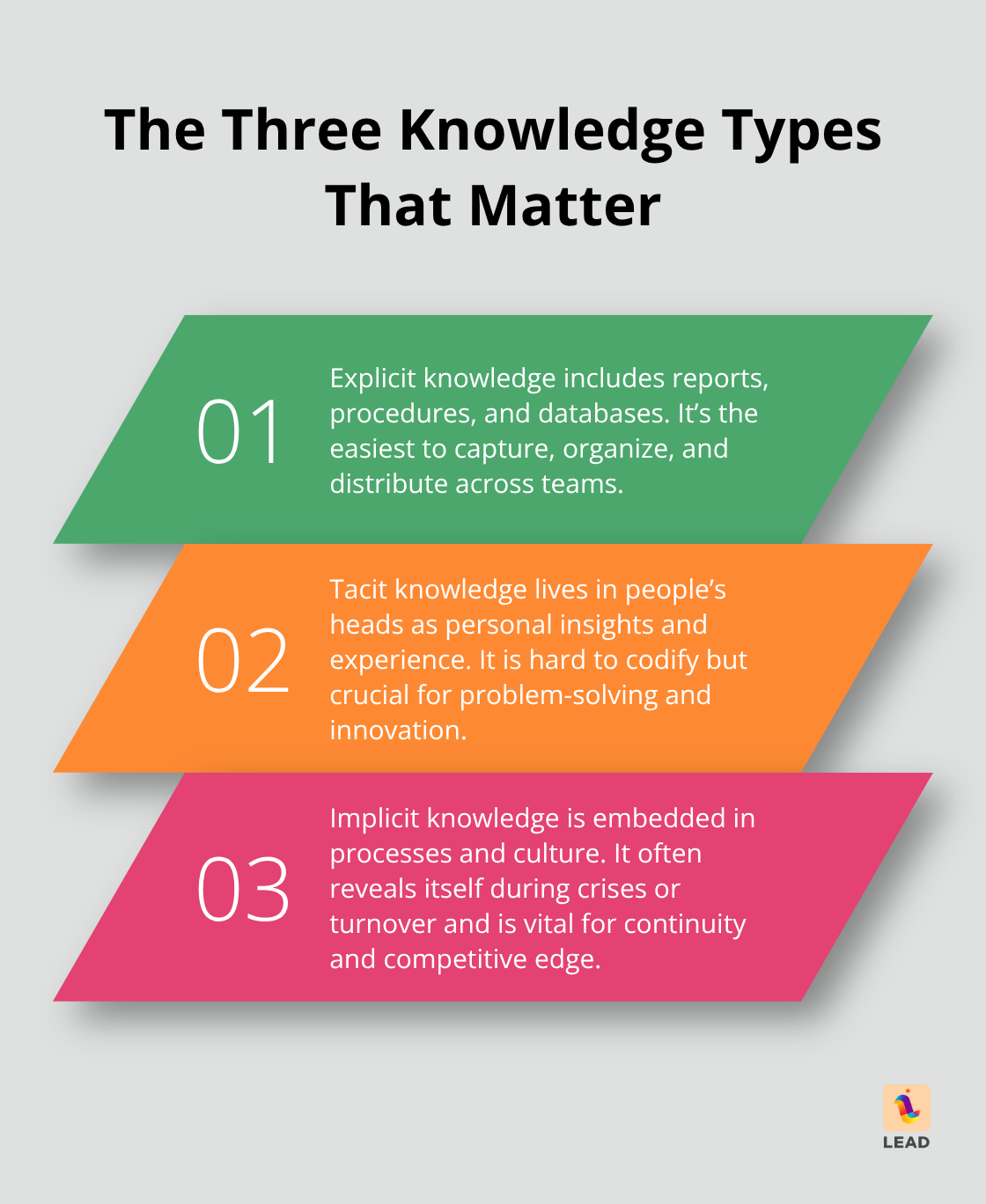
Peel back the layers of an organization and you’ll find three kinds of knowledge. First, there’s explicit knowledge-your reports, procedures, databases… the low-hanging fruit. Easy peasy. Then, you’ve got tacit knowledge-personal insights, the secret sauce in people’s brains. Finally, implicit knowledge-the sneaky stuff woven into your organizational DNA, invisible until a crisis hits or someone jumps ship. Most companies are all about explicit knowledge while overlooking the real MVPs-tacit and implicit knowledge-the secret weapons of competitive advantage.
The Hidden Costs of Knowledge Chaos
Let’s talk chaos-knowledge chaos. Without a grip on knowledge management, companies pay the price in productivity nosedives and efficiency leaks. Employees go on wild goose chases for info or play the waiting game with colleagues. Newbies? They crawl toward full productivity, dragging their feet through email mazes and personal brain dumps. And when key players exit stage left, their expertise walks right out the door, leaving teams stuck reinventing the wheel. Customer service takes a hit-resolution rates drop, customer ties strain, and support costs go through the roof.
Why Traditional Approaches Fail
Traditional methods-stuff like basic file storage or dusty old intranets-go belly up because they treat knowledge like static snapshots, not the dynamic assets they are. Want the edge? Leverage AI, but remember, that’s only gonna shine if your knowledge systems serve up clear, organized data for AI to munch on.
What’s next on your agenda? Dive into a deep-dive of your current knowledge gaps. That’s your ticket to spotting improvement opportunities through enhanced collaboration and strategic knowledge sharing efforts. Time to level up.
How Do You Start Your Knowledge Management Journey
So, you want to dive into knowledge management? Hold up-first, you need a no-nonsense audit of what you’ve got versus what you actually need. Most folks skip this part-then they scratch their heads when their pricey new systems gather digital cobwebs. The smart cookies do their homework first, and surprise, surprise-they see higher adoption rates. Best practices involve structured feedback, coaching, balancing pay and teamwork-while keeping the focus on employee engagement, not just quotas.
Map Your Knowledge Landscape
Start mapping your knowledge jungle-three dimensions, folks. First, stocktake your explicit assets-docs, databases, procedures, training guides. Next, pinpoint your tacit savants-who saves the day when things go south? Lastly, find your implicit potholes-what falls apart when those key players are MIA?
Then, whip up a knowledge risk assessment, ranking what’s crucial by impact and vulnerability. If your top sales engineer is about to retire with all the integration know-how locked in their brain-time to sound the alarm, my friend. This list? It’s your navigational chart on what to handle first.
Set Measurable Goals That Matter
Vague objectives-they’re project killers, worse than budget slashes. Skip the wishy-washy ‘better collaboration’ dreams-hone in on those gritty metrics that make the execs nod. Think clear targets: slash problem resolution times by 35%, halve new hire onboarding from 12 weeks to 6, or bump up first-contact fix rates by 25%.
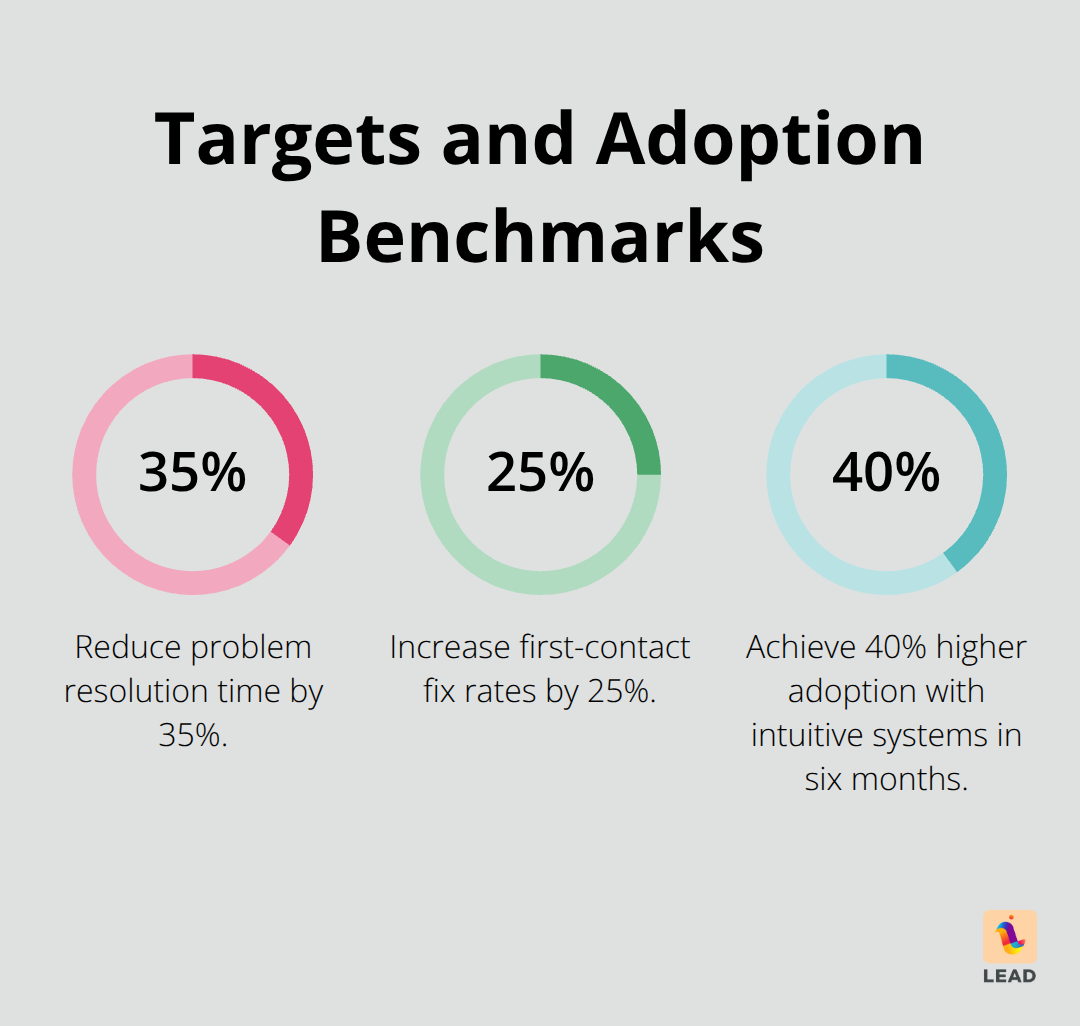
The savviest orgs link their key metrics like ROI and handling time straight to business outcomes. Pick a sweet spot of three to five metrics-those that hit your bottom line where it counts.
Get Leadership to Open Their Wallets
Nabbing leadership buy-in? Forget dazzling slides-it’s all about laying out their financial hemorrhage. Figure out the cash drain from knowledge inefficiency. If your 200 knowledge workers waste 5.3 hours a week waiting for info-boom, that’s 1,060 hours of productivity vanishing each week.
At an average loaded cost of $75 per hour-yep, you’re watching $4.1 million a year swirl away. Toss this figure next to your implementation expenses and watch those budget green lights flash. Numbers speak louder than any deck you’ll ever pitch.
With your audit in the bag and leadership on the money train, it’s time for the techy nitty-gritty-picking the right platform and constructing workflows that don’t fall apart.
How Do You Pick the Right Platform and Build Adoption
Look, choosing a platform for knowledge management could be the difference between a streamlined operation and a hot mess. Those feature-heavy behemoths? A wolf in sheep’s clothing. They promise the earth but give you a tangled web of complexity. According to Aberdeen Group, firms with intuitive systems are enjoying 40% higher adoption rates in just six months. Zero in on what’s essential: a search function that actually delivers, mobile access for your road warriors, and smooth hooking up with tools like Slack or Microsoft Teams.
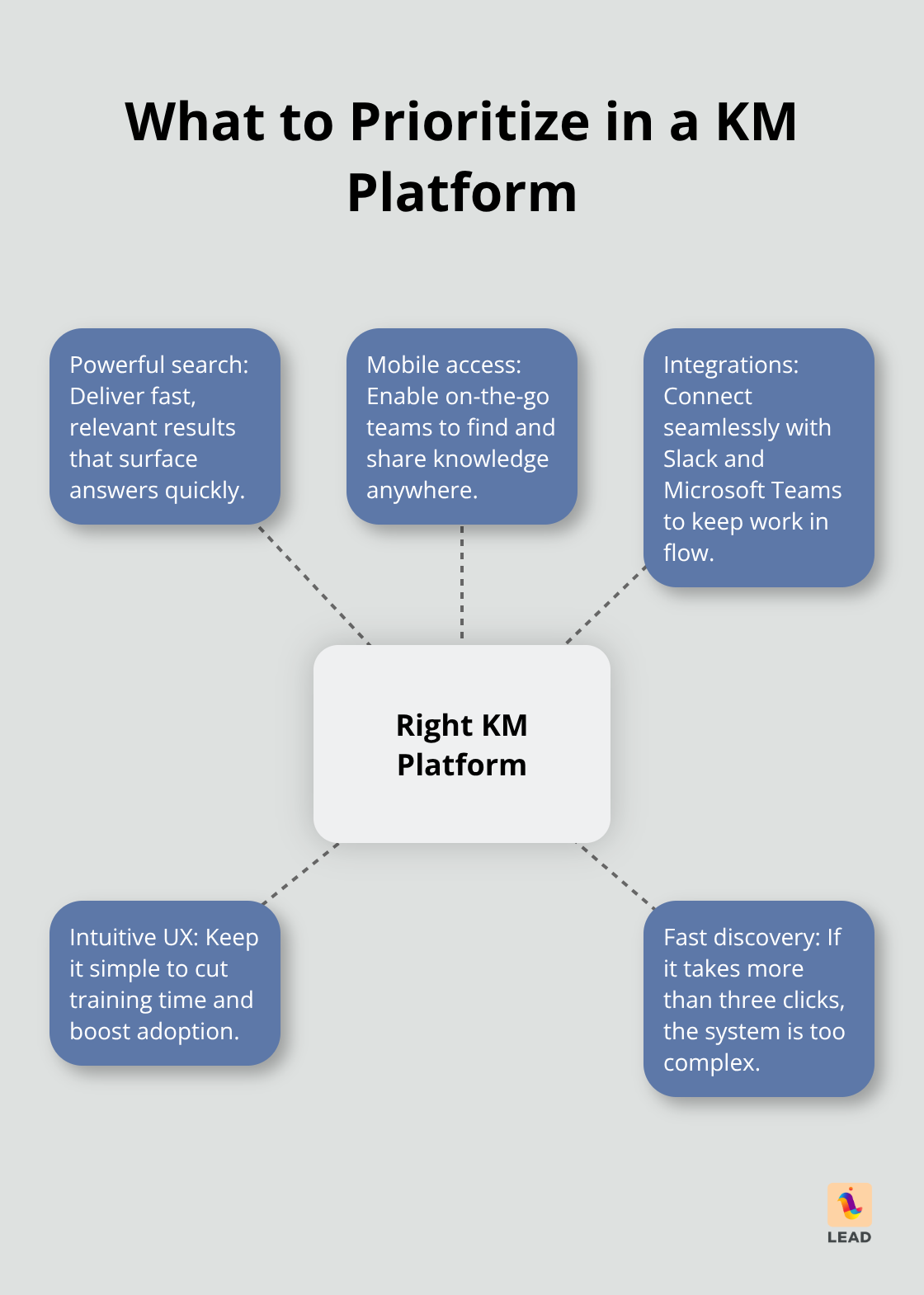
Your IT folks might champion those all-singing, all-dancing enterprise solutions with 200 features, but what your team craves is simplicity. Document360 nails it by keeping the user experience front and center, not bogged down by feature overload. Give that search feature a spin with real-life queries your team uses every day-if finding what you need takes more than three clicks, it’s time to move on.
Build Workflows That Stick
Ditch the red-tape approval chains-they’re momentum killers. The real magic of knowledge sharing happens with micro-contributions-quick updates, snappy insights, and rapid-fire feedback loops. Craft workflows with two approval steps max for sensitive stuff and none at all for routine updates.
Organizations with streamlined knowledge workflows are nailing resource allocation and keeping things humming through automated processes. Automate those content review reminders every 90 days instead of once a year. Get your experts to drop 10-minute knowledge nuggets, none of those doorstopper manuals. When Southwest Airlines rolled out those snack-sized knowledge bits, their maintenance teams shaved 18 minutes off aircraft turnaround time per flight.
Make Training Irrelevant Through Design
Time to bin those marathon training programs-design platforms so intuitive they speak for themselves. The top options need just 15 minutes of intro, not week-long boot camps. Set up templates for common stuff: troubleshooting guides, process docs, and project retrospectives.
Done right, gamification can be your best friend-celebrate top contributors monthly and publicize knowledge reuse metrics. Firms with peer recognition systems? They’re seeing better engagement according to recent workplace studies. Tackle immediate pain points first. If your sales crew is burning hours digging up competitive battlecards, start there. Gain a little success and watch adoption skyrocket-way faster than any training regime could manage.
Final Thoughts
Success with enterprise knowledge management systems all boils down to three cardinal rules: leadership skin in the game, user-first design, and never-ending measurement. Get these right, and according to those folks at Aberdeen Group, you’re looking at a 15-30% productivity jump in year one. How? By tracking how fast newbies get up to speed, resolving issues on the first call, and tallying up knowledge reuse stats… beyond the vanilla usage numbers.
The top dogs in this game are hawk-eyed on how swiftly teams share the goods when a key player exits stage left-saving themselves a cool 3.9 hours per person each week. They’re all about those quarterly knowledge audits, sprucing up content in line with usage trends, and rolling out successful pilot projects far and wide. They’re treating their knowledge systems as sprouting assets that morph with business needs.
These systems sing when plugged into the human networks where the real know-how hangs out. LEAD.bot is your mapper, charting those invisible knowledge threads in your organization, pointing out who’s got the chops and where the collaboration gaps are gaping. This people-centric base cranks up the effectiveness of your knowledge system and primes your organization for the AI leap.