
Teams are losing time to scattered docs, duplicate work, and AI tools pulling from stale information. This guide on How to Implement Knowledge Management for Learning? focuses on the practical systems, choices, and habits that make knowledge more usable. Today’s challenge is turning knowledge into something people can actually find and use across fast-moving teams.
Here at LEAD.bot, we get it—nailing knowledge management can revolutionize the way organizations learn and scale. Smart strategies are the key to turning all that scattered intel into golden learning moments that translate into actual business success.
What Knowledge Strategies Actually Work?
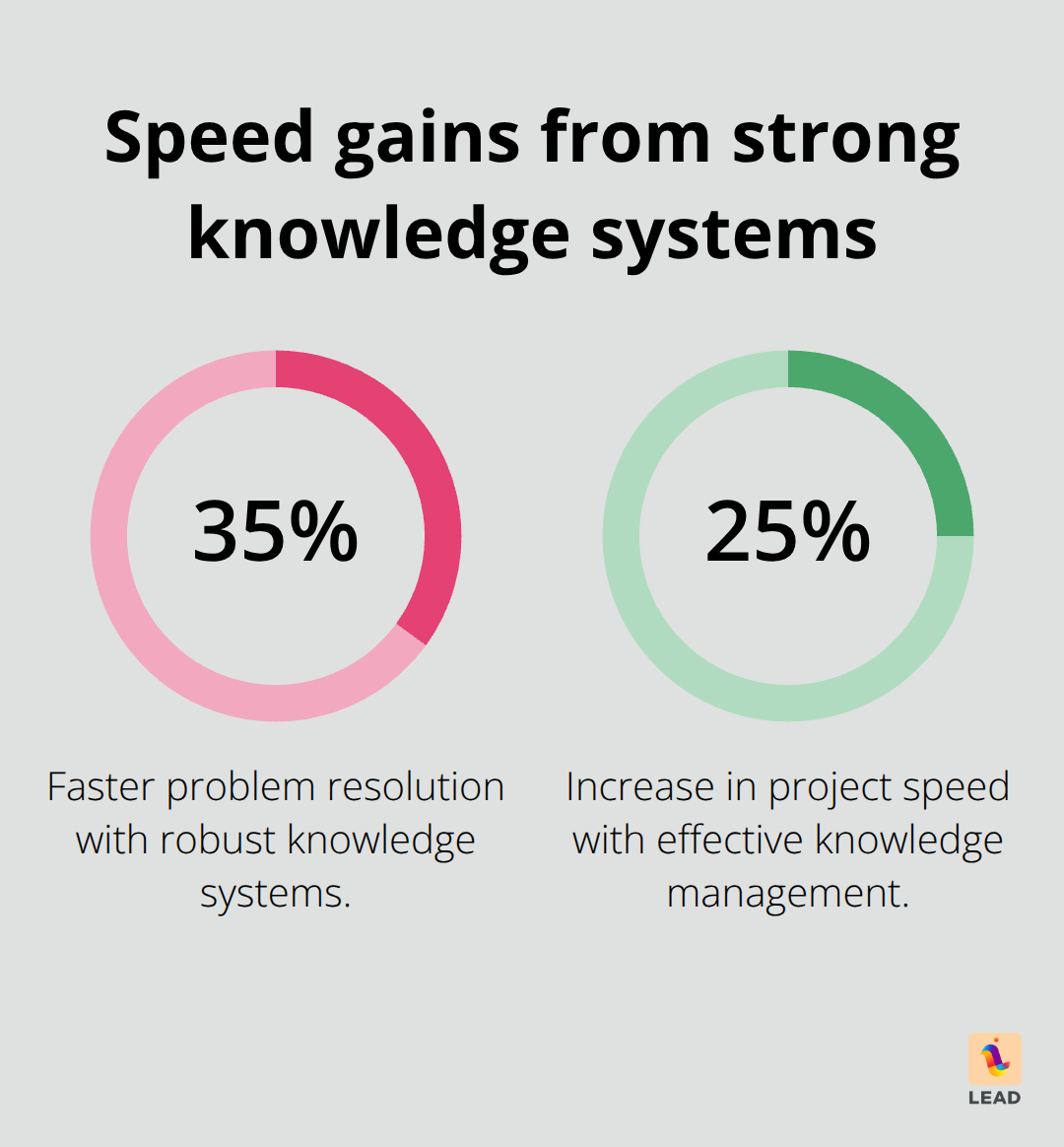
The top-tier firms? They’re not just hoarding info-they’re crafting knowledge ecosystems, turning random nuggets into a killer edge. Microsoft’s internal dive showed companies with slick knowledge setups resolve problems 35% faster and boost project speed by 25%. The magic? Three interconnected pillars that flip the script on how teams learn and get stuff done.
Build Knowledge Hubs That People Actually Use
If your folks can’t find what they need in under 30 seconds, your knowledge hub’s a dud. Atlassian found out the hard way-68% of their teams ditched internal wikis because the search was busted. The remedy? AI search that gets context, not just keywords.
Netflix revamped their knowledge base with topic clusters, seeing usage rocket 400% in just six months. Tag stuff by skill level, department, and project type. Roll out templates for go-to scenarios like troubleshooting guides and lessons learned. Give a nod to knowledge owners to keep content fresh, nixing old info pronto.
Transform Learning Through Peer Networks
Social platforms crank engagement rates 5x higher than the tired training modules (from LinkedIn Learning’s 2023 report). Slack channels zoned in on core expertise spark informal mentorship, with senior folks in the mix. Danone blew up their peer learning gig to over 1,000 global content creators, trimming training costs by 40% and boosting what their teams remember.
Build expert networks so your crew can spot who’s got the goods. Set up peer reviews for knowledge contributions and make a big deal out of active knowledge sharers. The trick? Let knowledge exchange flow naturally-none of that forced stuff.
Create Communities of Practice
Communities of practice kick knowledge transfer into high gear by linking people with shared headaches and skills. 3M? They’ve got over 100 technical communities across business units, raking in $2.4 billion annually by swapping ideas. These groups meet up regularly (virtually and IRL) to talk best practices, crack tough problems, and guide newcomers.
Lay down clear governance with community leaders sparking discussions and keeping the ball rolling. Give time and resources for community get-togethers-IBM sets aside 10% of employee time for these activities. Keep tabs on participation and measure business impact to prove the payoff to the higher-ups.
These knowledge strategies are pure gold when they dovetail, building an epic ecosystem where info roams free. The next big move? Implementing knowledge management so sharing knowledge feels as natural as breathing, not some afterthought.
How Do You Build Trust for Knowledge Sharing?
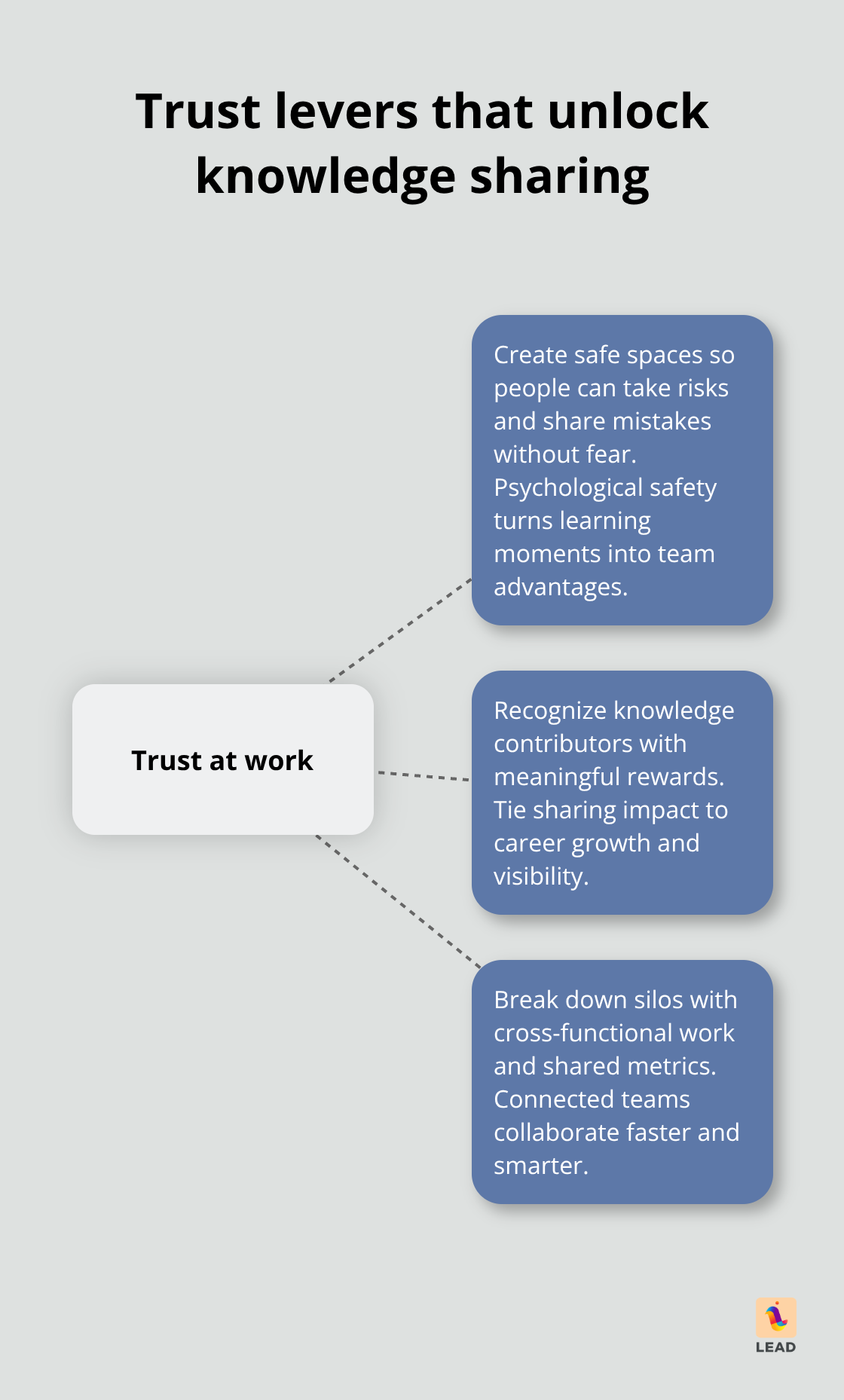
In the epic showdown of Culture vs. Strategy-yeah, Culture wins every time, hands down, especially in knowledge management. Google’s Project Aristotle nailed it: psychological safety turbocharges team performance more than individual genius ever could. Forget the superstar squads-the real champs are the ones where folks feel they can blurt out mistakes and toss around questions. The gritty truth? Employees hoard knowledge like dragon’s treasure because they’re terrified of looking stupid or losing their edge. We’ve gotta flip the narrative-make vulnerability a power move, not a career limiter.
Create Safe Spaces for Honest Exchange
Fear-oh man, it’s the silent killer of knowledge sharing, way more than any tech hiccup. Edmondson’s Harvard studies found teams with sky-high psychological safety created these magic zones where people took risks without looking over their shoulder. The smart movers and shakers? They own up to not knowing everything, and they throw a party for failures-because failure’s an epic teacher.
Anonymous feedback channels, folks. Or grab that trusty after-action review to figure out what went off the rails-no finger-pointing, just learning. Take a page from Toyota-they let workers hit the emergency brakes on production with zero fear, dodging heaps of potential chaos. Weave knowledge sharing into performance reviews, but remember-it’s about the quality, not the quantity of insights.
Don’t drown in info overload.
Reward Knowledge Contributors Like Revenue Generators
Want to shift behaviors faster than you can say “top-down decree”? Recognition, baby. Siemens saw knowledge shares skyrocket a jaw-dropping 340% after launching an innovation awards gig-shining a klieg light on employees tossing around killer insights. Craft recognition systems turning spotlight-hogging sales types into mere side actors next to knowledge stars.
Microsoft’s own MVP setup churned out over 50,000 solutions, saving millions on support costs-solid show. Tie knowledge hustle to career leaps-can’t climb high up the food chain without flashing those knowledge creds. Chuck the generic thank-you’s and bring on the real treasure: conference access, primo projects, a seat at the boss’s table.
Break Down Information Fortresses
Silos-yeah, they’re the noose choking off knowledge flow and blinding departments to each other’s brilliance. McKinsey’s got the scoop-connected teams are 5x more likely to tear it up in high performance. Look at sales teams pairing with product dev-they slam those deals 18% faster with tech savvy that wow customers.
Cross-functional teams? They’re the anti-silo forces, sharing expertise and making friendships beyond the org chart spaghetti. Cycle your top players through the company’s nooks and crannies-turn them into inter-department bridges. And hey, set up metrics that make departments work hand in glove-when the whole crew wins or falls together, collaboration becomes instinctive.
What ties all this trust together? A stellar technology infrastructure that makes sharing feel easy-breezy, not like lugging around a ball and chain.
What Technology Stack Transforms Knowledge Management?
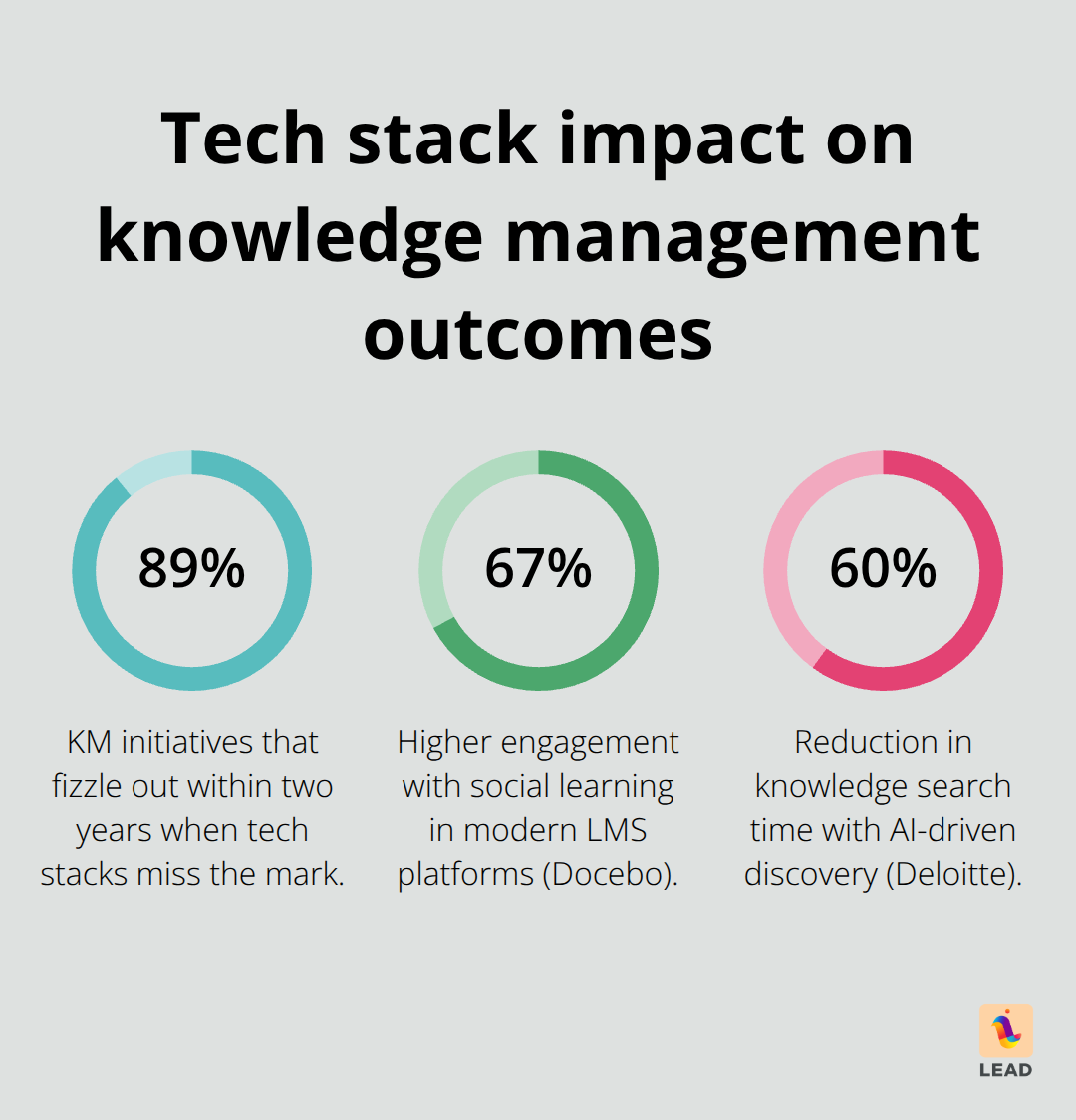
Here’s the cold, hard truth: 89% of knowledge management initiatives fizzle out within two years. Why? Companies mess up the tech stack.
Forrester’s numbers show a staggering $2.1 million down the drain each year on knowledge platforms that are basically black holes no one wants to go near. Here’s the kicker-it’s not about chucking every feature into one bloated system. Nah, it’s about piecing together a killer ecosystem where each tool does its one job, and does it well.
Learning Management Systems That Actually Deliver Results
Modern LMS platforms-yeah, they’ve leveled up way beyond just delivering courses. Cornerstone OnDemand shows up strong when you tether knowledge bases right into those learning paths. The magic bullet? Contextual learning… employees get the knowledge they need, right smack in the middle of real-world tasks.
Docebo’s social learning twists up engagement by 67% compared to the dusty old e-learning methods. Smart LMS action? It’s about sprinkling microlearning right into daily routines-we’re talking nimble 3-minute skill clips springing up when projects hit certain points or roles shift. Unilever, for example, slashed training costs by 35% and boosted knowledge stickiness when they ditched those annual training slogs for ongoing, snack-sized learning bites.
Expert Networks and Real-Time Collaboration Platforms
Slack channels with a laser focus on expertise-8x more knowledge flow than those old-school email threads (so says Slack’s internal data). The juicy bit? Expert tagging that surfaces the brainy folks in minutes, not days. IBM’s nifty expert finder shaves 12 hours off each project by hooking teams up with the right experts, pronto.
Microsoft Teams shakes hands with knowledge bases-helping blend collaborative chatter with documented solutions like a charm. The smart players? They’re rolling out AI-powered engines that pitch the best knowledge hits based on project vibes, skills needed, and past team-ups. This stuff pays: Accenture logs 23% quicker project wraps when teams nail down the right expertise first go.
AI-Powered Knowledge Discovery Platforms
AI takes knowledge management from waiting-to-pounce to a magical world of discovery. Companies diving into AI-powered knowledge setups reaping the rewards of wicked integration pulling the weight on those gnarly knowledge management hang-ups. Natural language processing cuts through the fog-staff toss out problems in plain talk and land on laser-focused answers.
Machine learning? It’s like having a backstage pass-sizing up usage patterns to pull the MVP content and spotlight the knowledge blind spots instantly. Deloitte clocked a massive drop in their knowledge search time-60%, just like that-once they geared up with AI-driven content that learns on the fly and sharpens up with every click.
Final Thoughts
Alright, folks – let’s talk knowledge management. For companies to ace organizational learning, there’s a trifecta in play: one, build psychological safety so teams can share freely (no skeletons in the closet), two, slap together a slick tech stack that connects all the dots, and three, roll out recognition programs that give a nod to the unsung heroes. Nail these, and your company is cruising with 35% quicker problem-solving and projects moving at lightning speeds – 25% faster, to be precise. It’s a game changer at the very core of how your organization hums along.
Teams tap into expertise like it’s magic, new hires hit the ground running 40% faster, and all that precious know-how? It sticks around even when folks decide to peace out. Think of knowledge management as the bedrock for AI shenanigans – mapping those human networks where the real magic happens (you know, the hidden links that spark innovation). It’s about preserving expertise and spreading it like wildfire across every corner of the business.
Kick things off with one pilot department, lay down some serious governance, and keep your eye on engagement and the biz impact. The tech is a big deal, sure, but it’s the culture shift that really seals the deal. LEAD.bot to the rescue – using network analysis to unearth the experts you didn’t even know you had and pulse surveys to keep tabs on knowledge-sharing mojo. Companies that master the combo of knowledge management and learning are like compound interest – their competitive edge just keeps growing.