

Knowledge Management Systems (KMS) — the unsung heroes revolutionizing info and expertise flow in organizations. Picture this: a world where data access is as smooth as your morning espresso, boosting collaboration, and sparking those lightbulb moments across teams.
At LEAD.bot, we’ve witnessed the KMS magic — yes, magic — how they can turn a business from a jalopy into a Formula 1 racer. Think productivity on steroids and decision-making like a pro chess player. Folks, KMS are your secret weapon in the cutthroat arena of today’s market.
Stick around as we dive into the KMS playbook… unearthing the strategies and best practices to squeeze every drop of potential from these tools. Get ready to level up.
What Are Knowledge Management Systems?
The Essence of KMS
Knowledge Management Systems (KMS) … Think of them as the motherboard of today’s companies-slick operators of information and shared know-how. These bad boys don’t just store facts; they’re living, breathing intel-machines that flip the script on teamwork and innovation. Instead of just being a repository, KMS serve like an organization’s circulatory system, keeping the blood of information flowing and fresh.
Core Components of KMS
Here’s the lineup for a killer KMS:
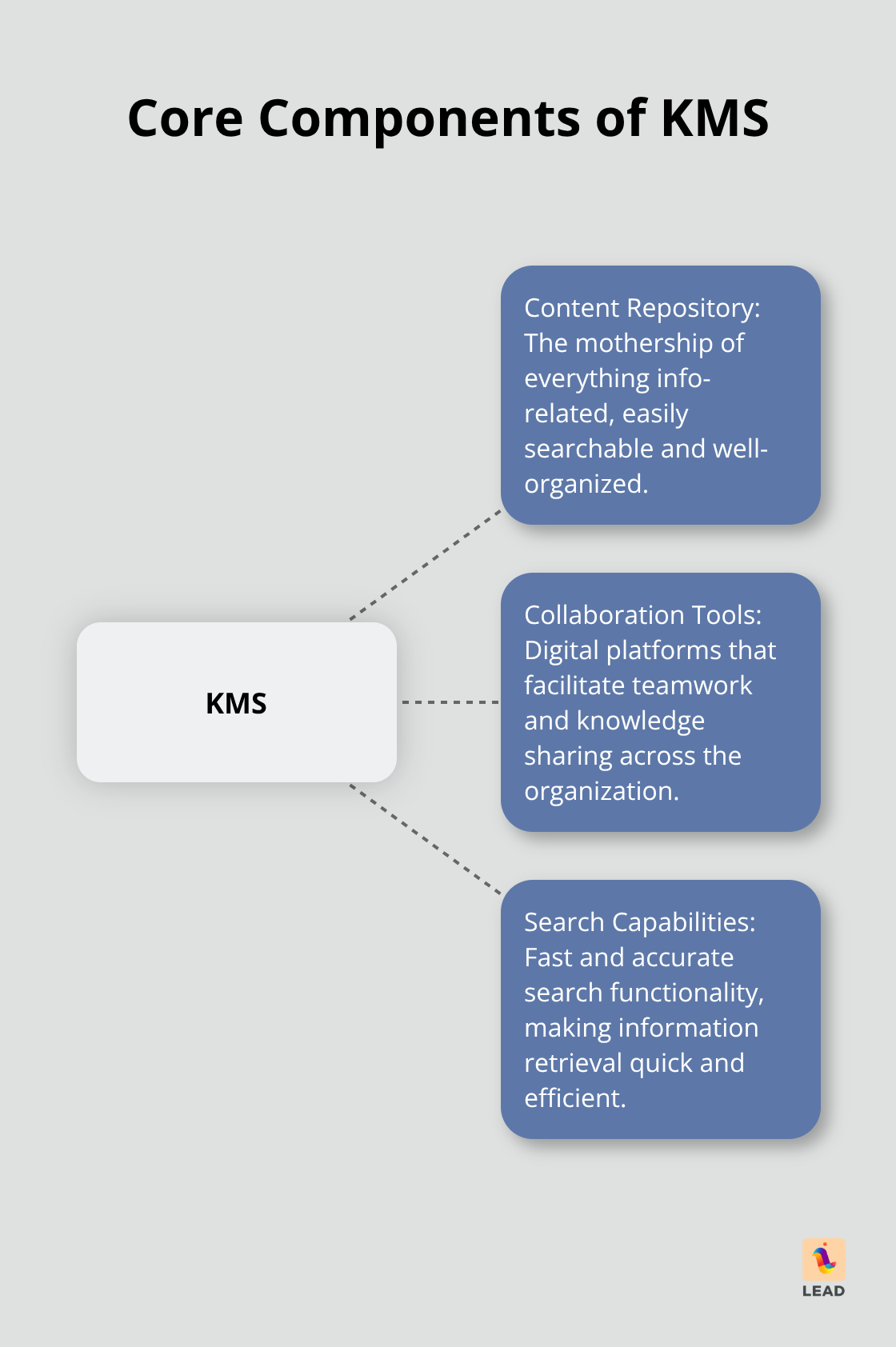
- Content Repository: The mothership of everything info-related. We’re talking about a turbocharged, easily searchable brain of the company. It’s like your regular filing cabinet just graduated magna cum laude.
- Collaboration Tools: Where water cooler chatter meets the digital age-these puppies get everyone in on the action, sparking a hive mentality that boosts brainpower across the board.
- Search Capabilities: Imagine a search engine on energy drinks-fast, accurate, and tuned in. That’s what KMS offer, making digging up data a breeze.
Types of Knowledge Management Systems
KMS come in flavors to suit any taste:
- Enterprise-wide Systems: The full-service option. These are like the Swiss Army knives of the corporate world, handling everything from HR headaches to keeping product specs in line.
- Specialized KMS: Tailor-made for niche markets – think customer support wizards or R&D geniuses. These are your precision instruments.
- Hybrid Approaches: Not one for purists (but genius for pragmatists). Mix and match different types to design a bespoke knowledge wonderland.
Transformative Benefits
Nailing a good KMS? Here’s the treasure haul:
For Organizations:
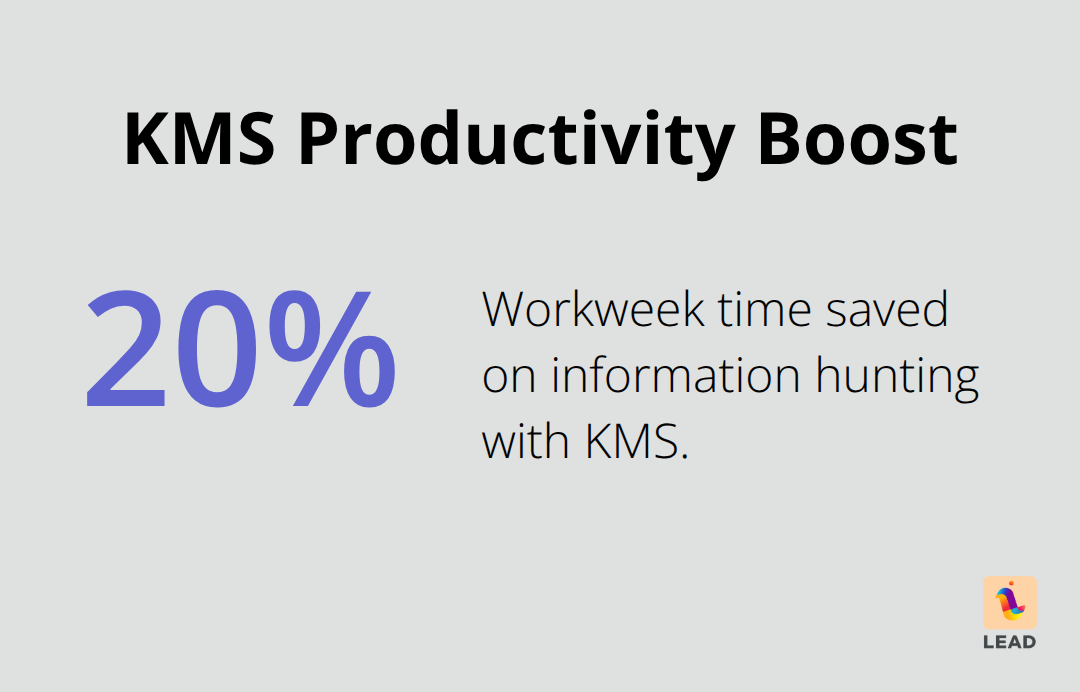
- Productivity Boost: McKinsey threw down some stats – Imagine saving nearly 20% of your workweek spent on info hunt. That’s money in the bank, potentially $750k a year (for a 150-person outfit).
- Innovation Catalyst: Barrier? What barrier? KMS smash silos, let creativity pollinate across departments.
- Knowledge Preservation: Amidst the “Great Resignation,” KMS ensure wisdom doesn’t head out the exit when seasoned pros seek greener pastures.
For Employees:
- Career Enhancement: Leveling the playing field, KMS let everyone dip into the well of organizational wisdom.
- Efficient Problem-Solving: Because nothing beats cracking issues faster and making killer decisions with the right intel.
- Job Satisfaction: Research backs it – the link between a smart KMS and feeling good about your job is real.
The Future of Work
As we dive deeper into digital territory and remote work continues to rise, KMS notch up their importance. They’re not just about sharing knowledge – these systems turn potential data paralysis into a supreme advantage. It’s about working not harder – but smarter, offering companies and employees a win in this ever-evolving workplace landscape.
Next up? We’ll unpack the nuts and bolts of how to get a Knowledge Management System rolling in your org, so you’re locked and loaded for success.
How to Implement a Knowledge Management System
Assess Your Organization’s Needs
Alright, folks…start with an audit-get under the hood of your current knowledge processes. You need to know: What info is mission-critical? Where are you stuck in the mud? Identify these bottlenecks, and that’s where your KMS (Knowledge Management System) gets its marching orders.
Get your team involved. Run surveys, conduct interviews, analyze workflow. This isn’t just a checkbox exercise-you’re on a mission to uncover the real pain points that your KMS needs to solve.
Choose Your KMS Wisely
You’ve got a buffet of KMS options out there, but trust me, not all are created equal. You want platforms with robust search, smooth user experiences, and seamless integration with what you already use. A strong knowledge management strategy slashes the time you waste digging for info.
Avoid the shiny objects-the bells and whistles aren’t what you need. Focus on core functionalities that fit your unique needs. Got a remote team? Mobile accessibility is your friend. Is compliance your middle name? Make sure the KMS nails document control.
Foster a Knowledge-Sharing Culture
Tech alone won’t do it. You gotta build an environment where sharing knowledge is the norm, not just a nice-to-have. This starts from the top. When leadership jumps in and engages with the KMS, it’s contagious.
Incentivize knowledge sharing. Public recognition, or make it count in performance reviews. Millennial-aged employees are often super willing to share best practices. Cash in on that.
Train Extensively
Your KMS is only as good as its users, period. Pour resources into comprehensive training. And no, it’s not a one-and-done gig-think ongoing. Regular workshops, video tutorials, hands-on sessions-keep it top of mind.
Pro tip: Find your KMS champions in each department. These people are your troubleshooters and biggest advocates. They’ll be your frontline to engrain the KMS into daily habits for everyone.
Implementing a KMS isn’t a “set it and forget it” deal. It’s a journey requiring constant refinement and adaptation. The next section dives into best practices to truly maximize your shiny new Knowledge Management System.
Supercharge Your Knowledge Management System
Foster a Culture of Active Participation
Want to supercharge your KMS? Make sharing as easy as clicking a button. Literally. Set up those nifty quick-share buttons in Slack or Microsoft Teams. Boom-instant contributions. This little trick? Turns your once-drab KMS into an electrifying powerhouse.
And who said work couldn’t be a game? Slap up a leaderboard showcasing top-notch contributors. Give these heroes a shoutout in meetings or newsletters. A little recognition goes a long way. Keeps your team pumped, hitting those organizational goals-oh, and it helps keep folks around too.
Maintain Fresh and Relevant Content
Old news? Deadly for a KMS. Appoint those content saviors-er-stewards, to keep things fresh and relevant. AI tools? They’ll flag outdated stuff automatically. Keeps your knowledge base buzzing and on-point.
Hit ’em with a ‘sunset clause.’ Every entry’s got a shelf life-say, 6 months. Update it or archive it, simple. Ensures your KMS remains a valuable treasure trove, not a digital wasteland.
Integrate Seamlessly with Existing Workflows
Your KMS should be like that comfy old t-shirt-slides right in with daily routines. If it’s a hassle? Forget it. Plug it into tools you love. Custom workflows? They’ll pull up relevant info based on what you’re doing at the moment.
Picture this: Open a new lead in the CRM, bam-your KMS serves up relevant case studies or product info instantly. That’s precious minutes saved, hunting down data all gone, like yesterday’s newspaper.
Measure and Optimize KMS Performance
Keep tabs on those key metrics-how’s your KMS doing really? See who’s engaged, how fast content’s flowing, and how much time you’re saving hunting info. Use this intel to keep fine-tuning the system.
Shoot out regular surveys. Ask the crew: what’s clicking? What’s dragging? This homegrown insight is gold, helping your KMS grow with changing demands.
Leverage AI for Enhanced Functionality
AI isn’t just for sci-fi anymore-it can catapult your KMS to new heights. Boost search accuracy, suggest relevant content, or even create new knowledge from old data.
Test the waters with chatbots or virtual assistants. AIs that steer folks to the right info lickety-split-better user experience, higher usage rates.
By melding cutting-edge data science and workstyle analytics, you pinpoint knowledge gaps, enhance teamwork, and bolster employee engagement in your KMS.
Final Thoughts
Knowledge Management Systems – the unsung heroes of the corporate universe – are fundamentally flipping the script on how organizations juggle information and know-how. We’re talking seismic shifts in productivity, innovation (not the buzzword type), and safeguarding that oh-so-critical vault of institutional wisdom. Companies with a strategic eye on KMS? They’re not just playing the game… they’re changing it, especially in the manic pace of today’s biz world.
But hold on – the magic of Knowledge Management Systems isn’t just hoarding data like a dragon sitting on a pile of gold. No, it’s supercharging team dynamics, sharpening decision-making skills, and turning problem-solving into an art form. When you’ve got a KMS firing on all cylinders, employees aren’t just checking boxes – they’re unlocking better job vibes and your org’s performance takes a serious uptick.
Enter LEAD.bot, the game-changer that’s slicing through the noise with a cutting-edge colab boost, armed with killer organizational network analysis. It’s the toolkit for firms ready to drag their knowledge-sharing out of the dark ages and into the now. Don’t let that precious intel slip into oblivion – get on the KMS train today and watch your crew connect, innovate, and fire up productivity like never before.