
Hybrid team collaboration breaks down when work lives in separate channels, routines, and trust networks. The strongest hybrid teams create clear communication rhythms, visible decision paths, and intentional moments of connection—so people can move work forward without guessing who owns what.
Now, juggling remote and in-office work is no cakewalk — but let’s not overlook the doors it opens for innovation and flexibility. This blog dives into some critical strategies (trust me, you’ll want to pay attention) that can help your hybrid team not just survive, but thrive in this ever-changing environment.
How to Streamline Communication in Hybrid Teams
Alright, let’s talk communication in hybrid teams. It’s the bedrock, folks – the DNA that holds everything together. At LEAD.bot, we’ve seen firsthand how dialed-in communication can be a productivity game changer. So, wanna make your hybrid team’s communication slicker than a greased eel? Here are some practical pointers.
Select the Right Tools for Your Team
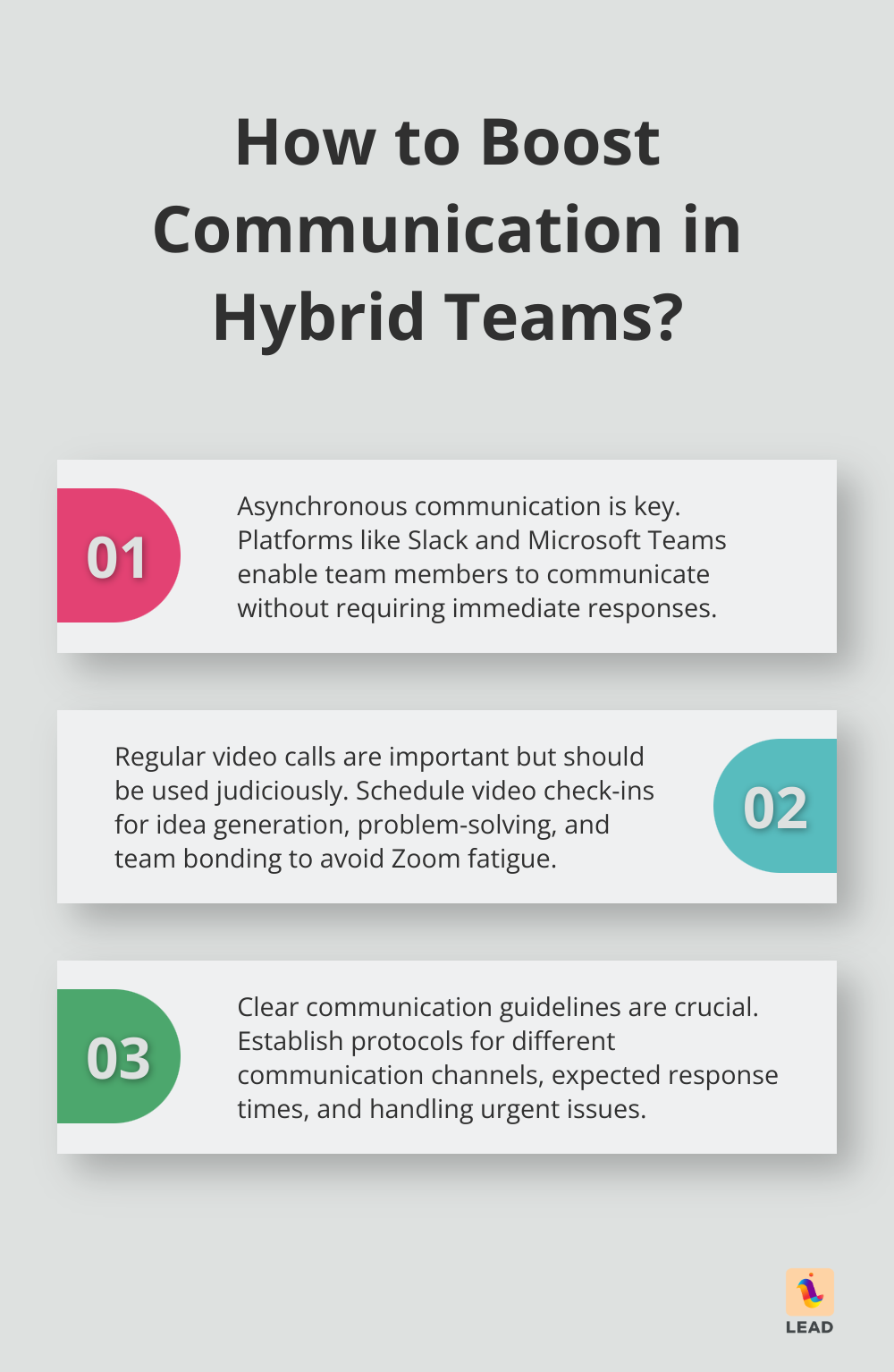
First off, you gotta pick your weapons wisely. Slack and Microsoft Teams – big players here. They do messaging, file sharing, video calls – the whole nine yards. And don’t forget, LEAD.bot integrates like a dream with these, throwing in features like virtual coffee chats and Sync-Ups (these are gold for spontaneous chats that hybrid teams usually miss).
For project management? Look no further than Asana or Trello – they offer visual task tracking to keep everyone rowing in the same direction. And speaking of teamwork, new research from Atlassian sheds some light on the health of teams, especially in today’s topsy-turvy work world.
Establish Clear Communication Protocols
After you’ve got your tools, it’s time for some rules. Lay down the law on how and where to communicate. Quick updates on Slack, formal stuff over email, and deep-dive discussions via video calls. Be deliberate about this, folks.
Set expectations for response speeds, too. Did you know a RescueTime survey found that a whopping 40% of knowledge workers never get more than half an hour of uninterrupted time? Which is… nuts. So, combat this with “focus time” – create spaces where your team can hit their groove uninterrupted.
Create a Single Source of Truth
You need a one-stop shop for info – a centralized hub. Whether it’s a slick SharePoint site, a rock-solid Notion workspace, or a detailed company wiki, make sure it’s easy-peasy for everyone to access, no matter where they are.
Empower your people to pitch in and maintain this hub. Studies have shown that sifting through files and data can eat up a big chunk of your day. Well-kept info hubs cut through the clutter and bump up productivity.
Leverage Asynchronous Communication
In hybrid land, nobody’s punching the clock at the same time. So, harness the power of asynchronous communication to bridge that gap. Tools like Loom let you drop quick video explainers – sometimes a video is worth a thousand texts, you know?
LEAD.bot’s Check-Ins feature is another ace up your sleeve, letting team members loop in updates on their terms – no real-time participation needed. It’s all about keeping everyone in the loop without cramming people into the same time slot.
Implement Regular Check-ins
Regular check-ins (one-on-one or team-wide) are the glue that keeps things from unraveling. Do them wisely – pick times that work for everyone, no matter where they’re tuning in from. Use these to track progress, tackle hurdles, and reinforce that sense of team cohesion.
With these communication strategies locked and loaded, your hybrid team is set to collaborate effectively. But remember, communication is just the opening act. Next up, let’s dive into how to cultivate an inclusive team culture that rocks – whether they’re remote, in-office, or somewhere in between.
How to Build an Inclusive Hybrid Team Culture
Implement Effective Virtual Team-Building
Zoom happy hours… meh, they usually flatline. Instead, let’s dive into stuff that actually forges real connections. You know what works? Virtual coffee chats – think of them as your digital water cooler moments, the kind that most hybrid teams long for. Here’s the thing: it’s all about carving out these informal convo spaces, which are pivotal for team unity.
And here’s a nifty idea: skill-sharing sessions. Get your team to swap some knowledge bombs every month – from work tips to quirky hobbies. These little powwows don’t just tighten the team but juice up that ongoing learning gig.
Level the Playing Field in Meetings
Hybrid meetings? Usually a mess, letting the in-office folks steal the show. Cue the ‘remote-first’ tactic – everyone jumps on video, even in-office peeps. Boom, level playing field.
Digital tools like virtual whiteboards become game-changers here, making sure those remote voices are heard loud and clear. Oh, and why not toss in a ‘remote advocate’ for every meeting? They’re your watchdog for keeping the offsite crew in the loop.
Recognize Achievements Across the Board
Acknowledgment in hybrid Land? Tricky, but oh so vital. Have a slick digital recognition system to catch everyone’s efforts, no matter where they’re tuning in from. LEAD.bot’s Check-Ins feature – it’s golden. Keeps those achievement shoutouts rolling in.
Recognition shouldn’t just wear a suit; hit those personal milestones too – birthdays, anniversaries, or a life win here and there. This strategy? It nurtures a human-centric vibe, valuing folks as whole people, not just office drones.
Foster Open Communication Channels
Let’s talk open comms – multiple lanes for everyone to cruise. Think Slack channels, town halls, anonymous feedback routes. The mission? Making each team member feel heard and important, no matter where they clock in from.
Promote Inclusive LEAD.botership
LEAD.boters need to dial up inclusivity – factor in time zones, offer equal career lift-offs whether you’re a cubicle dweller or a homebody, and coax insights from every corner of the team. Inclusive leadership isn’t just good – it’s transformative: more flexibility, nicer work-life blending, and tailored employee experiences right in the hybrid universe.
As we stride ahead, let’s figure out how to fine-tune those hybrid workflows for a productivity and collaboration boost.
How to Streamline Hybrid Workflows
Define Clear Roles and Expectations
Crystal clear roles – that’s the name of the hybrid game. You gotta draw up those job descriptions with laser precision. Spell out responsibilities, KPIs, and what you expect each team player to knock out of the park. Why? So tasks don’t get jumbled up like a bad game of Twister, and everyone knows their lane.
Nail down who gets the final word on which decisions. There’s gold to mine from how remote-first outfits handle these things – boosting your org’s health in the process. Dive into that RACI matrix (Responsible, Accountable, Consulted, Informed) to untangle who does what on different projects or tasks, because nobody likes spinning in circles.
Implement Flexible Scheduling
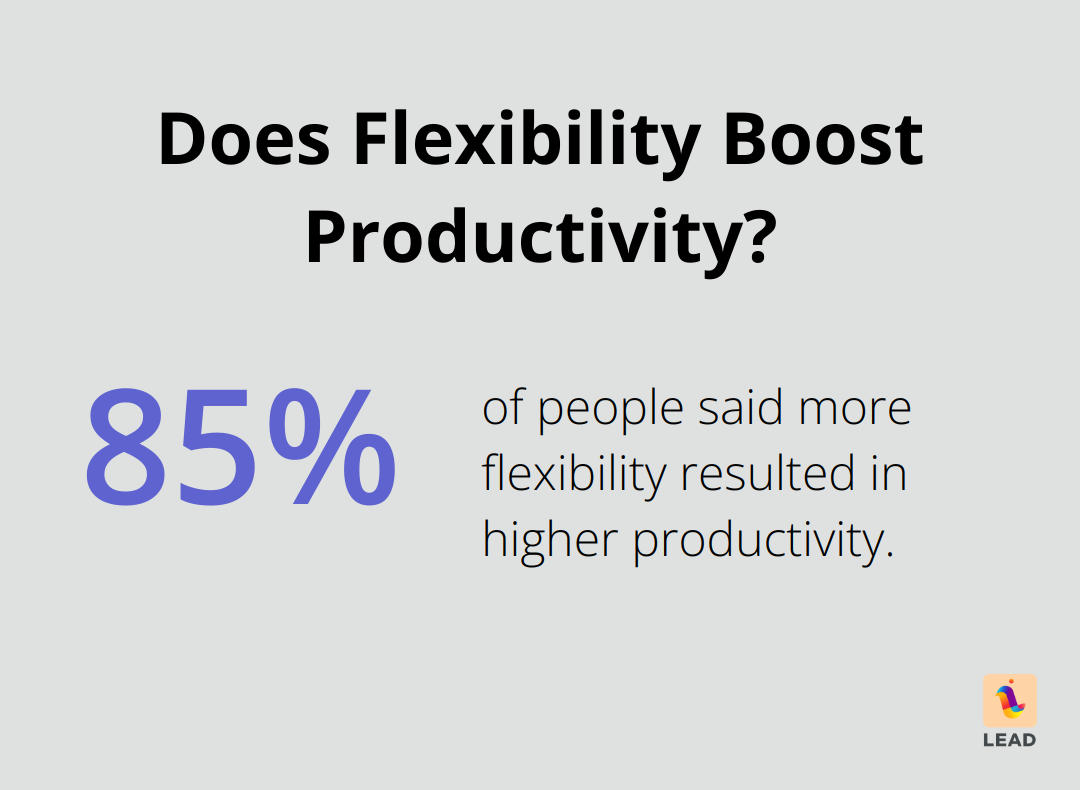
Flexible hours – they’re the backbone of making hybrid work actually work. Get those core hours set up, when everyone’s on the grid and can actually see each other (virtually, at least). But outside that window, give folks wiggle room.
Grab time-tracking tools like they’re the last piece of chicken at a picnic. Think RescueTime or Toggl. They’re there to help your crew manage their time – like a productivity GPS showing the best route.
Utilize Project Management Tools
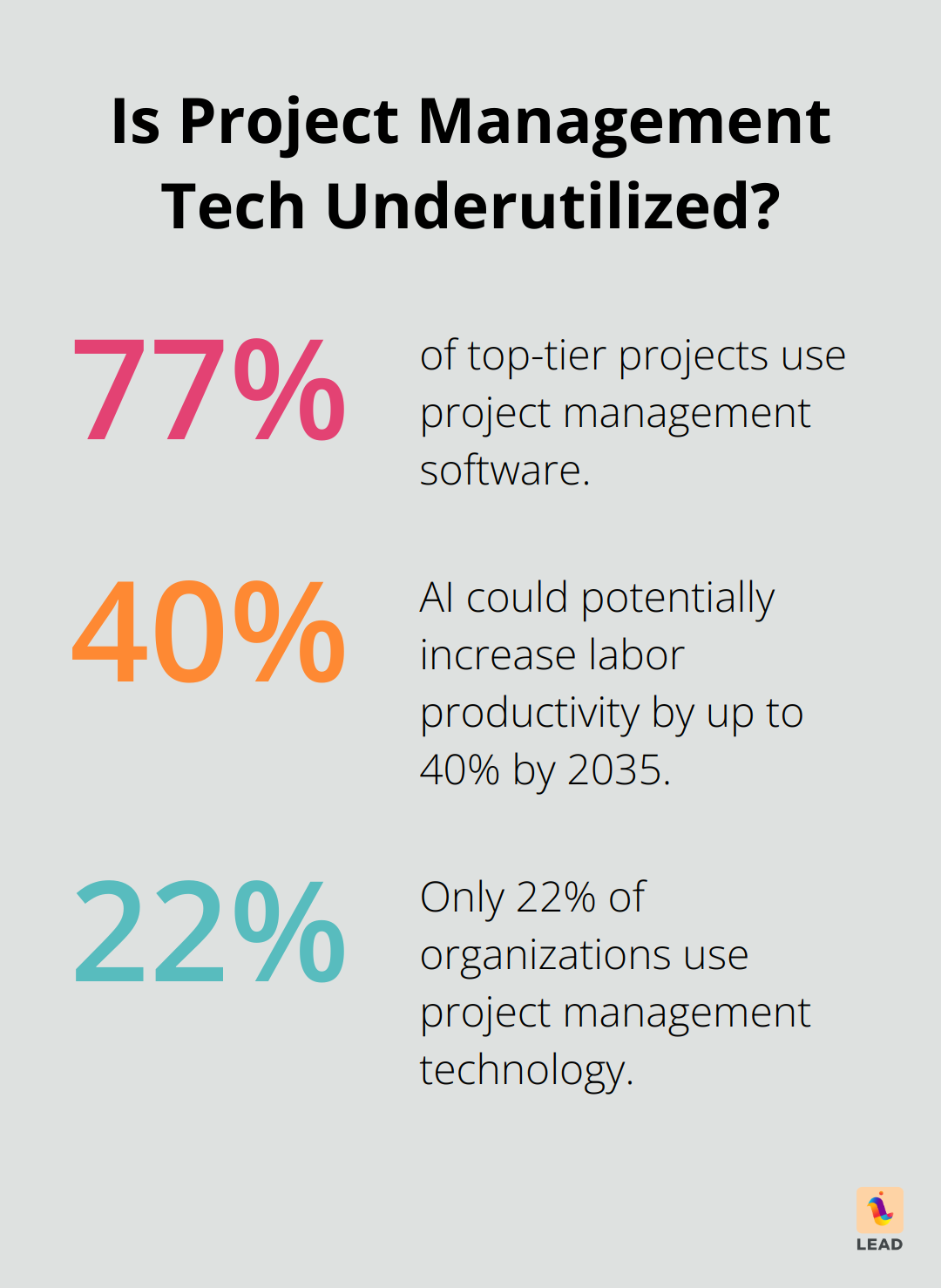
In hybrid territories, keeping track of tasks is like herding cats – you need the right gear. Tools like Asana, Trello, or Monday.com are the Swiss Army knives of task tracking: workflows, deadlines, progress – all at a glance.
When you’re picking a tool, don’t skimp on features like task dependencies, time trackers, and how they hook up with your communication gadgets. Tight integration is the secret sauce for making info dance between your tools without missing a beat.
Throw in the Kanban method for good measure – it’s like a work-in-progress reality show for your team.
Standardize Documentation Practices
Hybrid teams survive on solid documentation. Set up the rules for jotting down processes, decisions, project updates. Tools like Notion or Confluence? They’re your team’s memory bank.
Create a rhythm where folks log their work progress daily. It’s the unsung hero of async updates, and your go-to reference when it’s time for performance reviews or dissecting what went wrong on a project.
Leverage Collaboration Tools
If you want collaboration to flow no matter if someone’s home or at the office, invest in the right gear. LEAD.bot? It’s a standout choice for juicing up collaboration and employee engagement – especially when you hook it into Slack or Microsoft Teams.
Look for features like virtual coffee chats and Check-Ins. They’ll boost morale and keep productivity humming. These tools are the bridge from couch to cubicle, building a workplace that’s connected and wired for innovation.
Final Thoughts
Hybrid team collaboration… it’s not rocket science, but it’s not a walk in the park either. You’ve gotta nail a bunch of moving parts. Clear communication? Check. A team culture that’s welcoming to everyone? Double check. And you can’t forget optimizing workflows – ’cause let’s face it, without that, we’re just spinning our wheels. The office game is changing fast, and if your strategy is stuck in place, you’re gonna get left behind.
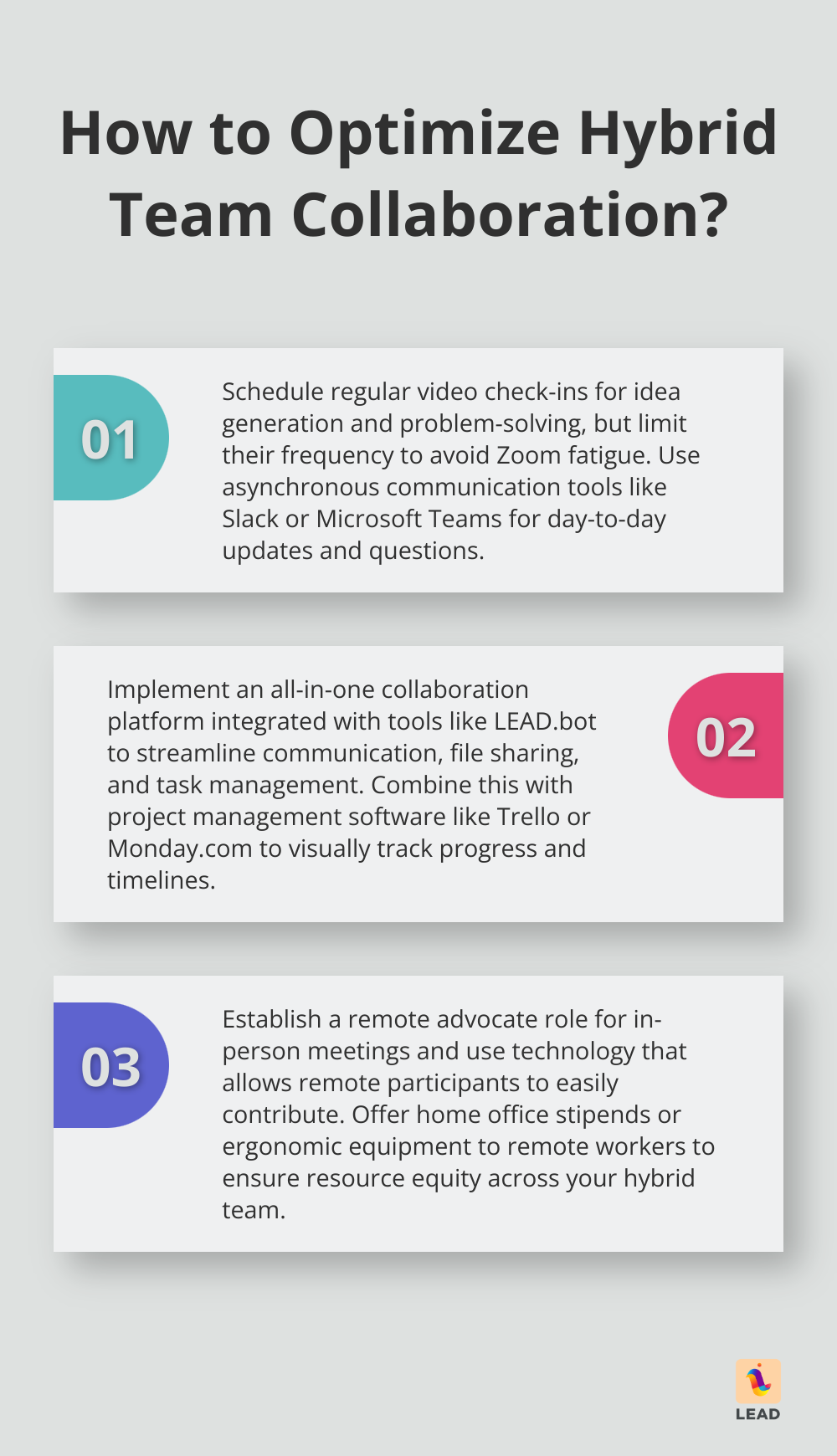
Enter technology – the not-so-secret sauce that keeps everyone from feeling like they’re shouting into the void. LEAD.bot swoops in like a superhero with virtual coffee chats, Sync-Ups, and Check-Ins. These are more than just buzzwords (though they sound cool) – they keep your team tied together and help you see what’s actually going on under the hood with your crew.
So what’s the takeaway? If you’re not focusing on hybrid collaboration, you’re betting against the future of work. Roll out these strategies and keep your antenna up for new tricks. Your team stands to gain a boost in productivity, creativity, and – who would have thought – happiness, as we dive deeper into the brave new world of work.