
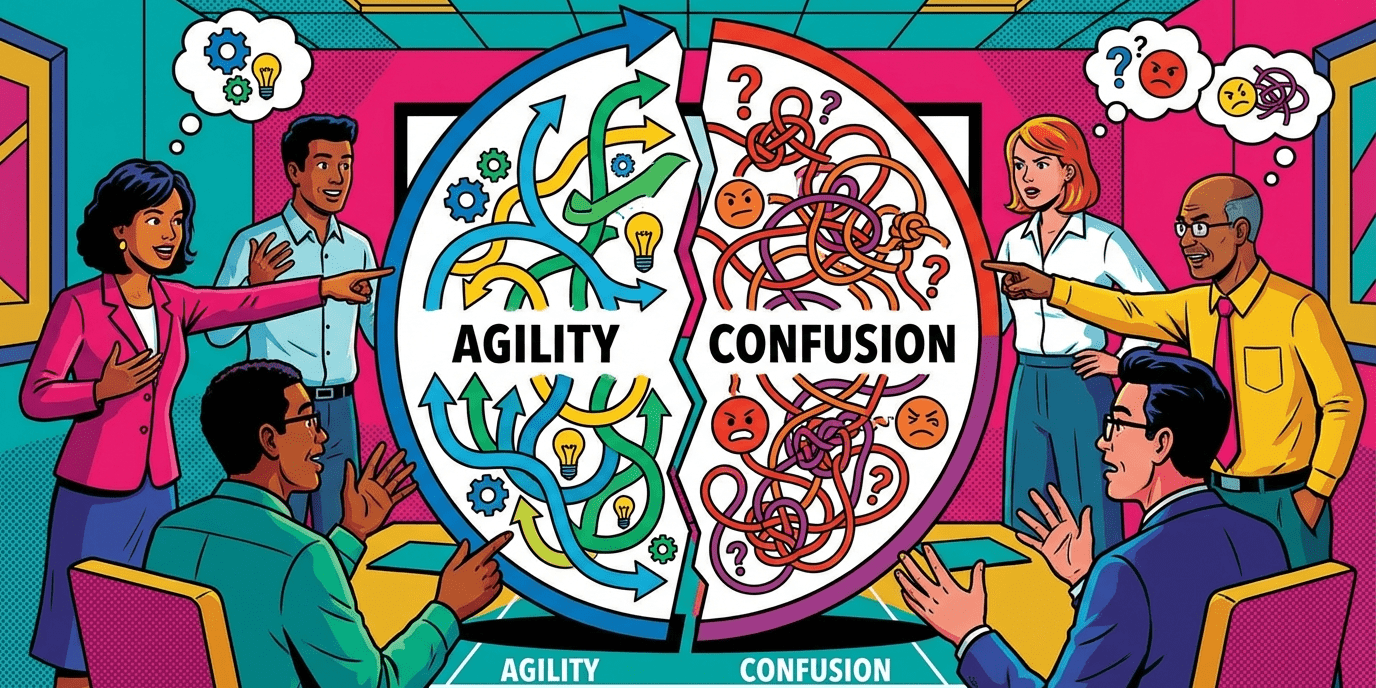
At LEAD.bot, a noticeable trend is emerging — the network of teams structure is gaining ground in modern businesses. What’s going on here? This shift away from traditional hierarchies… it’s shaking things up, opening doors for agility and innovation that the old-school ways couldn’t. But, let’s not get ahead of ourselves — every model, just like your favorite pair of sneakers, has its upsides and downsides. In this post, we’ll dive into the good, the bad, and the head-scratching aspects of this sexy new organizational approach.
What Is a Network Organizational Structure?
Redefining Organizational Hierarchy
Network organizational structures flip company operations on their head. Imagine interconnected teams – a stark departure from the old-school top-down hierarchies. It’s all about egalitarianism, nimbleness, and teamwork.
Core Elements of Network Structures
Network structures ditch those rigid command chains – take a hike, bureaucracy! Instead, employees band together based on skills and project needs, which means they can pivot faster than a cab driver in midtown traffic. This setup? It’s about squeezing the most out of talent.
The Shift from Pyramids to Webs
Back in the day, traditional hierarchies did just fine. But hey, the world’s on fast-forward now. You need to think quicker. Enter: Network structures – the answer to the need for blinding speed and agility.
Network Structures in Practice
Some trailblazers are killing it with network structures:
Take Spotify with its “squad” model. Yup, you heard that right – small, cross-functional squads zero in on specific features. And boom, Spotify stays hot in the sizzling music streaming biz.
Then there’s W.L. Gore & Associates (you know, Gore-Tex). These folks have leaned on a network structure for ages. Their “lattice” setup sparks innovation, delivering everything from guitar strings to top-notch medical devices.
And how about Zappos, diving into “holacracy” – a network structure to the extreme, if you will. It’s controversial, sure, but hey, it shows the wild potential for a radical remake of how things are done.
Tools for Network Structure Success
Thinking about making a network structure your thing? Collaboration analysis tools are your best pals here. I’m talking video conferencing, cloud software, AI… they ramp up efficiency, productivity, and team collaboration, crucial in this setup. And don’t sleep on LEAD.bot – it’s top-tier in this game, with virtual coffee chats and organizational network analysis to streamline changes and smash silos.
Network structures are beyond a fad – they’re tackling the modern business maze. They offer agility and untapped potential for innovation, leaving crusty models in the dust. Of course, they bring their own headaches. In the next section, we’ll dig deep into the perks of this organizational style.
Why Network Structures Outperform Traditional Models
Agility Redefined
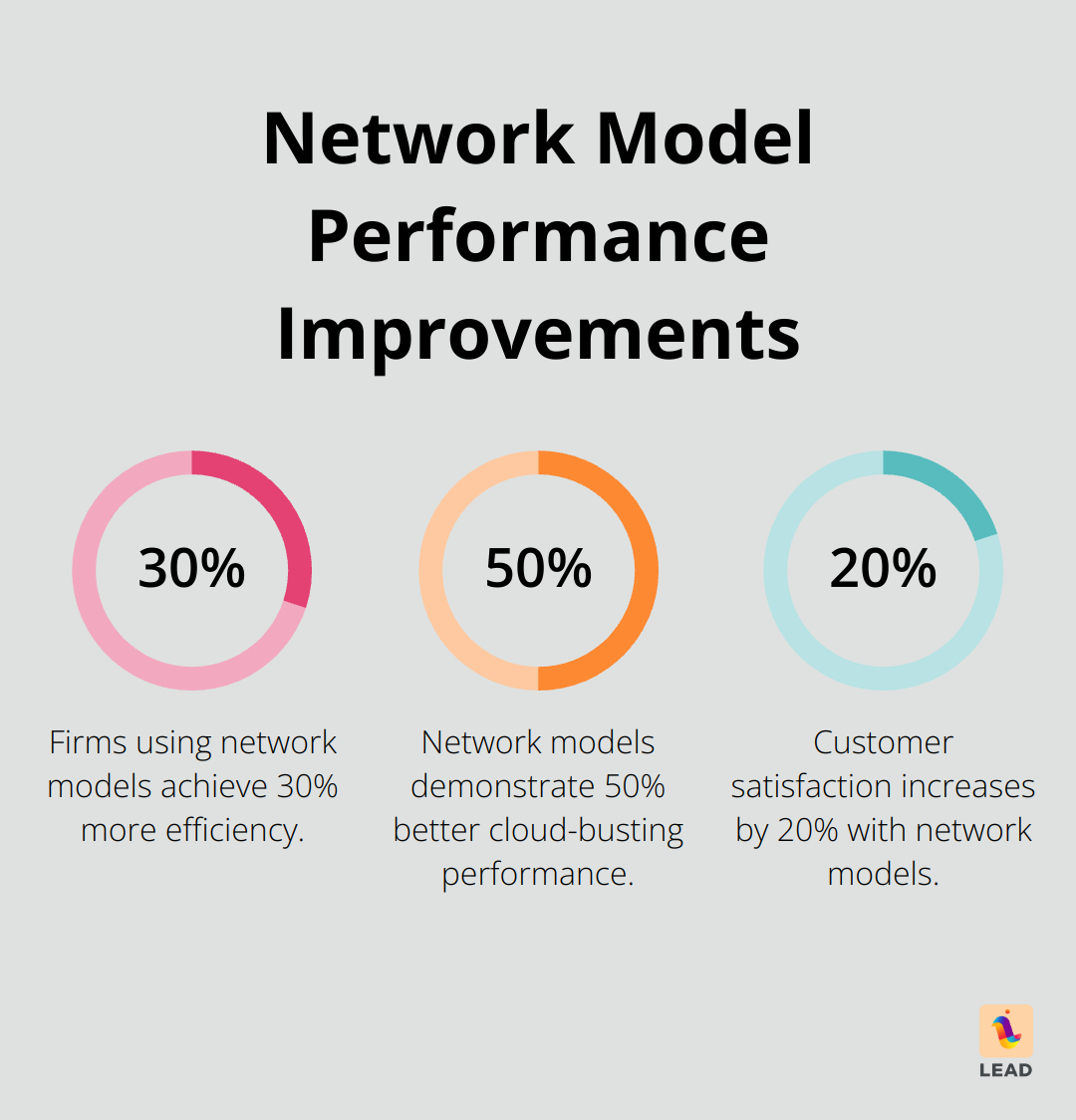
Welcome to the era of doing business at warp speed. Network structures-think of them like organizational jazz bands-inspire companies to pivot faster than a TikTok trend. When market winds change, these setups let firms remix teams and reshuffle resources quicker than you can say “McKinsey study,” which, by the way, shows agile companies are 70% more likely to land in the top tier of organizational health. This agility isn’t just theoretical-firms using network models are pulling in 30% more efficiency, 50% better cloud-busting performance, and customers? They’re smiling 20% wider.
Innovation Catalyst
Let’s talk cross-pollination. Forget about those creativity-stifling silos; network structures are the ultimate compost for innovation. Bust down those barriers and watch ideas flourish like wildflowers. Avoid falling into the usual traps-the Passive-Aggressive or Overmanaged ruts that sap creativity. Look at Procter & Gamble’s Connect + Develop program. It’s like an all-access pass to external genius, and it’s shaken up their product line like a snow globe.
Resource Maximization
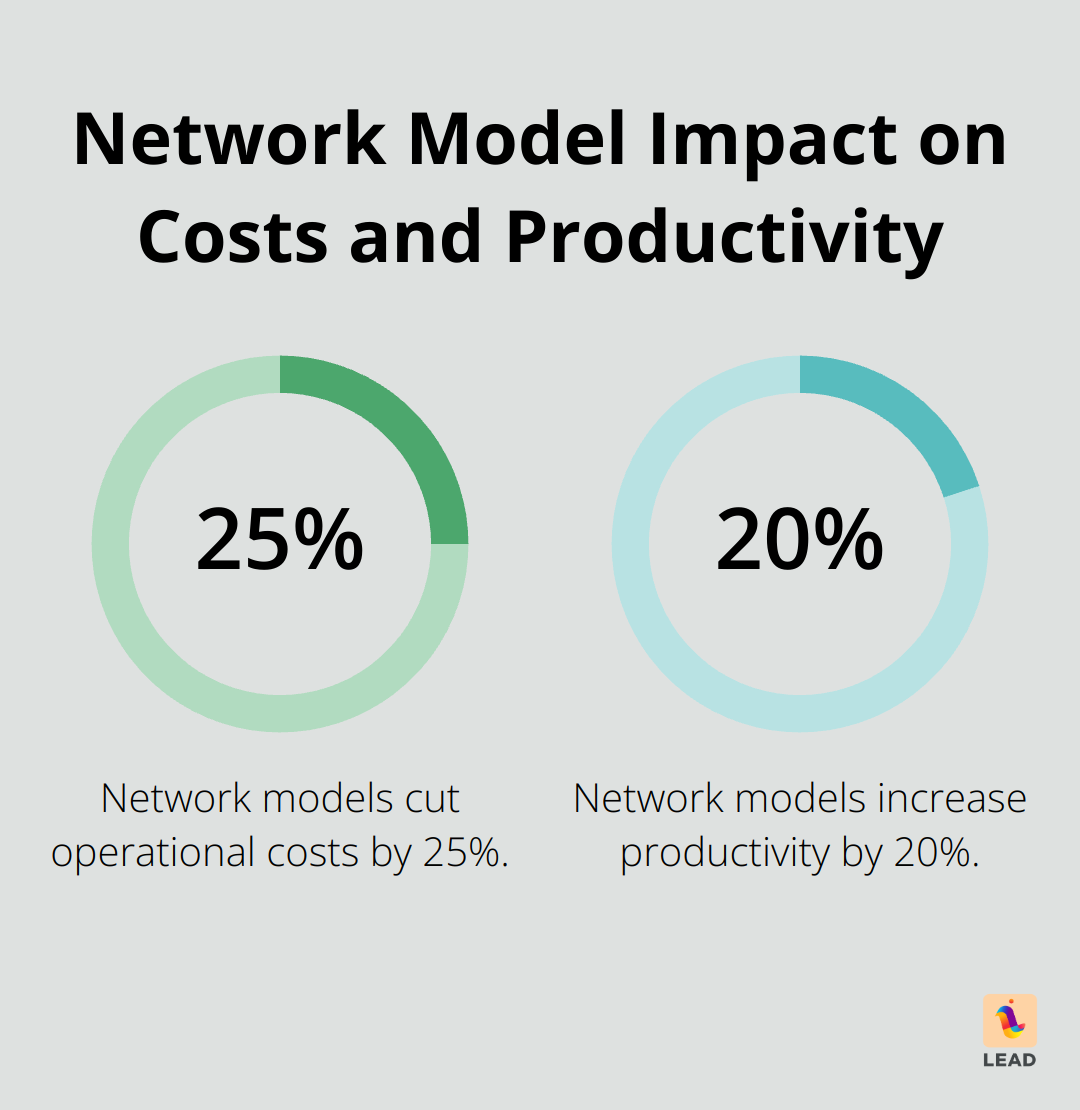
Matchmaking-not just for dating apps. Network structures are crushing it by aligning talent with projects like it’s a championship puzzle. The result? Major league cost savings and productivity hikes. Boston Consulting Group says jumping to a network model cuts operational costs by a cool 25% and ramps up productivity by 20%. This isn’t just about tightening belts-it’s about making every buck count, times ten.
Employee Satisfaction Boost
Now, let’s talk about happy campers. Network structures boost employee morale like a three-day weekend-more autonomy, richer job experiences, and room to grow. Deloitte to the rescue again; it’s proven that collaboration-centric companies outperform others by a landslide. Translation? Less turnover (up to 15% less) and revenue growth that soars 2.5 times higher than old-school setups.
Tools for Success
You can’t just wish upon a network structure and hope it runs itself. You need the tech equivalent of a Swiss Army knife-video chats, cloud software, AI wonders. Tools like LEAD.bot are trailblazers here, offering virtual coffee breaks and network analysis that disassemble silos like Jenga blocks.
So, network structures aren’t just rewriting the rules-they’re flipping the script entirely. If you’re not embracing adaptability, innovation, and employee kick-back vibes, you’re on a fast lane to obsolescence. Now, the looming question: What roadblocks might pop up as organizations navigate this networked frontier?
The Dark Side of Network Structures
Communication Chaos
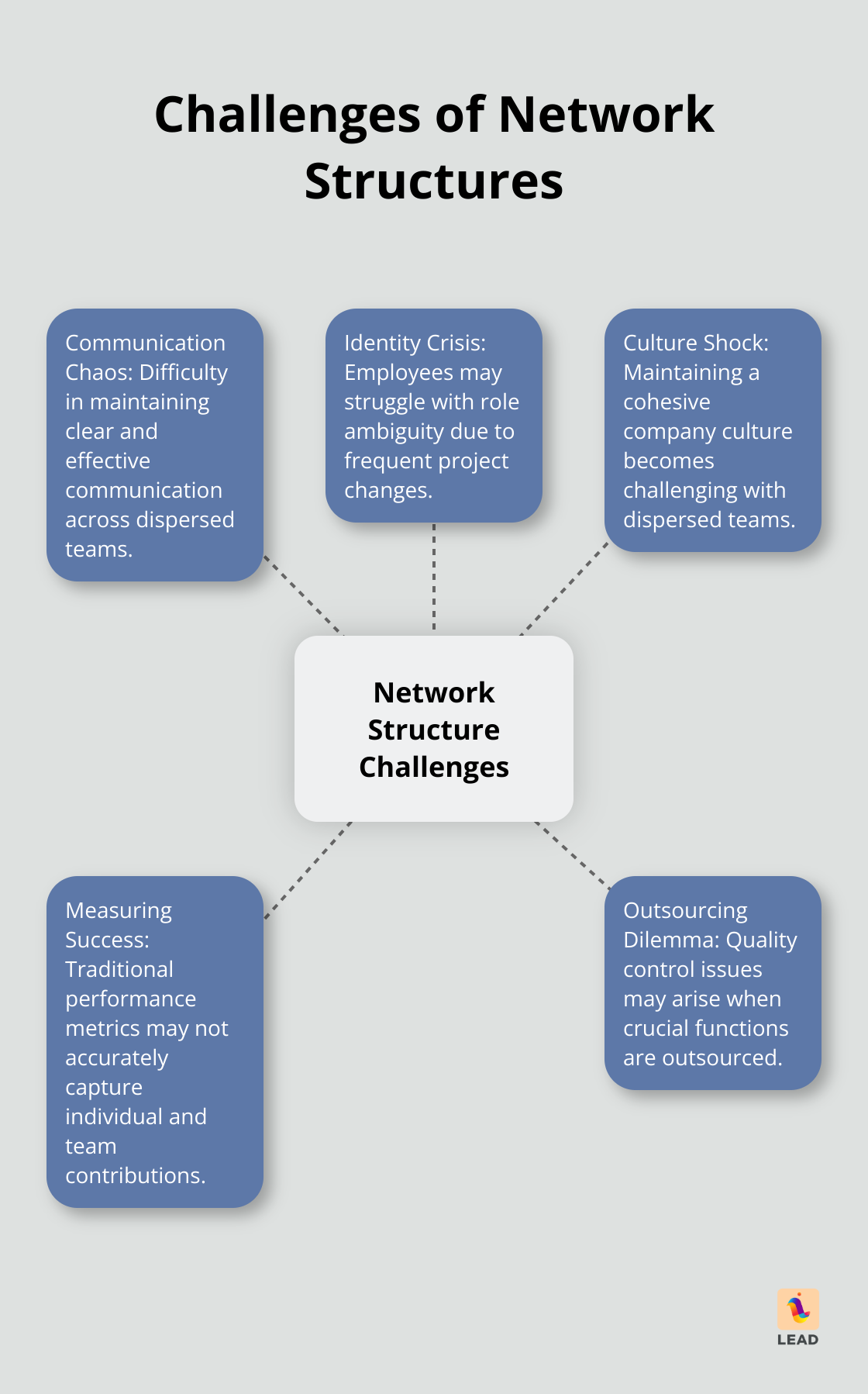
So, you’ve got network organizational structures… and communication challenges. It’s like herding cats. Various teams on different projects mean details slip through the cracks all the time. Poor communication leads to professional failures-no small potatoes. It’s a serious roadblock to getting things done.
The antidote? Companies need solid communication strategies. That means high-quality project management tools and clear channels for sharing info. (Think tools like LEAD.bot, offering virtual coffee chats and network analysis to close those gaps and keep everyone in the loop.)
Identity Crisis
Role ambiguity is the Achilles’ heel of network structures. Employees hopping between projects? They easily lose track of their roles. Result? Missed deadlines, doubled effort, and cranky team members.
Solution time. Organizations need crystal-clear job descriptions and regular check-ins. Managers must lay down explicit expectations and make sure everyone knows their role in each project. Tools that offer regular feedback and performance tracking are golden here.
Culture Shock
Keeping a cohesive company culture? With network structures? Ha! Teams are dispersed and constantly shifting-it’s a major hurdle to keep unity and shared values alive.
Intentional culture-building is the name of the game. Think team-building activities, consistent leadership messaging, and chances for cross-team mingling. Some companies hit the jackpot with digital culture initiatives-using platforms to celebrate wins and share values keeps everyone aligned. Aligning goals fosters unity and a shared vision.
Measuring Success
Traditional performance metrics-yeah, not so much with network structures. Individual output? Hard to pin down. And team success doesn’t always add up to the big picture.
Time for a metrics makeover. Focus more on project outcomes instead of individual tasks, or whip up new KPIs that capture the collaborative spirit of network structures. Regular pulse surveys can dish out valuable insights into team dynamics and overall productivity.
The Outsourcing Dilemma
Network structures love outsourcing-brings its own headaches. Quality control goes out the window when external partners handle crucial functions.
To dodge these bullets, companies need solid vetting processes for partners and strong oversight on outsourced duties. Regular audits and crystal-clear expectations are a must.
Final Thoughts
Network organizational structures-let’s face it-have flipped modern business on its head. We’re talking flexibility, innovation, and razor-sharp resource use, all of which let companies pivot like they’re in a dance-off in response to market surprises. But, hold your horses, because these setups also come with their baggage-communication mishaps, fuzzy roles (who’s doing what?), and cultural identity crises. So, companies better do their homework before diving headfirst into this web-like team structure.
The crystal ball says networks are the future… businesses chasing after agility like it’s the last train out of the station. Remote work and global talent pools? They’re pressing fast-forward on all this. We might see some funky hybrids popping up, mixing age-old hierarchies with new-fangled networks, trying to strike that perfect harmony between solid ground and adaptability.
LEAD.bot enhances workforce collaboration with a sprinkle of virtual coffee meets, some pulse surveys, and a dash of organizational network analysis. These tools? They’re like bridge-builders-smashing down silos, amping up employee vibes, and helping firms dance through organizational shake-ups. Winning in this brave new world means embracing those changes, keeping learning hats on, and letting technology lead the charge… because new work methods are here, whether we’re ready or not.