

Teams are losing time to scattered docs, duplicate work, and AI tools pulling from stale information. This guide on Types of Knowledge Management Systems Explained focuses on the practical systems, choices, and habits that make knowledge more usable. Today’s challenge is turning knowledge into something people can actually find and use across fast-moving teams.
So, let’s dive into it… the universe of knowledge management systems is vast — and a tad overwhelming. We’re talking everything from straightforward repositories to those snazzy collaborative platforms and brainy expert systems. We’ll unravel their features, spill the beans on the benefits, and throw in some stories from the trenches. All this, to help you make a smart pick for your team.
What Are Knowledge Repositories?
The Digital Vault of Organizational Wisdom
Knowledge repositories – the unsung heroes of workplace efficiency. These digital lockers are flipping the script on how businesses operate, becoming the go-to spot for storing, structuring, and scattering important info across the company.
The Anatomy of Knowledge Repositories
Think of a knowledge repository as your firm’s collective cranium. Everything’s in there – from product blueprints and customer statistics to golden rules and aha moments. And here’s the twist: it’s not just about stashing data. The real magic? Making that data a quick grab-and-go.
An IDC study spilled the beans – knowledge seekers are blowing 2.5 hours daily just hunting for info. A smartly organized knowledge hub can slash that time, serving up a nice productivity bump.
The Power of Centralized Knowledge
Centralize your data and wave goodbye to those “can’t find it” blues. This is why it’s a game-changer:
- Consistency: One single source for all truths cuts down flubs and chaos.
- Accessibility: Info’s right there for you, whether you’re onsite or couch-cruising.
- Knowledge Retention: The must-know stuff sticks around, even when the old-timers clock out for good.
- Faster Onboarding: Fresh faces dive into a sea of company wisdom, smoothing out their ramp-up.
Top-Tier Repository Tools
The marketplace is swimming with knowledge repository tools, each boasting its own flair. Here’s a taste of the top picks:
Confluence: From Atlassian, it’s a pro at whipping up documents and rallying the troops around them.
SharePoint: Straight from Microsoft, it plays nice with Office products – a no-brainer for Microsoft-loving teams.
Notion: This Swiss Army knife of a workspace is catching fire, especially amongst the startup and tech folks.
LEAD.bot: Not the usual suspect, but LEAD.bot hooks into Slack and Microsoft Teams, blasting open knowledge sharing and teamwork. It’s ace at toppling silos and connecting brainiacs organization-wide.
Pick your weapon wisely – you want something that vibes with your crew’s needs and culture. Keep an eye on simplicity, how it integrates, and its room to grow when you’re scouting for your perfect match.
Beyond Storage: Creating Living Knowledge
A killer knowledge repository isn’t just a dusty filing cabinet. It’s a live wire – growing, adapting with your biz. The value? It’s about more than hoarding info; it’s in the swift access, effortless use, and continual refresh.
LEAD.boters need to laser-focus on building a central hub where docs, assets, and core processes lounge – searchable and ever-current. Vital in our blend-together, work-from-anywhere times.
As we charge ahead, let’s dig into how joint platforms are boosting knowledge handling to new heights, sparking team spirit and creativity in ways that dusty old files just can’t crack.
How Collaborative Platforms Revolutionize Knowledge Management
The Evolution of Real-Time Collaboration
Collaborative platforms are the secret sauce transforming knowledge management… Yep, they create these dynamic playgrounds where info zooms around, and teams do their magic without a hitch. Slack, Microsoft Teams, and this little gem called LEAD.bot are the frontrunners here-melding chat with knowledge-sharing like it’s nobody’s business. That LEAD.bot-hooked up with Slack and Microsoft Teams-makes knowledge swaps as easy as pie, smashing those organizational silos to bits.
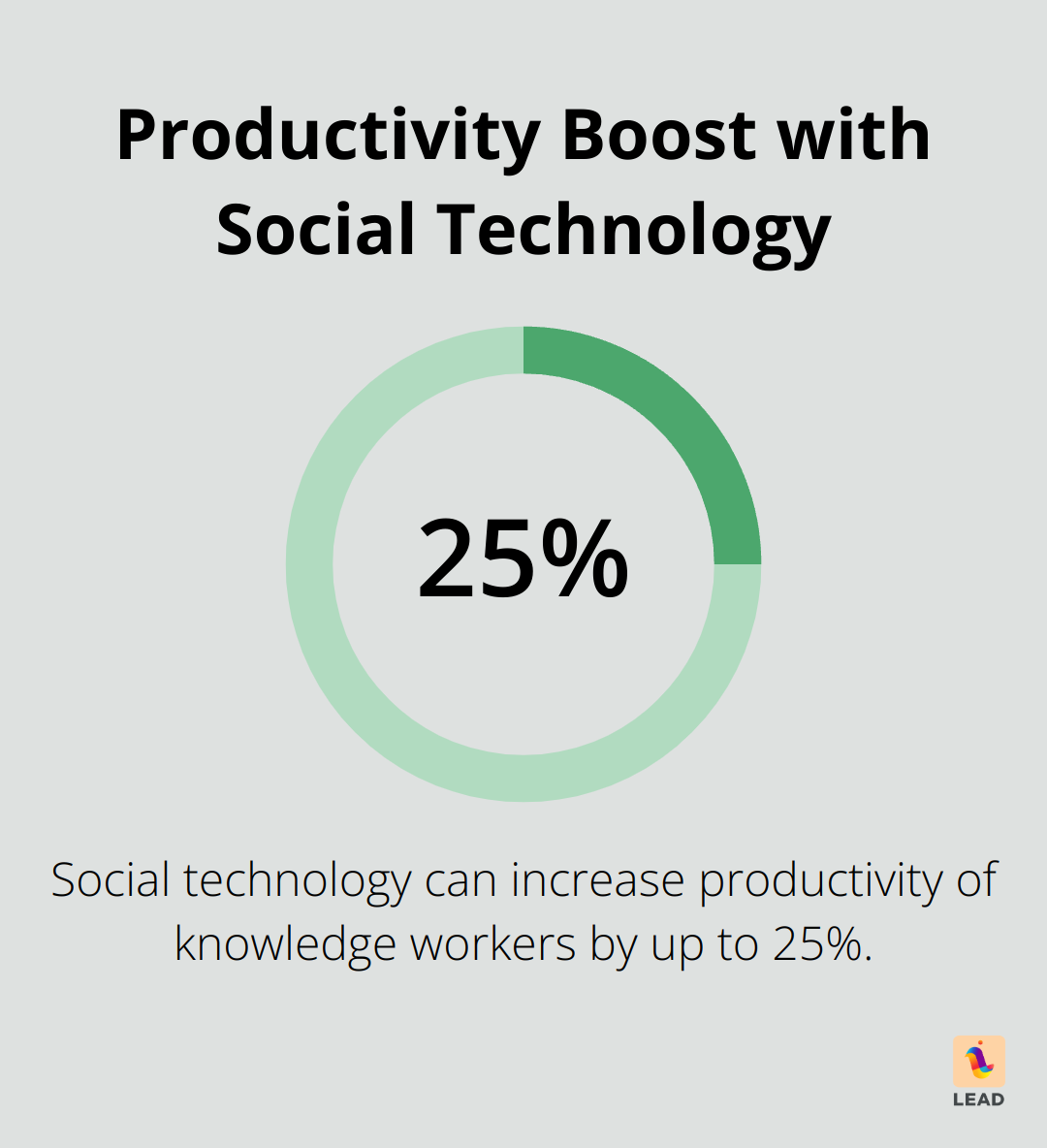
According to a McKinsey study, throwing social tech into the mix can supercharge knowledge workers by 20-25%. You heard that right.
Key Features Driving Effective Collaboration
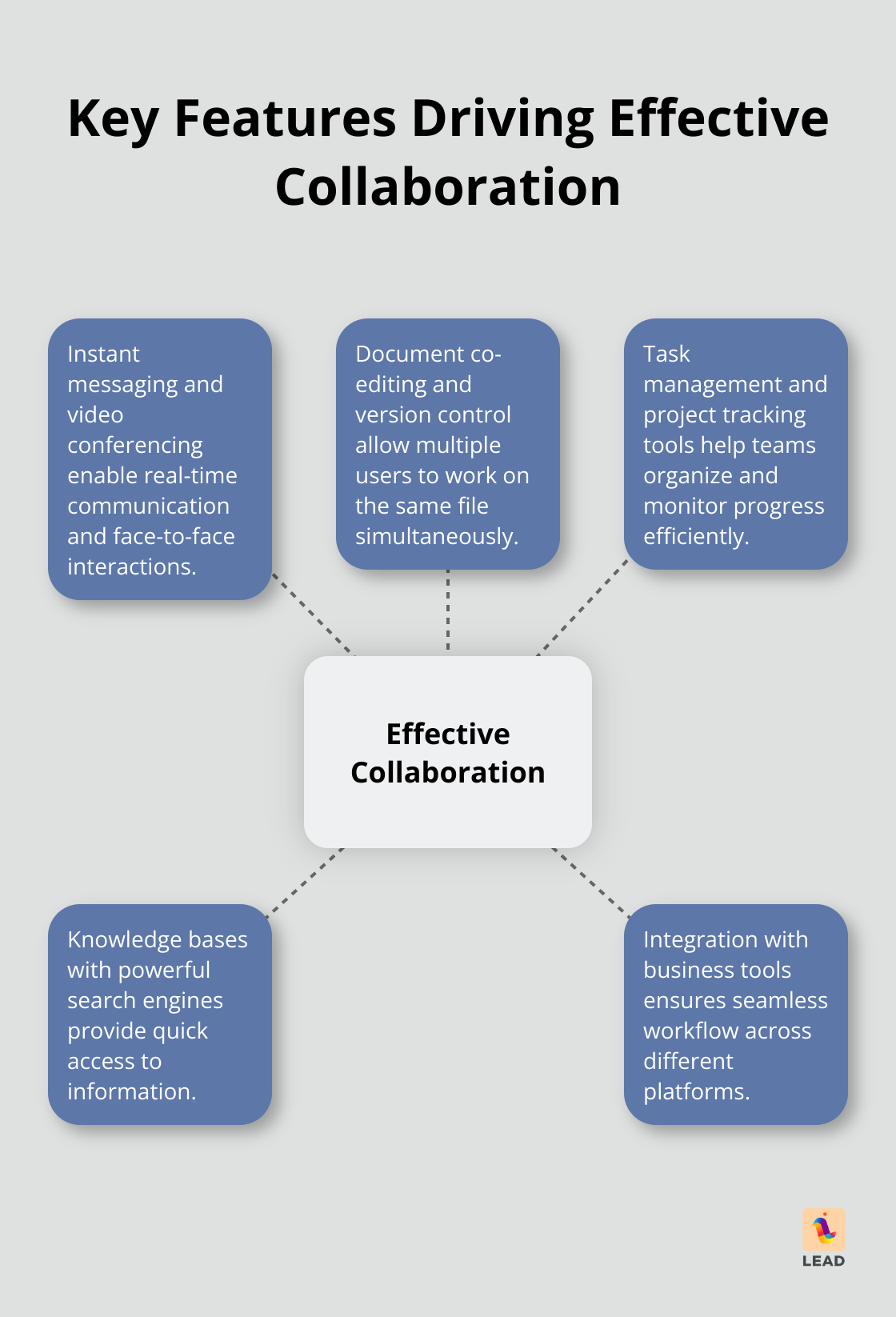
What makes these KM systems tick? Here’s the rundown:
- Instant messaging and video conferencing
- Document co-editing and version control
- Task management and project tracking
- Knowledge bases with beefy search engines
- Synchs with all your biz tools
These bits and bobs build this tight-knit space where knowledge doesn’t gather dust-it lives, breathes, and grows.
Quantifying Impact on Productivity and Innovation
What’s the scoop on boosting performance? Well, social tools in the workplace transform teams into productivity powerhouses.
And innovation? It takes off like a rocket. When team ideas bounce around and morph in real-time, innovation’s speed dial turns up. Firms embracing these platforms brag about top-notch idea success rates and their faster-than-ever product launches.
Real-World Success Stories
Over at Spotify, their custom-built platform, Backstage, is revolutionizing their development game. It corrals documentation, tools, and services, slashing setup times from weeks to hours-talk about efficiency.
Then there’s IBM; they rolled out a killer internal social network, trimming down the time spent digging for expert tidbits and cranking up employee happiness.
Even smaller outfits cash in. A mid-sized marketing agency shaved time off project completions by integrating a slick KM system, thanks to smoother info flow and less inbox mess.
The Cultural Shift
Setting up a killer KM platform? Oh, it’s more than software-even more culture shift. It’s about making the leap toward transparency and active participation. LEAD.boters gotta step up, be the champions of knowledge sharing-show people the way.
Looking ahead, the line between knowledge management and collaboration tools is blurring. These integrated wonders, making knowledge sharing second nature, will reign supreme. But what’s next? Enter the powerhouse duo-expert systems and AI, pushing knowledge management’s boundaries into new realms.
How AI Supercharges Your Knowledge Management
The AI Revolution in Knowledge Systems
AI-a buzzword that’s reshaping everything, everywhere, all at once (okay, maybe not everything). It’s like the caffeine shot we never knew our knowledge management needed. AI captures, processes, and uses info faster than you can say “synergy,” leading to smarter and speedier decision-making. AI-driven expert systems are becoming the must-have in knowledge-heavy industries, handling volumes that would make a human’s head spin.
AI Applications Across Industries
Want drama? Look at healthcare. IBM’s Watson for Oncology steps into the ring, analyzing patient data and medical literature to dish out personalized treatment plans-potential game-changer for patient outcomes.
Over in the legal sector, it’s all about the time-crunch. AI combs through those endless piles of documents-case laws, statutes, you name it. Lawyers find the goodies in minutes instead of spending hours eyeballing the fine print.
Financial institutions? They’ve got AI-backed tools for sniffing out risk and fraud. Enter JPMorgan Chase’s COIN (Contract Intelligence) program-reviews commercial loan agreements in seconds, saving a cool 360,000 lawyer hours each year. Yep, you heard right.
And in manufacturing? It’s predictive maintenance riding in like a boss. These systems use machine learning to analyze sensor data from equipment. Companies fix things before they explode-less downtime, less cost. GE Power reports a 5% production uptick thanks to this tech wizardry.
Quantifiable Impact of AI on Knowledge Management
AI isn’t just a pretty face-it makes knowledge management pack a punch. Accenture’s crystal ball says AI could double annual economic growth rates by 2035. For knowledge management, AI systems:
- Slash info search time by up to 95%-is the time-sucking proverbial haystack going extinct?
- Crank up decision accuracy by a solid 25-50%
- Boost employee productivity by 20-30%-and that’s before coffee.
Implementing AI in Your Knowledge Strategy
Ready to make AI your new best friend?
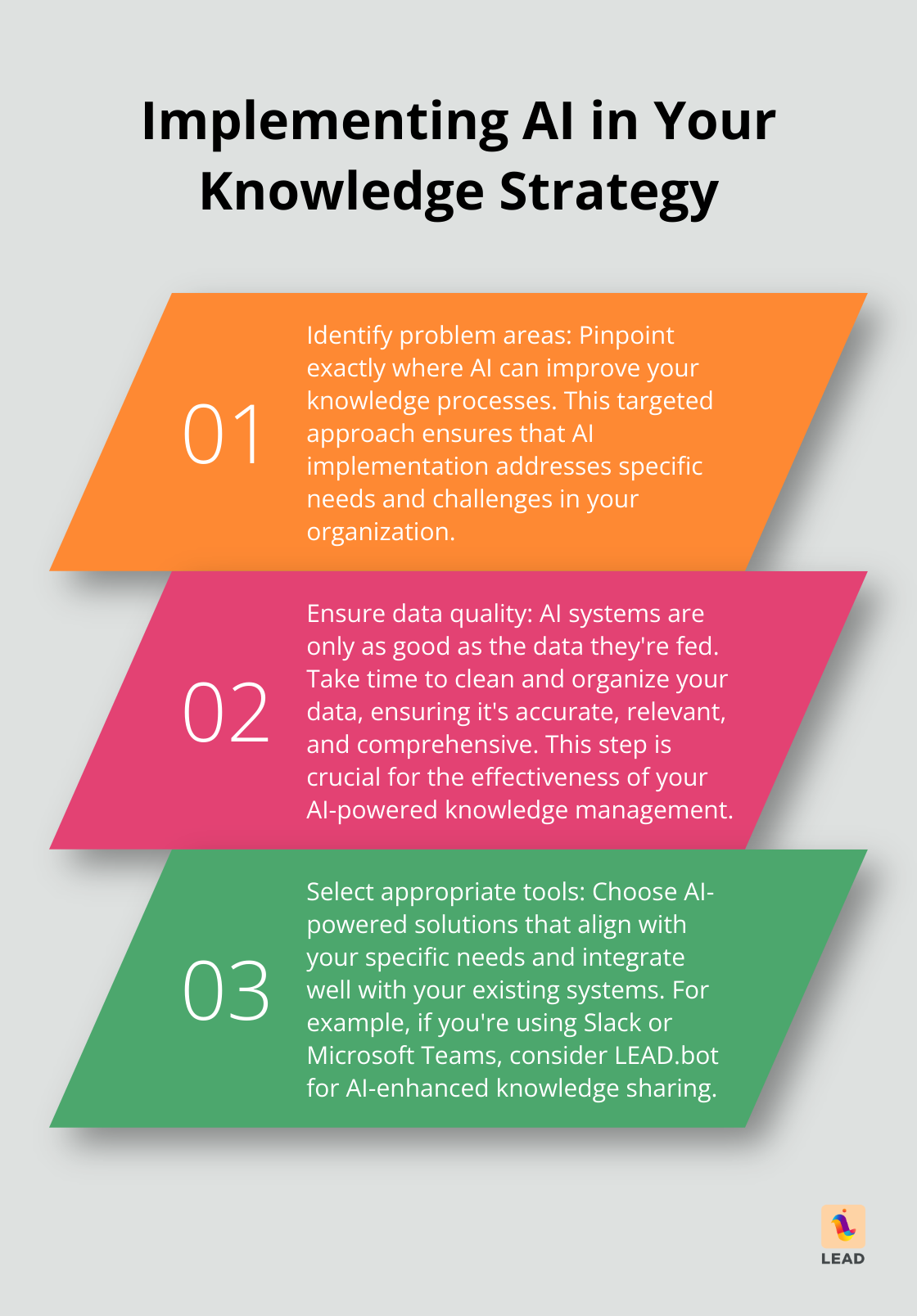
- Nail the problem spot. Find out exactly where AI can jazz up your knowledge processes.
- Don’t skimp on data quality. AI is only as good as its raw material. Time to clean house.
- Get the right tools. Find AI-powered solutions that fit your needs like a glove. (Using Slack or Microsoft Teams? LEAD.bot’s got AI-smarts for knowledge sharing tailored just for you.)
- School your crew. Make sure everyone’s clued up on how to roll with AI-powered systems.
- Keep your eye on the prize. AI learns. Check in on performance and tweak as you go.
The Future of AI in Knowledge Management
AI in knowledge management isn’t standing still-it’s sprinting. The next big thing is the human-machine mashup, crafting truly intelligent organizations. This tandem promises to revolutionize how we cook, spread, and use knowledge at work. Fasten your seatbelt; it’s gonna be a wild ride.
Final Thoughts
So, here we are – knowledge management systems have morphed from dusty filing cabinets into these AI-powered beasts that are flipping the script on how we handle information. Organizations now have a smorgasbord of options, from centralized data vaults to collaborative platforms that juice up innovation. Throw AI into the mix, and you’ve got systems that make decisions faster than a cat on a hot tin roof and churn through knowledge with ease across the board.
Picking the right system? It’s all about aligning with that company vibe, meshing well with the gizmos you’ve already got, and growing at the pace of your ambitions. What’s on the horizon? Think tailored, AI-fueled experiences that know what you need before you do. This dance between human smarts and machine savvy will craft genuinely intelligent organizations.
LEAD.bot steps up with a killer solution for the modern knowledge battleground. It turbocharges collaboration, makes sharing second nature, and smashes those pesky organizational silos by syncing with favorites like Slack and Microsoft Teams. Nail down a solid knowledge management game plan and you’re gearing up for long-haul wins (while unleashing your business brainpower to its fullest).