

Network organizational structures are revolutionizing the business landscape, delivering a transformative edge to those who embrace them. Companies adopting these models gain unparalleled agility, efficiency, and resilience, responding to challenges with a swiftness that traditional hierarchies struggle to match. At LEAD.bot, we don’t just advocate for this approach—we’ve implemented it ourselves, witnessing firsthand how it redefines operations, accelerates innovation, and positions us at the forefront of progress.
This post offers a comprehensive exploration of why network structures are gaining prominence. We’ll examine their tangible benefits, from enhanced organizational network security to improved collaboration and elevated performance. Join us as we unpack how these adaptable, forward-thinking systems enable businesses to not only navigate but excel in today’s fast-paced, interconnected world.
How Network Structures Boost Agility
Lightning-Fast Market Responses
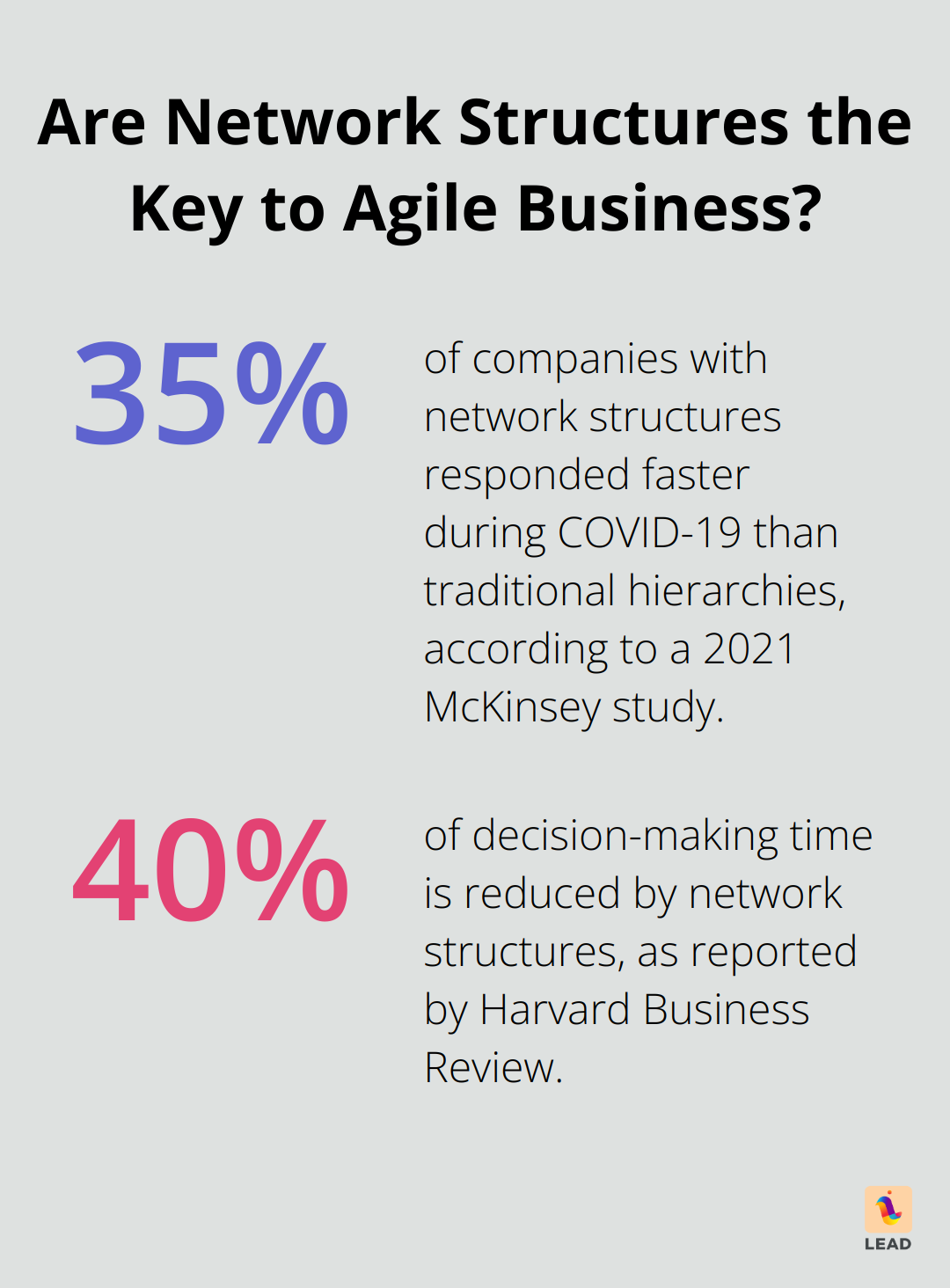
Network organizational structures serve as dynamic frameworks that enable businesses to respond swiftly to market demands in an increasingly volatile global environment. Unlike traditional models, these structures prioritize adaptability, allowing companies to adjust strategies with remarkable speed. A 2021 McKinsey study highlighted that organizations leveraging network-based approaches were 35% faster in adapting to disruptions, such as those experienced during the COVID-19 pandemic, compared to their hierarchical counterparts. This agility stems from decentralized decision-making and enhanced coordination across teams, ensuring businesses remain competitive when rapid responses are critical to success.
Scaling at Warp Speed
The ability to scale operations efficiently is a hallmark of network structures, offering unparalleled flexibility to meet fluctuating demands. These systems eliminate the rigid constraints of conventional frameworks, enabling organizations to expand or contract seamlessly. A notable example is Airbnb, which utilized a network model to extend its presence to over 220 countries within a decade—an extraordinary feat of growth facilitated by its adaptive structure. This scalability reflects the capacity of network organizations to optimize resources and align teams dynamically, positioning them to capitalize on opportunities without the delays often associated with traditional expansion.
Breaking Down Barriers
Network structures excel at dismantling bureaucratic obstacles that hinder organizational progress. By flattening hierarchies and empowering employees with greater decision-making authority, these systems streamline processes and accelerate execution. Research from Harvard Business Review indicates that such an approach can reduce decision-making timelines by up to 40%, enhancing operational efficiency. This reduction in administrative overhead allows businesses to focus on strategic priorities rather than navigating layers of approval, fostering a culture of responsiveness and agility that is vital in today’s fast-evolving markets.
Empowering Autonomous Teams
Autonomy is a cornerstone of network organizational structures, driving innovation and problem-solving through empowered teams. By granting groups the freedom to operate independently within a broader strategic framework, organizations unlock creative potential and accelerate outcomes. Recent studies suggest that while traditional workplace well-being initiatives have limited impact on satisfaction, autonomy serves as a critical differentiator. It enables teams to tackle challenges proactively, adapt to shifting conditions, and contribute meaningfully to organizational goals, fostering a sense of ownership and accountability.
Facilitating Rapid Communication
Effective communication is essential to organizational success, and network structures are uniquely adept at establishing open, efficient channels that break down silos. By utilizing modern tools and promoting cross-functional collaboration, these systems ensure that information moves fluidly throughout the enterprise. This connectivity strengthens coordination and supports swift decision-making—a critical advantage in fast-paced environments where delays can undermine competitiveness. The adoption of cutting-edge communication technologies further enhances this capability, enabling organizations to align efforts, exchange insights, and respond cohesively to emerging opportunities or challenges.
Beyond maintaining pace with market demands, this agility positions companies as leaders, primed to drive progress. A closer look reveals that network structures not only facilitate rapid information flow but also spark innovation and disseminate knowledge with remarkable efficiency, amplifying organizational intelligence and fostering a culture of shared expertise.
How Innovation Thrives in Network Structures
Network structures serve as a powerful catalyst for innovation, dismantling traditional barriers and enabling ideas to flow freely across organizational boundaries. By breaking down departmental silos, these systems accelerate the exchange of concepts and insights, fostering an environment where creativity thrives. This dynamic connectivity acts as a force multiplier, driving innovation to new heights and unlocking potential that rigid, conventional frameworks often stifle.
Diverse Expertise Unleashed
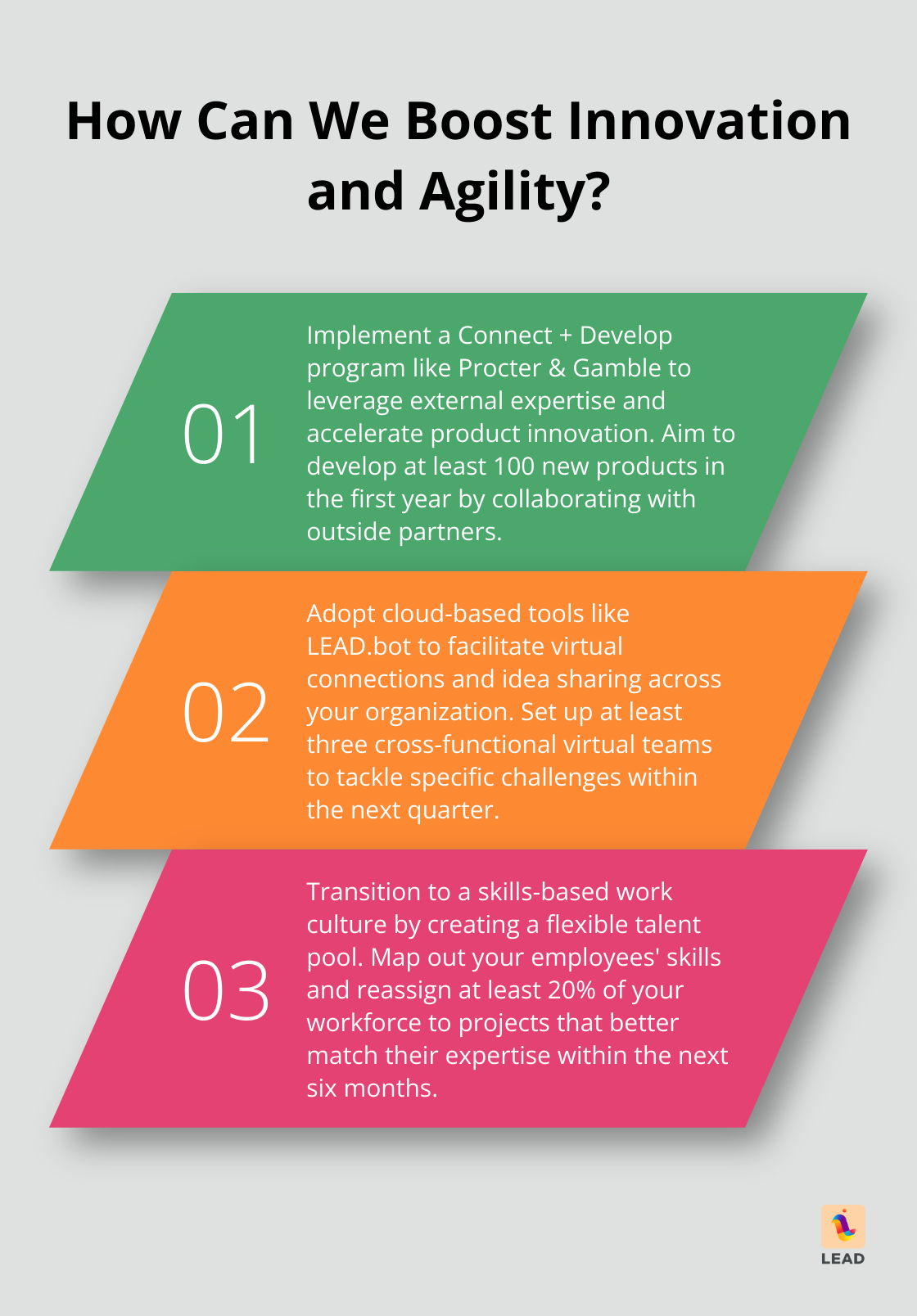
Network structures unlock access to a broad spectrum of expertise, extending beyond the confines of a single organization. Rather than relying solely on internal resources, companies can tap into a global pool of talent and specialized skills. This diversity fuels groundbreaking innovations across industries. A prime example is Procter & Gamble’s Connect + Develop program, which exemplifies the power of network-driven innovation. By integrating external expertise, P&G has launched over 2,000 new products, significantly boosting revenue while accelerating its product development pipeline. This approach demonstrates how network structures transform traditional innovation models into agile, high-impact systems.

Collaborative Problem-Solving Takes Center Stage
In network structures, collaboration takes precedence as a core driver of success. Teams—whether internal or partnered with external stakeholders—unite to address complex challenges with the precision and synergy of a well-coordinated unit. Research indicates that organizations prioritizing collaboration are five times more likely to achieve superior performance outcomes. This collaborative ethos not only yields more effective solutions but also cultivates a culture of continuous learning and improvement, reinforcing organizational resilience and adaptability.
Knowledge Sharing at Warp Speed
Network structures function as high-speed conduits for knowledge dissemination, enabling ideas and best practices to circulate rapidly throughout the enterprise. When paired with agile methodologies—a common feature of these systems—organizations see a 70% greater likelihood of ranking among top performers in organizational health, according to recent studies. This enhanced vitality directly amplifies performance and innovation, creating a virtuous cycle where shared knowledge drives sustained growth and competitive advantage.
Virtual Connections Fuel Innovation
Digital platforms play a pivotal role in network structures, bridging geographical divides and fostering seamless virtual collaboration. These tools eliminate silos, connecting individuals across regions as effectively as if they were in the same room. Such online environments serve as unexpected catalysts for innovation and rapid problem-solving, enabling teams to iterate and refine ideas in real time. LEAD.bot exemplifies this trend, equipping organizations with robust networking and idea-sharing capabilities. Its comprehensive features make it an essential tool for businesses embracing network structures to drive innovation.
How Network Structures Slash Costs and Optimize Resources
Trimming Overhead Expenses
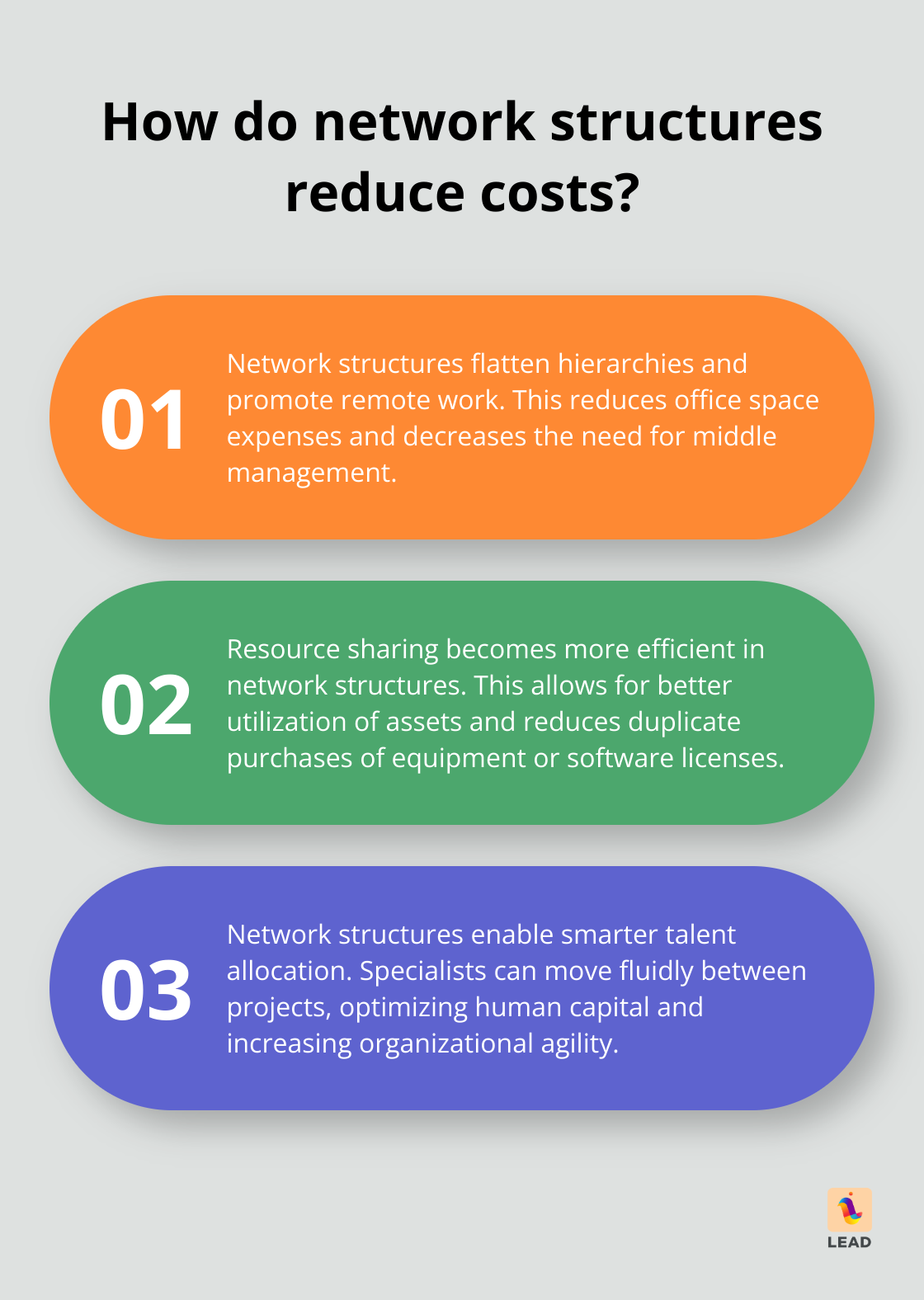
Network structures offer a strategic approach to reducing overhead costs by streamlining operations and embracing flexibility. By flattening hierarchies and integrating remote work, these systems significantly decrease the need for expensive office spaces—a shift accelerated by the widespread adoption of work-from-home models. This transformation has prompted organizations to reevaluate traditional structures, often reducing reliance on middle management. For instance, Zappos adopted a holacracy—a form of network structure—and reported enhanced productivity with a leaner managerial framework, demonstrating how such systems can optimize costs while maintaining efficiency.
Resource Sharing: A Cost-Effective Approach
Resource sharing lies at the heart of network structures, delivering greater value through efficient asset utilization. By pooling costly resources such as equipment or software licenses across teams and projects, organizations avoid redundant expenditures and maximize returns on investment. This collaborative approach transforms high-cost barriers into shared opportunities, enabling businesses to operate effectively without straining financial resources. The result is a leaner, more adaptable cost model that supports growth without excess.
Smart Talent Allocation
Network structures excel in optimizing human capital by aligning talent with organizational needs. Rather than leaving specialists underutilized, these systems deploy skills dynamically across projects, ensuring expertise is applied where it delivers the most impact. Companies adopting flexible talent strategies within network frameworks are pioneering a skills-based work culture that enhances agility and reduces inefficiencies. This targeted allocation not only trims operational costs but also maximizes the return on investment in human resources, making talent a driver of both performance and savings.
Technology-Driven Cost Reduction
Technology serves as a cornerstone for cost efficiency in network structures, eliminating the need for expensive legacy systems. Cloud-based solutions, such as those offered by LEAD.bot, replace costly hardware and software investments, enabling seamless remote work, reducing travel expenses, and streamlining communication. By leveraging these tools, organizations minimize spending on traditional IT infrastructure while maintaining operational excellence. The financial relief provided by such technologies underscores their role as a vital enabler of cost-effective network models.
Agile Project Management
Agile project management complements network structures, amplifying their cost-saving potential. By accelerating project timelines and minimizing waste, this approach ensures resources are used efficiently and effectively. The inherent nimbleness of agile methodologies translates into tangible savings in both time and capital, allowing organizations to deliver results with greater precision. This efficiency enhances the overall economic advantages of network structures, reinforcing their value as a forward-thinking solution for resource optimization.
Final Thoughts
Network organizational structures are fundamentally reshaping how businesses operate in the modern era. This approach prioritizes exceptional flexibility, enabling organizations to pivot swiftly in response to market shifts, scale operations with ease, and enhance overall efficiency. By dismantling traditional hierarchies, these systems empower teams to act autonomously, accelerate decision-making, and ignite creativity—unleashing a wave of innovation that propels companies forward.
From a financial perspective, network structures offer significant advantages. They streamline overhead costs with precision, leveraging talent optimization, technology-driven communication, and heightened productivity to maximize resources. However, this model is not without its challenges. Maintaining accountability can become complex in decentralized systems, risking a diffusion of responsibility, while over-reliance on external partners may introduce vulnerabilities. Striking the right balance is critical to realizing the full potential of this approach.
As organizations pursue agility and strive to outpace competitors in innovation, network structures will play an increasingly central role. Tools like LEAD.bot are proving indispensable, providing robust solutions for virtual collaboration and reinforcing organizational resilience. In essence, network structures are not a fleeting trend—they represent a enduring shift, empowering businesses to harness their capabilities and thrive in an ever-evolving landscape.