Employee Connection Programs: The Three Workflows Every People Team Should Automate
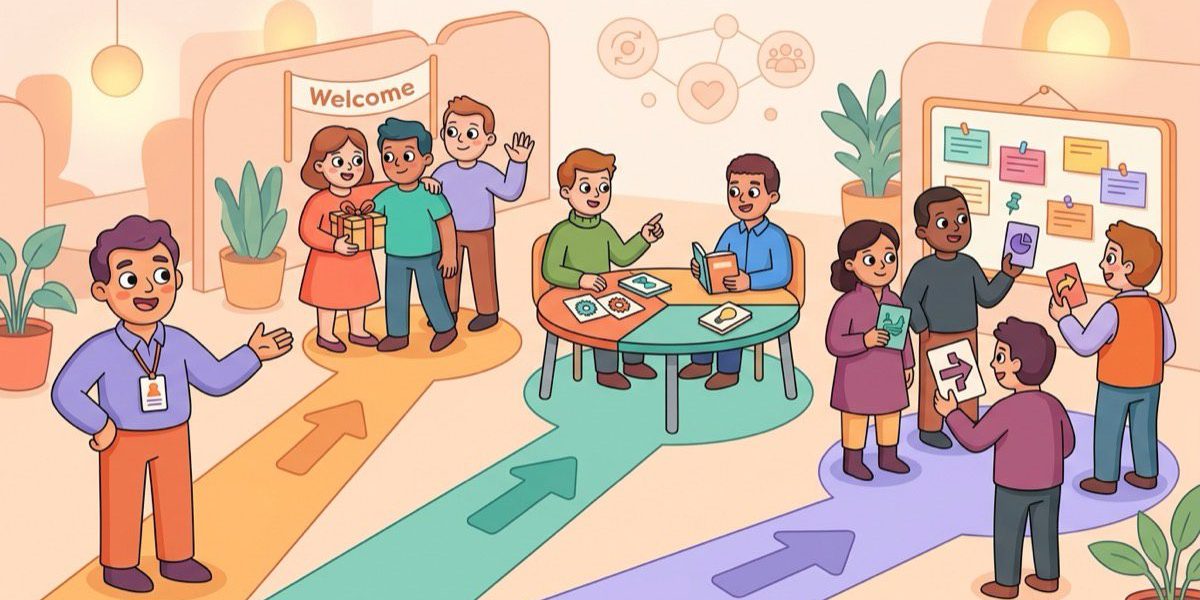
An employee connection program works best when it is tied to real work: onboarding, mentoring, and knowledge sharing. Instead of asking people teams to manually pair employees every month, the program should make the right introductions inside Slack or Microsoft Teams, then help you see whether those connections are improving team connection and organizational network health.
Why casual connection is not enough anymore
Most people teams do not have a connection problem because employees dislike one another. They have a routing problem. New hires do not know who can explain the informal rules. Managers do not know which peer would be a useful mentor for a high-potential employee. Remote teammates miss the casual moments that help office-based colleagues build trust faster. Cross-functional projects slow down because the right expert is three introductions away.
Casual coffee chats can help, but they are not a complete operating system for team connection. If pairings are random, the best outcome is a pleasant conversation. The harder question is whether that conversation helps someone ramp faster, find a hidden expert, build a mentoring relationship, or understand how another team really works.
This is where LEAD.bot should be treated as a structured employee matching layer, not just a chat scheduler. The goal is not more meetings. The goal is better trust paths across the company.
Workflow 1: onboarding buddies that last beyond week one
New hire onboarding often starts strong and then fades. The first week is packed with orientation, documents, and welcome messages. By week three, the new employee is expected to navigate the informal network mostly alone. That gap is where confusion, duplicated effort, and avoidable manager dependency show up.
A stronger onboarding buddy workflow starts before the new hire needs help. Match each new hire with a buddy who can answer practical questions, explain team norms, and introduce the people behind the org chart. The match should account for department, location, work style, and relevant experience. It should also avoid overloading the same helpful employees again and again.
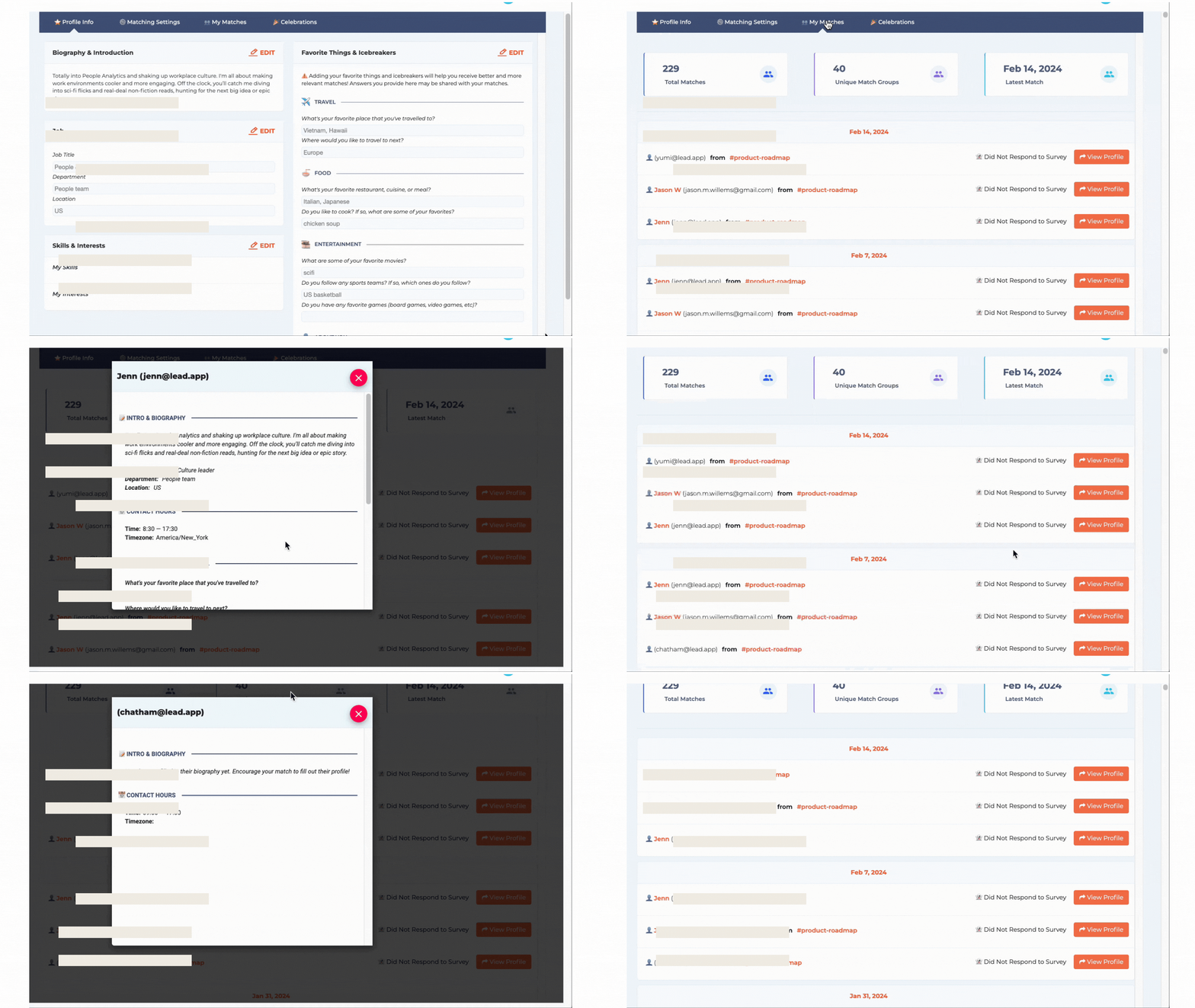
When the workflow runs inside Slack or Microsoft Teams, the buddy relationship becomes easier to maintain. LEAD.bot can support onboarding buddies as part of a broader employee integration program, which helps people teams move faster without turning every introduction into a spreadsheet project. LEAD.app approved materials cite the ability to speed up 40% of employee integration through new hire onboarding and post-merger connection programs, which is exactly the type of outcome an onboarding buddy workflow should be built to support.
Workflow 2: mentoring pairs that create useful knowledge sharing
Mentoring programs often fail when they begin with a sign-up form and end with a calendar invite. Employees may want mentoring, but they do not always know who to ask. Senior employees may want to help, but they need clear matching logic so the program feels useful instead of random.
For people teams, the practical move is to define the purpose of each mentoring track. Is the goal leadership pipeline development? Peer learning? Reverse mentorship? Cross-department skill sharing? Each goal needs different matching criteria. A new manager may need a mentor who has handled similar team changes. A product employee may benefit from a customer-facing partner who understands field feedback. A rising leader may need exposure outside their immediate function.
LEAD.bot supports matching across use cases such as peer learning, speed mentorship, reverse mentorship, and mentor skill sharing. That matters because mentoring should not be treated as one generic program. It should be a repeatable workflow that helps employees find the right guide for the problem they are actually trying to solve.
Workflow 3: cross-team knowledge sharing before silos harden
Knowledge sharing is usually discussed as a documentation problem. Documentation matters, but many questions are social before they are searchable. Who has solved this before? Which team owns the edge case? Who understands the customer history? Which colleague can explain why a process works the way it does?
If those answers depend on personal networks, newer employees and remote employees are at a disadvantage. They may be capable, motivated, and well-trained, yet still outside the trust paths that make the company move quickly. A cross-team knowledge sharing workflow makes those paths more visible and more intentional.
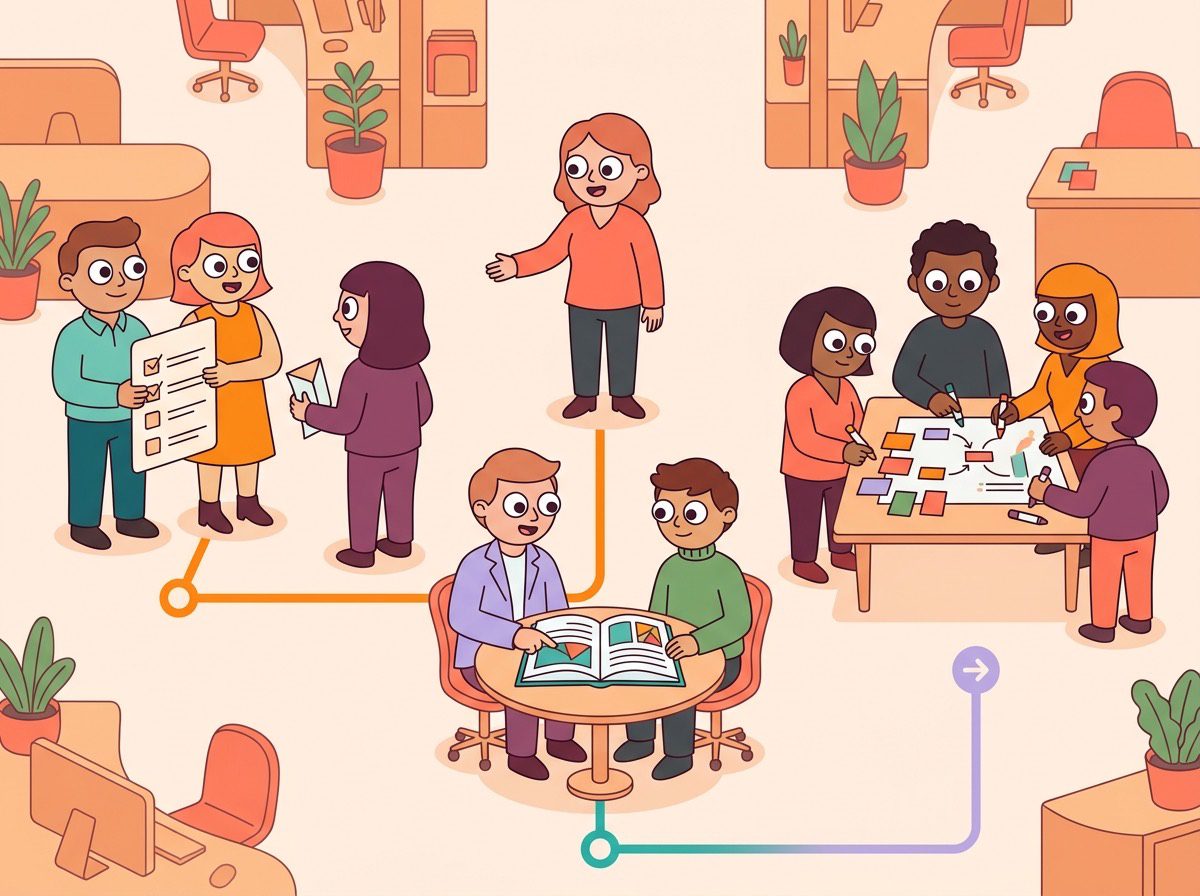
Start with moments where knowledge gets stuck: onboarding, post-merger integration, regional silos, duplicated work, and cross-functional handoffs. Then design employee matching around those bottlenecks. Pair people across departments for targeted learning conversations. Rotate knowledge-sharing matches by topic, not just by availability. Use pulse surveys and relationship intelligence to understand whether employees are building the right connections over time.
For a people team comparing employee connection platforms, this is the difference between “people talked” and “knowledge moved.” The stronger program gives employees better access to who knows what, while giving HR enough visibility to improve the program without micromanaging every relationship. LEAD.bot is built for that practical middle ground: human connection with enough structure to improve outcomes.
How to run the program without creating admin burnout
The risk with any employee connection program is that it becomes another manual operating burden. If your team has to export a spreadsheet, check every pairing by hand, send reminders, and chase participation, the program will eventually slow down.
A better operating rhythm is simple. First, define the use case: onboarding buddy, mentoring, knowledge sharing, or cross-functional collaboration. Second, set the matching inputs that matter for that use case, such as team, location, seniority, interests, skills, or start date. Third, automate the pairing and reminders inside the collaboration tools employees already use. Fourth, review program health on a regular cadence using participation, feedback, and organizational network health indicators.
You do not need to automate the humanity out of the program. You need to automate the repetitive coordination so people teams can spend their time improving the experience. The most useful employee connection programs still feel personal to employees, but they are structured enough for HR to scale.
What to measure after the introductions happen
Participation is a starting point, not the finish line. A high participation rate tells you employees showed up. It does not prove that onboarding improved, silos weakened, or knowledge flowed faster.
Measure whether new hires know where to go for help. Ask whether mentoring pairs are producing useful next steps. Look for whether employees are building connections outside their immediate team. Use pulse surveys to check whether people feel more supported, more informed, and more connected to the organization. When possible, review collaboration patterns over time so the program can evolve from a nice-to-have ritual into part of your organizational network health strategy.
The best employee connection programs are not built around one feature. They are built around the work relationships your company needs most. If your current approach only creates casual chats, it may be time to design the three workflows that matter: onboarding buddies, mentoring pairs, and knowledge sharing paths. For a broader view of how LEAD.bot compares with employee connection alternatives, see the LEAD.app comparison guide.