How to Prove ROI From Cross-Team Connection Programs
You prove ROI from cross-team connection programs by tying every match to a clear business workflow: onboarding, mentoring, knowledge sharing, silo reduction, or internal mobility. The goal is not more meetings; it is faster employee integration, stronger trust paths, and fewer stalled handoffs between teams.
A practical program gives you a simple answer when leaders ask what changed: who met, why they were matched, what follow-up happened, and which team outcome improved.
Start With the Business Workflow, Not the Pairing
Most connection programs get measured too late. A people team launches friendly introductions, sees positive comments, and then tries to reverse-engineer a business case.
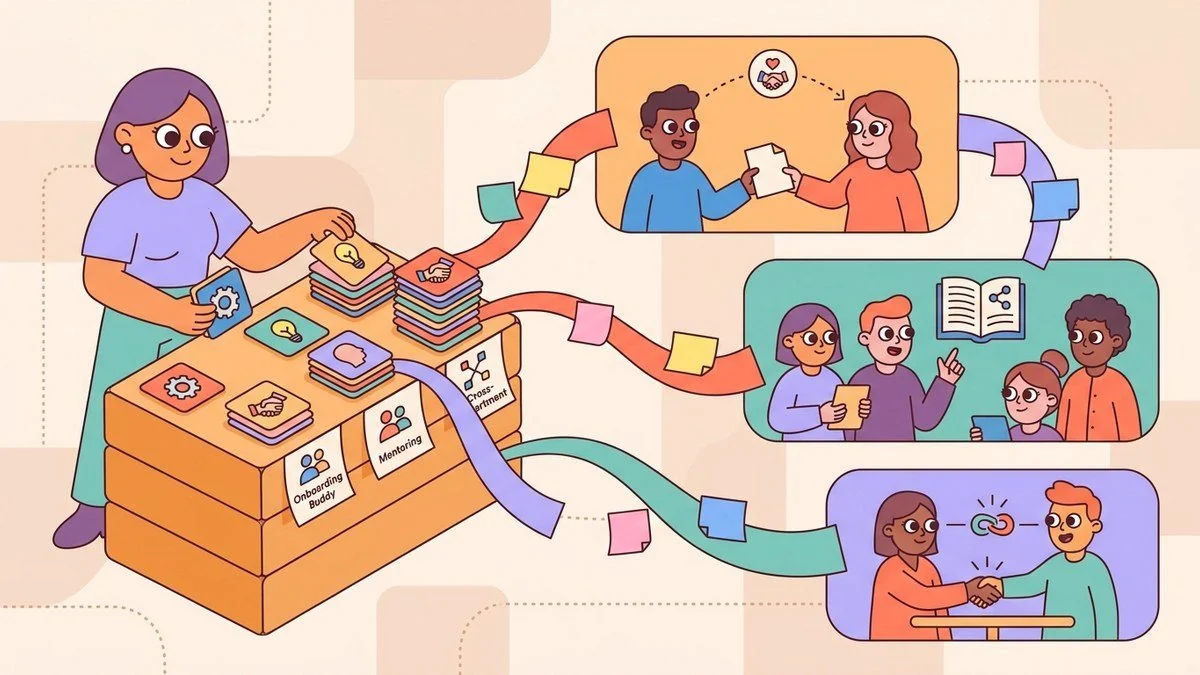
Start with the outcome you want. If the priority is new hire speed, the workflow is onboarding buddies. If the issue is duplicated work, the workflow is knowledge sharing. If teams are stuck in regional or functional silos, the workflow is cross-functional collaboration. The match is only the delivery mechanism.
This is where structured employee matching is different from open-ended social pairing. You can define the purpose of each introduction before it happens: help a new hire find context, connect a manager with a peer mentor, route a frontline employee to someone who solved the same problem, or create a trust path between two teams that rarely work together.
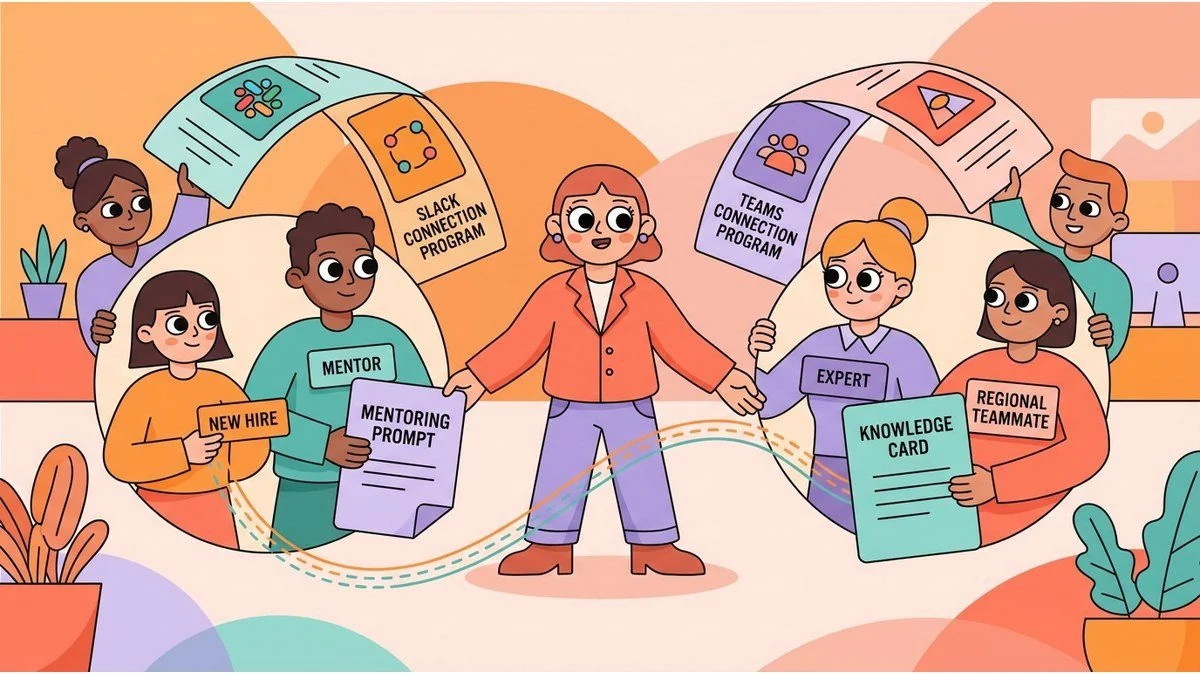
LEAD.bot works inside Slack and Microsoft Teams, so these programs can live where employees already communicate. That reduces the friction that often kills well-intentioned people programs. Instead of asking employees to remember a separate platform, you can make connection part of the work rhythm.
Use Three ROI Buckets Leaders Already Understand
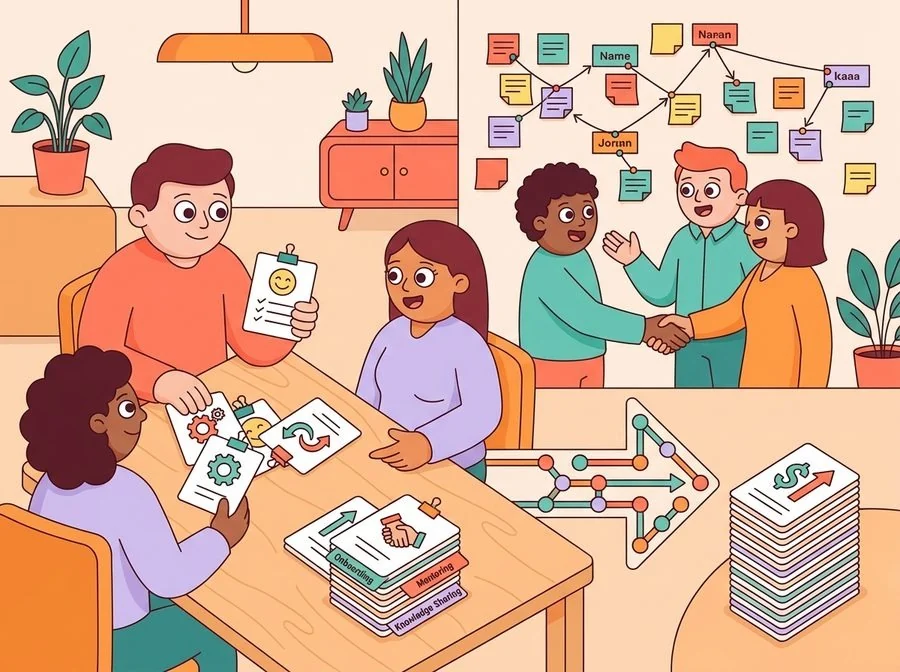
For most people teams, connection ROI becomes easier to explain when you group it into three buckets: integration, knowledge flow, and collaboration health. These are broad enough for executives and specific enough for HR operators.
Integration covers new hire onboarding, post-merger team blending, and employees moving into new roles. When the right buddy or mentor is assigned early, employees do not have to guess who can answer practical questions.
Knowledge flow covers the “who knows what” problem. Matching employees to hidden experts, peer mentors, or cross-team contacts gives social knowledge a path to move.
Collaboration health covers the strength of relationships across departments, locations, and seniority levels. You are looking for fewer isolated teams, better handoffs, and more trusted cross-functional routes.
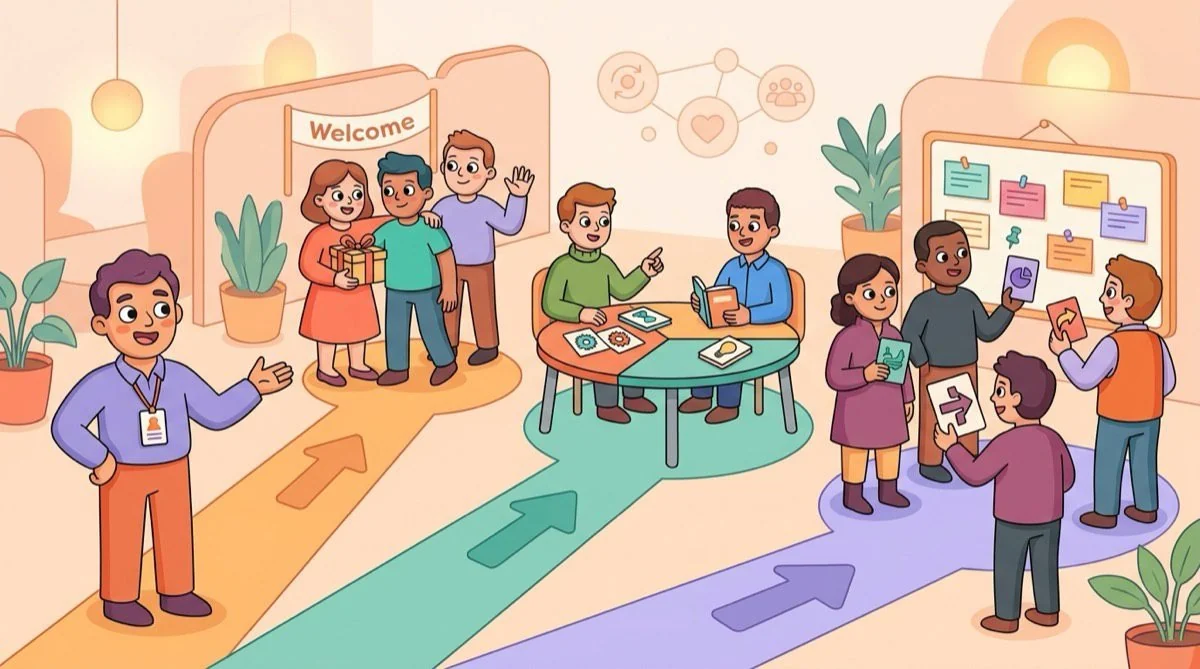
If you need a deeper program structure, pair this article with LEAD.app's guide to the three employee connection workflows every people team should automate. It shows how onboarding buddies, mentoring, and cross-team matching can work together instead of becoming separate admin projects.
Choose Metrics That Match the Program Purpose
A common mistake is measuring every connection program with the same survey question. Participation matters, but it is only the start. A strong measurement plan includes activity, quality, and outcome signals.
Activity signals answer the basic adoption question: how many employees were matched, how many meetings happened, how often employees accepted or rescheduled, and whether participation is balanced across teams. These numbers tell you whether the program is alive.
Quality signals tell you whether the matches are useful. Ask short pulse questions after a connection: was the match relevant, did the conversation help, and would the employee want another similar introduction?
Outcome signals tie the program back to the workflow. For onboarding, compare how quickly new hires find answers or reach early milestones. For knowledge sharing, track whether employees report easier access to experts.
This does not require a complicated analytics project. It requires discipline about matching the metric to the reason the connection exists. LEAD.bot combines matching, pulse surveys, and relationship intelligence so people teams can look beyond attendance and see whether the program is improving organizational network health.
Make the Admin Model Part of the ROI Case
ROI is not only about employee outcomes. It is also about how much coordination the people team has to spend to keep the program running. A program that delivers good matches but requires constant spreadsheet work will eventually stall.
Build the admin case into the program from the beginning. Decide which groups are eligible, how often matches should happen, what exclusions matter, what reminders are needed, and when a match should pause. Then automate the repeatable parts so the people team can focus on program design instead of manual coordination.
This is especially important for cross-team connection programs. As the company grows, manual matching gets harder because the people team has to consider department, location, tenure, manager relationships, role context, and program goals. The more complex the organization becomes, the more valuable structured matching becomes.
If your team is already wrestling with this, use LEAD.app's practical guide on matching employees across departments without adding admin work. It gives a clear model for creating cross-functional connections without turning HR into a scheduling desk.
Turn Connection Data Into Better Program Decisions
Once the program is running, the most useful data is often directional. You want to know which teams are overconnected, which groups are isolated, where new hires lack trust paths, and which employees are becoming informal connectors. These patterns help you improve the next round of matches.
For example, if new hires are meeting buddies but still struggling to find subject-matter experts, add a knowledge-sharing match after the first month. If one department keeps receiving requests but rarely reaches outward, create a reciprocal cross-team program. If managers are relying on the same few people for every introduction, widen the matching pool so hidden experts become visible.
This is how connection programs become stronger over time. You are not just checking whether two people met. You are learning how the organization actually shares context, where collaboration patterns are healthy, and where people need better routes into the network.
For onboarding-specific programs, the next step is to review how to manage onboarding buddy programs without admin burnout. It shows how to keep the human value of buddy systems while removing the manual work that makes them hard to scale.
A Simple ROI Scorecard You Can Use This Month
You do not need a perfect model to start. Use a one-page scorecard with five questions:
- What workflow did this connection program support?
- How many relevant matches were completed?
- Did employees rate the matches as useful?
- What business friction did the program reduce?
- How much admin time did automation remove?
Run that scorecard monthly. Keep the language simple enough for leaders outside HR to understand. Instead of saying the program increased engagement in the abstract, say that new hires found answers faster, cross-team experts became easier to reach, or mentoring pairs continued beyond the first introduction.
That is the real ROI story. Cross-team connection programs work when they create useful trust paths that help people move faster together. With LEAD.bot, you can design those matches around the workflows your organization already cares about: onboarding buddies, mentoring, knowledge sharing, and healthier collaboration across the organizational network.