

Most of us already adapted to the new norms after the pandemic, and many employers have planned or are considering bringing work back to the office.
While studies have shown that remote work actually increases productivity, workers who clock in from a distance lose out on some important parts of company culture. Some remote workers lament the lost snacks, games, and social atmosphere that came with the office.
However, a remote workplace can still benefit from serendipity – the chance moments when a worker embraces an opportunity. Serendipitous interactions can provide the “happy coincidence” benefits of healthy teamwork and collaboration.
To harness serendipity, hiring managers and HR professionals need to discover good candidates, embrace employee connections, and foster a culture that supports serendipity. Happy workers are much more likely to embrace a chance opportunity, and your company culture should encourage employees to pursue opportunities within the scope of their work.
This article explores some of the ways you can increase workplace serendipity, both in the short and long term.
What Did the Pandemic Change for Workers?
 To understand serendipity and the workplace, managers need to know exactly how the pandemic altered the everyday work of employees.
The pandemic ushered in the modern era of remote working. While remote work isn’t news to everyone, it’s easy to become complacent with remote work. You could have quickly or easily adjusted to remote work, but other employees still struggle on a daily basis.
From there, remote work affected workers in different ways. Young talent that was hired during the pandemic may not have had an opportunity to connect with coworkers in a meaningful way. Many young professionals use the workplace as an opportunity to form genuine connections and friendships – something that was lost during the pandemic.
Not only do workplace friendships help with employee retention and satisfaction, but strong connections can lead to more serendipity. The more meaningful time employees spend together, the more they might communicate about workflow issues, and from that, creative ideas spark.
Some remote workers are parents or became parents during the pandemic. Unfortunately, the pandemic also forced many children out of school, making it difficult for at-home parents to juggle both their families and work and leading to exhaustive burnout for millions of employees, many of whom are counting down the days until they can return to the office.
Many working parents are highly skilled and excited by their work. However, burnout at home can lead to missed opportunities in the workplace, and it could even cause the employee to quit just to take time off.
These are just a few examples of how remote workers might have been affected by the pandemic, and there are certainly many more. Again, because it can be easy to get used to remote work, it can also be easy to forget that some employees struggle with the change.
Serendipity and Remote Work
If many employees are struggling to embrace serendipity due to conditions forced upon them, how can managers find a remedy? Well, there are several ways to foster serendipity in a remote workplace.
Encourage Breaks
What’s more valuable: an employee that works themselves hard all day or an employee that takes time to recharge and comes to work focused and attentive?
The same study that discovered the increased productivity of remote workers also found that remote workers work longer hours because you never really “leave” work when you’re at home all day, so it becomes difficult to separate work and home.
To prevent remote work from blurring the time between work and personal time, leaders can encourage employees to take breaks, and set restrictions on when workers can and can’t schedule meetings.
Encourage Flexibility
With remote work, many employees are finding that they can work from anywhere with internet access. As a manager, does it really matter to you where they live as long as they’re getting their job done?
Encourage your employees to enjoy the flexibility of remote work. Don’t make them feel like they need to sit alone in their living room for 8-9 hours each day. Consider starting a chat group where remote workers discuss some of their favorite aspects of a flexible work environment.
Connect Employees
Imagine the scenario where a young new hire has trouble forming the workplace friendships they need. How can you connect workers organically? That’s where LEAD.app comes in.
LEAD.app works with Slack and Teams to cleverly connect workers that might not otherwise interact. The benefits of this are twofold, too. For employees, LEAD.app lets them connect with new people, talk about new topics, learn about each other, and potentially form new connections. It also helps break up the workday and can leave employees feeling rejuvenated.
For managers, LEAD.app is the perfect platform for workplace serendipity. When two employees meet over virtual coffee or lunch break, they’re bound to discuss their work. By doing so, the two workers could connect two ideas that otherwise would have always been separated. Managers can essentially create chance encounters to promote serendipity.

The Future of Work and Serendipity
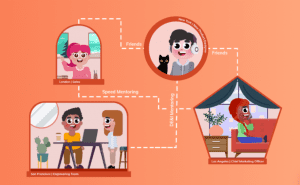 As offices reopen, managers are noticing an interesting trend: some workers want to come back while others do not. So, how can you embrace serendipity in the long term when workers are still set to be separated virtually?
The best way to promote long-term serendipity is to plan as if your workplace will remain remote forever. Some employees will always prefer remote working, and there’s always the slim chance that another scenario could force all in-office employees to work remotely.
Tools like LEAD.app aim to make remote workplaces better for everyone within an organization. Small changes like integrating LEAD.app could be all it takes to embrace serendipity in the workplace.