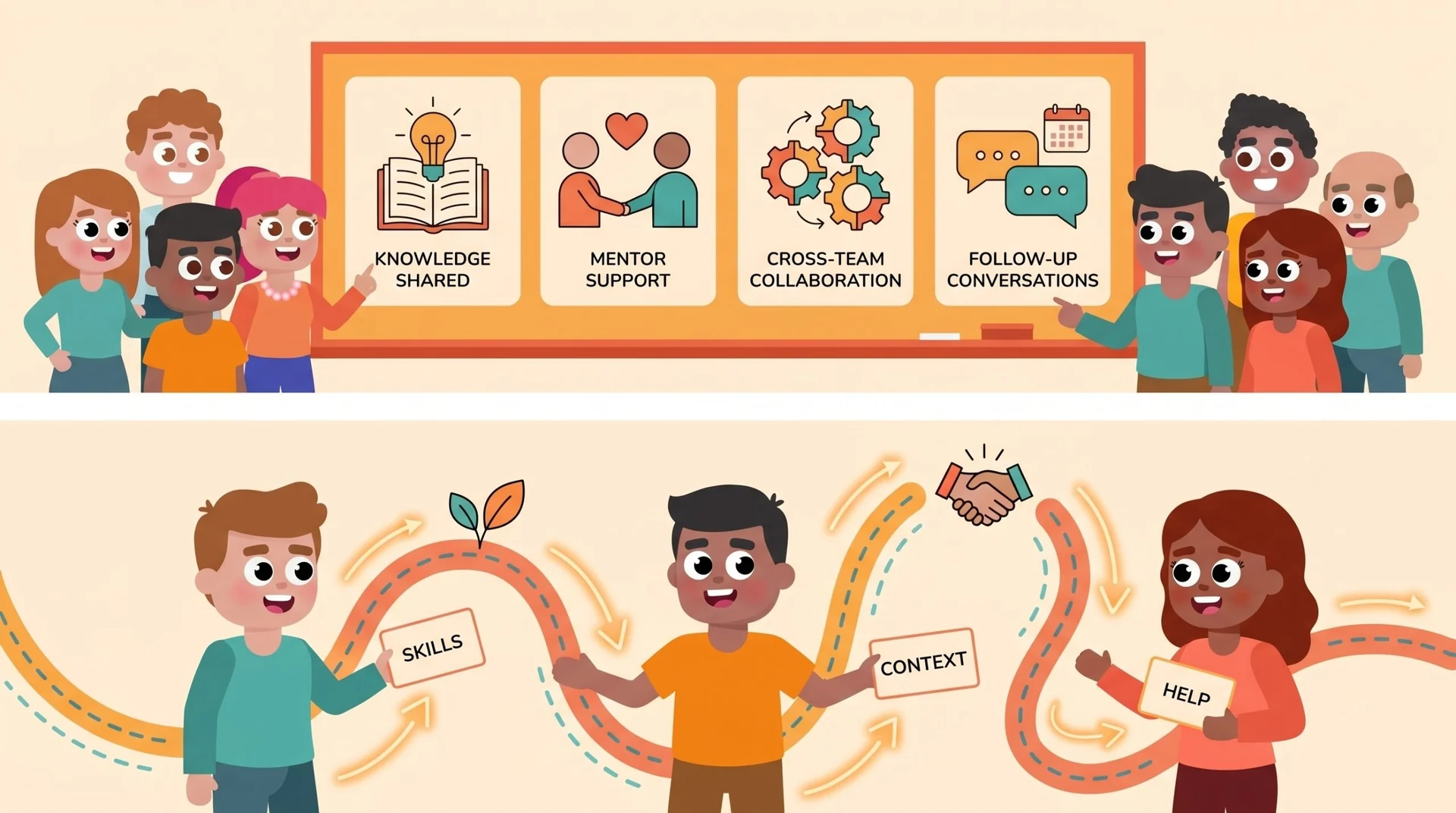

What Is Knowledge Management?
The Essence of Knowledge Management
Knowledge management isn’t just about storing files—it’s about unlocking the real value of how people work together. The smartest organizations don’t treat knowledge as static information; they map how expertise flows, who influences decisions, and where collaboration gets stuck. It’s about activating your team’s collective brainpower in real time, not just filing away documents.
The Knowledge Trifecta
You’ll often hear about three types of knowledge:
-
Explicit knowledge: The obvious stuff—manuals, databases, reports. Useful, but surface-level.
-
Implicit knowledge: Skills learned over time that could be documented, though they usually aren’t.
-
Tacit knowledge: The hardest to capture—intuition, trust, influence. The kind of know-how you only see when the right people are connected.
At LEAD.bot, we focus less on managing explicit info and more on making the implicit and tacit visible through organizational network analysis (ONA) and behavioral signals.
The Impact of Modern Knowledge Management
Old-school KM was about reducing time wasted searching files. Today, the bigger win is surfacing who knows what, who trusts whom, and where silos form. With that clarity:
-
Onboarding speeds up because new hires instantly see who to go to, not just what to read.
-
Collaboration strengthens because influencers and connectors are recognized, not overlooked.
-
Innovation accelerates because cross-functional knowledge flows naturally.
The Ongoing Cycle
KM isn’t a one-off project—it’s a living system. By continuously capturing network patterns and behaviors, you create feedback loops that make organizations more adaptive, resilient, and AI-ready.
Tools and Approaches
The future of KM isn’t document repositories—it’s platforms that map, measure, and activate human networks. That’s where LEAD.bot fits:
-
Using ONA to reveal hidden experts and influencers.
-
Leveraging behavioral signals from calendars and collaboration tools.
-
Turning invisible knowledge flow into visible, actionable insights.
Building Your Knowledge Management Powerhouse
Capturing Knowledge Gold
It’s not just about hoarding data—it’s about unlocking wisdom. The real jackpots aren’t in dusty folders, they’re in human networks: brainstorming sessions, project postmortems, and yes, even those water-cooler chats. Hidden brilliance flows when the right people connect.
Here’s a savvy move: use pulse surveys and behavioral signals to reveal the experts and connectors you didn’t even know you had. Deloitte found organizations that do this are 57% more likely to outperform on key metrics. That’s not luck—that’s design.
Organizing Your Knowledge Vault
Forget “dump everything in a shared drive.” That’s yesterday’s KM. Modern organizations need visibility into how knowledge flows between people. Who influences outcomes? Where do silos form? Which teams are at risk of burnout?
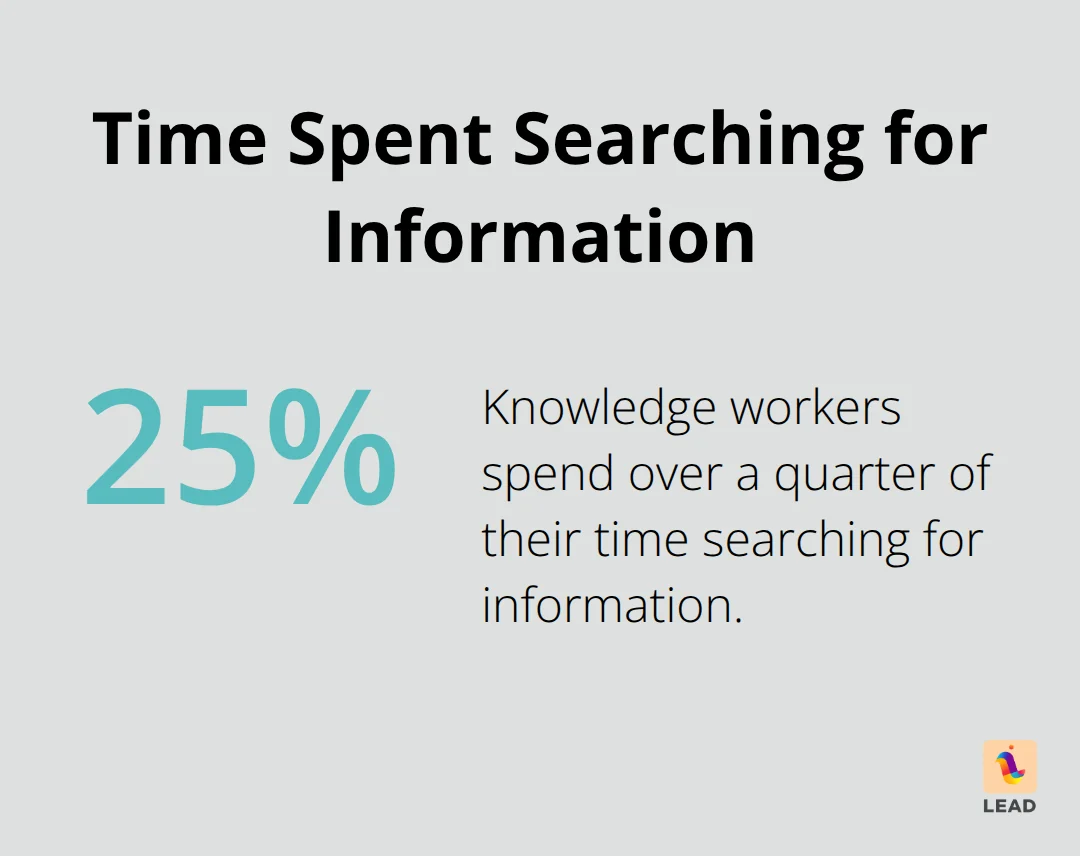
Knowledge workers lose nearly 9 hours a week just looking for the right person or right context. By mapping networks with ONA, you make those connections visible, cutting wasted time and reducing friction.
Sharing is Caring (and Profitable)
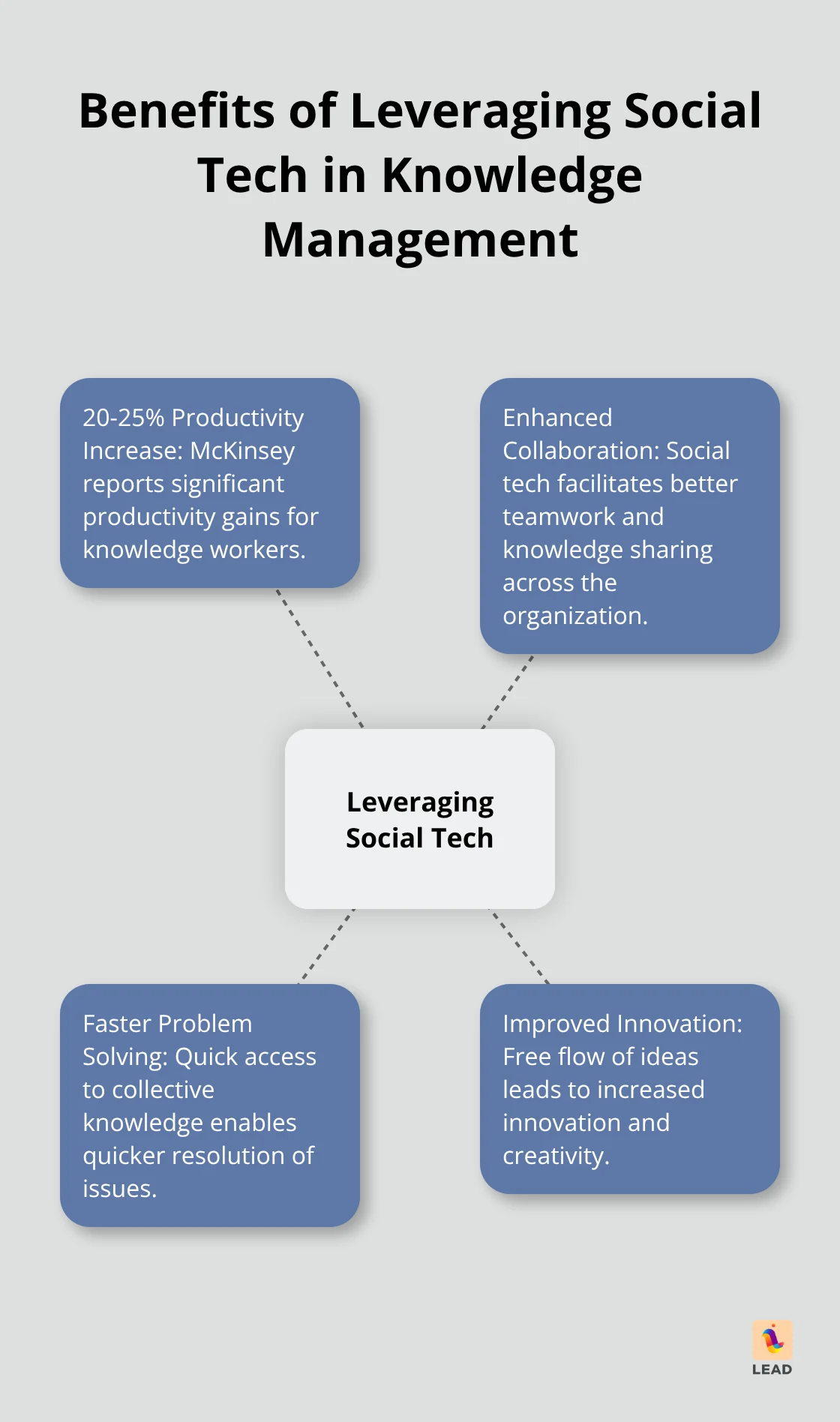
Knowledge has no value if it stays trapped. Sharing it isn’t just a nice-to-have—it’s a growth multiplier. McKinsey found that networked collaboration can raise productivity 20–25%.
That’s why the future isn’t about static repositories. It’s about activating networks: running cross-functional matches, spotlighting hidden influencers, and building mentorship loops powered by data. With the right system, knowledge flows like capital—circulating, compounding, and paying dividends across the org.
Putting Knowledge to Work
The payoff-getting that knowledge off the bench and into the game. All the know-how in the world is squat if it just sits pretty. This is the integration piece, folks. Make it seamless, make it slick.
Plug knowledge right into everyday workflows with platforms like Slack and Microsoft Teams. When wisdom is right there-or wherever your team is-you’re looking at faster solutions and a boost in innovation. That’s the real endgame.
Possessing knowledge? Nah. It’s about taking that insight to fuel your ventures forward. With these strategies locked in, you’re not just hoarding info; you’re setting up a strategy that’ll catapult your organization forward.
Now that we’ve demystified the foundation of a killer knowledge management system, let’s dig into the practical steps for laying down these strategies in your setup.
How to Implement Knowledge Management
1. Conduct a Knowledge Audit
Not just “what documents exist”—but who holds the keys, and how flows happen.
-
Survey your team: What knowledge do they actually need each day? Where are the bottlenecks? Who are the hidden experts?
-
Map knowledge flows: Use ONA to reveal source-to-destination routes. Who bridges silos? Who’s isolated? Research from MIT Sloan's network analysis research supports this approach.
-
Pinpoint knowledge risks: Where would knowledge vanish if a key connector left tomorrow?
Panopto found 42% of institutional knowledge lives in people’s heads. Without mapping, that know-how can evaporate.
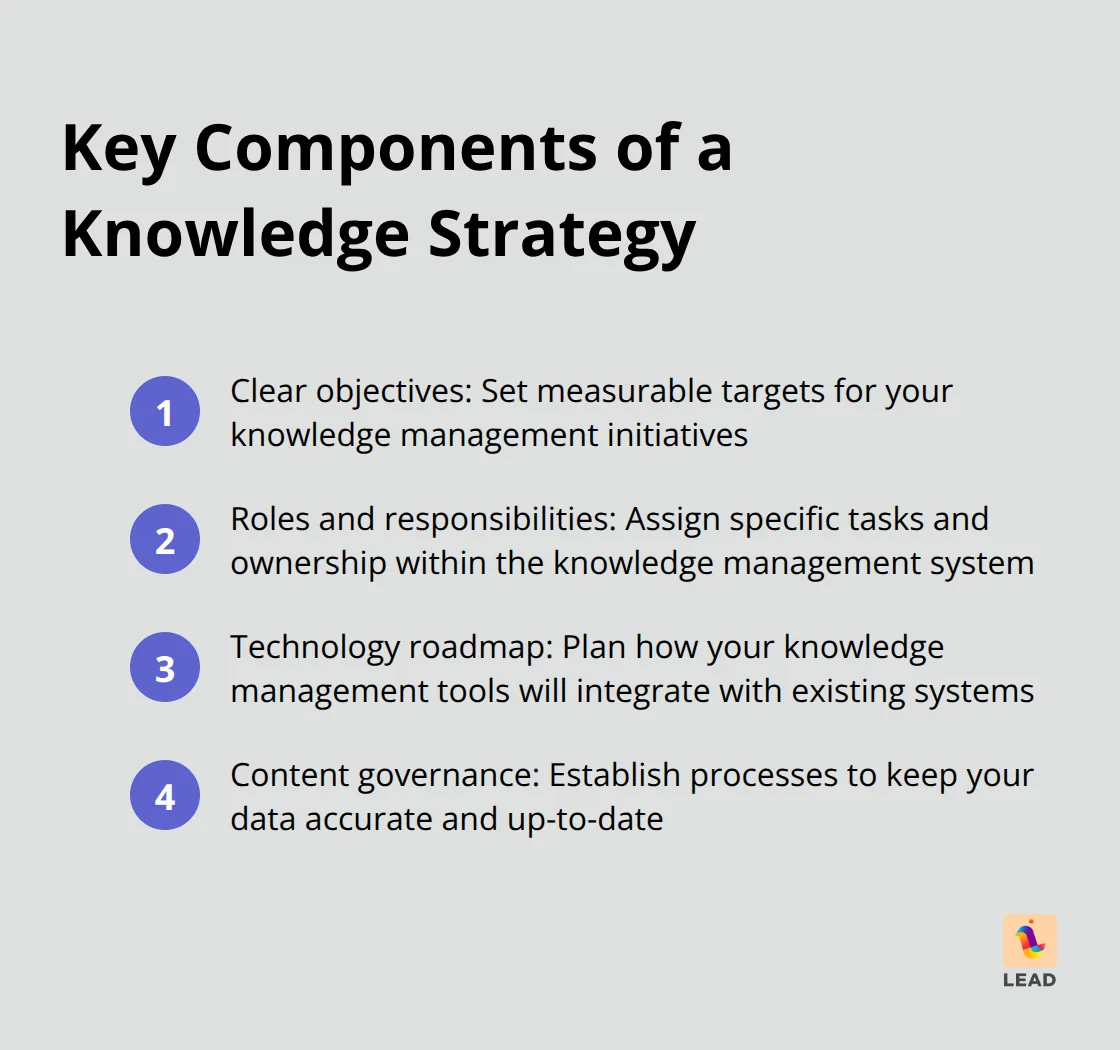
2. Develop a Knowledge Strategy
Once you see the flows, it’s game time. Build a strategy that aligns with business priorities:
-
Clear objectives: Do you want faster onboarding? Stronger cross-team collaboration? Smoother AI adoption?
-
Roles and responsibilities: Who owns influence mapping, pulse surveys, or network insights?
-
Technology roadmap: Integrate ONA and behavioral signal tools into existing platforms like Slack/Teams.
-
Governance: Set lightweight processes so network data stays fresh and actionable.
And remember—keep it flexible. Knowledge flows shift as organizations evolve, so your strategy has to bend and adapt.
Select Appropriate Tools
Choose tools that don’t just store content, but make knowledge flow visible. Forget clunky knowledge bases—you need tech that plugs into your workflow and uncovers the who and how of collaboration.
Look for:
-
ONA-powered insights: Reveal hidden experts, influencers, and at-risk silos.
-
Seamless integration: Slack and Microsoft Teams, not another platform people have to check.
-
Behavioral analytics: Track engagement, collaboration patterns, and ROI.
-
Scalability: Grows with your org without adding friction.
Thinking AI? LEAD.bot’s got your back—surfacing tacit expertise and network dynamics right inside Slack and Teams.
Create a Knowledge-Sharing Culture
Spoiler alert: tech alone isn’t the silver bullet. Culture makes or breaks KM.
Here’s how to spark it:
-
Leadership modeling: When leaders share openly, teams follow.
-
Recognition: Reward people for connecting, mentoring, and sharing—not just output.
-
Make it simple: Knowledge sharing should feel like a chat, not a chore.
Studies show knowledge-sharing behaviors are the connective tissue between culture and performance. When people trust the network, collaboration takes off.
Provide Ongoing Training and Support
Think of training as watering your KM garden—keep it fresh, consistent, and motivating.
-
Onboard new hires fast: Show them how to tap into networks, not just wikis.
-
Best practice refreshers: Keep sharing habits alive with quick, ongoing nudges.
-
Celebrate wins: Showcase how surfacing hidden knowledge solved real problems.
Measure progress in time saved, faster onboarding, and innovation rate—then refine continuously.
Final Thoughts
Modern KM isn’t about file storage—it’s about activating networks. That means fewer screw-ups, lightning onboarding, and innovation at scale. Yes, it takes commitment, but the payoff is massive.
Enter tools like LEAD.bot—the Swiss Army knife for network activation. By embedding ONA and behavioral signals into Slack and Teams, it breaks silos, spotlights hidden influencers, and shows how your organization really ticks.
Companies that master capturing, sharing, and activating knowledge will own the future. Don’t let those golden insights vanish—make KM your competitive edge and turn your org into an innovation juggernaut. ?