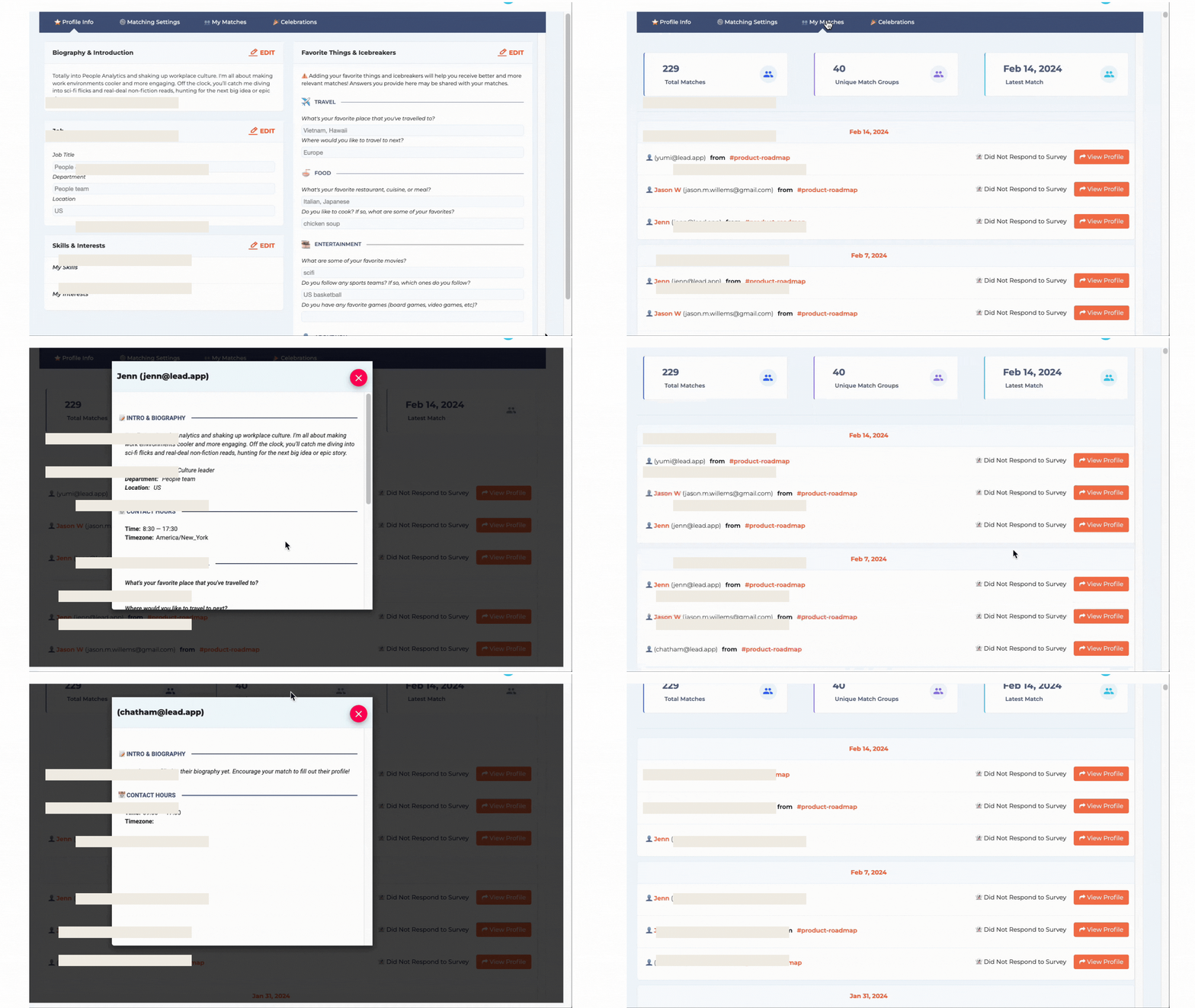

Hybrid work model — buzzword of the decade, right? So many companies are on this merry-go-round. At LEAD.bot, oh boy, we’ve been right in the thick of it — figuring out hybrid work. Spoiler: It’s no walk in the park.
Nailing teamwork in this quasi-virtual reality calls for deliberate moves — and, yes, some nifty tools. Let’s dive into some top-tier tips to spark authentic collaboration in this hybrid circus, making sure everyone on the team feels like they’re actually part of something — and getting stuff done.
How to Set Up Clear Communication Channels
Choose the Right Tools for Each Task
Alright, let’s dive in. Hybrid work-it’s a game of communication. The unsung hero of productivity. Nail this, and you’re on your way to success. So, what’s the secret sauce? Setting up the right channels-it’s not rocket science, but it gets the job done.
Different strokes for different folks, or in this case, tools for different tasks. Got a quick q? Hit up instant messaging-Slack or Microsoft Teams are your go-tos (don’t forget to spice it up with LEAD.bot integration). These rapid-fire platforms keep the convo flowing. But, for those deep dives or Eureka moments, cue video conferencing-get some face time, build those bonds.
Project management and task tracking-your Asanas, Trellos, Jiras-are like the backbone of your operation. Think big picture-these platforms do. They give the “who’s doing what and when” clarity, which is gold.
Establish Clear Usage Guidelines
You’ve got the tools. Now, you need rules-or guidelines. Crystal clear ones. Why? To avoid drowning in a sea of messages where the important stuff gets lost like socks in a dryer. For instance, maybe all project talk happens in the project management tool, while general news drops in a Slack channel.
And speaking of studies, take a look at this one-it’s peeking into strategies that boost cohesion and engagement. Worth a glance.
Provide Equal Access and Training
Tools in hand? Check. But knowing how to wield them-that’s the ticket. Train everyone, no matter their zip code or tech skills. Think video tutorials, written guides, or even the old-school one-on-one sessions-for those needing that extra TLC.
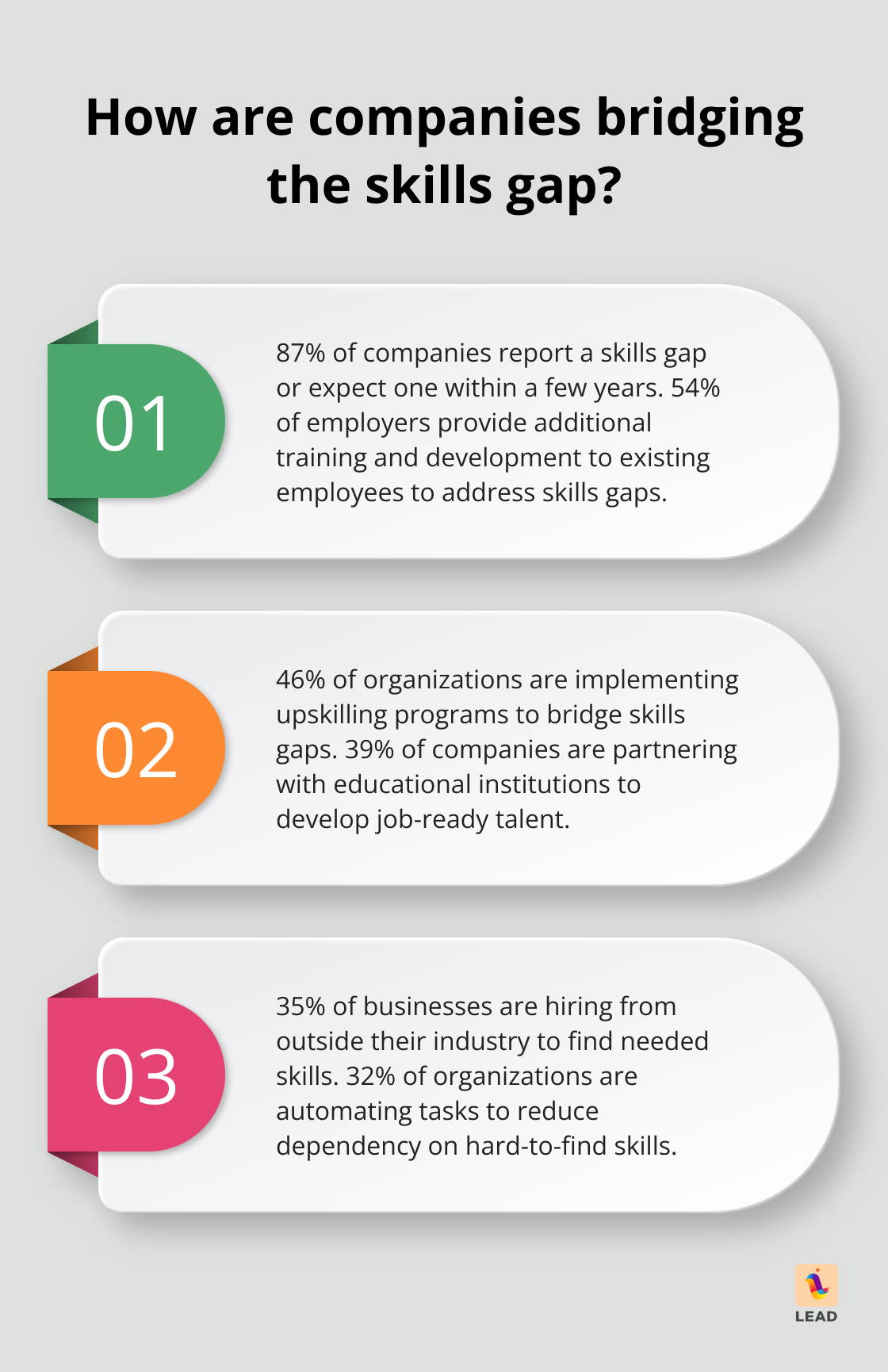
Worried about skills gaps? Recent stats have you covered. They dive into the who’s, what’s, and how’s to bridge that gap in today’s workforce.
Monitor and Adjust
Time to play the long game. Communication-it’s not static. It’s an ever-changing beast. Regularly check how these channels are vibing with the team. Feedback is your north star here-snag it through surveys, chit-chats, whatever floats your boat. Figure out what’s killing it and what’s-let’s say-poisoning the well.
Foster a Culture of Open Communication
But wait, there’s more. Tools and guidelines-they’re not miracle workers. Foster a vibe where everyone feels like they can chime in, share that million-dollar idea, or toss out a newbie question without flinching. Open doors (helped along by tools like LEAD.bot)-more than just a concept. It can fast-track innovation and stronger team ties.
With these action points in check, you’re well on your way to tackling the hybrid work maze-and winning. Ready to take your team to the next level? Let’s explore structuring collaboration like a champ in this brave new world.
How to Structure Collaboration in Hybrid Teams
Regular Team Meetings: Beyond Status Updates
Alright, hybrid work is here to stay-so long, spontaneous water cooler wisdom. We’re diving into structured land where teamwork ain’t just a buzzword but a living, breathing system. In-office, remote-doesn’t matter, we’re bridging the gap with intentional moves.
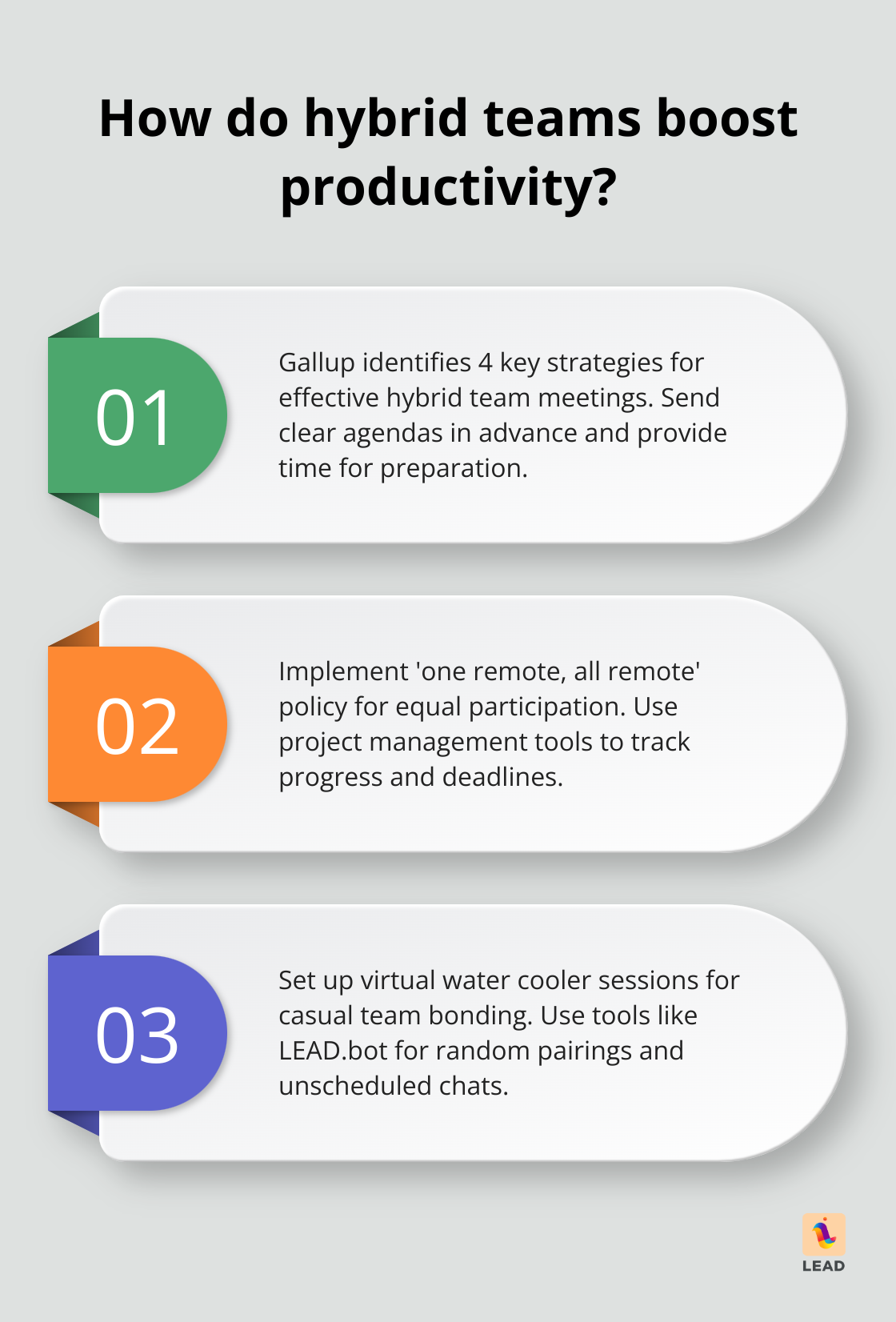
Take those regular team meetings and supercharge them beyond status droning. Gallup spilled the beans on four killer ways to nail this in a hybrid setup. Here’s your playbook:
- Send out a clear agenda before anyone’s asking, “What’s this about?”
- Give folks the space to prep-make contributions count; no one’s there to sit pretty.
- Get some project management tools on board to track all the hows and whens.
Call it the ‘one remote, all remote’ mantra: if Sally’s Zooming, we’re all Zooming. Levels the playing field so in-office cliques don’t hijack the convo.
Virtual Water Cooler: Building Cross-Distance Bonds
You know it-casual chats build team glue. But in hybrid land, recreating those priceless moments needs a bit of orchestration. Cue the virtual water cooler sessions.
Set up chill, optional catch-ups-no shop talk allowed. Think team-building exercises, personal briefings, or good ol’ banter. A study pokes into the remote work matrix, unearthing impacts on productivity, satisfaction, and team spirit, pinning down ways to juice them.
Tools like LEAD.bot are aces at these connections. Who doesn’t love random pairings for light, unscheduled chit-chats? Smash silos, amp up that team belonging.
Project Management: Hybrid Collaboration’s Backbone
Now, in the hybrid cosmos, keeping tabs on progress isn’t optional-it’s mandatory. It’s the sticky tape keeping your crew glued together.
Pick a tool offering real-time insight and cozy integration with your chats. Tech squads dig Jira, marketing peeps might drift toward Asana or Trello (psst, LEAD.bot’s a standout for team cohesion).
Here’s a nugget: don’t install and bail. Routine check-ins during those team gatherings keep everyone on the same page-and totally accountable.
Asynchronous Work: Embracing Flexibility
Hybrid squads, with their varied time zones and eclectic calendars, thrive on asynchronous work. Roll out tools letting folks plug away at their own tempo (yep, LEAD.bot shines).
Push for crisp docs and lucid written dialogues. Information needs to flow-whether Bob’s asleep in Tokyo while Jen’s grinding in New York. Set ground rules for response vibes, nurture a space where asynchronicity’s the co-op’s darling.
Building a hybrid collaboration blueprint means carving out an equitable team vibe. Let’s dial into strategies ensuring every voice is heard, every player feels valued-irrespective of where they’re dialing in from.
How to Build an Inclusive Hybrid Team Culture
Equal Participation: The Great Equalizer
Equal participation stands as a non-negotiable element in hybrid work environments. In-office employees often dominate hybrid meetings – yeah, it’s a thing. To combat this, implement a round-robin approach. This method ensures everyone… yep, everyone gets a turn to speak. Use digital hand-raising features in video conferencing tools to manage fair participation.
According to a Harvard Business Review study, teams with equal conversational turn-taking achieve more success. Actively seek input from remote team members during discussions. (Tools like LEAD.bot can prompt participation from quieter team members – a nudge to speak up never hurts.)
Team Building: Breaking Down Digital Walls
Team building in a hybrid setting… well, it calls for some creativity. Virtual escape rooms, online trivia contests, or remote cooking classes? Yup, they can work wonders. The key is to choose activities that don’t favor either in-office or remote participants.
A Forbes article revealed 25% of remote employees experience daily loneliness, compared to only 16% of fully onsite employees. Tackle this head-on by organizing regular virtual social events. (Ever tried virtual coffee chats? They can facilitate casual interactions – like your favorite water cooler moments, but online.)
Recognition: Celebrating Wins, Big and Small
Recognition… it’s a game-changer for fostering inclusivity. Make it a habit to celebrate team achievements regularly and publicly. Use your company’s communication channels to highlight both individual and team successes.
A Gallup study showed employees who receive regular recognition are 5 times more likely to feel connected to their company culture. Try implementing a peer recognition program where team members nominate each other for outstanding work – think of it as an inclusive shout-out system.
In a hybrid setup, make sure remote workers receive as much recognition as in-office team members. It’s crucial to acknowledge their contributions with equal visibility.
Inclusive Communication Practices
Establish communication practices that work for both in-office and remote team members. Use asynchronous communication tools to accommodate different time zones and work schedules. Encourage the use of shared digital workspaces for collaborative projects.
Set clear expectations for response times and availability. This practice helps prevent remote workers from feeling pressured to be “always on” – and it allows in-office employees to respect boundaries (because, yes, boundaries exist).
Equitable Professional Development
Provide equal opportunities for professional growth to all team members, no matter where they are. Offer virtual training sessions, online courses, and mentorship programs accessible to everyone. Ensure remote employees have the same access to career advancement opportunities as their in-office counterparts. The playing field… should be level for everyone.
Final Thoughts
So, hybrid work is the new playbook now – no newsflash there. But the real deal? Intentional collaboration. That’s the bedrock if you want your crew to crush it. We’re talking clear lines of communication, chances to actually collaborate (not just ping in Slack), and a culture that feels like everyone’s got a seat at the table. Doesn’t matter if you’re in Atlanta or Antarctica – everyone’s in the loop, and they matter.
Winning with a hybrid team? It’s all about those deliberate moves that ensure collaboration isn’t just an accident. Nail this, and you’re looking at boosted productivity, happy campers, and people sticking around longer. Also, there’s tech – like LEAD.bot – ready to make things smooth as butter, with features like virtual coffee chats (how’s that for remote bonding?), surveys, and even a peek into your network dynamics.
Looking ahead, hybrid work is here – get used to it. But collaboration? That’s gotta be on purpose. Roll out these strategies, and you’re set to ride this wave into future success. Take that initial plunge, keep it up, and watch your hybrid team become a dynamo of innovation (and teamwork).