
Why Scaling Team Communication Gets Harder as You Grow
When high-growth companies add more communication processes—standups, surveys, all-hands, recognition platforms—scaling team communication should get easier. It doesn’t. The real problem isn’t volume or tooling. It’s communication gaps: the slow erosion of informal context that leaders can no longer see. The moment your team grows past a certain size, the informal layer that made collaboration effortless quietly disappears—and no new process automatically replaces it.
What Teams Lose When Headcount Grows Fast
A 15-person team communicates effortlessly because everyone knows who to ask, who to trust, and how decisions really get made. No one documents this. It just exists.
At 80 people, the same company has org charts, Slack channels, and weekly rituals—but the informal layer is gone. People don’t know who holds influence outside their pod. New hires don’t know whose opinion moves the room. Senior leaders can’t tell where knowledge is pooling or where friction is forming between teams.
This loss isn’t sudden. It happens hire by hire, quarter by quarter. The org structure grows, but the connective tissue—the trust relationships, knowledge flows, and informal authority—doesn’t scale automatically.
What you lose isn’t engagement. It’s coordination context: who bridges two groups that should be talking, who is quietly becoming a bottleneck, which new hire hasn’t built trust yet and why. Without this context, even well-meaning leadership decisions land in the wrong place.
Why Surveys and Check-ins Miss Communication Gaps
Most fast-scaling teams try to solve the scaling team communication challenge with more structure: pulse surveys, manager check-ins, skip-levels, eNPS. These tools are useful for measuring sentiment—but they don’t map coordination.
A pulse survey tells you how someone feels. It doesn’t tell you whether they’re integrated into the team’s informal knowledge network or operating in isolation. A high eNPS score in one team can coexist with a coordination gap that’s quietly delaying decisions on another team.
Check-ins catch individual problems. Coordination breakdown is a systems problem—it’s visible only when you look at relationship patterns across the team, not at any single data point.
Leaders often assume that if no one is complaining, things are fine. But communication gaps don’t feel like a crisis until something breaks: a critical handoff gets dropped, a misalignment between two teams surfaces as a missed deadline, or a high-performer leaves because they never felt connected to the organization’s actual power structure. By the time it’s visible, it’s already been costly.

The Role of Informal Networks in Fast-Scaling Companies
Every organization has two structures: the formal one on the org chart, and the informal one that actually drives how work moves through the team.
The informal network is made up of trust relationships, knowledge-sharing patterns, and influence flows. It answers questions like: Who do people actually go to when they’re stuck? Whose judgment carries weight in cross-functional decisions? Where is institutional knowledge concentrated, and where is it thin?
In a small team, leadership can feel this network directly. In a fast-scaling company, the informal network becomes invisible—unless you have a way to surface it.
This matters because most coordination failures trace back to informal network gaps: two teams with misaligned expectations who never built real trust, a new manager who doesn’t yet have the credibility to move decisions, a department that’s knowledge-rich but doesn’t share across boundaries.
Adding more rituals doesn’t rebuild the informal network. It just adds noise around a signal you’re still missing. Observations from fast-scaling teams show the same pattern again and again: the teams that resolve ambiguity fastest know where trust already exists and where new connections need support.
How Organizational Network Analysis Helps Leaders Preserve Trust at Scale
Organizational network data is the layer underneath your org chart—the patterns of trust, knowledge flow, and influence that determine how your team actually operates.
LEAD.bot surfaces this layer through ONA (Organizational Network Analysis). Instead of asking employees how they feel (sentiment), it maps how your organization actually behaves: who people rely on, where knowledge travels, which relationships are strong and which are thin.
When leaders have organizational network data, scaling team communication stops being guesswork. You can see:
- Which new hires are integrating well and which are isolated
- Where informal knowledge is concentrated in one person (single points of failure)
- Which cross-functional pairs have high trust and which are operating with friction
- Where coordination gaps are forming before they become delivery problems
This isn’t surveillance. It’s the organizational visibility that leaders in a 15-person company have naturally—restored for a team of 150.
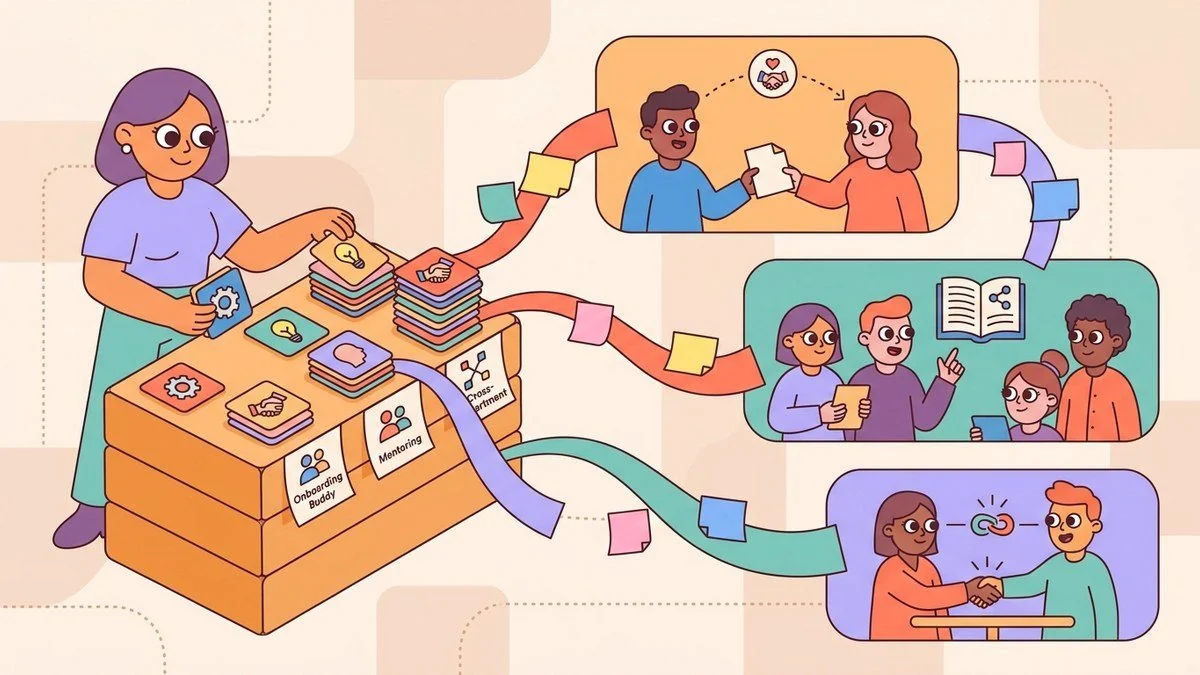
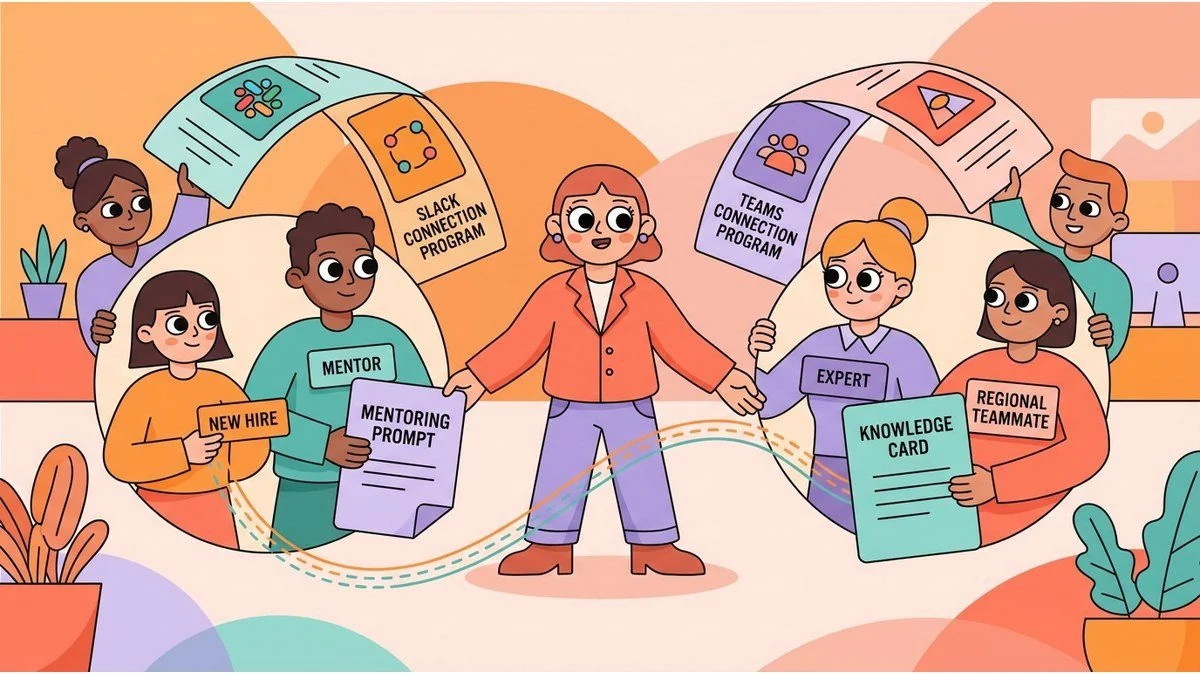
With this context, onboarding becomes targeted. You don’t just assign new hires to managers. You connect them to the people whose informal influence and knowledge will help them ramp fastest. That’s how fast-scaling companies keep culture intact as headcount climbs.
A Practical Way to Spot Bottlenecks Before They Become Cultural Problems
The earlier you see coordination breakdown, the cheaper it is to fix.
Here’s a practical signal to watch: when a team grows past 50 people, knowledge-sharing patterns tend to shift within the first 90 days after each growth phase. Some employees who were natural connectors at 30 people become bottlenecks at 60. Some cross-functional relationships that worked informally start needing more structure.
You don’t catch this through surveys. You catch it by understanding how behavioral patterns are shifting—who people are turning to, where trust is concentrating, where new information flows are forming and where they’re not.
LEAD.bot gives your team this visibility in real time. When you see a bottleneck forming, you can act: create a new connection, restructure a working group, or adjust onboarding so the next hire lands in the right informal network—rather than drifting at the edges of your organization.
The alternative is waiting for the bottleneck to announce itself—usually through a delivery miss, a resignation, or a cultural friction point that leaders didn’t see coming.
Scaling team communication is hard because growth doesn’t automatically scale trust. The companies that get this right don’t just add more processes—they preserve the informal context that makes coordination possible. That starts with seeing what’s actually happening in your organization, not what employees report on a survey.
Explore how LEAD.bot maps your organization’s informal networks and relationship patterns →