
Teams are losing time to scattered docs, duplicate work, and AI tools pulling from stale information. This guide on How to Use AI Knowledge Management Tools Effectively focuses on the practical systems, choices, and habits that make knowledge more usable. Today’s challenge is turning knowledge into something people can actually find and use across fast-moving teams.
Over at LEAD.bot, it’s like we’ve got front-row seats to the Information Overload Show (it’s a thing). Companies are drowning in data every day. But—here’s the kicker—the right plan of attack can spin that scattered chaos into a competitive boost that actually shows up on the bottom line.
What Makes AI Knowledge Management Different
Here’s the thing – AI knowledge management… it’s like taking a chaotic mess of info and turning it into a well-oiled machine. AI tools do the heavy lifting by using machine learning matching logic to automatically sort, analyze, and pinpoint the good stuff. They take unstructured data from all over the place: emails, documents, you name it, and build these slick, searchable databases that actually understand your questions. As Gartner’s research shows, hitting those 2023 business goals of operational efficiency and growth means ditching those old-school manual processes that suck up your time.
The Intelligence Behind Modern Systems
Old-school knowledge bases – think of them as your granddad’s filing cabinet – need you to do all the tagging and organizing. Not anymore. AI-powered solutions? They handle that automatically through natural language processing. Tools like Tettra work right within Slack to shoot back instant answers from company files, and Document360’s got some neat tricks like deflecting support tickets – slashing the direct support load by up to 40%. According to MIT research, knowledge bases paired with AI models up the game on output quality while slashing inaccuracies. These platforms get to know you – yep, learning from your moves – and get sharper over time, tailoring info for each role and department.
Organizations That See Real Impact
The ones really reaping the benefits? Fast-moving tech firms and customer service squads – they’re drowning in repeated queries and intricate product details. Remote or hybrid setups love AI, as it cuts the hassle of locating that go-to expert or nailing down the latest SOPs (especially for newbies). Research underscores the biggie – data quality’s top priority. AI-driven content checks become a goldmine, especially for industries where keeping info current isn’t just nice – it’s a compliance thing.
The Foundation for Enterprise AI Success
Here’s the kicker – most AI rollouts hit the brakes not because tech isn’t there, but because of the people stuff: the knowledge gaps, the unsung heroes, the “we’ve always done it this way” mindset. Without nailing down that people-side knowledge layer, AI systems end up with skewed data (cue: bad results). Companies gotta map out the real human knowledge networks, rally the troops, and build trust before amping up AI adoption and nixing resistance to transformation.
How Do You Set Up AI Knowledge Management for Success
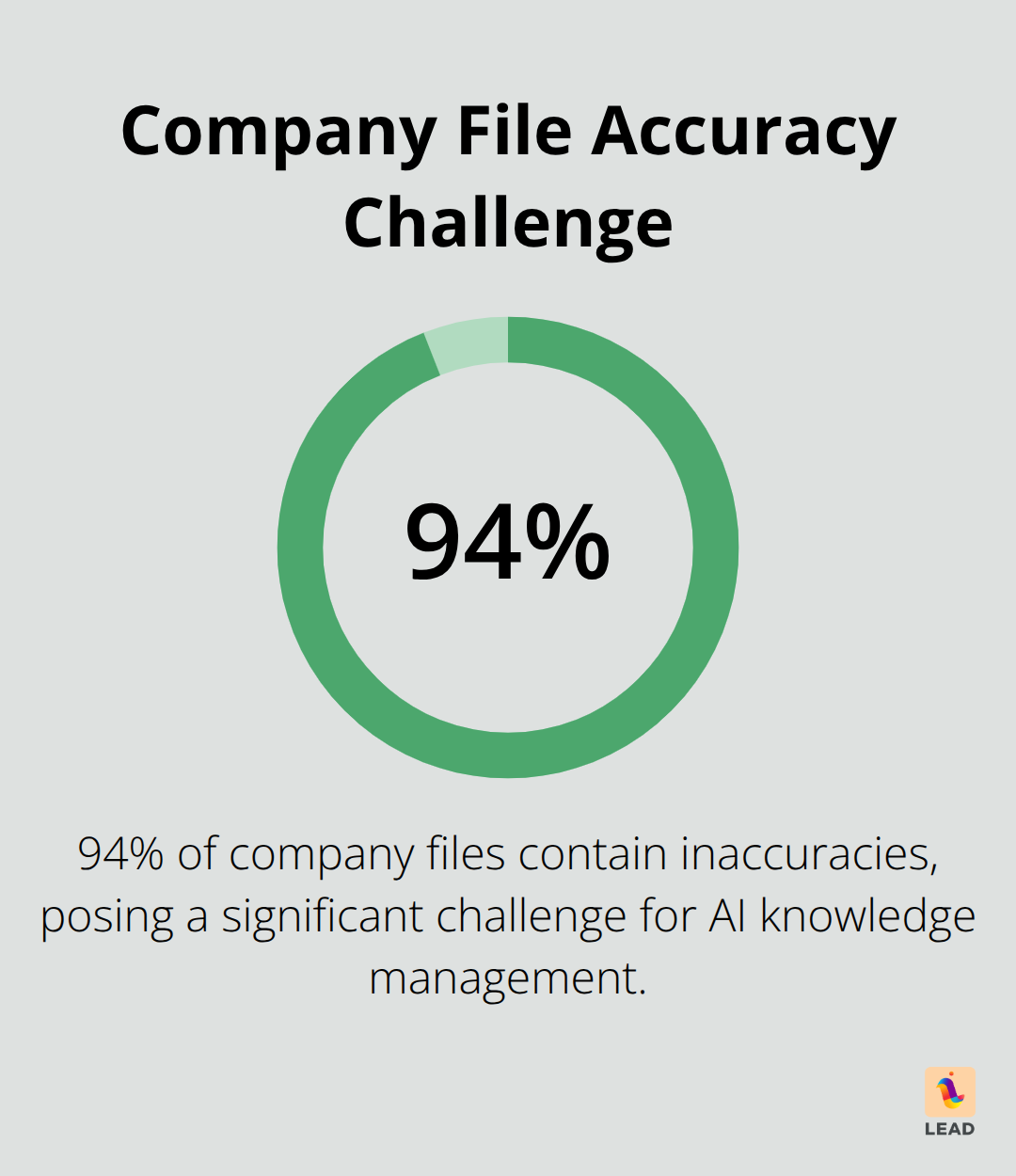
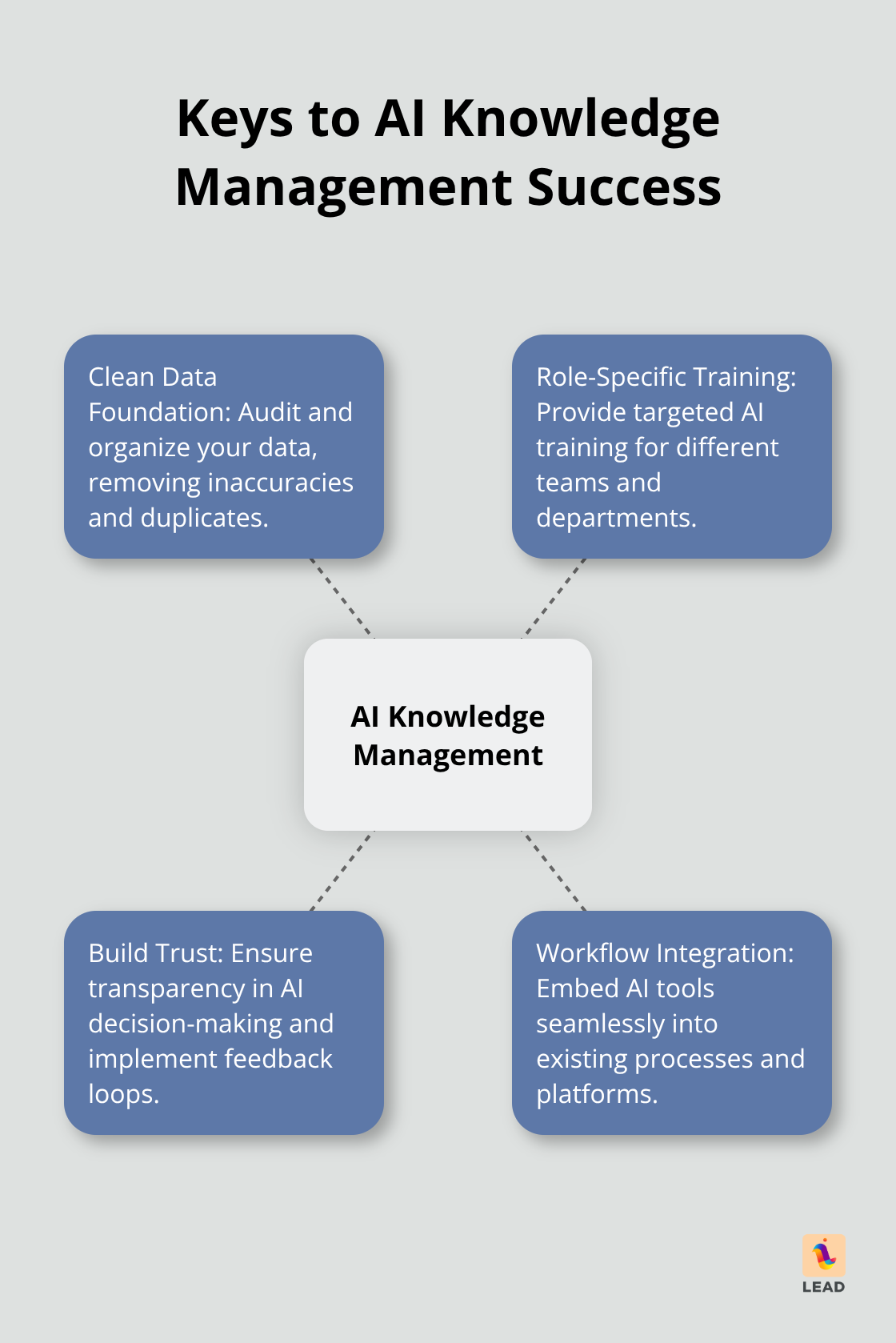
So, data prep-it’s the make-it-or-break-it factor in your AI knowledge quest. First up, audit what you’ve got-because, let’s be honest, 94% of company files pack a punch of inaccuracies. You’ve got to clean house. Build a content hierarchy that vibes with your team’s real-world workflow-not some pie-in-the-sky org chart. Documents? Need consistent headers, clear lingo, and tags that AI can actually decode. Research from the good folks at MIT tells us that a structured knowledge base couples nicely with AI, cranking up output quality and dialing down errors.
Clean Your Data Foundation
Surprise, surprise-most organizations have no clue about the chaos they’ve built up over time. Duplicate files, outdated steps, clashing info-it’s a symphony of confusion for AI systems. Sound the alarm every quarter with content audits and pitch documents that haven’t seen daylight in six months. Declare ownership-someone’s got to own up to accuracy in each knowledge zone. Settle on uniform file names and folder structures across the board (and watch search times drop by 30%).
Train Teams for Real-World Scenarios
Forget those one-size-fits-all AI training gigs. Zoom in on role-specific drills that make sense today, not next century. Customer service peeps aren’t speaking the same AI language as sales reps or engineers. Pin down what “good” looks like for AI-helped tasks in every nook and cranny of your company. According to Document360 users, it’s a 40% cut in support tickets when you show teams the AI ropes for real. Train up some power users-they’ll wave the AI flag and handle troubleshooting.
Address the Trust Gap
People shy away from AI when it’s shrouded in mystery. You need transparency around AI decision-making-non-negotiable if you want buy-in. Pull back the curtain and show your team the sources AI taps into and how it ranks info relevance. Use feedback loops where folks can call out iffy responses-builds trust and boosts system smarts over time.
Integrate Into Existing Workflows
Drop the notion that AI knowledge management’s a standalone gig. Embed it directly into everyday workflows-Slack, Microsoft Teams, CRM, you name it. Tools like Tettra prove this move works-shooting answers straight into Slack convos instead of making folks switch contexts. Map out your top 20% information requests that eat up 80% of support time.
Hook your AI system up to live data lines so info stays fresh by default. Aim for invisible integration-when your team can tap into knowledge without detouring from their daily grind, adoption skyrockets. This seamless method paves the way for tracking real business impact-concrete metrics and performance indicators, anyone?
How Do You Track Real ROI from AI Knowledge Management
Here’s the hard truth: when it comes to AI knowledge management ROI, most firms are chasing the wrong metrics. They’re like, “Hey, check our adoption rates!”… while drowning in support tickets and stagnant productivity. The metrics that actually matter? Those that smack your bottom line directly. Document360 customers shave off a whopping 35% in support tickets within a mere three months when they get serious about tracking specific numbers: average resolution time, first-contact resolution rates, and knowledge base search success rates. Take Tettra users – they knock 25% off onboarding time for newbies, not by vague satisfaction tallies, but through real time-to-productivity benchmarks.
Track What Actually Moves the Needle
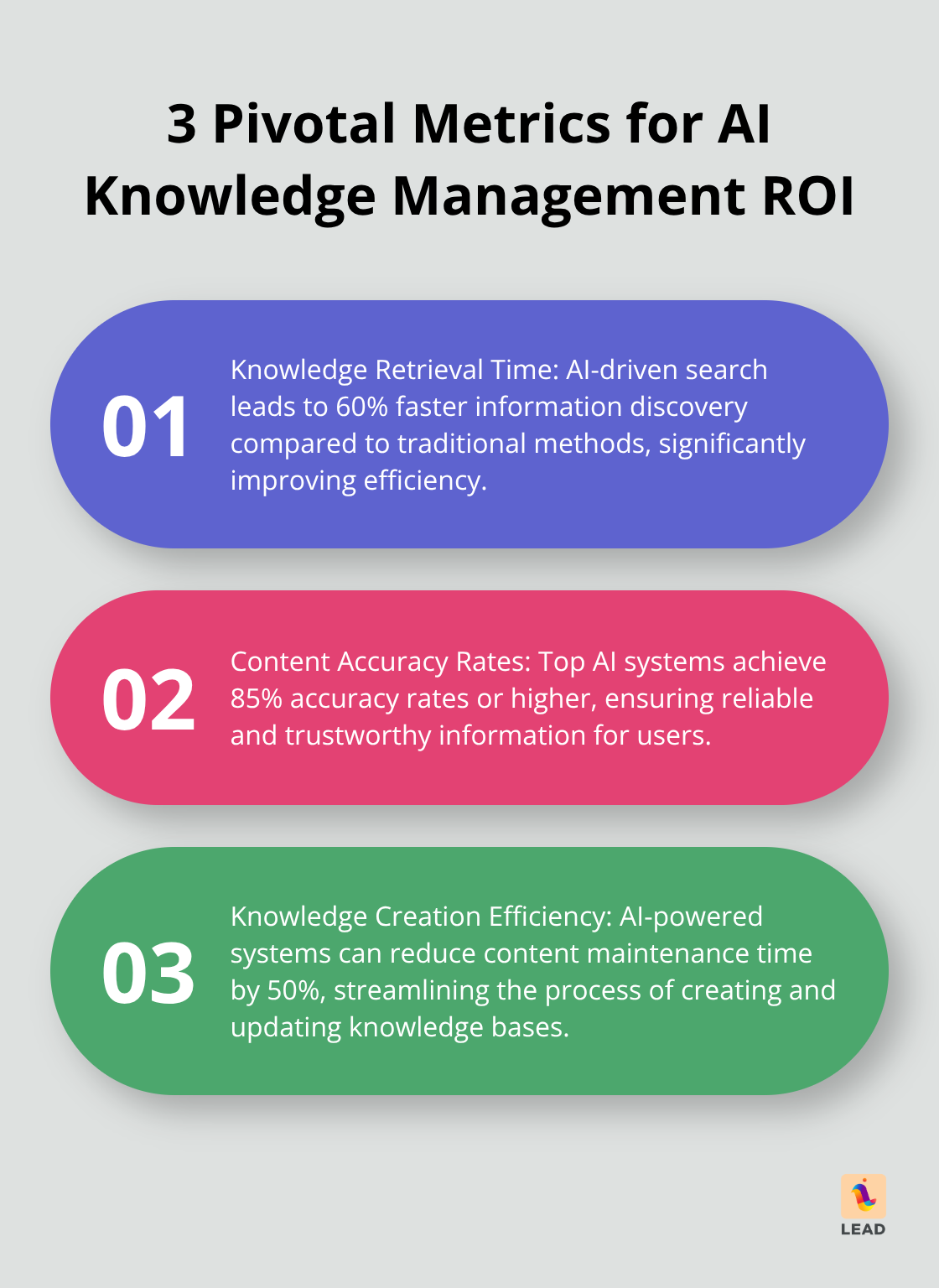
The smart players zero in on three pivotal metrics that scream “cha-ching.” First up, knowledge retrieval time – it’s all about how fast folks can snag answers. Teams leveraging AI-driven search boast a 60% speedier info discovery versus old-school methods. Next, content accuracy rates – track how often those AI answers need a human touch-up. Top systems… we’re talking about 85% accuracy rates or more. Last but not least, knowledge creation efficiency – monitor how swiftly subject matter experts can whip up and refine content. The cream of the crop? They slash content maintenance time by 50%, thanks to automated flagging of outdated info.
Scale Through Department-Specific Optimization
Cookie-cutter approaches? A total flop. Each department dances to its own tune. Sales squads crave real-time competitive smarts and product updates – keep an eye on deal closure rates and proposal response times. Customer service? They’re hungry for instant troubleshooting guides – track ticket escalation rates and customer satisfaction vibes. Engineers… they need seamless technical doc searches – monitor code review times and project delivery paces. Businesses tailoring AI knowledge management per department rake in 3x adoption rates and rack up 40% better performance metrics compared to those one-size-fits-nobody setups.
Monitor Knowledge Quality Over Time
Quality metrics – beyond crucial. They differentiate stellar rollouts from costly flunks. Keep tabs on content freshness with automatic nudges when docs hit the 90-day mark without an update (the go-to standard in many biz fields). Watch search query success rates – if there’s repeated digging for the same info, you’ve got content voids to fill. Measure expert contribution tallies to nip knowledge bottlenecks in the bud. Firms sticking above the 80% content quality mark enjoy ongoing productivity surges, while those dipping below 70% face a user exodus within half a year.
Final Thoughts
AI knowledge management tools-think of them as the duct tape for your corporation’s leaky info boat-turn chaos into strategic gold, driving results you can actually measure. Companies diving into this pool notice a 40% drop in support tickets, snag info 60% faster, and cut content upkeep time in half. Success here? It starts with getting your data house in order, training your team like champs, and making these tools slide right into everyday workflows.
Firms need to check their content’s pulse, set up who owns what, and build trust by keeping AI decisions out in the open. Keep your eyes on the prize-metrics that matter: how fast you resolve issues, the accuracy level you hit, and how efficiently you pump out knowledge. Targeted tweaks for each department? Rocket fuel for adoption, yielding results three times better than trying to jam one-size-fits-all down everyone’s throats (while the latter often crashes and burns).
Why do most AI efforts flop? Spoiler alert: it’s the people problem, not a tech fail. Mapping out the web of human knowledge and aligning your culture is a must before hitting the gas on AI. LEAD.bot is the ace up your sleeve, tackling these issues with organizational network analysis and engagement tools that pull hidden knowledge into the spotlight, helping companies lay a rock-solid people foundation for AI to thrive on.