
Managing hybrid teams — it’s what 83% of organizations are wrestling with right now, globally. The kicker? Juggling the need for remote flexibility with in-office collaboration, all the while not dropping the ball on productivity or team spirit.
Here’s the deal: At LEAD.bot, we’ve watched firms trip over themselves with communication chasms, lopsided participation, and the murky waters of performance tracking. So what’s the play? You need a game plan — strategic leadership, crystal-clear protocols, and the right arsenal of tools to close the physical gap… or you’re toast.
How Do You Actually Communicate in Hybrid Teams
Let’s face it – most hybrid teams flop because they dive into communication without a game plan. Microsoft discovered that a whopping 27% of workers feel left in the dark by their bosses, and this number just shoots up in hybrid setups. But hold up, the trick isn’t drowning in more meetings – it’s all about nailing communication with laser-like precision.
Set Non-Negotiable Communication Windows
You’ve got to establish core collaboration hours where everyone’s plugged in, no matter where they are. The Office for National Statistics says hybrid workers save 56 minutes a day ditching their commutes, but this perk vanishes if folks start playing it solo in their communication bubbles. So, pick solid four-hour windows where responses are mandatory.
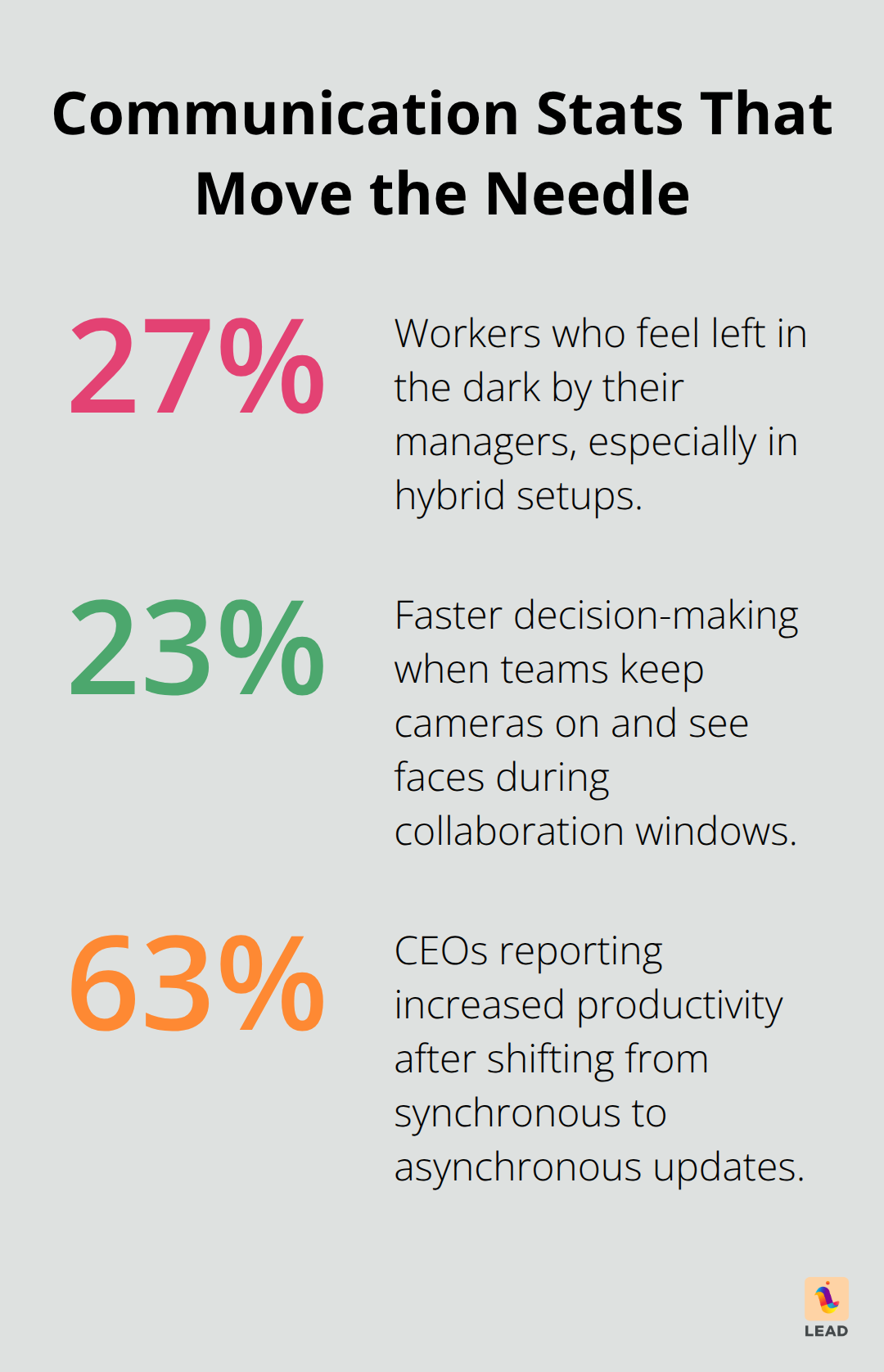
Go all in with video during these times – Stanford tells us that seeing faces boosts decision-making speed by 23% for scattered teams.
Master Asynchronous Tools for Deep Work
Quick updates? Sure, Slack and Microsoft Teams are your pals, but they wreck productivity for the deep stuff. Dive into Loom for those detailed break-downs remote workers can hit play on when it’s their time. Instead of lining up meeting after meeting, hit record for project updates. TestGorilla found out that 63% of CEOs claim increased productivity when teams switch gears from synchronous to savvy asynchronous communication. Here’s the rule: Over two back-and-forths? Record a video or set up a hardcore call.
Structure Check-ins That Actually Work
Weekly team meetings? Productivity killers. Go for snappy 15-minute daily standups with a rotating lead, mix in monthly deep sessions for strategy. Gallup data shows remote workers getting weekly feedback hit engagement levels three times higher than those in the dark. Focus on three metrics per check-in: what’s done, obstacles in the way, and the next 24-hour goals. Ditch the chatter – hybrid teams thrive on info dense communication, not fluffy chit-chat.
Now, these communication guidelines alone won’t pull your hybrid team up by its bootstraps. You’ve got to craft real trust and bring remote and in-office workers together. It’s about making intentional moves that go way beyond just talk.
How Do You Build Trust Across Physical Divides
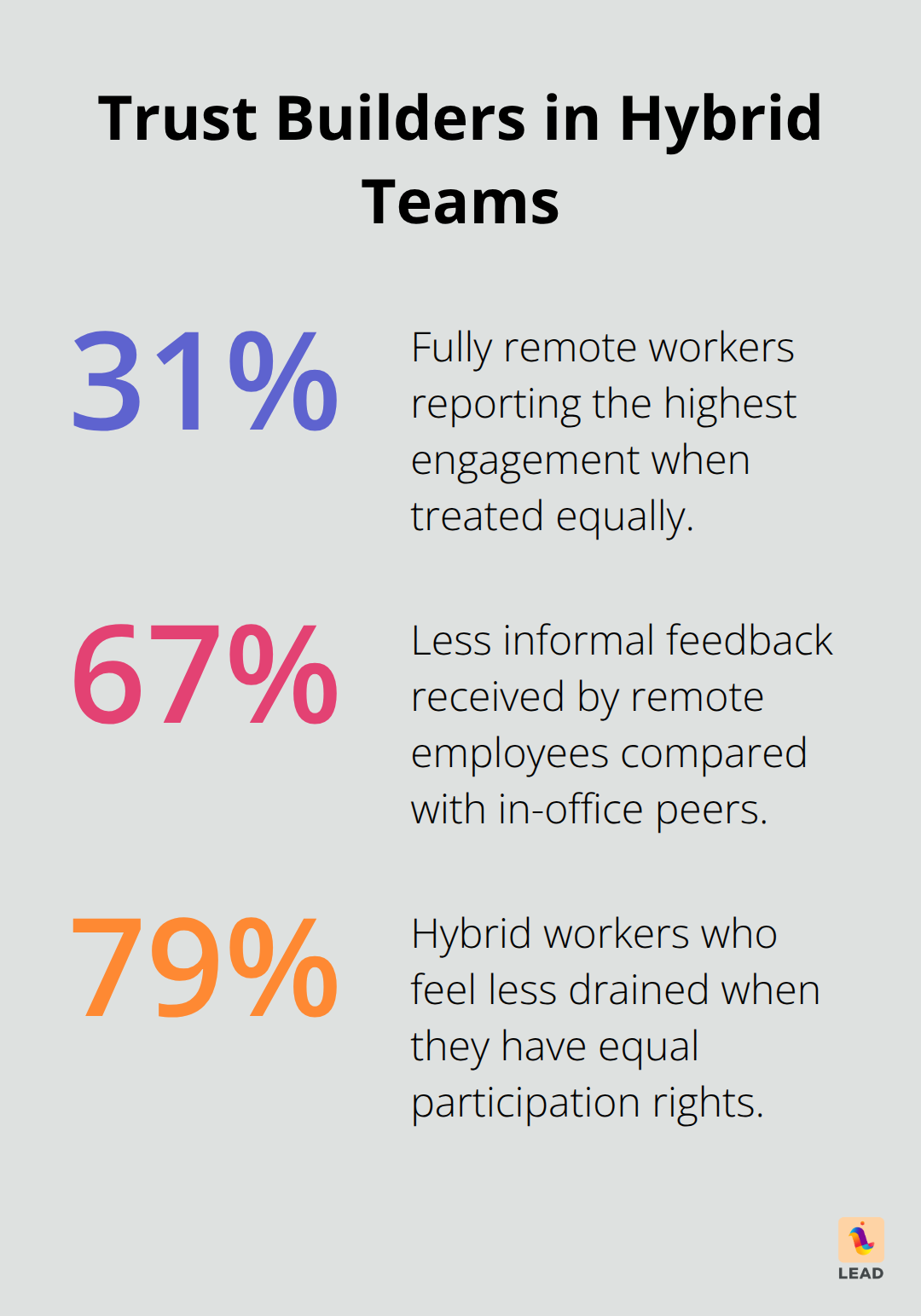
Trust crumbles in hybrid teams when remote folks get treated like second-class citizens. Gallup research shows fully remote workers are most engaged at 31%, compared to their hybrid and on-site counterparts at 23%. But that’s only when they snag that equal treatment. The kicker? Most managers play favorites with those parked closest to their office. Microsoft data unveils that remote workers get a whopping 67% less informal feedback than their desk neighbors.
Companies preach inclusion but practice proximity bias. Remote team members need the same lane to decision-making, project leadership gigs, and career advancement. Shake things up by rotating meeting leadership between locations weekly. During brainstorms, leverage digital whiteboards where all hands can contribute simultaneously rather than letting office folks hog the conversation.
Create Equal Participation Rights
TestGorilla found 79% of hybrid workers feel way less drained when they get equal participation rights. Make it a non-negotiable: no major calls during hallway chats that leave remote folks in the dust. Set up structured decision-making processes requiring input from all team members, no matter where they are.
Office workers often hog spontaneous chats that steer project direction. Counter this by scheduling formal input slots where remote team members can contribute equally. Use anonymous suggestion tools to level the playing field and nix location bias from warping idea evaluations.
Turn Small Talk Into Strategic Connections
Ditch the cringe-worthy virtual happy hours-they flop. Pivot to structured relationship-building that packs a punch. Schedule 20-minute cross-functional pairings monthly, rotating partners to bust open silos. Focus these sessions on work hurdles and expertise sharing rather than idle chit-chat.
Gallup data underscores that employees with strong workplace friendships are 70% more engaged. But building friendship needs intentional structure, especially in hybrid settings. Create project buddy systems pairing remote and office workers on specific goals. This builds work relationships through shared outcomes, not phony bonding exercises.
Stanford research indicates structured peer interactions boost team performance by 19% compared to unstructured social shindigs. Make relationship-building measurable by tracking cross-team collaboration frequency and project success rates from these partnerships.
Make Progress Visible to Everyone
Invisible work suffocates hybrid team trust faster than missed deadlines. When half your team’s remote, progress transparency’s non-negotiable. Implement daily progress dashboards that highlight real work done, not just hours clocked. Use tools like Asana or Monday.com, so every team member can see project status, blockers, and next steps in real-time.
The Office for National Statistics found hybrid teams with transparent tracking systems hit deadlines 34% more consistently than those relying on status meetings. Document decisions immediately in shared spaces accessible to all team members. Roll out weekly wins showcases where both remote and office contributors snag equal recognition.
This transparency isn’t about micromanagement-it’s about ensuring contributions are visible, no matter the location. When everyone gets the full picture of team progress, trust builds naturally through demonstrated competence, not just physical presence. But visibility alone won’t seal the deal. You need solid performance frameworks functioning across locations.
How Do You Track Performance Without Micromanagement
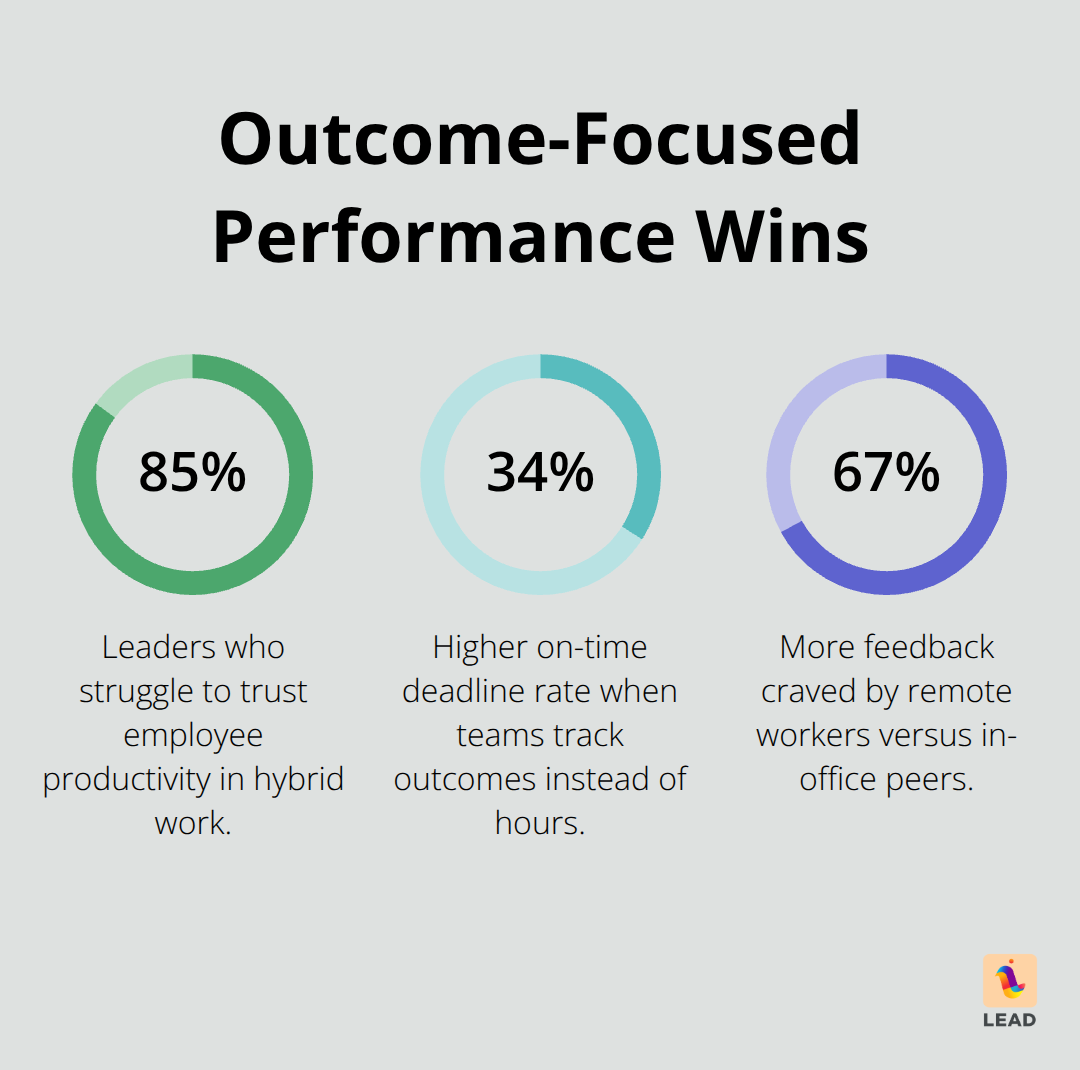
Hybrid work… the new normal, right? But performance management – it’s taking a nosedive because too many managers still cling to activity monitoring instead of outcome measurement. Microsoft’s research (yes, the tech giant) found a staggering 85% of leaders are struggling to trust that employees are, indeed, productive in this hybrid era. Why? Outdated frameworks that still think physical presence equals productivity. Spoiler alert – it doesn’t. Stanford University shows workers clocking in from home two days a week are just as productive as those glued to their cubicles when you judge them by results, not hours stared at a screen.
Focus on Output Metrics That Matter
Time-tracking, hourly check-ins… let’s toss those relics of the past. According to TestGorilla, 63% of CEOs witnessed a productivity uptick when they ditched hours-based metrics for deliverable-based assessments. Think specific, measurable outcomes – no more vague goals. Eye project completion, quality, and client satisfaction – forget login times.
Tools like Asana and Monday.com? Use them. They’re great for creating transparent dashboards where team members update status every day. The Office for National Statistics found that hybrid workers chasing outcome-based goals met deadlines 34% more often than their hourly-watching peers.
Implement Weekly Performance Conversations
Forget monthly reviews – they’re productivity anchors in hybrid setups. Gallup data tells us weekly feedback jacks up engagement three times over compared to just once a quarter. Keep it short, keep it sweet – 20-minute weekly one-on-ones focusing on finished deliverables, current roadblocks, and the coming week’s game plan.
Document these chats in shared systems (think visibility, not surveillance). And remember, remote workers crave 67% more feedback than their in-office counterparts, as per Microsoft’s workplace analytics.
Provide Technology and Development Resources
Hybrid models flop when remote workers don’t have the right gear or learning access. If companies are saving 90% on office costs, why not pump 30% back into tech and training for remote folks? Set them up with killer home office gear – quality monitors, ergonomic chairs, solid internet stipends.
Launch mentorship programs pairing remote workers with senior members for career growth. Firms offering equal development opportunities to all employees – desk and nomads alike – boast 76% better retention and speedier skill acquisition by 23%, according to fresh workplace studies.
Final Thoughts
So, here’s the deal – managing hybrid teams isn’t just about rolling out a fancy new Zoom background. It’s leadership with intention… and the results? They pretty much shout ‘success’ from the rooftops. Check this out: 83% of organizations are braving this wild hybrid terrain, and the ones nailing communication, building trust like it’s a Fortnite tower, and tracking performance by results instead of how long Jim from accounting spends at his desk? They’re hitting it out of the park. Stanford says, with the right management, hybrid workers hold their own against their office counterparts in productivity, while TestGorilla’s got 63% of CEOs winking and nodding at the productivity gains from clever hybrid tactics.
And the real kicker? The long game pays off even bigger. Roll out these frameworks and you’re looking at a 76% boost in retention, deadlines being met 34% more consistently, and teams amping up engagement by 70% through deliberate relationship-building efforts. Suddenly, your hybrid crew isn’t a migraine waiting to happen – it’s your secret weapon. These forward-thinking companies morph what could be a scatterbrained group into a well-oiled machine that leaves traditional office setups licking their wounds.
Here’s the blueprint: carve out clear communication windows, keep progress tracking transparent as your grandma’s living room windows, and shift focus to deliverables, not butt-in-seat time. If you’re serious about supercharging team collaboration and engagement, LEAD.bot is your jam – it’s ready to plug into Slack or Microsoft Teams, offering pulse surveys and network analysis so you spot those collaboration cracks before productivity takes a nosedive. The future is bright for leaders who tweak their playbook for this new hybrid reality.