
Hybrid work models have taken over—83% of organizations are in on the game. But here’s the kicker: most leaders are floundering when it comes to managing these scattered teams. Why? Because it’s not easy to play ultimate frisbee when you’ve got half the team on Zoom and the other half in the office break room.
Over at LEAD.bot, we’ve sifted through mountains of data on successful hybrid leadership patterns from hundreds of companies. And what’s the stumbling block, you ask? It often comes down to sloppy communication protocols and a total lack of clarity. Basically—people don’t know who’s on first or what the heck they’re supposed to do.
So, training in leading hybrid teams? It’s become the go-to for modern managers who are determined to keep the band playing together while offering the freedom of a choose-your-own-adventure work style.
What Communication Framework Actually Works for Hybrid Teams?
Alright, let’s talk about where hybrid teams often crash and burn-treating communication like a game of chance. Hybrid workers deal with a cocktail of collaboration headaches thanks to policies that often feel as fair as a coin toss. The solution isn’t drowning in meetings-it’s about nailing the art of structured information flow.
Set Communication Rules That Stick
Your crew needs GPS-level clarity on when to tap into which channel. Instant messages? Perfect for those quick-hit updates under two sentences. Video calls? Essential for those decisions that need a good debate. Emails handle the heavy lifting for detailed project updates that need to be on record. And those Slack or Teams threads? They’re for your mission-critical, ongoing project chatter. No exceptions. No gray areas. Teams with rock-solid channel protocols land on smoother communication shores. Keep these rules as visible as your office coffee machine and enforce them like clockwork.
Master the Sync-Async Balance
Here’s where the leadership ship often takes on water: opting for either all-sync or all-async dialogue. The savvy hybrid captain? They chart a 60-40 course-60% async for the deep dives and documentation, 40% sync for the human-to-human stuff and tackling those brain-bending problems. Nail down your sync moments during those core overlap hours (think 10 AM to 2 PM in your main timezone).
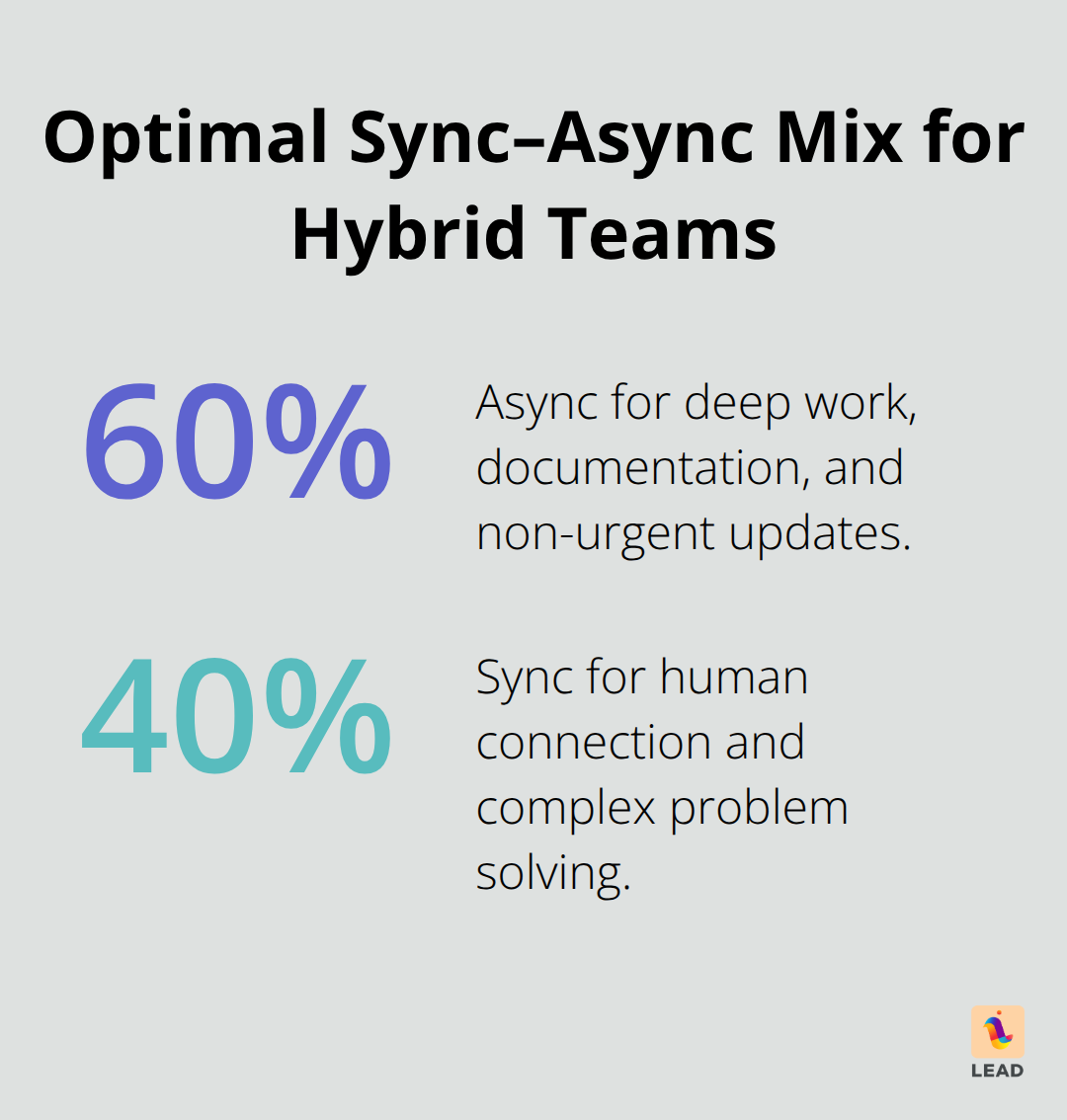
Async methods are your MVP for status updates, project archives, and feedback that’s non-urgent. This tactic lets remote warriors contribute without suffering the timezone tango.
Run Meetings That Don’t Suck for Anyone
Pro tip: always throw in a virtual meeting link, even for the in-person pow-wows. Cameras on, people-engagement isn’t optional. Kick off every meeting with a quick two-minute personal check-in-it’s glue for team connection. Meeting recordings and cliff notes? Ship them out within 24 hours, pronto. And don’t forget to rotate those meeting times-play fair with those global clock differences. Teams that play by these rules? They tend to buzz with higher satisfaction scores from the remote crew.
Bottom line, these communication pillars build the trust and transparency hybrid teams need to not just survive-but thrive. Yet, let’s be real, communication alone won’t weave the deep connections that keep your team jazzed and rolling strong over time.
How Do You Build Real Connection in Scattered Teams
Let’s get one thing straight-trust just doesn’t magically appear in hybrid teams. It’s like trying to grow a garden with no seeds. So, here’s the skinny: the folks most anxious about hybrid work? They’re also the ones teetering on the edge of burnout. Why? No hybrid plan-a roadmap to nowhere. So, spare me the endless team-building exercises and rah-rah emails. What you really need are meaningful touchpoints and a solid way to separate the wheat from the chaff-what works and what’s noise.
Schedule Connection Points That Count
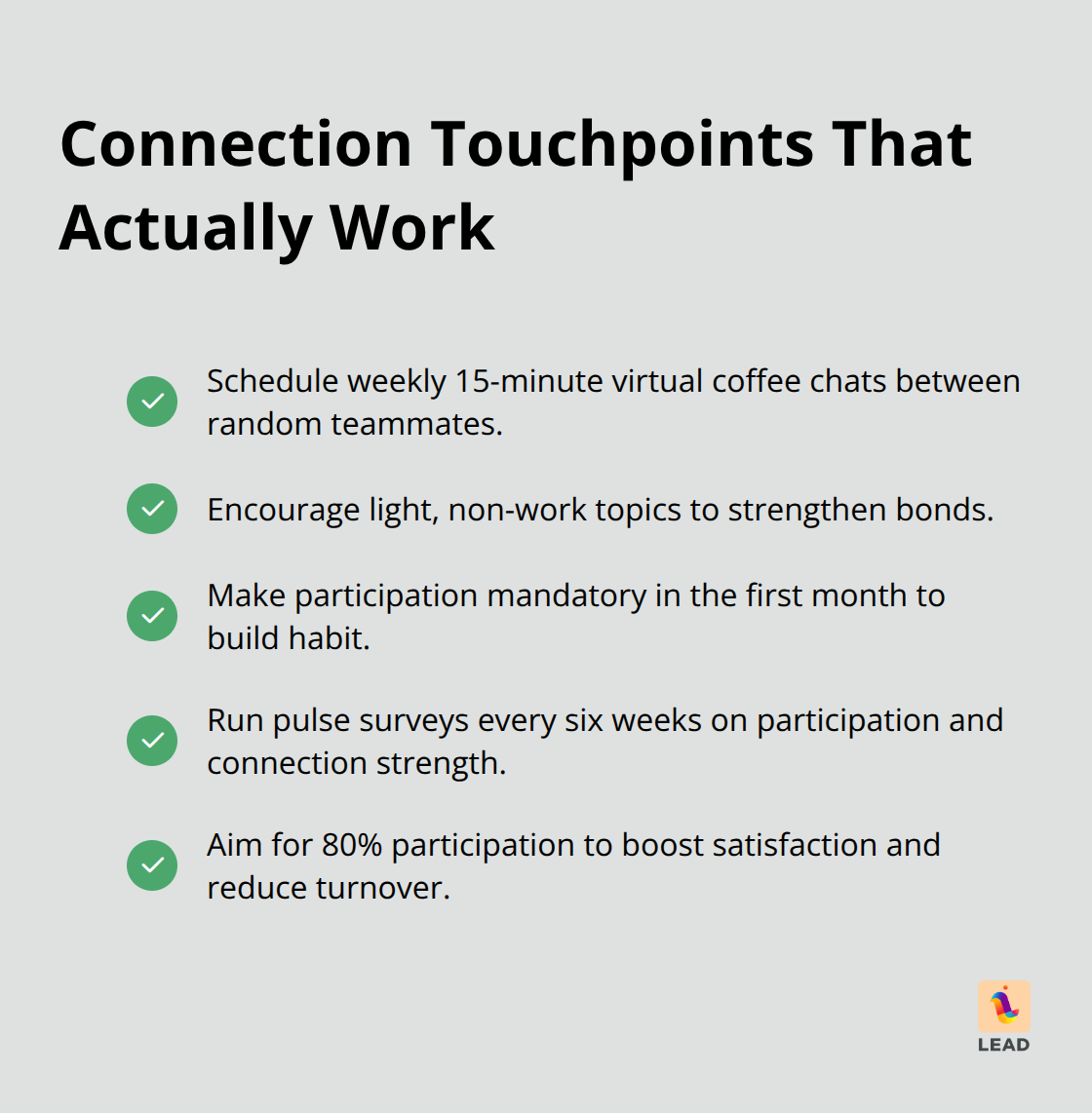
Listen up: weekly virtual coffee chats-between random team members-trump quarterly all-hands meetings any day when it comes to building real connections. Set up 15-minute no-work banter slots. Talk pets, hobbies, how the weekend warrior marathon went. Because… teams tied together with strong bonds are 21% more productive than those lacking these informal, yet crucial, interactions. Make it compulsory first month-let the good times roll from there.
When it’s time for mid-year reviews, focus on relationships too-not just how many to-dos got checked off. Pulse survey your team every six weeks on participation and connection strength. Teams hitting 80% participation in these informal meets report higher job satisfaction and lower, you guessed it, turnover.
Use Data to Spot Problems Before They Explode
Pulse surveys-these aren’t just feel-good feedback loops. They’re like your team’s early warning system. Ask these monthly: How’s your connection vibe with teammates? Are priorities clear as day? Feeling the leadership love and support? Teams that weave these into the routine catch signs of isolation sooner than those relying on yearly reviews.
But here’s the kicker: don’t just collect the data-act fast. Two weeks, max, or folks will ghost you. If scores dip below seven out of ten, book one-on-ones yesterday. Companies plugging into sentiment data monthly? They see better retention than those sticking to the old quarterly or annual check-ins.
Address Isolation Head-On
Remote work’s got its own bag of tricks-challenges office folks don’t even sniff. So, drum up protocols for remote team members to spit out concerns fear-free. Buddy up remote and office-based colleagues for weekly non-work check-ins-just good old human connection.
Here’s a pro tip: diverse employees tend to struggle more to pipe up in remote settings. Leaders-be the megaphone. Create space with structured feedback sessions and anonymous suggestions. Teams tackling isolation head-first report sky-high engagement scores compared to those hanging back until things hit the fan.
Connecting is the bedrock of any solid hybrid team, but hey, it falls flat without crystal-clear performance standards and accountability measures-regardless of where your team’s spread.
How Do You Track Performance Without Micromanaging
So, here’s the deal with managing performance in hybrid teams-you’ve got to ditch that archaic obsession with clocking in and out. Time cards in the digital age? Nope. We’re talking a seismic shift to results-driven metrics. Picture this: your folks scattered around the globe, dialing in from their dens, their kitchen counters. You think you’re tracking their hours? Forget it. The real winners are those leveraging S.M.A.R.T. goals. They set the stage for better outcomes by anchoring goals in clear expectations. Keep the focus on weekly deliverables-metrics that matter-versus those grinding daily check-ins. By the way, Microsoft discovered 85% of remote workers felt more productive when bosses measured tangible results, not just chair time. So, you’ve got to build dashboards that spotlight project wraps, quality rates, client smiles…the works…but skip tracking every login or endless Zoom sessions.
Track Collaboration Patterns Through Data
Flexibility isn’t just a buzzword-it’s driven by data. Network analysis tools are your radar, offering a view into employee engagement. Strong cross-links between teams? They’re fast-tracking projects. Meanwhile, you’ll want to keep tabs on how often folks are chatting, how quickly they’re responding to those important pings, and participation in collaborative tech. The moment those numbers drop, don’t sit back-jump in with structured pairing sessions or inter-team gigs. Monthly check-ins on these metrics? They’re your early warning system versus those sluggish quarterly evaluations.
Build Flexibility With Hard Boundaries
Ah, flexibility that sticks…it’s all about clear boundaries. You need core hours-plain and simple-when everyone’s reachable. Think four hours of global overlap. Outside those hours, response times stretch to 24 hours for non-urgent stuff (unless the sky is falling). Scribble down all processes so the team’s brainpower doesn’t vanish when someone’s offline. Documented workflows? They’re the secret sauce to fewer delays when your MVPs are on different rhythms. Use project tools that timestamp every move, tracking individual chops without the over-the-shoulder routine. Your golden mean? Maximum freedom paired with zero guesswork on deadlines.
Address Performance Issues Early
Nip performance snags in the bud before they escalate. Weekly one-on-ones outperform those monthly sit-downs, especially for remote crews needing regular feedback circuits. Make these chats about tackling hurdles and figuring out what’s needed, not just stale status reports (leave those for async updates). When things go south, dig into the whys first-usually, it’s foggy expectations or resources fall short, not a motivation famine. Teams jumping on performance glitches within two weeks bounce back far better than those sitting tight for formal evaluations.
Final Thoughts
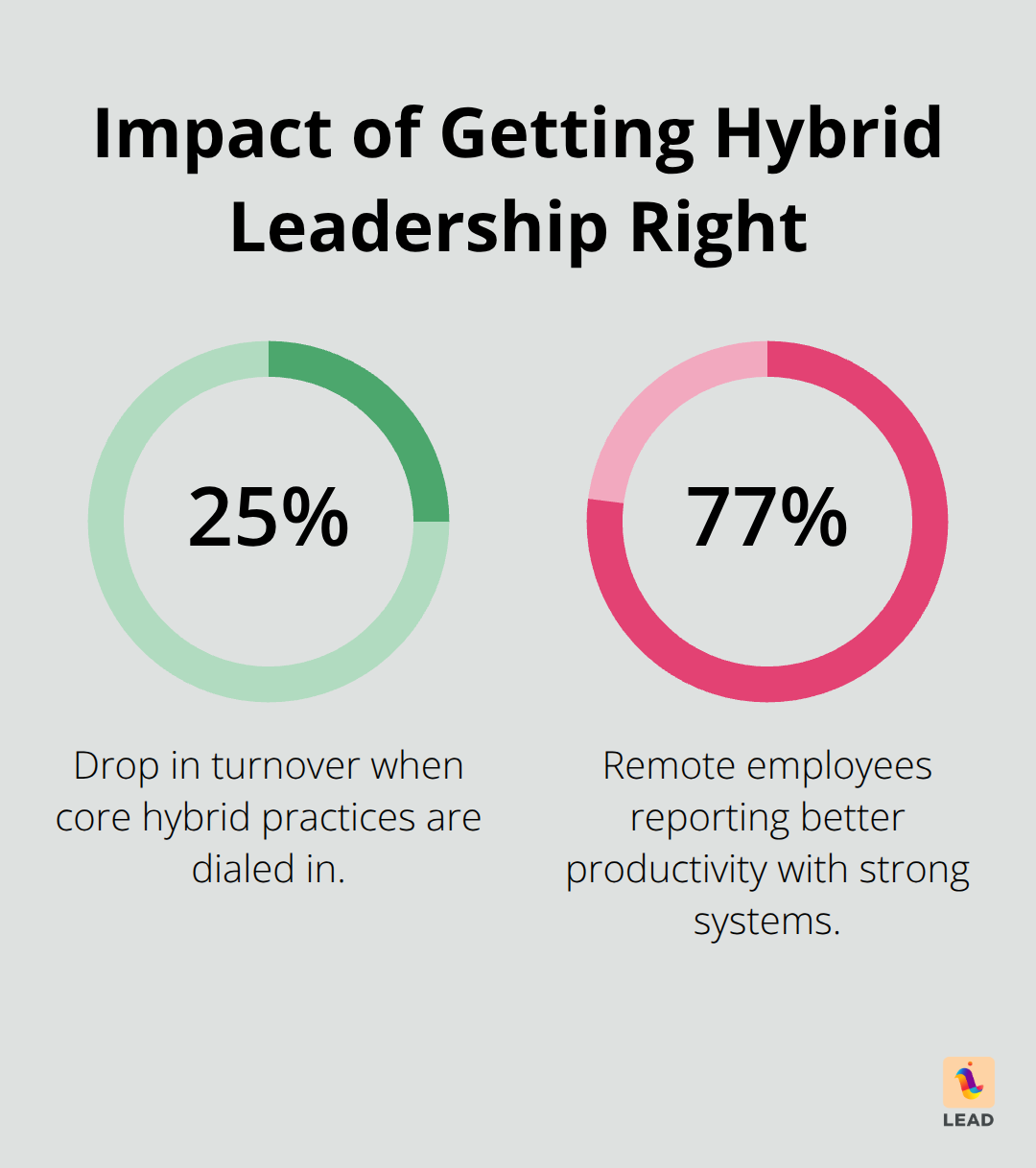
Alright, let’s break this down. Leading a hybrid team? Think three things – structured communication protocols, that means having specific ways you talk to each other; intentional relationship development, which is all about actually caring who’s on your team; and results-focused performance measurement, for knowing who’s crushing it. The good stuff happens when companies dial in on these. Data-driven strategies, folks, that’s what keeps the fog at bay. Get this right, and what do you get? A 25% drop in people turning over. And for the remote crew? 77% shout out to better productivity.
Yeah, those are not numbers you ignore.
And here’s the magic – it’s the gift that keeps giving. Nail the basics early, and your team builds the momentum to breeze through future hurdles. Wanna win? Get a strong foundation; don’t just wing it. Your secret sauce? Systematically apply those leadership elements. Dial them in with precision – not a sprinkle here and there like you’re seasoning a soup.
Your move is simple. Kick off with one communication protocol this week – just one – then branch out. We’re at LEAD.bot (you know, those cool folks at workforce collaboration tools), and we’ve seen it firsthand. Teams using these tools to keep their networks tight blow the improvised ones out of the water. The ace up the sleeve? Proper systems making the unseen seen – keeping folks connected, not relying on blind luck.