
The future of leadership? It’s gonna be all about juggling hybrid teams. Yep, as in those 73% of organizations gearing up to keep flexible work models rollin’ past 2025. What does that mean for bosses? Well, remote and in-office folks need totally different management styles—so it’s like riding two horses with one backside.
Here at LEAD.bot, we’re watching leaders sweat bullets trying to balance the whole virtual meet-up scene with the good old face-to-face action. This tidal wave of change demands fresh skills—think Jedi-level—and shiny new tools. Plus, strategies… lots of them… to keep the crew productive and (here’s the kicker) actually engaged, no matter the work environment.
Essential Skills for Hybrid Team Leadership
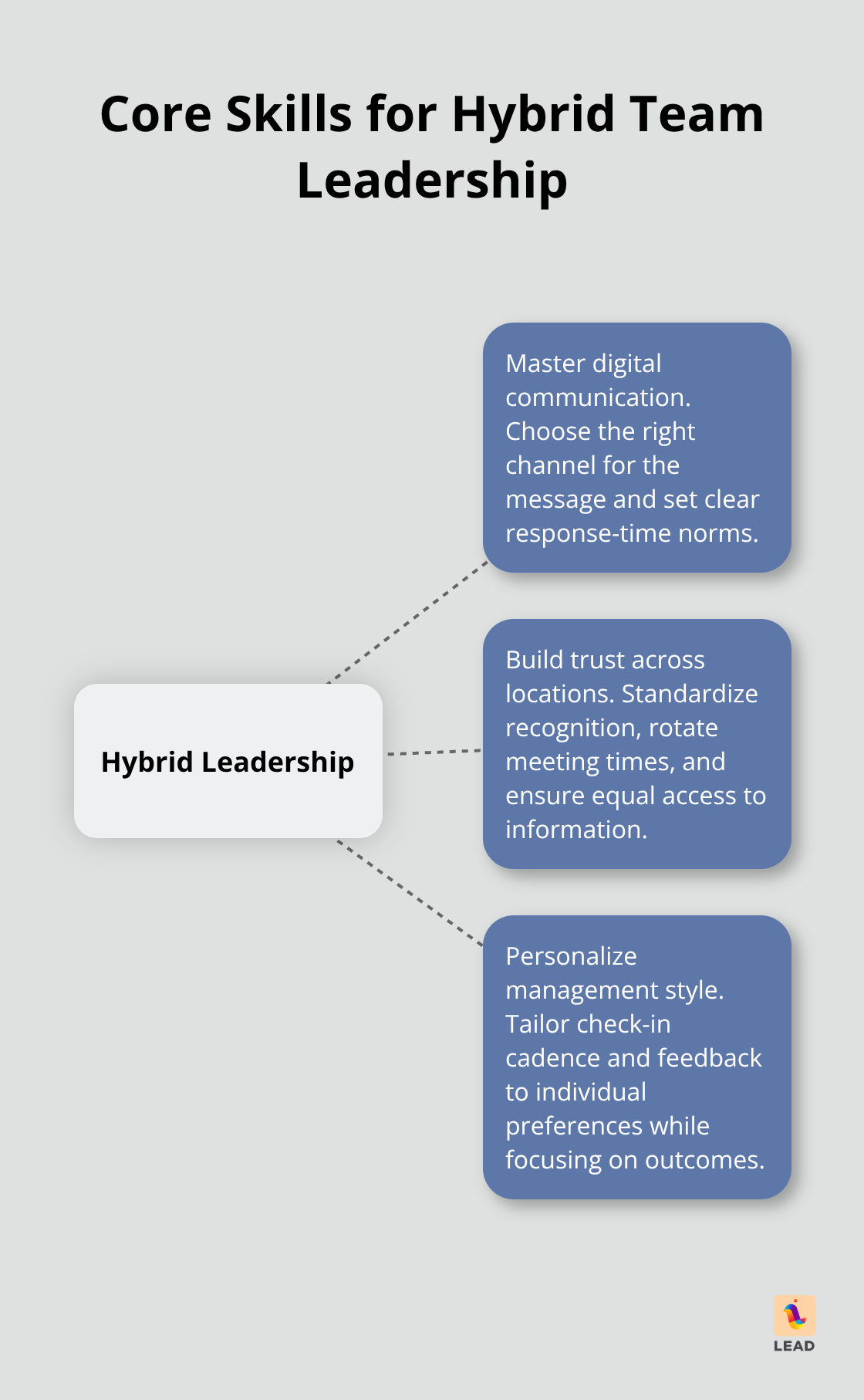
Hybrid leadership-yeah, it’s a whole different beast. Nailed to three must-have skills that make or break managers navigating this maze of complexity. First up, communication platform mastery. Hint: It’s not just about Zoom calls. Companies thrive with hybrid schedules when in-person counts-big time. But…many of you? Still digital novices trying to lead. Become fluent in asynchronous communication-use Slack or Teams. Know when to hit video vs. text. Set response time rules in stone. Gallup shouts out-79% of employees want flexibility as their top pick in an employer. But without laser-focused digital communication? That flexibility…poof, crumbles away.
Master Digital Communication Platforms
Good hybrid leaders? They know their channels-like, really know them. Complex convo? Cue the video calls. Quick ping? Shoot an instant message. Formal stuff? Yeah, that’s an email job. These leaders, they don’t mess around with expectations-urgent matters? 4 hours. Routine? 24, tops-and train teams on how each platform plays.
Oh, and they love a good communication audit-roots out gaps, makes the workflow hum.
Build Trust Across Physical and Virtual Spaces
Trust-it ain’t a wish you make; it’s action. Remote workers? They’re staring down a 35 percent higher layoff risk thanks to that pesky proximity bias. Favor the folks in the office-promotions, big projects-yeah, that’s real. Break through with standard recognition, rotate meetings for time zone fairness, and equal info access for all. Weekly one-on-ones? Talk results, not clocked hours. Make those decisions transparent-share with everyone alike.
Adapt Management Style to Individual Work Preferences
One-size-fits-all management? Throw it out. The savviest hybrid leaders? They get that. Harvard Business Review says tailoring to individual styles jacks up productivity 22%. Some folks need daily check-ins; others, a weekly roundup. Scope out their comms frequency, feedback flavor, productivity peaks. Craft personal growth plans tapping into their strong suits, not clamping them in the 9-to-5 mold.
These core skills-yeah, they’re the secret sauce to success. But don’t forget, the right tech deck is your wingman in supporting your teams for the win.
Tools and Technologies for Hybrid Team Success
The right tech stack? It’s what separates the hybrid teams hitting it out of the park from those barely getting by. Companies embracing integrated collaboration platforms are tapping into solid research-covering individual to societal levels. The savvy leaders? They choose platforms that do it all-video chats, file shares, managing projects, instant messaging-in one slick package.
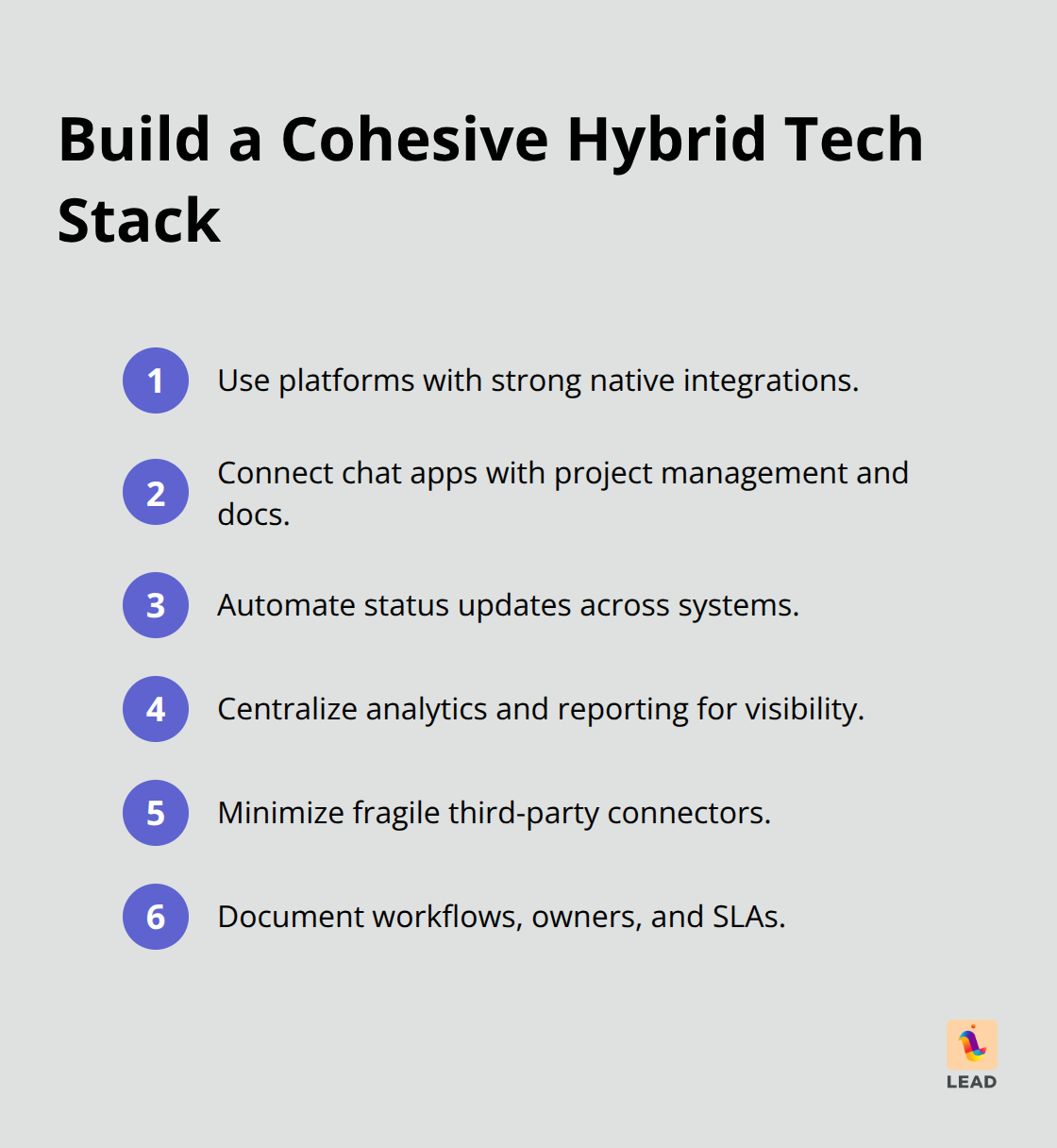
Slack and Microsoft Teams are the big players. But the real magic? It’s layering in specialized tools. Yeah, Asana or Monday.com for projects, Figma for design collabs, Miro for visual brainstorms. Key takeaway: stop handling tech like isolated islands. Your communication setup needs to chat with your project management gear, which should sync with your analytics board.
Collaboration Platforms for Seamless Workflow
Today’s hybrid teams need systems that tie each workflow thread. Teams using cohesive ecosystems see fewer slip-ups and speedier project wrap-ups. Pick platforms with built-in connections over patchy third-party fixes (trust me, they’ll tank when you need them most).
Set up workflows that auto-trigger pings across your tools. When Asana says “task done,” the team channel lights up and key players get the nod. The sharpest hybrid managers? They set these links once, let automation handle the mundane, and save headspace for big-picture moves.
Performance Tracking and Analytics Solutions
Counting hours? So last century. Today’s hybrid heavyweights use Tableau or Power BI to track real-world metrics: project wraps, customer smiles, teamwork vibes. Companies diving into data-driven performance management get insights into remote-friendly team spots and preferences to nail hybrid strategies.
Automated dashboards? They show what’s real: revenue per head, customer ping times, innovation line items. Elite hybrid managers check these weekly-not monthly. They catch productivity slumps early and spotlight standout stars, no matter where they are. Tools like Worklytics or Humanyze dig into comms patterns to bust collaboration jams and find your in-house gurus.
Virtual Team Building and Engagement Tools
Team building? It’s not forced socializing-it’s crafting real connections. With Donut for Slack, you get random coffee dates; Kahoot turns online meetups into interactive-not drab-sessions. MIT research? It says teams with tight social bonds crush complex tasks by 35%.
Host virtual lunch-and-learns, wield breakout rooms wisely, juggle meeting slots to suit different clocks. Employee engagement activities foster natural networking via virtual coffees and set check-ins, sparking the connections that remote work tends to starve.
Tech sets the scene for success, but even top-notch tools can’t solve every puzzle hybrid teams face.
Overcoming Common Hybrid Team Challenges
Hybrid teams crash and burn on three oh-so-predictable fronts. First up-communication breakdowns. Microsoft research says remote folks miss out on 67% of those juicy informal info exchanges buzzing around in offices.
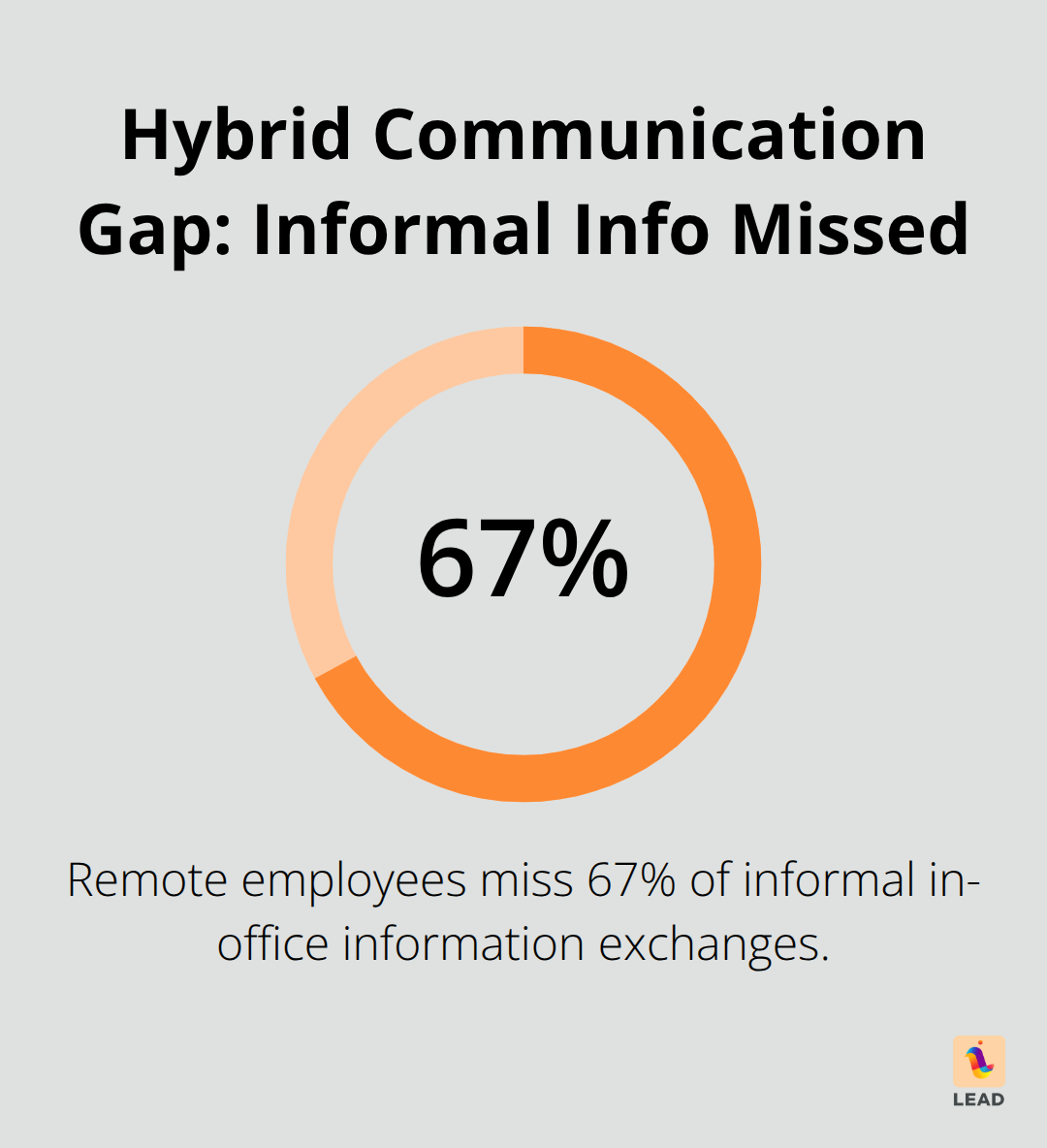
So, leaders need to crank up the info redundancy systems. Hit them with key updates through three channels: email, team chat, and a video recap. Overlap hours-everyone, online, same time. Communication protocols? Set ’em up, with specified response times pinned to urgency levels. Institute those weekly team syncs. Why? To cover both project updates and those casual chit-chats that echo the water cooler vibe.
Address Communication Gaps and Misunderstandings
Information silos-they’re like kryptonite for hybrid teams, wrecking them faster than any tech glitch. Smart move? Build a maze of touchpoints for critical updates. Settle on daily standup calls for those make-it-or-break-it project teams. Create shared documentation hubs-everyone gets the info buffet. Weekly all-hands meetings are a must, not a nice-to-have. Hybrid management superstars have communication champions in each locale, who pass along crucial updates and cultural nuggets remote workers usually miss.
Prevent Social Isolation and Maintain Team Cohesion
Social isolation? It torpedoes hybrid team mojo faster than a dodgy internet connection. Remote workers are dialed in but lonely, stressed, and riding an emotional rollercoaster. The fix? Structured connection ops. Pair remote folks with office-side buddies for weekly virtual coffee chats. Shake up leadership roles in meetings, letting remote peeps grab the spotlight. Craft dedicated Slack channels for pure, unfiltered non-work chatter. Monthly virtual team lunches where work talk is banned-lock it in. Track who joins these social gigs and reach out if someone keeps ghosting. Make connection non-negotiable.
Balance Flexibility with Accountability
Flexibility without a side of accountability is a recipe for chaos. Top-notch hybrid teams flip the script with outcome-based metrics-not activity tracking. Clear as day deliverables, deadlines, and standards. Weekly progress check-ins zero in on results, not time clocks. Project management tools? Use ’em-they offer real-time progress peeks for all team members. Peer accountability is the secret sauce-team reports progress to each other, not just the big boss. Missed a deadline? Jump in with one-on-one chats that tackle hurdles head-on. The best hybrid leaders? They treat flexibility like a badge of honor-earned by consistent delivery, and what better way to keep it that way.
Final Thoughts
The crystal ball for leadership? Yeah, it’s hybrid teams. Those who nail it will conquer their markets. Imagine this: Companies ditching the clock-watching and focusing on outcomes see a 22% bump in productivity. Meanwhile, the dinosaurs clinging to office hour obsession? They watch top talent stroll out the door. Adapt or perish, folks.
Three must-haves for smashing hybrid leadership: killer digital communication, trust in every corner, and a management style that’s as personalized as your Spotify playlist. Sure, your tech stack needs some muscle, but the real MVP? The human touch. Leaders crafting structured link-ups and using data to steer performance-those are the ones building organizations that can take a punch and keep going.
The long-term champs? The ones who see hybrid work not as a headache, but as their secret weapon. These savvy players pull in top talent from every corner, trim those nasty overheads, and create cultures buzzing on flexibility and deliverables. Ready to revolutionize your hybrid strategy? LEAD.bot slots right into your Slack and Teams to crank up collaboration and engagement (think network insights and casual virtual coffee chats).