
Teams are losing time to scattered docs, duplicate work, and AI tools pulling from stale information. This guide on How to Implement Innovative Knowledge Management focuses on the practical systems, choices, and habits that make knowledge more usable. Today’s challenge is turning knowledge into something people can actually find and use across fast-moving teams.
Over at LEAD.bot, we’re watching organizations wrestle with these outdated approaches…which are more like walls than bridges, really. The secret sauce here? A seismic shift from static storage to dynamic, AI-powered ecosystems—ones that actually adapt and learn (imagine that).
The companies that are killing it today? They’re building knowledge systems that think, connect, and evolve right alongside their teams. That’s the future, folks.
What Makes Knowledge Management Actually Work
AI Transforms Knowledge Discovery Into Precision Science
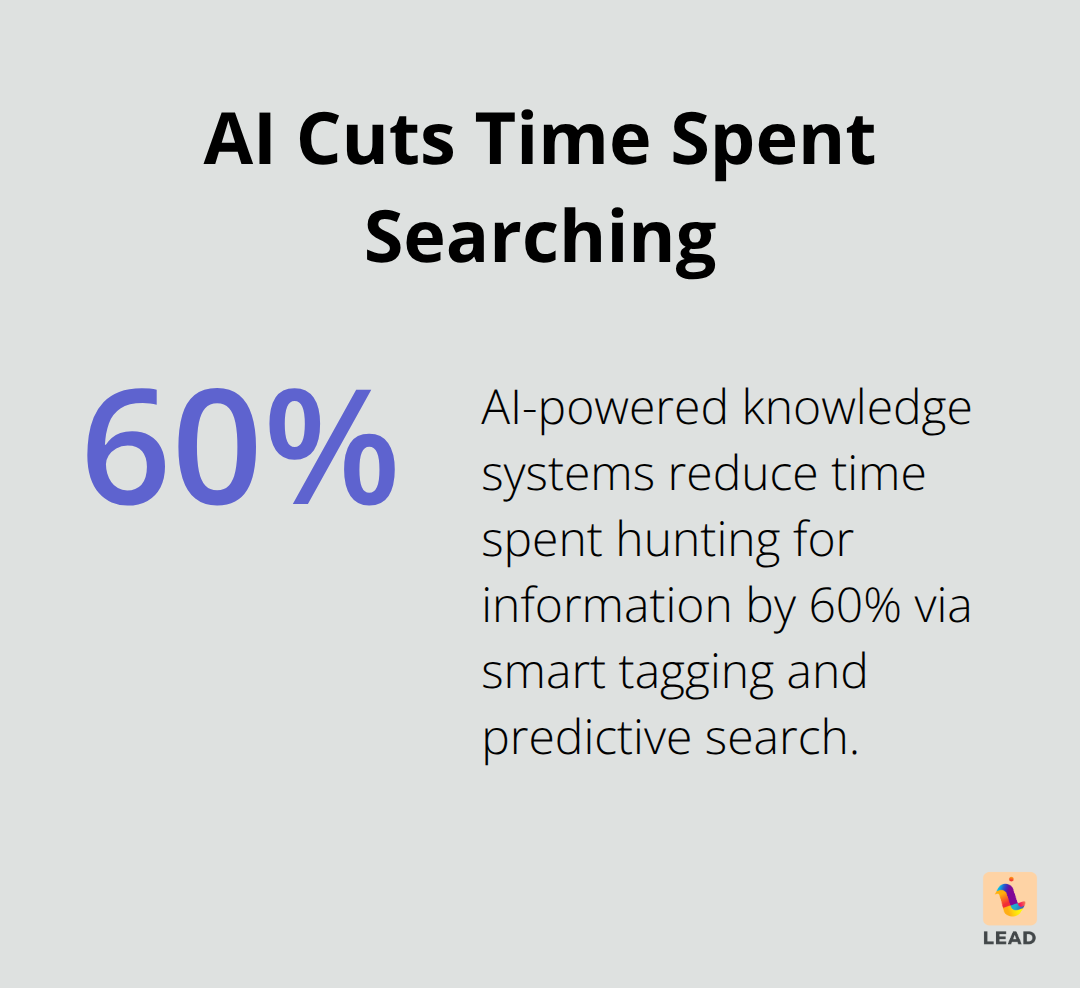
AI is taking knowledge management from the land of guesswork into the world of precision science-it’s like going from throwing darts in the dark to, well, using a laser-guided missile. Machine learning matching logic dive into oceans of organizational data, fishing out patterns our puny human brains miss. Microsoft says workers squander 3.6 hours daily hunting for information. That’s painful. But bring in AI-powered knowledge systems, and bam! A 60% reduction in this wild goose chase through smart content tags and predictive searches.
These systems are mind readers, learning from user behavior, categorizing documents on autopilot, and creating connections across departments that you’d think defy the laws of physics. And the kicker? AI doesn’t just fetch what’s there-it spots the missing puzzle pieces and sends up flares before minor hiccups turn into major messes.
Dynamic Networks Connect People and Expertise
Static repositories-in a word, tombs. You want dynamic networks-living webs that make information dance between people, projects, expertise. That’s why knowledge management is a top-three issue shaking up company mojo, per Deloitte’s Global Human Capital Trends study. These systems? They’re like GPS for who-knows-what, tracking transfers of wisdom in real-time and pinging just the right expert when challenges pop up. The real wizardry happens when tacit knowledge-the stuff that used to disappear with a departing employee-gets captured and translated into searchable, actionable smarts.
Social Learning Outperforms Traditional Methods
Thinking outside the dusty textbook pays off-big time. Collaborative environments smash traditional methods by a staggering 300%, says PwC. Social platforms evolve into arenas where employees create content, share adventures, and tackle puzzles collectively. Danone rolled this out, letting 1,000 content maestros across 30+ countries do their thing, slashing costs by 40% while pumping up knowledge retention. These spaces thrive on the exchange of battle-tested, real-world wisdom, not dry, theoretical babble. The secret sauce? Systems that actually reward knowledge sharing through gamification, recognition, and chances to climb the career ladder (not just hollow applause).
Technology Integration Makes Knowledge Flow Seamless
Where do the best knowledge systems plug in? Right into the heart of the tools teams already live and breathe. When your knowledge management chats with your communication and project tools, adoption rates? Through the roof-because nobody wants to learn a new interface or mess up what’s working. This seamless blend forms the bedrock for developing a knowledge management strategy that delivers real business oomph.
Which Technology Solutions Actually Drive Knowledge Management Success
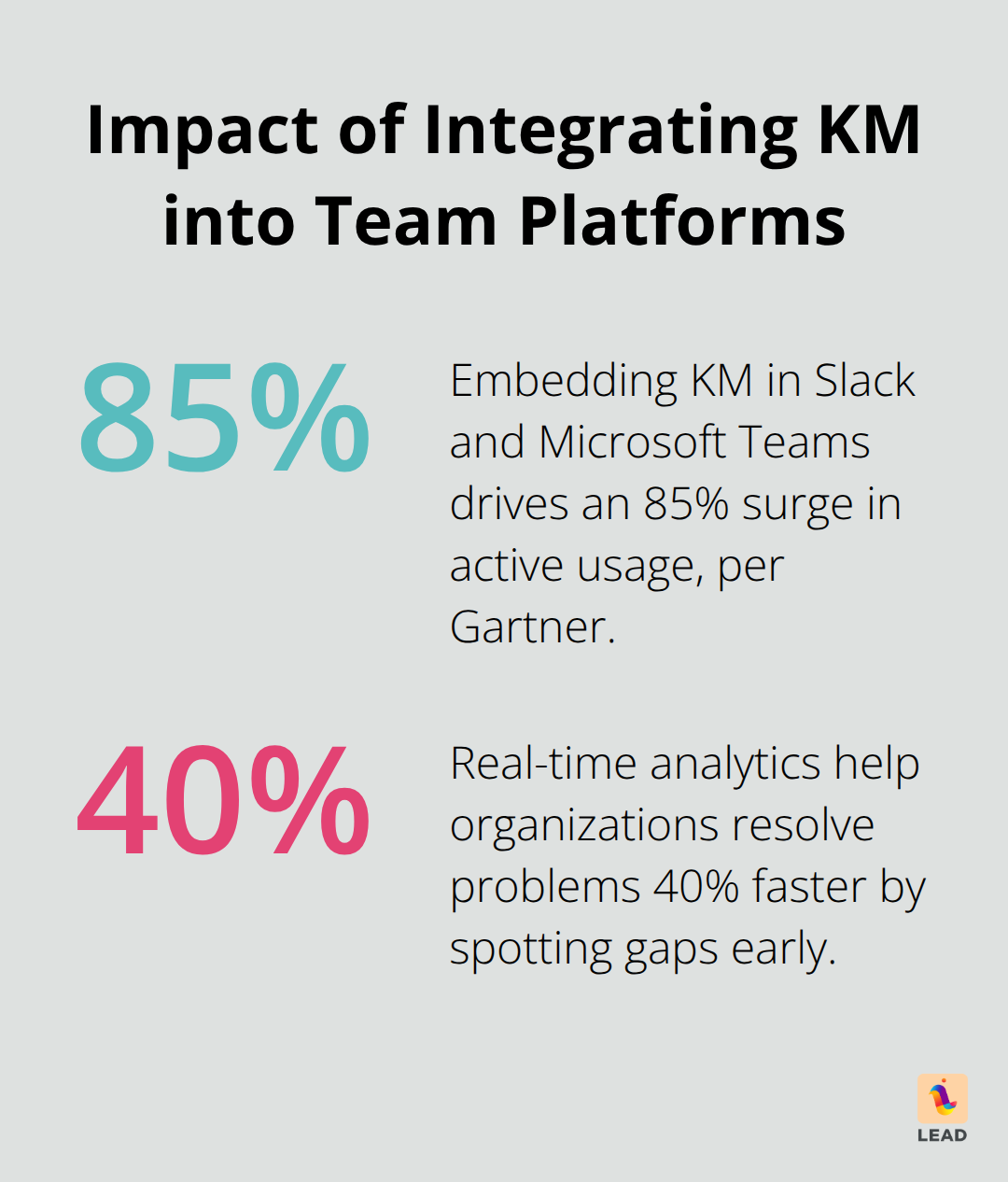
Picture this – carving out a tech stack that’s not just smart, but lives right where the action is. It’s about dropping knowledge tools into the likes of Slack and Microsoft Teams… and what do you get? An 85% surge in people actually, y’know, using them. Yep, per the whiz kids at Gartner. Why? ‘Cause it wipes out the hassle that usually torpedoes these initiatives before they even leave the dock.
When you’ve got folks accessing expertise, trading insights, and locking down knowledge without doing the platform cha-cha, it’s not optional – it’s automatic. Think of these platforms not just as chat rooms, but more like knowledge superhighways. Every convo? A potential nugget of wisdom, logged and searchable.
Communication Platform Integration Drives Adoption
Smart cookies over here – they weave knowledge management right into the everyday tools. Slack and Microsoft Teams aren’t just chat spots; they’re the natural habitats for knowledge capture. Those who tap into these, instead of standalone doodads, see engagement soar to 3x. That’s where the magic stirs.
It’s about making knowledge flow effortlessly in the regular workflow. While teams chat about projects, insights get scooped up by the system – as if by magic. It’s seamless, busting down any hurdles like having to recall to update a separate database or grapple with new software.
Real-Time Analytics Transform Decision Speed
Step into the world of Pulse survey systems – flipping knowledge management from playing catch-up to gazing into the crystal ball. Companies wielding real-time analytics crack problems 40% faster – stopping knowledge gaps before they even get a chance to clog up the works.
These systems track who’s vibing with what info, who’s the MVP contributor, and where knowledge traffic hits a snag. This data paints a picture, letting managers fix gaps before they morph into mountains. Organizations can pinpoint trending topics, size up knowledge quality, and tweak content based on what actually gets eyeballs.
Network Analysis Reveals Hidden Expertise
Here’s the kicker – the finest pearls of wisdom often sit with folks who’re, well, not shouting from the rooftops. Enter network analysis tools that map out these silent superstars and decode who knows what, and who’s pulling strings behind the scenes.
The folks at MIT reckon that companies using this mapping wizardry hack down the time-to-expertise by a whopping 50%. Instant match-making between problem-solvers and knowledge keepers turns hidden smarts into a powerhouse of shared intelligence driving killer outcomes.
Mapping lifts the veil on hidden experts, uncovers influence webs, and points out collab gaps that regular old org charts miss by a mile. It’s about unearthing those knowledge brokers linking departments and shining a light on expertise clusters that typically stay off the radar.
Integration Challenges Create Implementation Roadblocks
Even the slickest tech tools hit walls when organizations roll them out across the board.
Why Do 70% of Knowledge Management Projects Crash and Burn
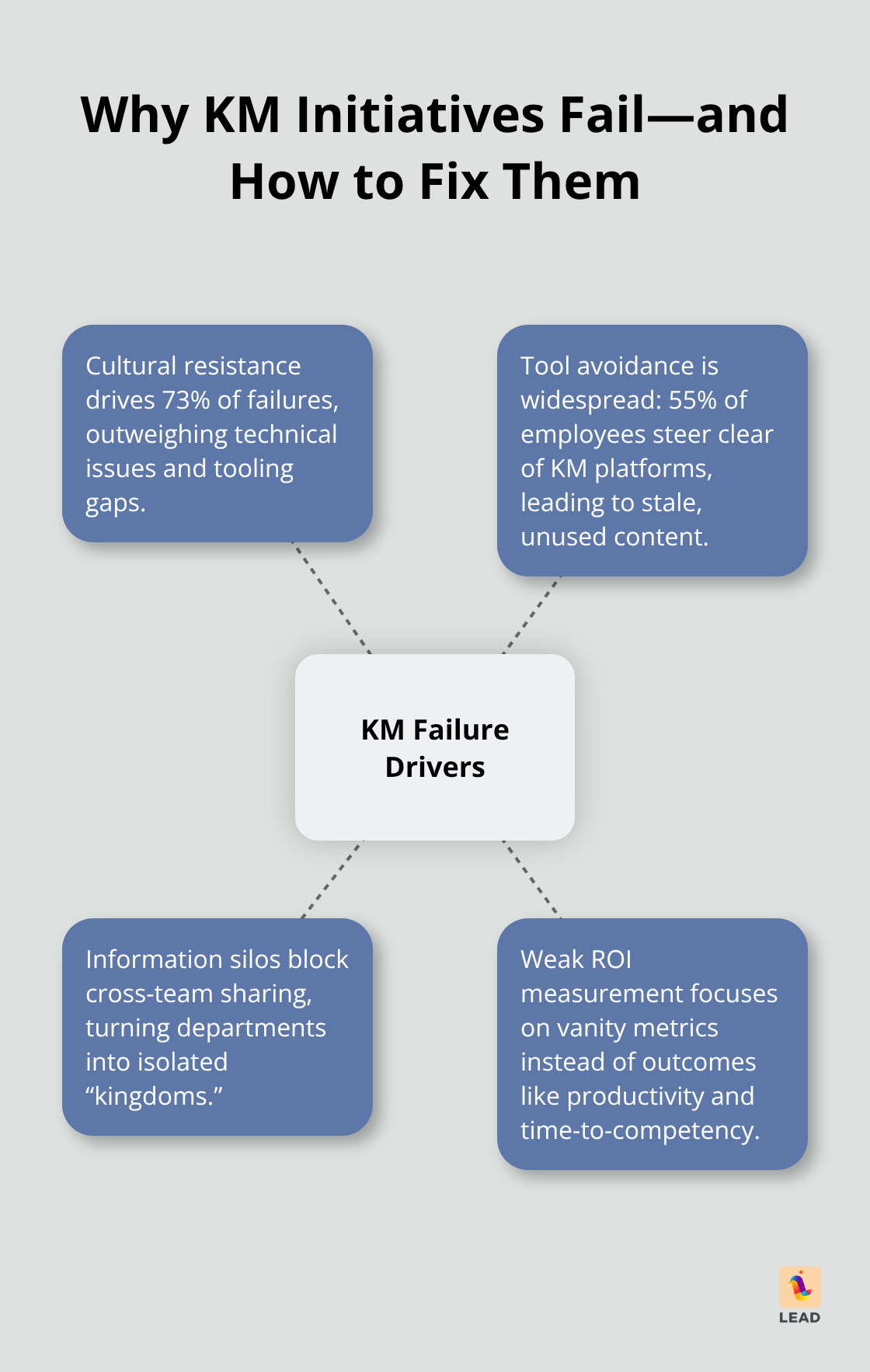
Here’s the brutal truth-most knowledge management projects bite the dust because companies slap band-aids on symptoms rather than tackle the root issues. They pour millions into shiny new platforms… and totally overlook the human dynamics that determine success or failure. According to IDC research, a whopping 55% of employees dodge these tools like the plague, creating digital ghost towns with content so outdated it might as well be from the paleozoic era. But this issue cuts deeper than just tech-it’s about smashing those castle-like departmental silos that hoard info like medieval kingdoms clutching their treasures.
Information Silos Turn Departments Into Competing Kingdoms
Sales? They’ve got the scoop on customer pain points, but do they share with product development? Nope. Engineering forges solutions without asking the market what it thinks. Marketing whips up campaigns without a clue from customer success teams. This isolating stance costs plenty, yet companies keep attacking the wrong enemy. The fix isn’t more meetings or collaboration mandates enforced by the fun police-it’s about designing systems that make cross-departmental knowledge sharing inevitable.
Organizations that roll out network mapping tools? They watch cross-departmental collaboration shoot up by 45% in just six months. These tools unearth hidden talents, pinpoint knowledge gatekeepers, and shine a light on collaboration voids you’d never catch on an org chart. Network analysis digs up the informal web where real knowledge flows-not the dusty old hierarchy that’s all bark and no bite.
Cultural Resistance Kills More Projects Than Technical Failures
Here’s the uncomfortable bit-employees resist knowledge sharing because the systems we’ve got punish them for it. It’s a dog-eat-dog world out there. Workers worry that spilling their secrets makes them expendable, while managers fret over losing their edge. Accenture finds that 73% of knowledge management crash-and-burns are due to cultural pushback, not tech hiccups.
The winning strategy? Make knowledge sharing a golden ticket in performance reviews and career ladders. Companies tying knowledge contributions to promotions see participation rates rocket 4x. Roll out splashy recognition programs where knowledge sharers become the rockstars of the organization, not faceless digits on a spreadsheet. Quit treating knowledge sharing as an extra chore-make it the roadmap to career nirvana.
ROI Measurement Separates Winners From Wishful Thinkers
Here’s where the winners pull ahead-they don’t measure success with fluff metrics like logins or document uploads. Those numbers… are totally irrelevant. Real winners track business impact: slashed time-to-competency for newbies, brisker problem-solving, less redundant work, and quicker decision-making.
Deloitte shows that firms with rock-solid KM measurement enjoy 25% more productivity gains compared to those winging it. Keep an eye on knowledge application, not just the churn of knowledge creation. Measure how shared insights morph into revenue spikes, cost slashes, and warp-speed innovation. The ones who nail it focus on outcome metrics: happy customers, slashed product development time, and low churn rates among top talents.
Final Thoughts
Okay, here’s the deal-innovative knowledge management needs a major facelift. Three big shifts: First, stop treating knowledge like it’s stuck in a library… think of it as a living, breathing network. Second, embed tools right into the workflow (don’t make people jump through hoops to use ’em). Third, focus on real business outcomes (ditch those vanity metrics). Nail those, and boom-you’re looking at a 25% jump in productivity and resolving problems 40% faster. It’s a big change, but hey, results don’t lie.
The real gold here? Long-term benefits. Companies with souped-up knowledge systems-well, they’re pretty much ready for AI without breaking a sweat. When your organization’s already got a map of expertise, collects tacit knowledge, and busts down silos, AI doesn’t hit a brick wall of culture-it speeds up because the groundwork is solid.
Want in on this revolution? Start now, with the right game plan. LEAD.bot dives in by analyzing networks, spotting experts, and blending smoothly with your existing communication tools. The companies that crush it tomorrow? They’re the ones building all this stuff today, crafting savvy organizations where knowledge is like water-flowing everywhere and highlighting expertise in all corners.