
How to Solve Hybrid Work Collaboration Challenges
Hybrid work collaboration challenges show up fast when your team depends on hallway context, inconsistent updates, and invisible decision-making. You can feel the drag in missed handoffs, repeated questions, and meetings that exist only because people do not know who owns what. The fix is not more tools. The fix is clearer team habits, better connection paths, and shared context people can actually use.
If you want hybrid work to work, you need a system that helps your team find the right person, understand the latest decision, and move without waiting for office luck. That is where a people-first operating model, supported by LEAD.bot, starts to matter.
Why hybrid teams lose momentum
In an office, people pick up context by accident. They overhear priorities, notice who is blocked, and learn who usually solves a certain kind of problem. In a hybrid setup, that background signal gets weaker. Some people get more context because they are physically present. Others stay out of the loop even when they are doing strong work.
That gap creates three common problems. First, work slows down because employees are not sure who to ask. Second, decisions get duplicated because updates live across Slack threads, docs, and meetings. Third, trust starts to fray because remote teammates feel unseen while office teammates feel overloaded.
These hybrid work collaboration challenges rarely come from bad intent. They come from missing operating rules. When your team lacks shared norms for communication and routing, collaboration becomes guesswork.
What strong hybrid collaboration looks like
Strong hybrid teams do a few simple things well. They make decisions visible. They document ownership. They create fast ways for people to find the right collaborator without relying on memory or proximity.
That means you should define where decisions live, what requires a meeting, and how quickly different channels need a response. A project update in Slack should not carry the same expectation as a blocker flagged in your task system. If those rules stay vague, your team spends energy interpreting instead of acting.
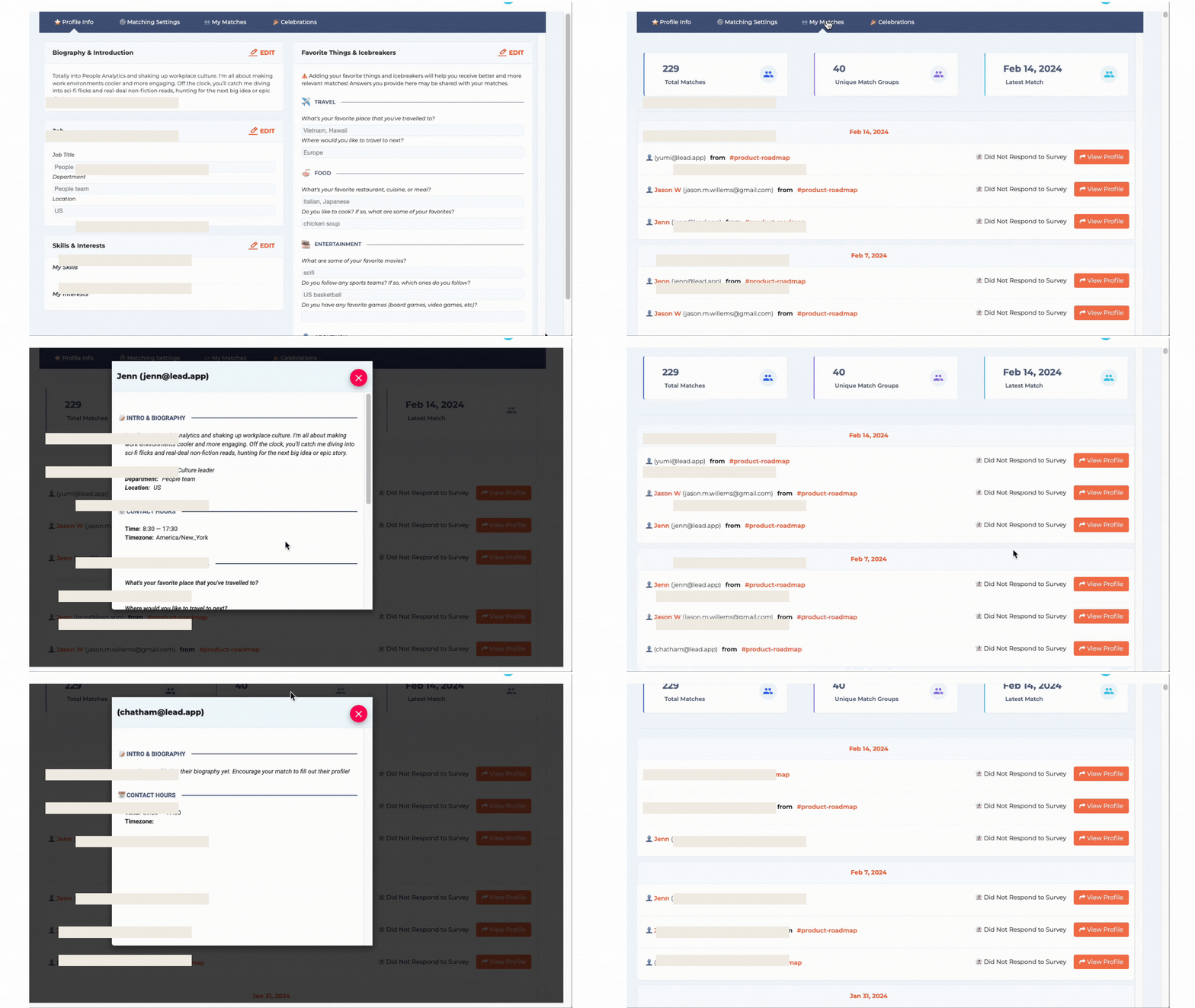
You also need better people context. On paper, your org chart shows structure. In practice, your team runs on trust, informal networks, and who actually knows how work gets done. LEAD.bot helps surface that real-world connection layer so you can route questions, introductions, and support through the people who already move things forward.
How to reduce friction across office and remote teammates
Start with communication design. Pick one place for project status, one place for decisions, and one place for urgent blockers. Then teach those rules until they feel obvious. This removes a surprising amount of drag because your team stops hunting for context.
Next, review meeting habits. Many hybrid teams use meetings to patch over uncertainty. That feels productive, but it usually signals a context problem. If people cannot tell what changed, who owns the next step, or which conversation matters, they ask for another call. Replace status meetings with written updates where possible, and save live time for decisions, conflict resolution, and creative work.
Then look at relationship gaps. Hybrid work collaboration challenges get worse when new hires or quieter teammates do not know who is approachable, helpful, or central to a workflow. A warm intro at the right moment can remove days of delay. This is where LEAD.bot becomes useful beyond standard employee apps. It helps your team connect based on real behavioral patterns, not just titles and departments.
What managers should change first
If you manage a hybrid team, do not start by adding another platform. Start by making hidden expectations visible. Tell people how you want updates shared, how decisions should be recorded, and when office presence actually matters. If being in person is valuable for planning or mentoring, say that plainly. If it is not required for focused work, protect that flexibility too.
You should also audit where collaboration slows down most often. Ask questions like: Which requests wait too long for an answer? Which teams rely on the same few connectors? Where do new employees get stuck in their first month? The answers point to structural gaps, not individual weakness.
Once you see those patterns, you can improve routing. A tool like intentional team connection design helps people build stronger ties, but connection alone is not enough. You need to know which relationships actually support onboarding, problem solving, and cross-functional flow. That is the difference between generic engagement and useful behavioral context.
How LEAD.bot supports better hybrid work
Most collaboration tools help your team communicate. LEAD.bot helps your team connect with better context. It surfaces the informal network behind the org chart so people can find trusted peers, reduce bottlenecks, and strengthen collaboration across distributed teams.
That matters when hybrid work collaboration challenges start to affect speed and morale. Instead of relying on whoever happens to be in the office, you can build a system that supports fairer access to knowledge and stronger team coordination. You can also spot where one person is becoming a hidden bottleneck before burnout sets in.
If your team is trying to improve connection and execution at the same time, start with the moments where collaboration breaks. Then build lightweight rules, clearer visibility, and stronger human routing around those moments. Hybrid work gets easier when context stops being accidental.
The bottom line
You do not solve hybrid work by copying office behavior into digital spaces. You solve it by making collaboration easier, clearer, and more intentional. The teams that do this well reduce confusion, protect flexibility, and help people find the right support faster.
That is the real opportunity inside hybrid work collaboration challenges. When you treat connection as infrastructure, your team can move with more trust and less friction. And when you add a behavioral context layer through LEAD.bot’s team connection workflows, you give people a more reliable way to work together wherever they are.