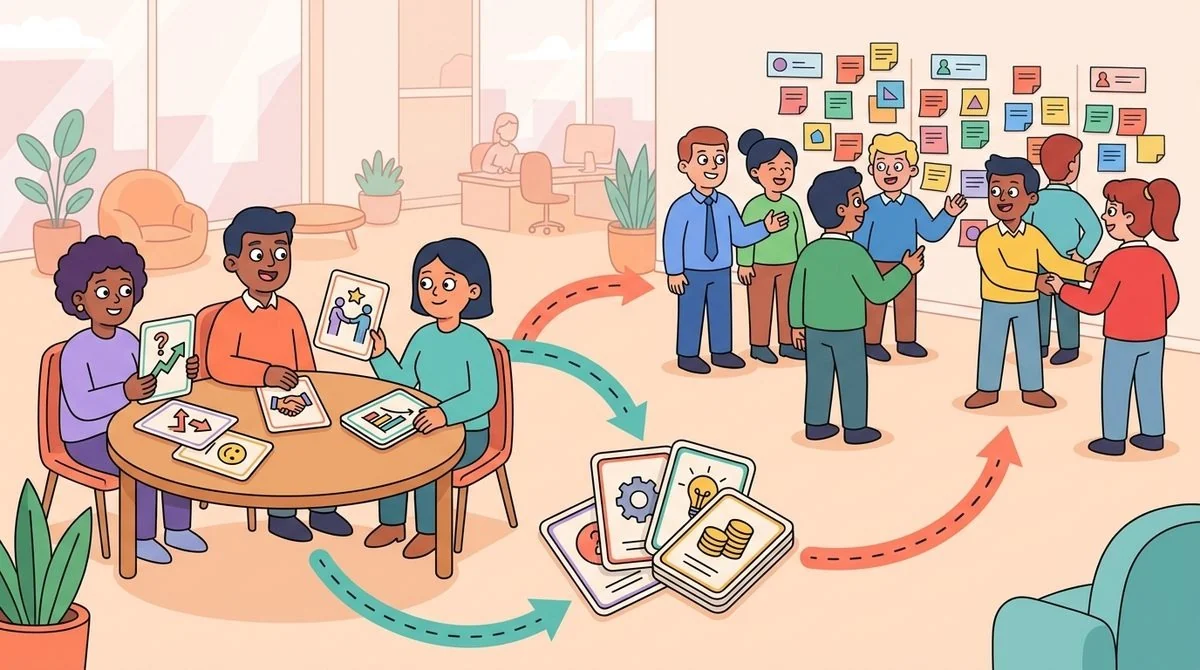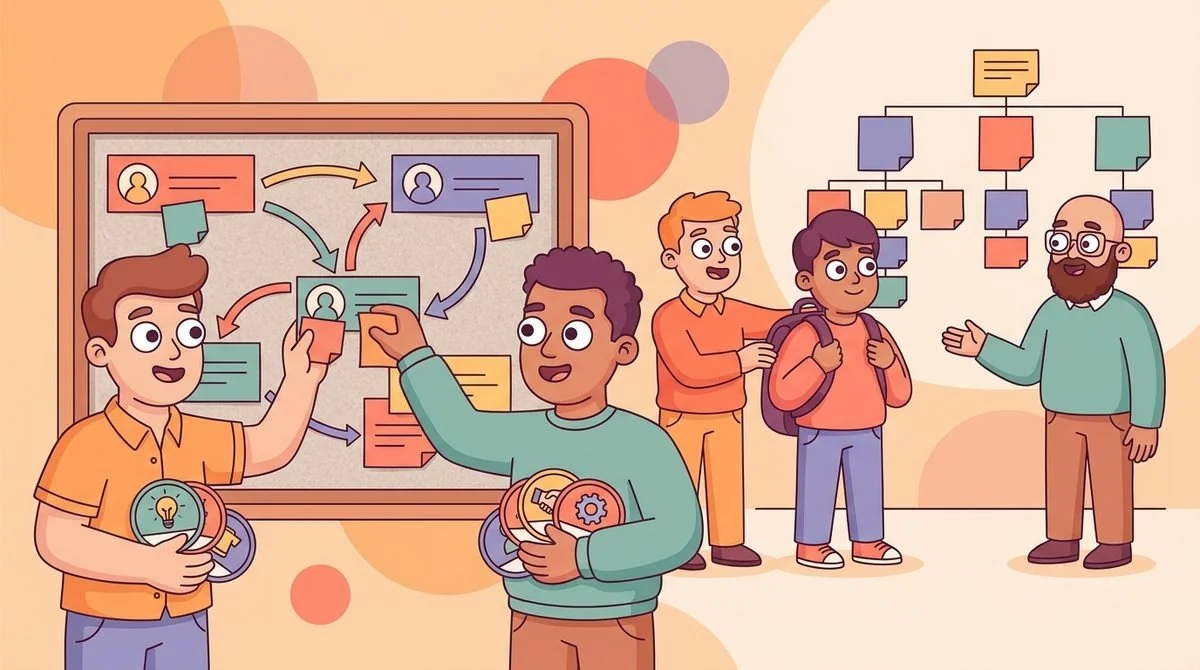
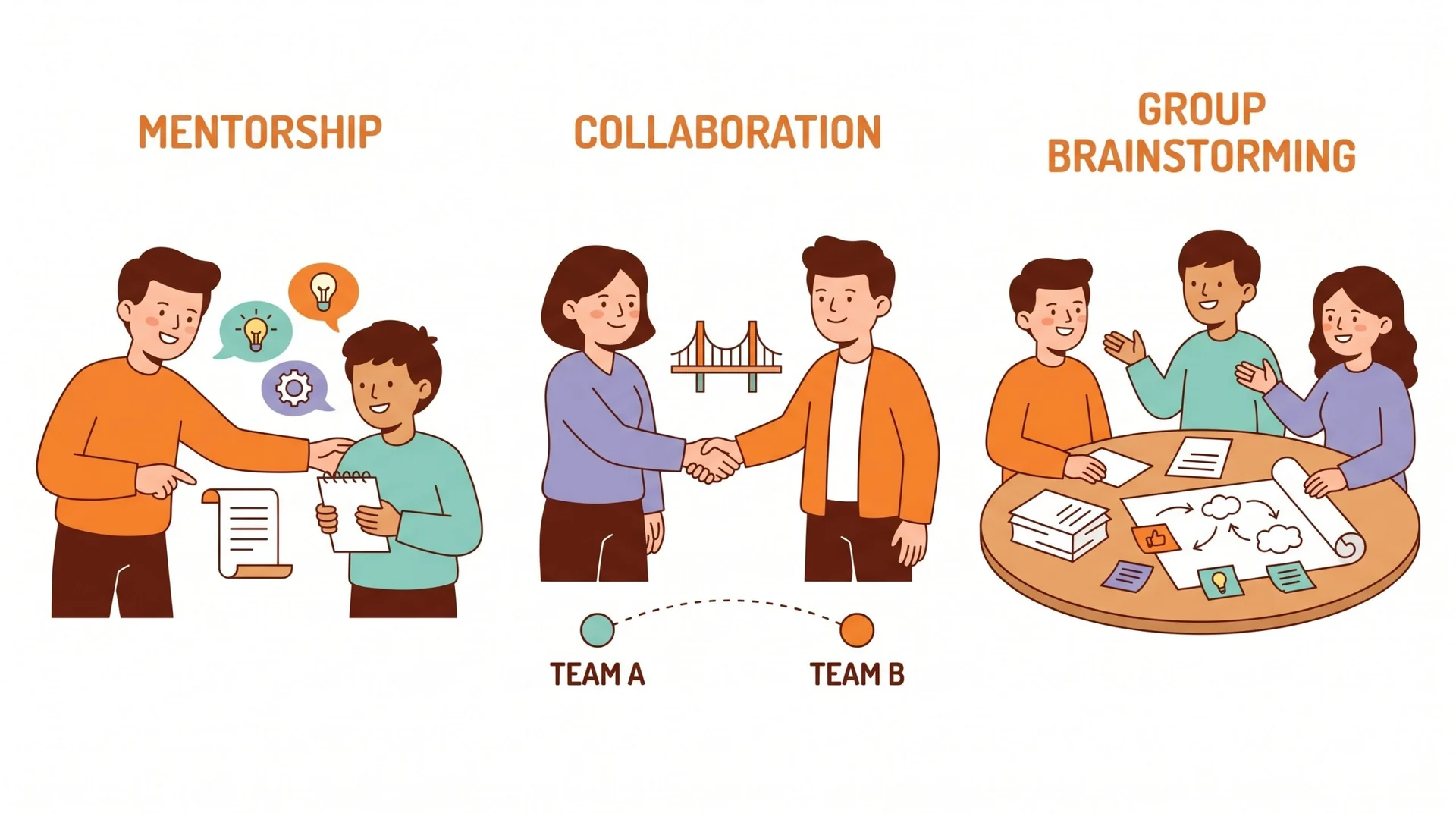
Automated milestone celebrations feel good for a day, but lasting team cohesion comes from structured, ongoing relationships that cross silos. The difference between a team that functions and a team that thrives isn’t how many birthday messages get sent—it’s whether your people have real, recurring reasons to connect across roles, levels, and departments. Structured employee connection programs built around role and team affinity are what actually drive long-term team engagement.
Why Birthday Bots Aren’t Building Your Culture
There’s nothing wrong with celebrating a work anniversary or a birthday. Acknowledgment matters. But when automated celebrations become your primary connection strategy, you’re confusing activity for impact.
A birthday notification tells an employee they’re remembered. It doesn’t tell them they’re valued, understood, or connected to the people they work alongside every day. Moments of recognition fade quickly. What stays is the quality of your team’s everyday relationships—and those don’t happen by accident.
Most HR platforms have mastered the celebration moment. What they haven’t solved is the space between those moments: the day-to-day relationship gaps that quietly drain eNPS scores, slow down cross-functional projects, and make people easier to poach. Your culture lives in those gaps.
Structured vs. Random: What Research Tells Us About Connection at Scale
Random coffee chat programs became popular for a reason—they’re easy to launch and feel inclusive. But randomness has a ceiling. Studies on workplace belonging and network theory consistently show that intentional connections—those with some structure around purpose, role, or shared context—produce stronger retention outcomes than purely serendipitous ones.
Microsoft’s Work Trend Index found that employees who reported having a close work friend were significantly more likely to stay and produce higher-quality work. The key word: at work. Not just someone they bumped into at a random coffee pairing, but someone they built a real working relationship with over time.
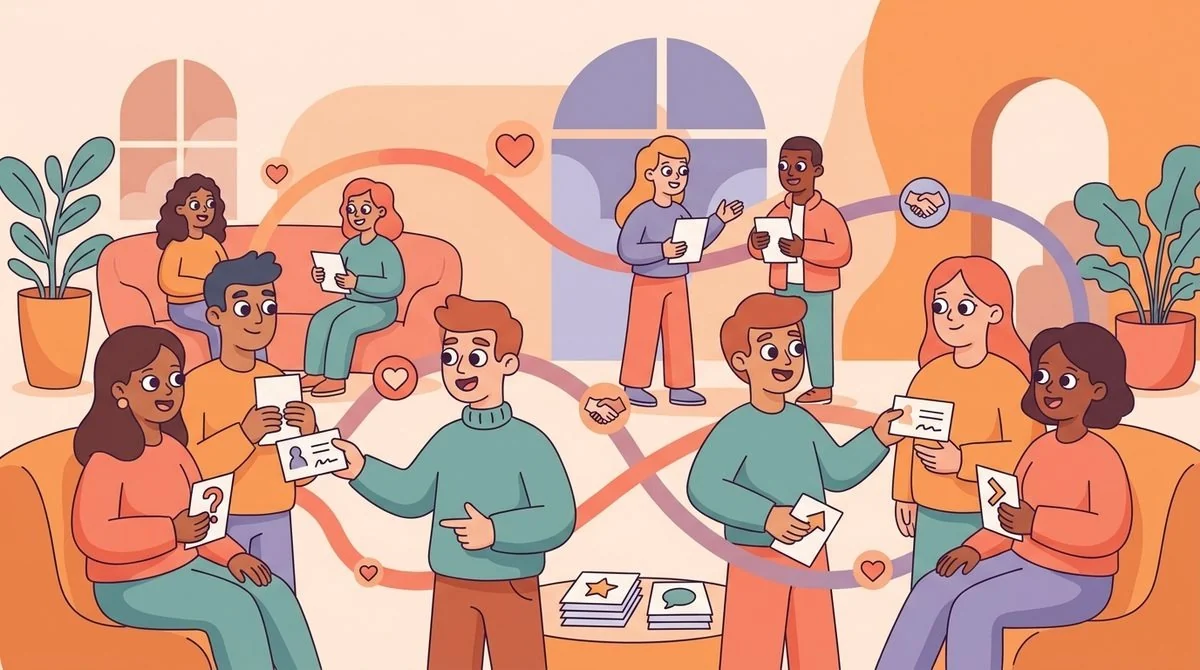
Structured employee connection programs—with defined tiers, intentional pairings, and recurring touchpoints—replicate this dynamic at scale. They don’t leave relationship-building to chance. They engineer the conditions for it.
Designing Your Connection Program: Role-Based Pairing, Mentorship Tracks, and Cross-Team Initiatives
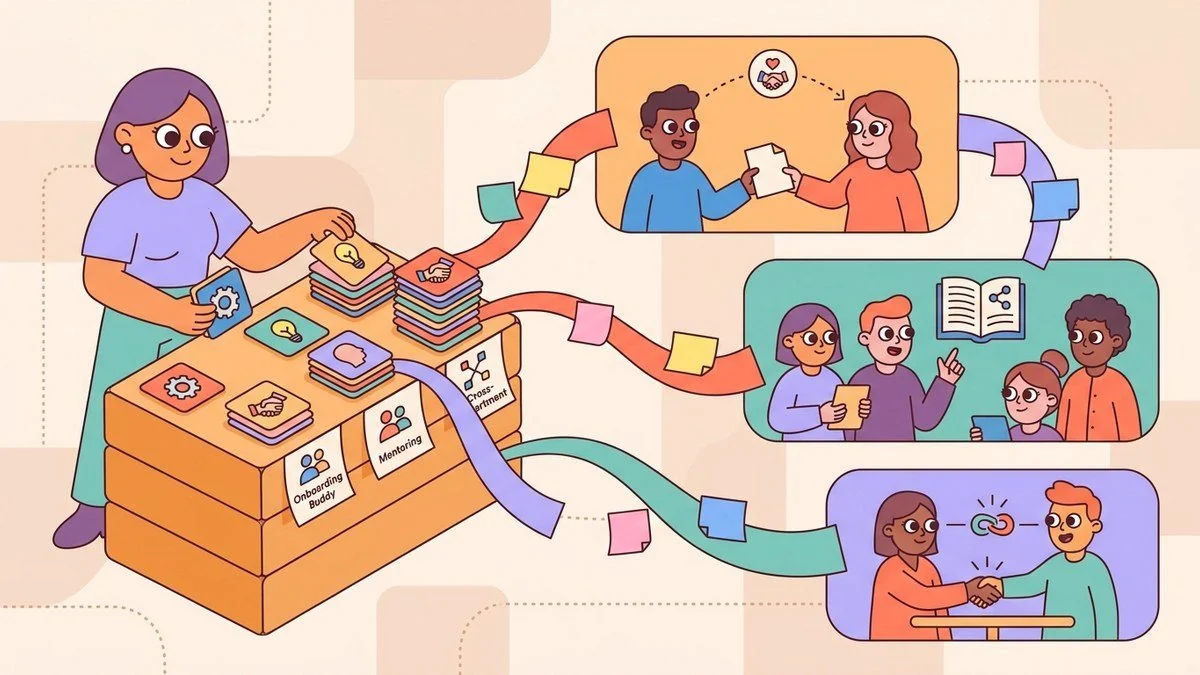
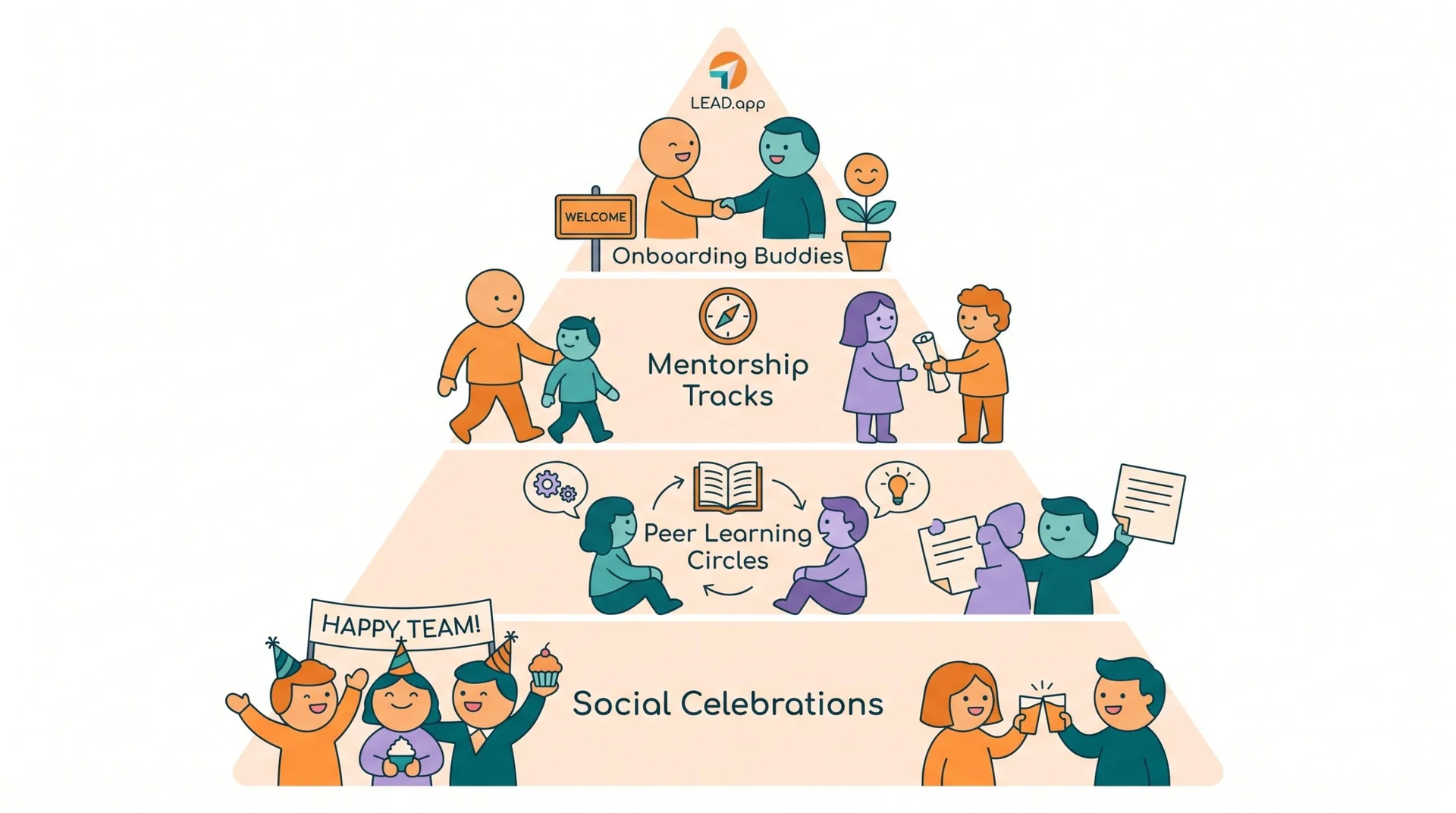
A strong structured connection program isn’t one-size-fits-all. It’s layered. Here’s how to think about the tiers:
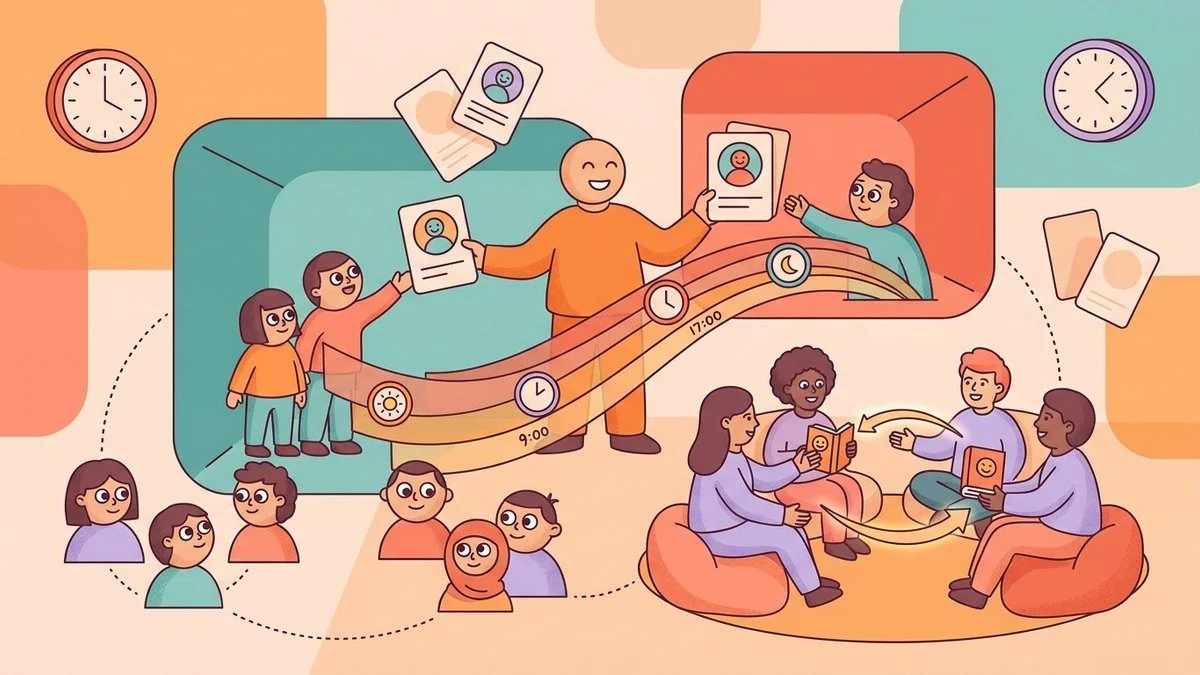
Onboarding buddy programs. New hires are paired with experienced teammates—ideally outside their direct manager’s chain—for the first 90 days. The goal: accelerate psychological safety and reduce time-to-productivity. These connections should be structured (weekly check-ins, defined conversation prompts) but feel human.
Mentorship tracks. Pair high-potential individual contributors with senior leaders or experienced peers outside their direct team. Define expectations upfront: how often to meet, what to discuss, how to close the loop. Open-ended mentorship programs fail because nobody knows what “good” looks like. Structured ones succeed because both sides understand the investment.
Cross-team peer learning circles. Group 4–6 people across departments around a shared professional theme—leadership development, technical skills, customer empathy. Rotate the facilitator. Run it for a fixed period (8–12 weeks). These groups build cross-functional trust at the peer level, which pays dividends when those same people need to collaborate on real work.
Social connection programs. Yes, celebrations fit here—but as one layer in a broader stack, not the entire program. Pair your recognition moments with relationship-building structures that persist beyond the notification.
The architecture matters: your structured employee connection programs should be designed so that each tier reinforces the others. A new hire who moves from an onboarding buddy to a peer learning circle to a mentorship track has three distinct relationship threads woven into your organization. That’s retention infrastructure.
Tracking the Impact: Engagement Metrics That Matter
If your connection programs are running but you’re not measuring them, you can’t improve them—and you can’t make the business case to leadership.
Four metrics worth tracking:
- eNPS (Employee Net Promoter Score) — Ask quarterly. Watch the cohort of employees actively participating in structured connection programs vs. those who aren’t. The delta tells you whether the programs are working.
- Voluntary turnover rate — Segment by tenure. If early-tenure attrition (0–18 months) is high, your onboarding buddy program may need structure. If mid-tenure attrition is climbing, your mentorship and cross-team layers may be missing.
- Internal mobility rate — How often are people moving into new roles inside your company rather than leaving for them elsewhere? Strong cross-team connection programs surface opportunities that would otherwise be invisible to employees.
- Connection program participation and completion rates — Raw engagement. If people drop out mid-program, the structure isn’t working or the load is too high. Fix the design before scaling.
These metrics don’t just measure the program—they measure the health of your organization’s informal network. That’s the asset you’re building.
From Design to Automation: How LEAD.bot Programs Scale Without Losing the Human Touch
Here’s the operational reality: designing structured employee connection programs for team engagement is the strategic work. Running them manually at scale is where most teams fail. Matching 500 people across roles, levels, and team affinities by hand—then tracking who completed what, who dropped out, who needs a nudge—falls apart fast.
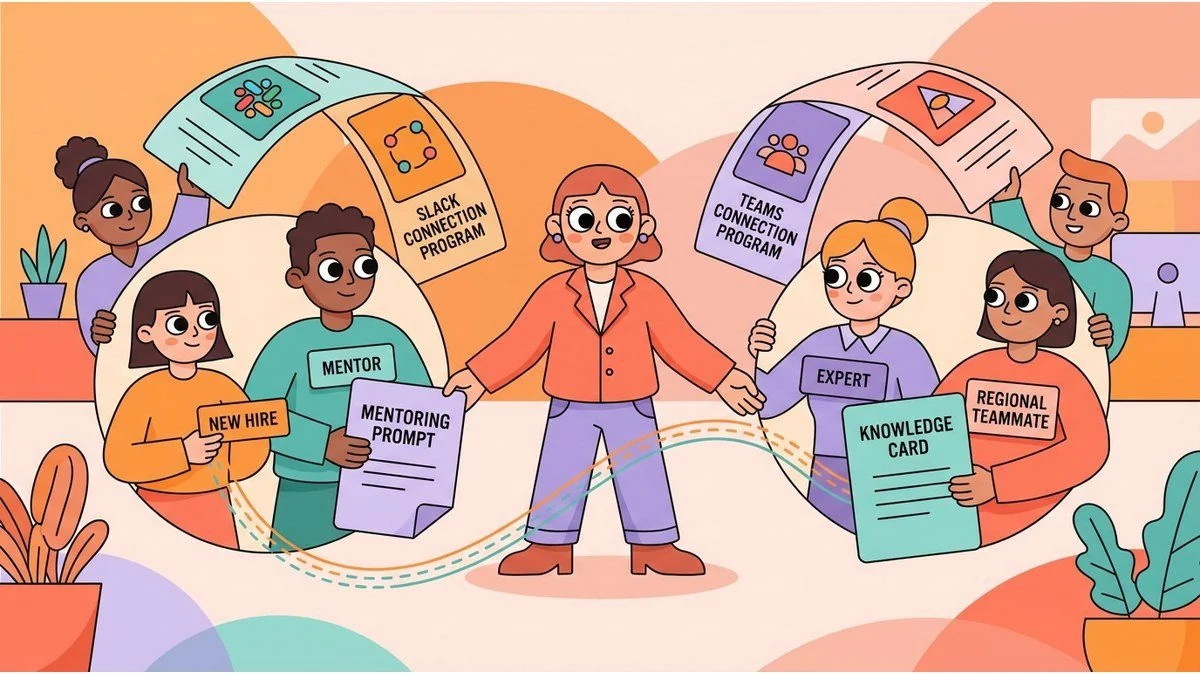
LEAD.bot automates the operational layer while keeping the human intent intact. It tiers participants by role and team affinity, not just availability. It surfaces the right match for a mentorship track versus a peer learning circle based on actual organizational context—not random draw. And it runs the program cadence automatically: scheduling touchpoints, sending structured prompts, flagging connections that have gone cold.
The difference between LEAD.bot and a basic pairing tool is the same difference between a random coffee chat and a structured connection program: intentionality at scale. Your team gets the relationship infrastructure. Your HR team gets the reporting. Nobody gets a spreadsheet.
If your people strategy still depends on birthday bots as its engagement engine, it’s time to build the layer underneath. Explore how LEAD.bot structures connection programs that compound over time—and book a demo to see what intentional pairing looks like inside your org.