
New approaches to diversity, equity, and inclusion (DE&I) are challenging and changing the status quo in every way. On top of that, they reveal incredible benefits for the organizations that implement them.
Treated as mere buzzwords used in the occasional staff meeting or annual training session, DE&I won’t do much. However, if you take those principles to heart and keep your organization committed to them, you are sure to earn trust and deeper commitment from your employees.
We’ll explore those concepts in more detail and look at what trustworthy research has revealed about organizations that take diversity, equity, and inclusion seriously.
Diversity, Equity, and Inclusion Explained
Diversity, equity, and inclusion mean creating a work environment in which people of all identities feel welcomed in a meaningful way. In most organizations, DE&I requires significant and systematic changes.
It might be tempting for leaders to reduce these concepts to ensure a more diverse work ethnicity in some companies. While ethnicity is a significant part of DE&I strategy, it’s only a part of it.
We can only make meaningful changes when we understand the differences between DE&I. However, each of these concepts is unique, and each requires a different approach from us. In an article for Independent Sector, Monisha Kapila, Ericka Hines, and Martha Searby explained the three terms:
1. Diversity: Diversity includes the many ways in which employees differ from one another. Among those differences are identity markers such as disability, ethnicity, gender, race, religion, and sexual orientation. Our understanding of the D in DE&I should also consider intersectional diversity; this is when an individual’s identity includes a few less privileged or under-represented identities.
2. Equity: We can define equity as giving all people in the organization access, opportunity, advancement, and fair treatment. It can only happen if we take the time and effort to identify and remove the barriers that prevent some groups of people from enjoying full participation or developing employee competencies. Equity requires us to ensure greater fairness and justice in our organization’s processes and procedures and the distribution of resources
3. Inclusion: The inclusion part of diversity, equity, and inclusion refers to creating an environment where all people feel welcomed, respected, and supported. They think that their colleagues and leadership value their contribution to the organization. The atmosphere is one in which you embrace the differences between people. In this sense, inclusion doesn’t end at ensuring your human resources demonstrate diversity – it’s also about employee retention.
YW Boston’s senior coordinator of dialogues, Fatima Dainkeh, explained that, when tackling DE&I, some organizations limit their focus to diversity. One of the reasons for this is that it’s sometimes easy to gauge diversity by visually scanning employees for ethnic, gender, and racial differences.
However, as Dainkeh elaborated, diversity doesn’t automatically lead to employees feeling welcomed or supported, which is where equity and inclusion practices come into play. Before looking at a few approaches, we can implement in our organizations, let’s explore some of the proven benefits of having a DE&I strategy.
The Benefits of Diversity, Equity, and Inclusion
McKinsey highlighted some of the most significant benefits of diversity, equity, and inclusion for organizations in a series of reports. The series includes 2015’s Why Diversity Matters, 2018’s Delivering Through Diversity, and 2020’s Diversity Wins.
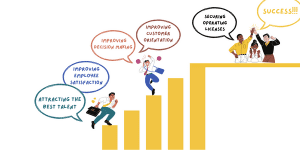
According to the firm, ethnic, gender, and cultural diversity, especially in executive teams, correlates to financial performance, but there is more to it. Why Diversity Matters revealed that one of the biggest drivers of that correlation was that companies with greater diversity, thanks to DE&I, are better at:
Diversity Wins revealed that the relationship between diverse executive teams and the financial outperformance of other less diverse companies has improved since the publication of the first report. The report also confirmed that organizations with solid diversity should emphasize inclusion more. The benefits of diversity, equity, and inclusion detailed in the report include:
• Companies in the top quartile for gender diversity in executive teams were 25% more likely to enjoy above-average profitability.
• The likelihood of outperformance increased with greater diversity.
• Organizations in the top quartile for ethnic/racial and cultural diversity outperformed the profitability of companies in the fourth quartile by 36%.

Actioning DE&I
McKinsey’s Diversity Wins report highlighted five areas of action inspired by best practices from top-performing organizations. Those areas provide valuable insights for actioning DE&I in your organization:
Ensure Diversity of Talent
Diverse talent is one of the main drivers of inclusion. Ensure diverse talent advances into technical, management, executive, and board roles. Organizations should determine which forms of multivariate diversity to prioritize, outlining which to measure according to data-driven targets.
Improve accountability and capability of leadership for diversity, equity, and inclusion
Leaders and managers should be at the core of your organization’s DE&I strategy. It means improving the skills and capabilities of leadership. Also, consider making all leaders accountable for their progress in DE&I.
Promote equity and equal opportunity through fairness and transparency
Level the playing field by using analytics to ensure the criteria behind pay processes and promotions are fair and transparent. Diversity targets should also be considered in this matter. Diversity targets aim to diversify your workforce to include a spectrum of employees. You can effectively set goals, such as increasing the number of people of color and/or women in leadership positions.
Promote welcoming behavior and deal with discriminatory behavior
Determine the norms for conduct that is open and welcoming in your organization. Along with that, your organization needs to deal firmly with discriminatory behavior, whether it’s outright bullying, harassment, or microaggressions.
Management and employees should be involved in identifying and addressing bullying, harassment, and microaggressions. It should also include helping employees to understand unconscious biases that may influence their treatment of employees of diverse identities.
Promote inclusivity through support for diversity
Create a welcoming culture of allyship within your organization. Employees should not feel that any part of themselves is not welcome within the work community. Designing and building connections between a wide range of people is part of that, as is supporting employee resource groups. Those connections between people can help create a community spirit and a sense of belonging.
Let your team freely collaborate and be transparent by using company culture apps like LEAD.bot. This can help your organization promote DE&I by matching employees to connect and prompting group discussions on readings, podcasts, talks, and other educational materials that not only can refine their skills but also their connection with each other.

Take The LEAD.bot
Whichever way you look at it, the benefits of a DE&I program are clear, therefore, investing in DE&I can LEAD.bot and help your organization grow. An application like LEAD.bot fosters community and promotes diversity, equity, and inclusivity (especially inclusivity) is more manageable. Use the tool to create quick, informal meetings and virtual coffee breaks between employees in your organization, and you’ll create a more cohesive, inclusive team that celebrates diversity.