
Employee Matching for Internal Mobility
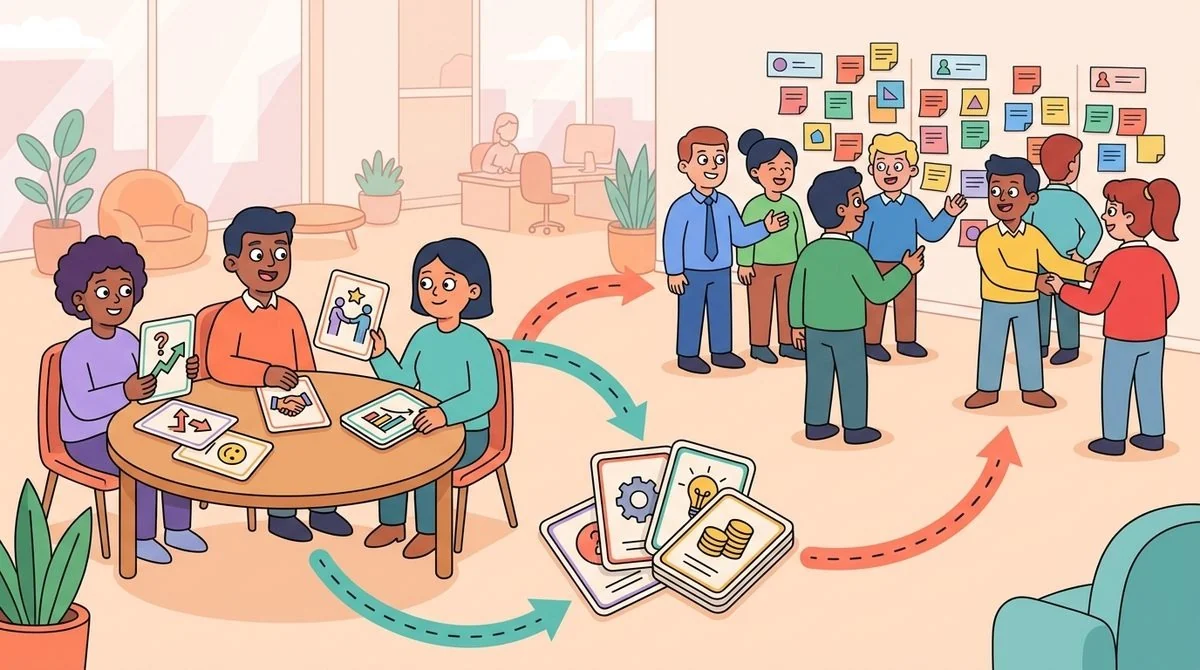
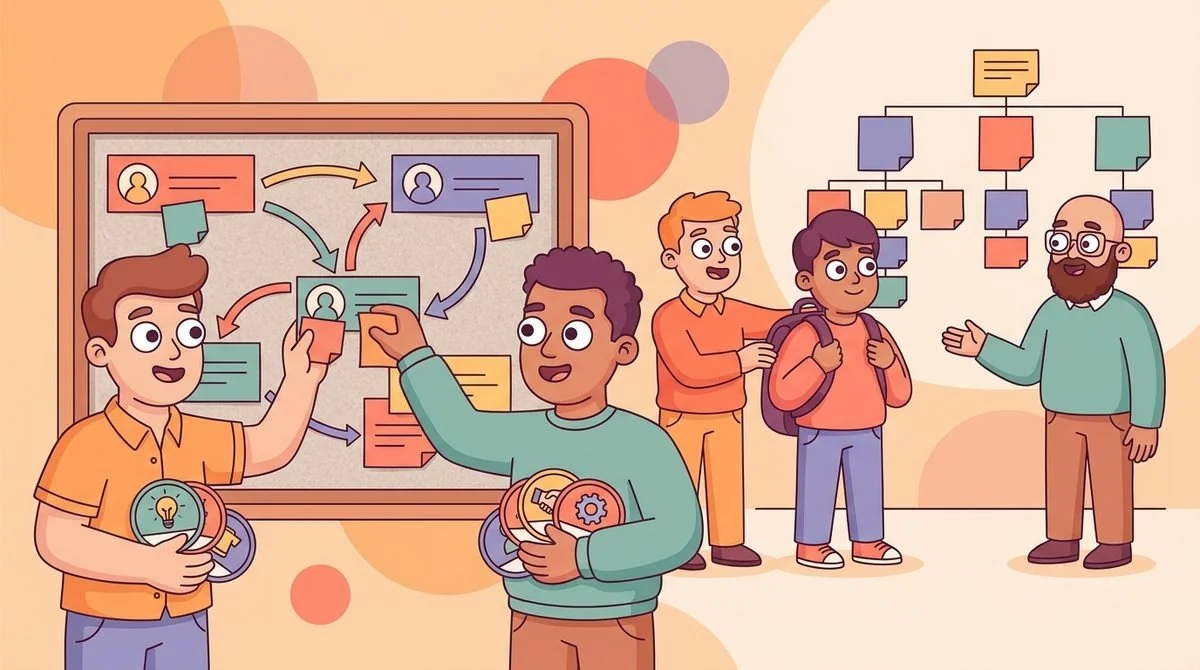
Employee matching helps internal mobility work because it shows people who can teach them, sponsor them, or explain the next role before a transfer request ever appears. Instead of waiting for managers to know every skill in the company, you create structured ways for employees to meet the right people across teams.
That matters now because many teams already have the talent they need. They just cannot see it. A project needs someone who understands a customer segment. A new manager needs a peer who has handled the same change. A high-potential employee wants to explore another function, but only knows the people on their current team. Good employee matching turns those hidden paths into real conversations.
Why internal mobility breaks before the job posting
Most internal mobility programs start too late. They wait until an employee is ready to apply for a role, then ask them to search an internal job board, talk to their manager, or find a mentor on their own. By then, the employee may already be looking outside the company.
The earlier problem is social. People do not know who has done the work they want to learn. They do not know which teams are open to talent from other functions. They do not know whether a manager will welcome an exploratory conversation. Internal mobility depends on trust paths, not just openings.
This is where employee matching becomes practical. You can match people by skills, interests, location, department, tenure, or learning goals. You can create cross-team introductions that feel useful, not random. You can help employees build weak ties before they need them.
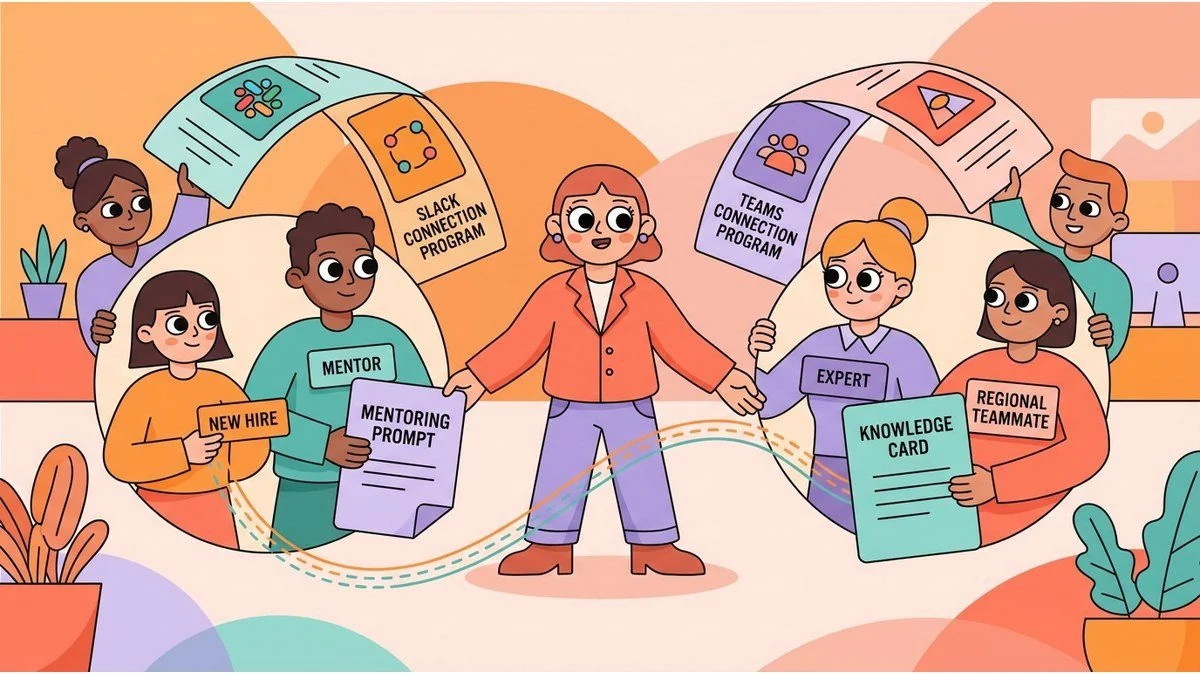
LEAD.bot supports this kind of structured connection inside Slack and Microsoft Teams, so people can meet in the tools they already use. The goal is not more meetings. The goal is better routes to the people who can help work move.
Find hidden experts before knowledge gets stuck
Every organization has hidden experts. They are the people others quietly ask when a system breaks, a customer asks a hard question, or a process does not match the documentation. They may not have the most visible title. They may sit in a different region. They may be known inside one team and invisible everywhere else.
Internal mobility improves when these experts become easier to find. A support specialist who understands implementation patterns can help product teams see recurring needs. A finance analyst who built a useful reporting habit can mentor another region. A longtime operations employee can explain why a change worked in one site and failed in another.
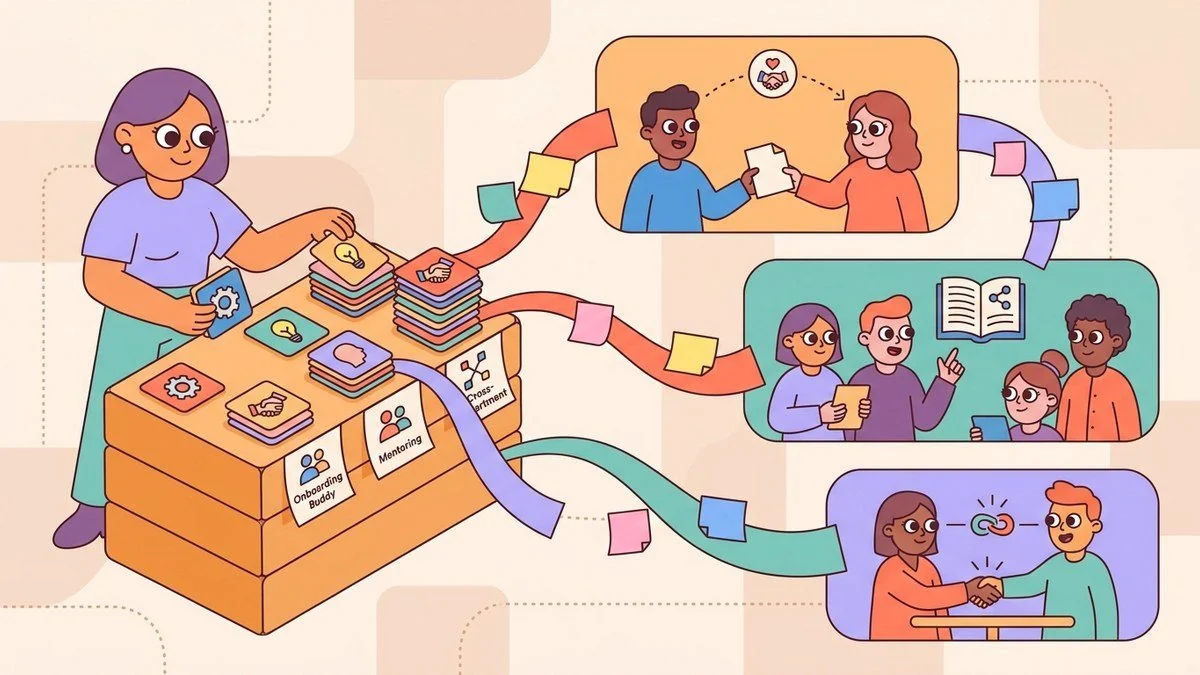
Employee matching gives these connections a repeatable shape. Instead of asking people to browse a directory and guess, you can run programs around skills, questions, or learning needs. For example, a monthly knowledge-sharing match can pair employees who want to learn about a function with people who have done that work. An onboarding buddy program can introduce new hires to people outside their manager's immediate circle. A peer learning round can connect employees who share a skill goal but work in different teams.
If your team is trying to improve knowledge flow, the related guide on knowledge discovery in your organizational network shows why the informal network matters as much as formal documentation.
Design matching rules around real work moments
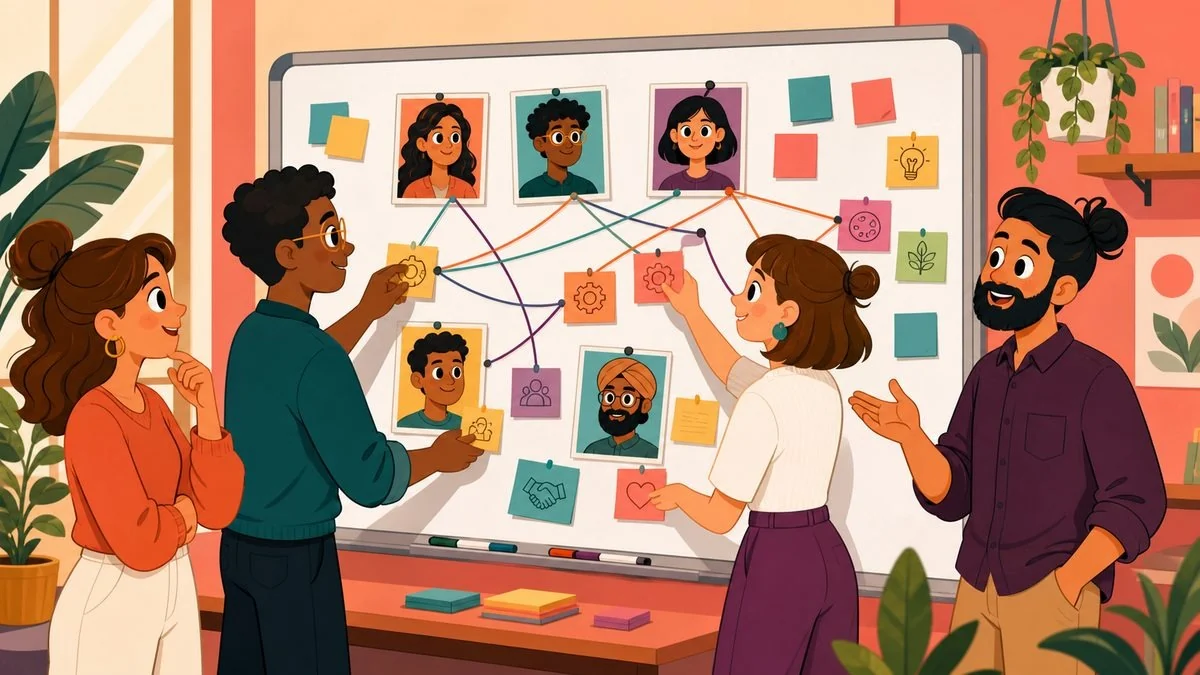
Matching works best when it starts with a clear moment. Do not begin with a broad goal like “connect everyone.” Begin with a workplace situation where the right introduction changes the outcome.
- New role exploration: match employees with peers in teams they want to understand.
- Hidden expert discovery: match people by skill, project history, or knowledge area.
- Onboarding buddies: match new hires with people who can explain culture, tools, and unwritten norms.
- Cross-functional collaboration: match teams that often depend on each other but rarely talk early enough.
- Mentoring and reverse mentoring: match people by learning goals rather than only seniority.
These rules do not have to be complex. A small set of useful criteria is better than a large rule engine that nobody maintains. The strongest programs are simple enough for HR to run, clear enough for employees to understand, and specific enough that each match has a reason.
For more on program design, see smart matching rules for employee connection programs. It breaks down how to move from random pairings to purposeful connections.
Use connection programs to support retention
People leave when they feel stuck, unseen, or cut off from opportunity. Compensation and role fit matter, but so does access. Employees are more likely to imagine a future inside the company when they can see possible paths and meet people already doing the work.
A structured connection program can make those paths visible. It can introduce employees to mentors outside their reporting line. It can help managers spot emerging leaders who are known for trust, information flow, or mentorship. It can show where regional silos are blocking collaboration.
LEAD.bot is installed by 2,000+ organizations and supports matching, onboarding buddies, knowledge sharing, Watercooler programs, pulse surveys, and celebrations. That combination matters because mobility is not one feature. It is a set of repeated moments where employees need to be seen, supported, and connected.
For onboarding-specific examples, the article on onboarding buddy programs that build knowledge flow shows how early relationships reduce confusion and help new hires find the right people faster.
What to measure beyond match count
Match count is easy to report, but it is not enough. A program can create many introductions and still miss the real goal. You need to know whether people met someone useful, learned something they could apply, or found a path they did not know existed.
Start with simple questions. Did the match help you understand another team? Did you find someone you would contact again? Did the conversation reveal a skill, process, or opportunity you did not know about? Did it help you solve a real work problem?
Then look for patterns. If employees in one region rarely get matched outside their office, you may have a regional silo. If new hires keep asking the same “who owns this?” questions, your onboarding knowledge paths may be weak. If certain people are repeatedly named as helpful, they may be informal leaders worth supporting.
Internal mobility is not only about moving employees into new jobs. It is about helping people discover where their skills can matter next. Employee matching gives that discovery a structure your team can run every month, without making employees navigate the organization alone.