
Smart Matching Rules for Employee Connection Programs
Smart matching rules help you connect employees with the right people for onboarding, mentoring, knowledge sharing, and cross-team collaboration instead of leaving every introduction to chance. The best rules combine business intent, employee context, and low-admin automation so your connection program keeps working after launch week.
If you run people programs in Slack or Microsoft Teams, the challenge is rarely getting one round of introductions out the door. The harder problem is keeping matches useful over time. A new hire needs an onboarding buddy who understands the role. A manager needs a peer who has solved a similar team challenge. A specialist needs a trusted path to someone outside their function who knows the answer before work gets duplicated.
That is where smart matching becomes more than a nice engagement feature. It turns informal connection into an operating habit. With LEAD.bot, you can run structured matching programs for coffee chats, onboarding buddies, mentorship, peer learning, and knowledge sharing inside the collaboration tools your employees already use.
Start With the Job Each Match Should Do
Before you set matching rules, decide what kind of work the connection should support. A social coffee program can be broad and lightweight. An onboarding buddy program needs more structure. A cross-functional knowledge sharing program should route people across silos without creating awkward or irrelevant pairings.
Use a simple question: what should be easier after this match happens? For onboarding, the answer may be finding a friendly guide during the first few weeks. For mentorship, it may be giving employees access to someone with relevant skills or career context. For knowledge sharing, it may be helping teams find who knows what before they repeat research, procurement, or implementation work.
Once the job is clear, the matching logic becomes easier. You can avoid the common mistake of treating every connection program like random coffee. Randomness can create pleasant surprises, but it does not consistently support onboarding, mentoring, or business-critical knowledge flow. Purposeful matching gives the program a reason to exist and gives employees a reason to participate.
Use Profile Context Without Making the Program Heavy
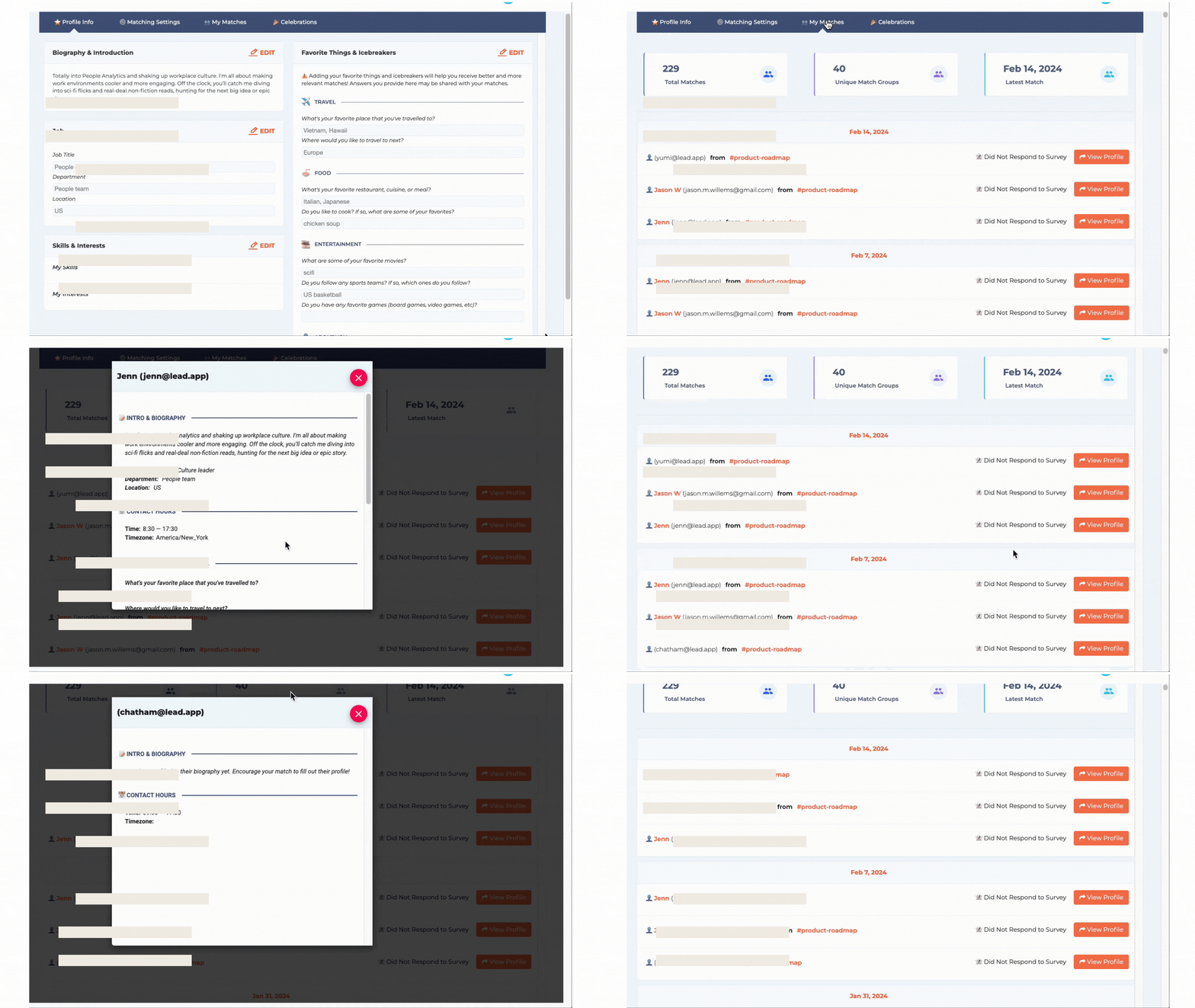
Strong matching rules usually combine a few practical fields: department, location, role, interests, skills, goals, tenure, and program type. You do not need a perfect data model to begin. You need enough context to avoid bad matches and create useful ones.
For a new hire onboarding program, you might match people by role family, office region, or interest area while avoiding direct reporting lines. For mentorship, you might match based on skills employees want to learn, topics they can teach, or career stage. For cross-team collaboration, you might deliberately connect people across departments so knowledge moves beyond the usual circle.
An employee matching app for Teams should make this practical for busy HR and people-ops teams. The rules should be easy to configure, repeatable across cohorts, and flexible enough to support different programs without rebuilding everything manually.
Build in Guardrails for Trust and Relevance

The best employee connection programs protect people from irrelevant or uncomfortable matches. Guardrails make the program feel intentional instead of noisy.
Start with exclusions. You may want to avoid matching someone with their manager, a direct report, or the same teammate repeatedly. You may also want to prevent a new hire from being matched only with other new hires when the goal is integration into the wider organization.
Then add positive rules. Pair a new hire with someone who knows the team’s unwritten norms. Connect an employee working on a new project with someone who has handled a similar problem. Match employees across functions when the program goal is cross-functional collaboration. These rules make connections useful because they respect how teams really work.
Trust also improves when employees understand why a match happened. You do not need a long explanation. A simple prompt such as “You both listed customer onboarding as a skill area” or “This match supports your cross-team knowledge sharing program” can make the introduction feel less random and more actionable.
Keep the Program Running Inside Slack or Microsoft Teams
Manual matching often works for one pilot and then fades. Spreadsheets, reminders, calendar nudges, and follow-up surveys create more admin work than most teams can sustain. A program that depends on one enthusiastic coordinator is fragile.
LEAD.bot helps people teams run employee connection programs inside Microsoft Teams and Slack, where employees already respond. It can support introductions, reminders, and surveys so the program does not rely on manual follow-up every cycle.
This matters because connection programs build value through repetition. One coffee chat may be pleasant. A structured program can help a new hire build early trust, help a mentor share expertise, and help a distributed team discover people outside their normal communication channels. Over time, those small connections improve the organizational network.
Measure Outcomes Beyond Match Count
Match count is useful, but it is not enough. If your goal is stronger onboarding, look for whether new hires are building relationships earlier and finding help faster. If your goal is knowledge sharing, look for whether employees know who to ask and whether repeat work is decreasing. If your goal is cross-functional collaboration, look for whether connections are spreading beyond the same few teams.
Pulse surveys can help you capture quick feedback after each matching round. Ask whether the match was relevant, whether the conversation happened, and whether the employee found the introduction useful. Over time, this feedback helps you improve the rules instead of guessing.
LEAD.bot also supports relationship intelligence and organizational network analysis in its Premium plan, helping teams understand connection patterns, potential leaders, and collaboration risks. Keep the analysis practical: the point is not to create another dashboard. The point is to see where connection is working and where people still need better trust paths.
Turn Smart Matching Into a Repeatable People Program
A strong employee connection program is not just a calendar invite generator. It is a system for helping people find useful relationships at the moment they need them. That includes onboarding buddies, mentoring pairs, peer learning, informal coffee chats, and knowledge sharing across departments.
If your current process depends on manual pairing, start small. Choose one use case, define the job each match should do, set a few rules, and gather feedback after each round. Then expand the program once you know which matches employees actually value.
With LEAD.bot mentorship and peer learning programs, you can move from ad hoc introductions to structured matching that supports real work. The result is not more meetings for the sake of engagement. It is a more connected organization where employees know who can help, who they can learn from, and how to build trust across teams.