
Organizations hemorrhage—yeah, that’s the word—$31.5 billion each year due to shoddy knowledge sharing practices. When employees can’t get the info they need swiftly, productivity nosedives by 21%… according to what the folks at McKinsey tell us.
At LEAD.bot, it’s like a daily rerun watching companies grapple with messy systems and siloed teams. The secret sauce? Effective knowledge management and collaboration. It changes the whole game for how teams work and make decisions.
Why Knowledge Silos Cost Companies Millions
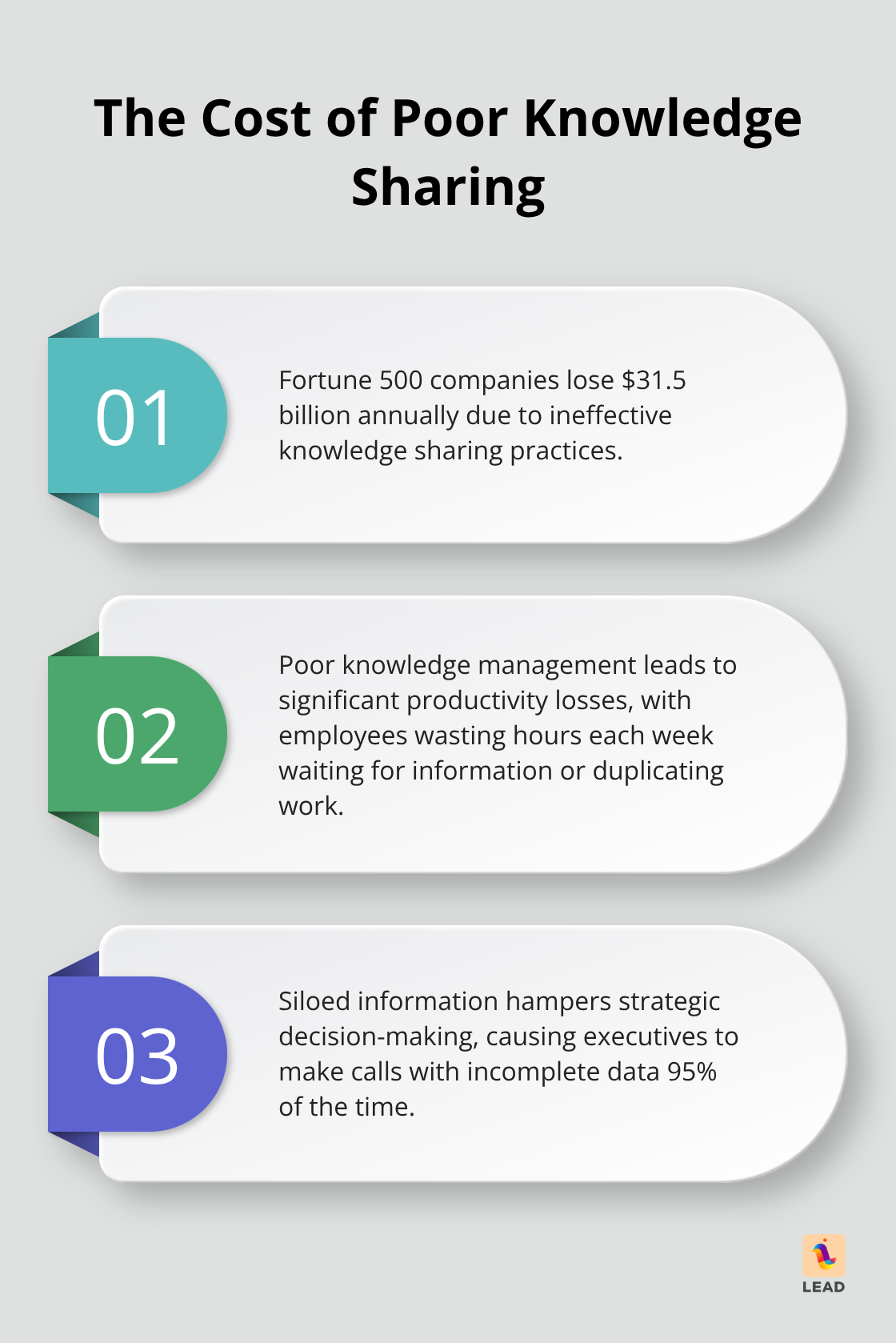
Picture this: modern companies as medieval castles with towering walls… departments are islands unto themselves. Sales? Hoarding customer insights like gold coins in a dragon’s lair. Engineering? Guarding those technical solutions with Fort Knox-level secrecy. HR? Lounging on a treasure chest of employee feedback data. The result? A staggering $31.5 billion wiped off the board annually for Fortune 500 companies, courtesy of research from IDC. Lost revenue? Sure. But the real gut punch is how it extinguishes productivity and wrecks decision-making.
Information Hoarding Creates Productivity Black Holes
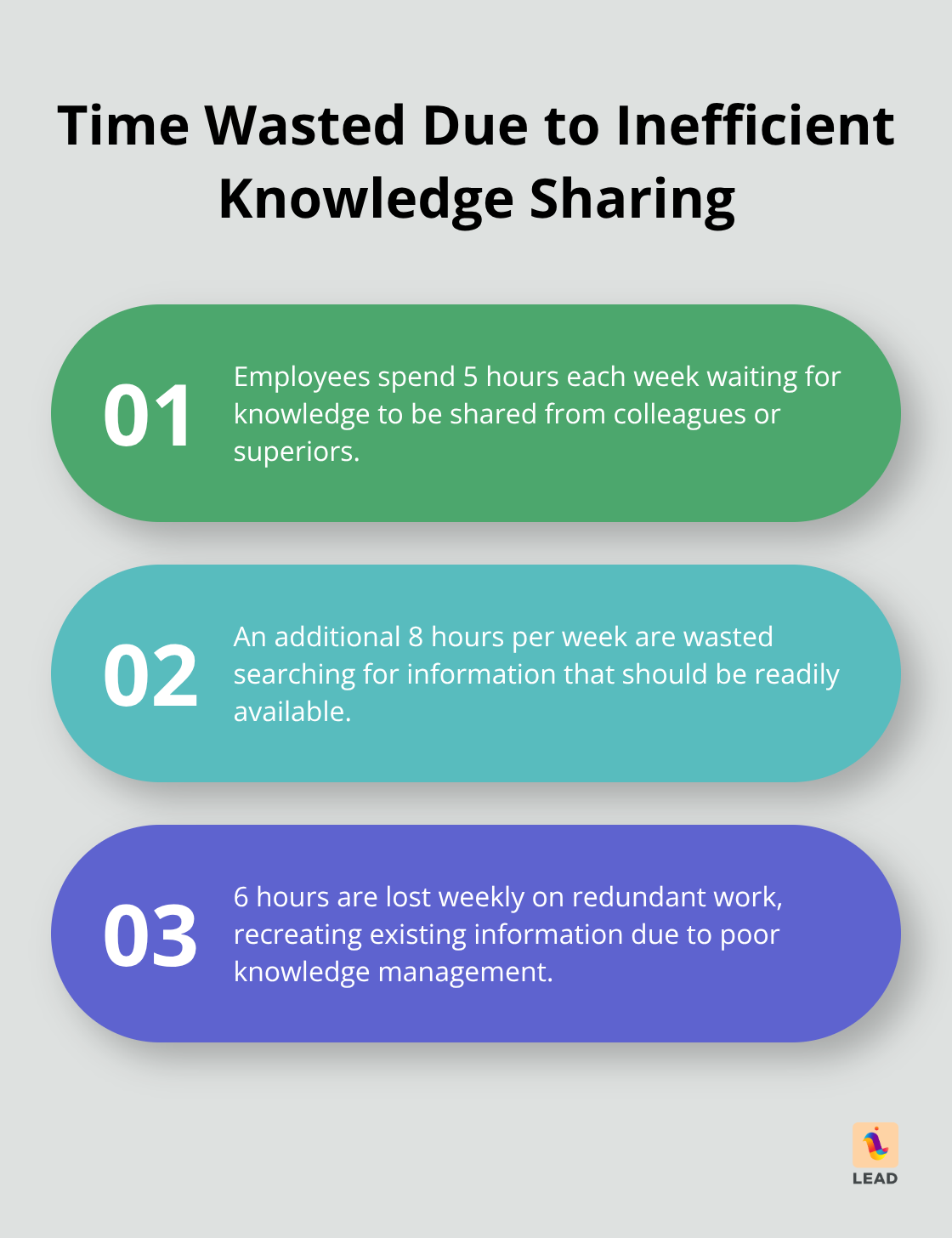
And here’s the kicker… Employees – each week – are bleeding out 5 hours just waiting for knowledge to trickle down, another 8 hours in a futile treasure hunt, and a colossal 6 hours on repeat work. Seriously, what’s the breakdown? Panopto’s got data – 60% of workers flounder trying to tap into colleague insights. Meanwhile, McKinsey says knowledge workers fritter away 1.8 hours every single day cloning existing work. Do the math: just imagine, a 1,000-person company set ablaze to the tune of $2.7 million annually on redundant efforts. And, oh, let’s not skip the 42% of corporate knowledge that’s only alive in employees’ heads – risky business, eh?
Poor Knowledge Management Sabotages Strategic Decisions
This isn’t just a ‘slow your roll’ issue-it’s tanking strategic mojo. The Harvard Business Review spills the beans: execs are flying blind and making calls with half-baked information 95% of the time, thanks to data being chained down in those darn silos. Project Management Institute’s on it, too: teams blundering through fragmented knowledge make 50% more goof-ups in project planning. Marketing might launch a campaign without a whisper from engineering, or product dev ignores the siren calls of customer feedback… and bam! Mountains of cash burn on massive misfires.
The Hidden Costs Multiply Across Organizations
But wait, there’s more! It’s not just immediate productivity grinding to a halt. Employee turnover goes through the roof as workers slosh through clunky systems. Newbies? They’re crawling to full productivity, taking 40% longer if knowledge transfer processes are MIA. And customer satisfaction? It nosedives when support staff can’t get their hands on the right info – like, yesterday. These snowballing costs are not just a ‘small hiccup’; it’s an enterprise-wide pickle that screams for systematic overhaul.
How to Transform Knowledge Hoarding Into Strategic Advantage
Knowledge silos… they need a scalpel, not a dance party. The cold, hard fact is, global employee engagement plummeted to just 21% in 2024. Here’s the kicker-employees won’t spill the tea if they’re sweating over backlash or someone swiping their credit. Where do companies hit the jackpot? It’s in setting up rock-solid recognition systems: shout-outs in team huddles, real rewards for the masterminds, and collaboration metrics that aren’t all smoke and mirrors. Look at Slack-organizations with specific channels for knowledge-sharing solve problems 47% faster. The secret sauce? Make sharing intel a must-do in job descriptions and those dreaded annual reviews-not just some fluffy extra.
Digital Platforms That Actually Work
Forget about those shiny, complex software packages that gather dust. Why does Confluence own the space? It’s because it slides into existing workflows like butter-75% of teams are on board within 90 days, versus limping along for 6 months with standalone stuff. Studies show that businesses armed with centralized knowledge platforms amp up onboarding through slick buddy systems and searchable docs. Document management with version control keeps the nonsense of outdated emails in check. Opt for platforms that jive with the communication tools teams are already living in, instead of creating hassle with more logins.
Structure Beats Chaos Every Time
Turning tribal knowledge into gold takes process mapping. Companies bleed 40% of their specialized knowledge quicker than they can capture it, say the numbers (so, yeah, documentation isn’t just an afterthought). Roll out standard templates for handing off projects, decision chronicles, and tech processes. Regular knowledge audits-like those quarterly check-ins tied to project goals-keep the info fresh and handy. Winners in this game assign clear owners for knowledge resources to dodge the drag of outdated clutter pretending to be useful.
Technology Integration Accelerates Adoption
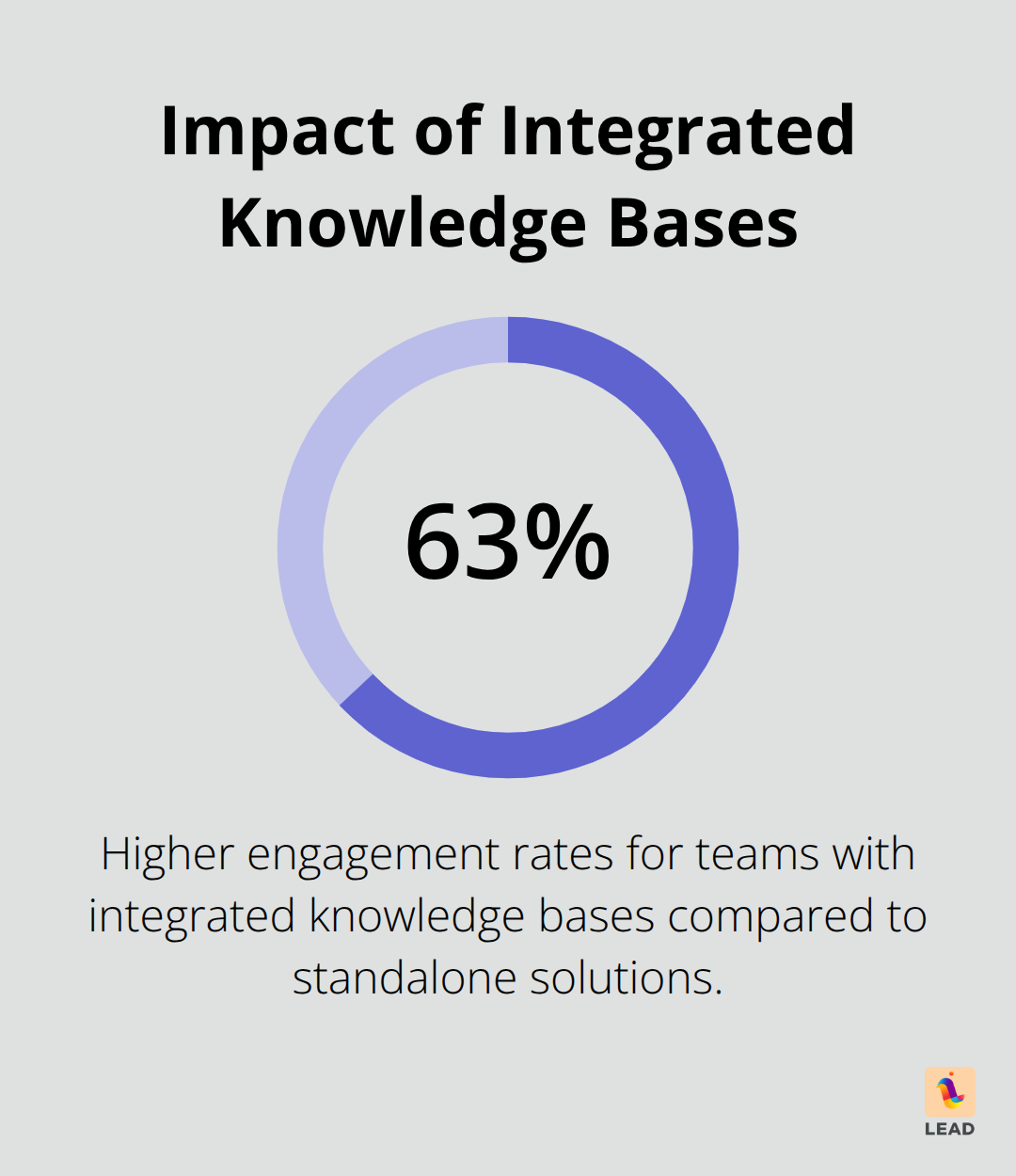
When knowledge management plugs into your go-to communication platforms, it starts singing. Teams that hook their knowledge bases up with Slack or Microsoft Teams rake in 63% higher engagement rates compared to when they fly solo. Real-time collaboration cuts through those email ping-pongs that slow down the game. Analytics features will spill the beans on what’s getting the clicks-and what’s become a digital ghost town. The trick is picking tools that trim down friction rather than inflate daily grind headaches.
Which Tools Actually Speed Up Knowledge Sharing
Integration Beats Isolation Every Time
Alright, let’s face it-those standalone knowledge management platforms? They’re just collecting digital cobwebs. Smart companies are waking up and smelling the coffee… and it smells like integration. Here’s the truth: when you integrate knowledge management into tools like Slack or Microsoft Teams, you boost engagement and support innovation. No more jumping from one app to another-employees get information right when and where they need it. This seamless flow? It’s the grease that stops the adoption wheels from grinding to a halt in your typical knowledge management attempts.
Real-Time Collaboration Transforms Documentation
Over at Microsoft SharePoint, things move faster-way faster-when you bring in live document editing. It’s not rocket science. Google Workspace shows the same boost when teams dive into process docs and training materials together, in real-time. Now, here’s the kicker: version control keeps outdated info from spreading like wildfire through emails and chats (that’s a money pit nobody wants to fall into).
The magic trick? It’s all in the analytics. Dashboards tell you which docs are lighting up and where the knowledge gaps lurk. So, managers can stop playing whack-a-mole with problems and start laser-targeting areas that need a little TLC. Firms using these savvy approaches see knowledge retention soar during employee transitions.
Network Analysis Reveals Hidden Experts
Typical knowledge management systems? Totally missing the mark-because they can’t map out the real MVPs where knowledge hangs out: human networks. Network analysis tools swoop in, spotlighting who’s got that niche knowledge across departments-it’s like reducing search time from hours to minutes. Talk about efficiency! These tools? They show collaboration patterns that are invisible when you’re just sifting through org charts and email threads.
Then there’s LEAD.bot, taking things up a notch with organizational network analysis. It maps out influence, flags collaboration gaps, and brings hidden knowledge to light. Suddenly, departments that never even waved at each other in the hallway are swapping knowledge like BFFs-stopping those silos that choke off innovation in their tracks.
Final Thoughts
Let’s break this down, shall we? Knowledge management and collaboration-think of them as turning your organization from a scattered puzzle into a sleek, powerhouse jet… seamless. Companies jumping on this bandwagon see some jaw-dropping stats: problems solved 47% faster, onboarding time cut by 40%, plus a jaw-dropping save on costs by ditching repeated work. Do the math-when knowledge is as free-flowing as your morning caffeine fix, productivity doesn’t just rise… it skyrockets.
Start with the culture. Make knowledge sharing as common as breathing-in performance reviews, team huddles, you name it. Then smooth out the tech road; use platforms that gel with what you’ve got rather than throwing roadblocks your way (think tools with killer analytics that light up what’s working and what’s just… noise).
Companies nailing this knowledge game? They are all set for the AI wave, they roll with market punches like a champ, and they hold onto that precious institutional knowledge-even when folks move on. LEAD.bot is like turbocharging this ride-by mapping out that human network where the real know-how hangs out, unearthing those hidden gurus. Nail knowledge sharing now, and you’re not just surviving… you’re building the bedrock for tomorrow’s killer edge.