
Onboarding Buddy Programs for Faster Team Connection
Onboarding buddy programs work when they connect each new hire to the people who can answer real questions, explain team norms, and point them toward useful knowledge. The best programs do more than assign a friendly face. They build a practical trust path from day one, so new employees know who to ask, where to learn, and how work actually moves across the team.
Your newest hire can finish every checklist and still feel lost. They may know where the handbook lives, but not who owns the tricky customer exception, which team has solved a similar problem, or why one region handles a process differently. That is where a buddy program becomes more than a welcome ritual.
Start With the Knowledge New Hires Actually Need
Many teams design onboarding around what HR needs to deliver: documents, policies, training modules, and manager check-ins. Those pieces matter, but they do not answer the everyday questions that slow a new hire down. Who has done this before? Who can explain the customer history? Who knows the shortcut that saves three hours?
Before you assign buddies, list the moments where new hires usually get stuck. Look at the first week, first month, and first quarter. A support hire may need fast access to experienced peers. A new manager may need a different path into culture, influence, and team history.
This is why generic matching often disappoints. A buddy should not be chosen only because they are available or friendly. The match should reflect role, location, function, working style, and the kind of knowledge the new hire needs next. LEAD.bot supports random, cross-team, manual, and smart matching, so you can shape connection programs around the purpose of the relationship.
Use Matching Logic Without Making the Program Hard to Run
The goal is not to build a complex rule engine that only one administrator understands. The goal is to make the right connection easy to start, easy to maintain, and easy to improve. Onboarding buddy programs should feel simple for participants, even when the matching logic behind them is thoughtful.
Start with a few clear matching rules. Pair new hires with someone outside their direct reporting line, but close enough to understand the work. Avoid pairing two people who are both new to the company. If your team is global, consider time zone overlap. If your team is hybrid, consider whether the buddy can help the new hire navigate both remote and in-person norms.
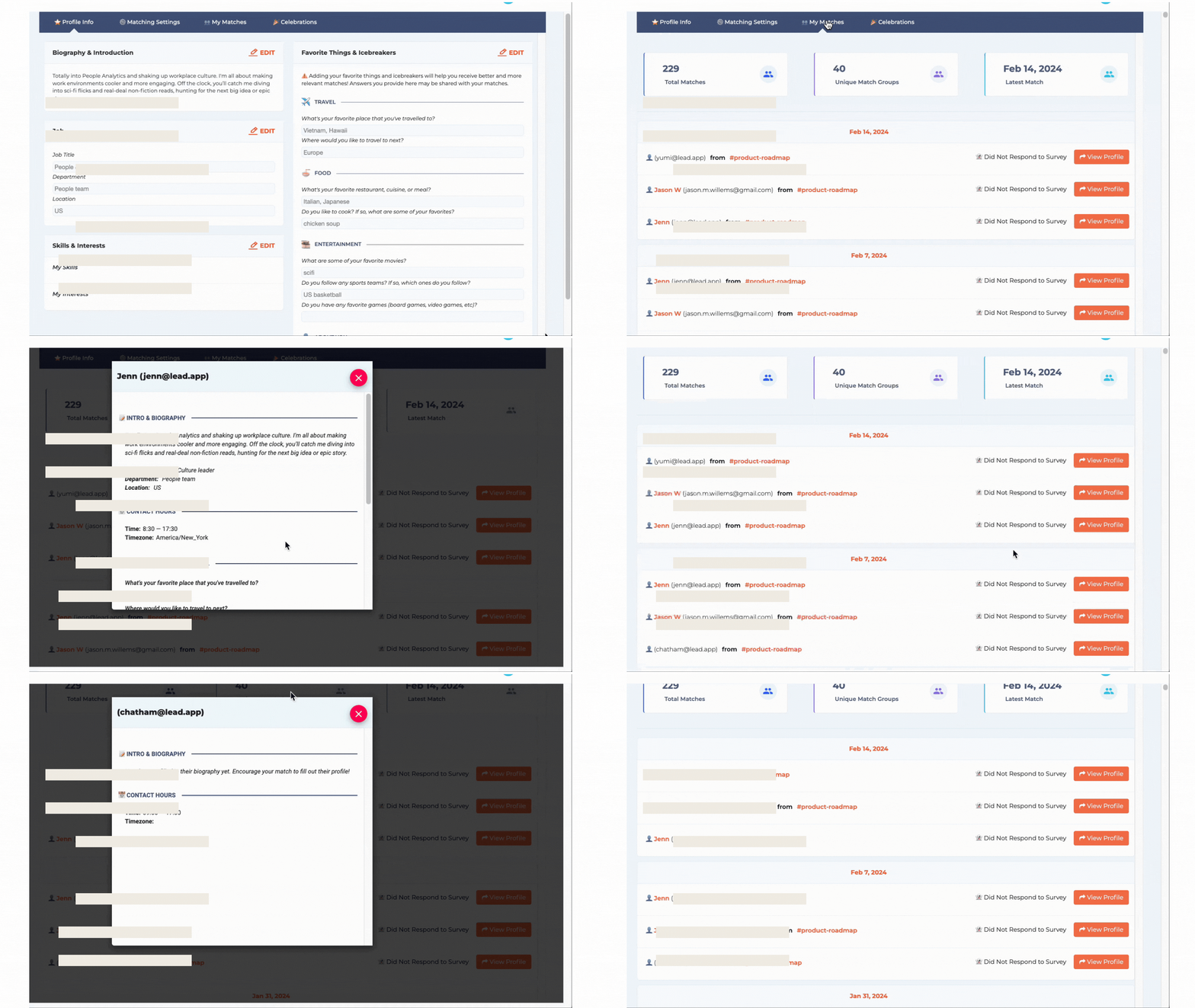
Then add one layer of knowledge fit. A new finance hire may benefit from a buddy who understands procurement patterns. A product marketer may need someone who knows how sales, customer success, and product share information. LEAD.bot is useful here because it works inside Slack and Microsoft Teams, so introductions can happen where work conversations already live.
Build a Rhythm Around the First 90 Days
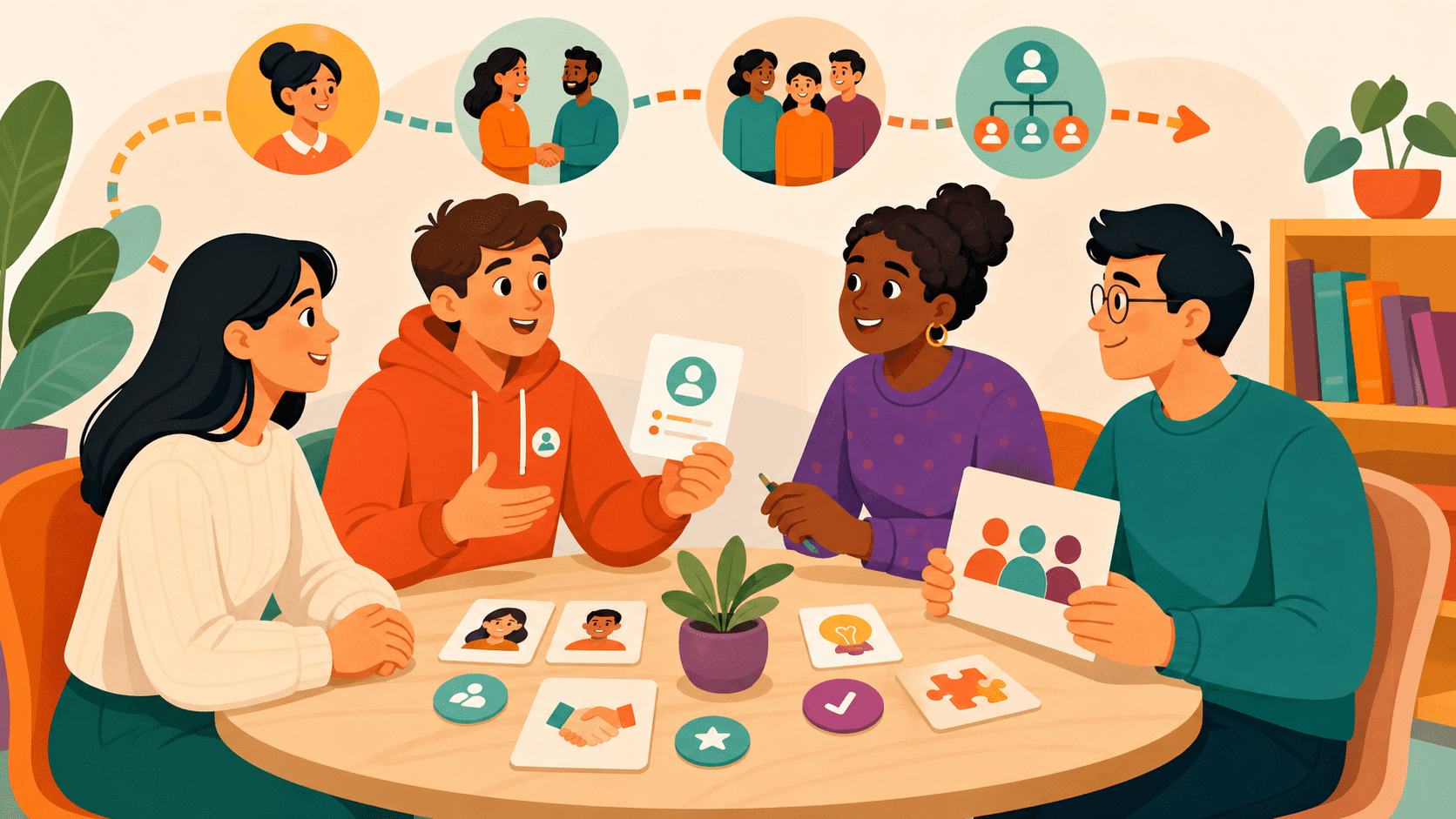
A buddy match should not be a one-time introduction. New hires need different kinds of support as their questions change. In week one, they need orientation and reassurance. In the first month, they need context around priorities and communication norms. By day 90, they need broader access to knowledge networks beyond their immediate team.
Set a simple rhythm. In week one, prompt the buddy to cover the basics: who to ask, how meetings work, where important knowledge lives, and what not to worry about yet. In weeks two through four, encourage more specific conversations about role expectations, stakeholders, and recurring decisions. After the first month, expand into cross-team introductions, mentoring pairs, or skill-sharing matches.
This is where onboarding buddy programs can connect to broader employee engagement. A new hire who meets only their manager and immediate teammates gets a narrow view of the company. A new hire who meets a buddy, a peer mentor, a cross-functional expert, and a few informal connectors builds a much stronger sense of belonging.
Make Knowledge Sharing Visible, Not Accidental
The hardest part of onboarding is often not formal training. It is the invisible layer of knowledge that lives in relationships. Someone remembers the failed experiment that explains a current policy. Someone knows the customer history behind a sensitive account. Someone can explain how decisions really get made.
If that knowledge stays hidden, new employees either interrupt the same few people or waste time searching. A good buddy program reduces that friction by helping new hires find who knows what. It also helps HR see where knowledge is concentrated, where teams are isolated, and where stronger connection paths are needed.
For a practical next step, map three knowledge categories for each new hire cohort: role knowledge, team norms, and cross-functional context. Then assign buddies or introductions for each category. You can also connect the program to pulse surveys by asking whether new hires know who to ask for help and whether they can find practical knowledge quickly.
Measure the Program Beyond Match Count
Match count is easy to report, but it does not prove that the program worked. A better scorecard looks at whether new hires built useful relationships. Did they meet the right people? Did they get answers faster? Did they feel comfortable asking questions? Did the buddy relationship lead to broader team connection?
LEAD.bot goes beyond simple introductions by connecting matching with knowledge sharing, onboarding, pulse surveys, and organizational network analysis. That matters because the real value of onboarding buddy programs is not the meeting itself. The value is faster employee integration, stronger trust paths, and better visibility into how teams really work.
Turn Buddy Programs Into a Repeatable Connection System
The best programs are structured enough to scale and human enough to feel real. You define the purpose, choose thoughtful matching criteria, set a 90-day rhythm, and keep improving based on feedback. Then you let employees build the relationships that make work easier.
If your current onboarding process relies on managers to remember every introduction, it will break as the team grows. If it relies only on documentation, it will miss the social knowledge that helps people succeed. LEAD.bot helps teams create those starting points inside Slack and Microsoft Teams, then expand them into mentoring, coffee chats, knowledge sharing, celebrations, and employee voice. To see how a structured connection program can support your team, visit the LEAD.app homepage or explore more practical ideas on the LEAD.app blog.