New Hire Connection Plans That Last Beyond Week One
A new hire connection plan is the set of people, conversations, and follow-up moments that help an employee build useful relationships after orientation ends. The best plans go beyond a welcome buddy: they match each person to the teammates, mentors, and knowledge holders who can help them feel capable faster.
If your onboarding program only covers forms, training modules, and the first manager check-in, the employee may still be guessing who to ask, where context lives, and how work really moves across the company. A stronger plan treats connection as part of the job ramp, not as a nice extra.
Why week one is not enough
Week one is usually full of scheduled activity. New hires meet HR, receive tool access, hear the company story, and join a few team calls. That structure is useful, but it can create a false signal: everyone looks connected because the calendar is full.
The real test starts in week two or week three. That is when the employee needs to understand unwritten norms, find the person who knows an old customer decision, ask a peer a small question without feeling exposed, or work with a team outside their manager’s direct circle. If those paths are not designed, the new hire relies on luck and manager availability.
A connection plan gives people-ops teams a repeatable way to prevent that drop-off. It turns informal support into a light operating rhythm: who the new hire should meet, why the match matters, when the conversation should happen, and what the organization should learn from the relationship over time.
Start with the outcome, not the calendar
Do not begin by asking, “How many coffee chats should every new hire have?” Start with the outcome you want. A product manager may need customer context, decision history, and trust with engineering. A sales hire may need a peer who understands deal review culture, a product expert, and a teammate in customer success. A remote employee may need extra trust paths outside their immediate manager.
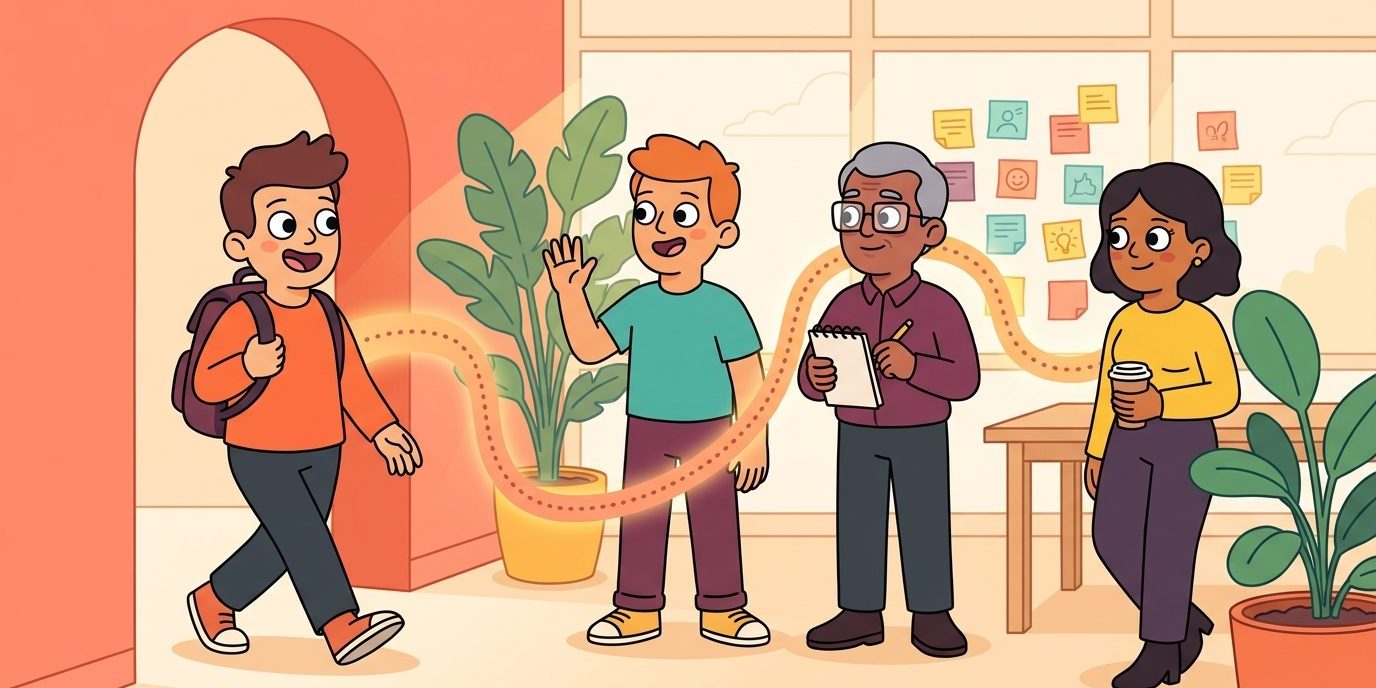
Once the outcome is clear, you can design the right match. A simple plan might include one onboarding buddy for daily questions, one role mentor for craft guidance, and one cross-functional connection for broader context. This keeps the program practical. You are not adding random meetings; you are creating a few high-value conversations that reduce confusion.
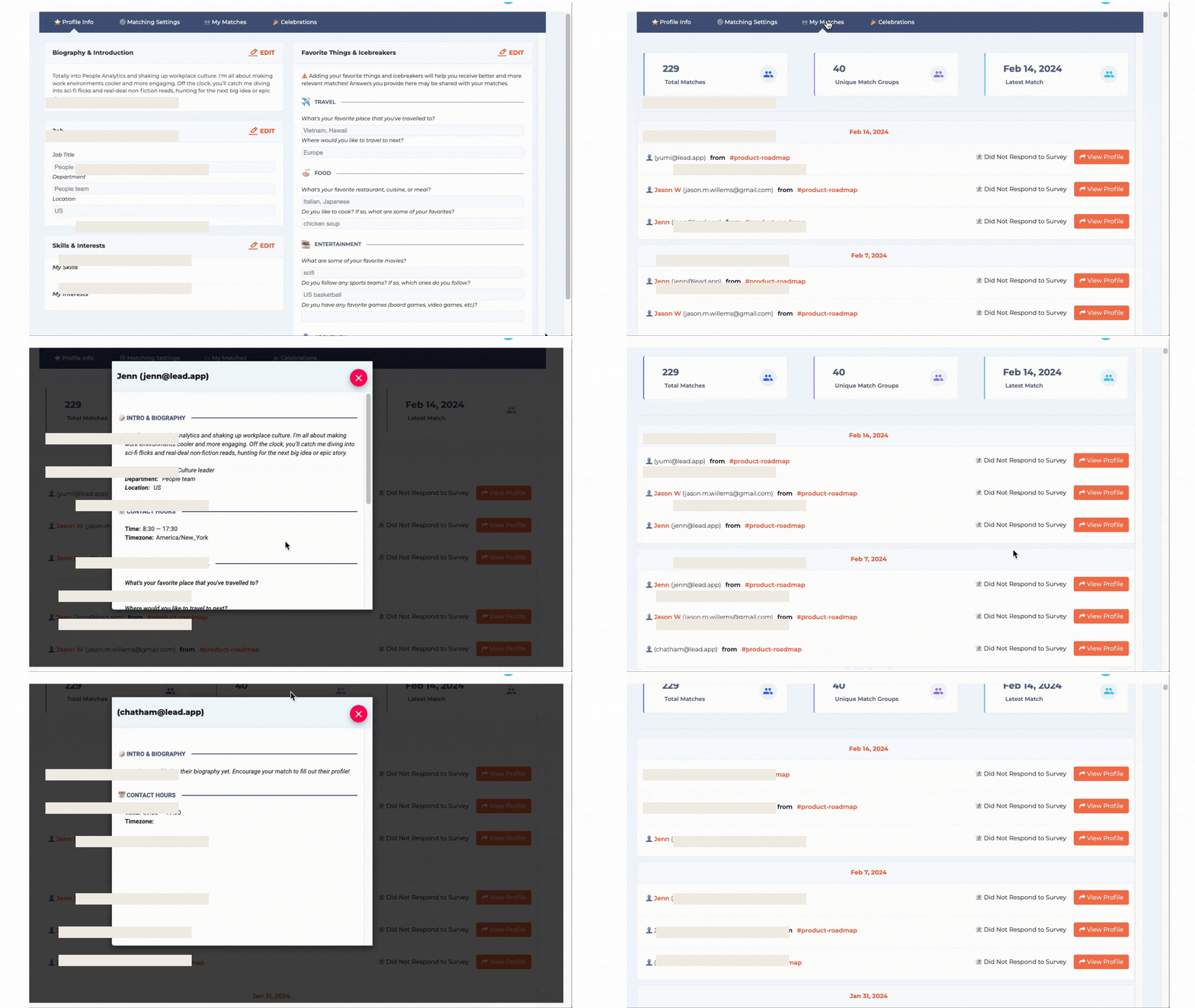
This is where employee matching matters. LEAD.bot supports matching across skills, interests, profiles, and program goals, so teams can move beyond manual spreadsheets without turning onboarding into a complex admin project. If you are already reviewing your buddy program, this guide to managing onboarding buddy programs without admin burnout pairs well with the plan below.
Build three layers of support
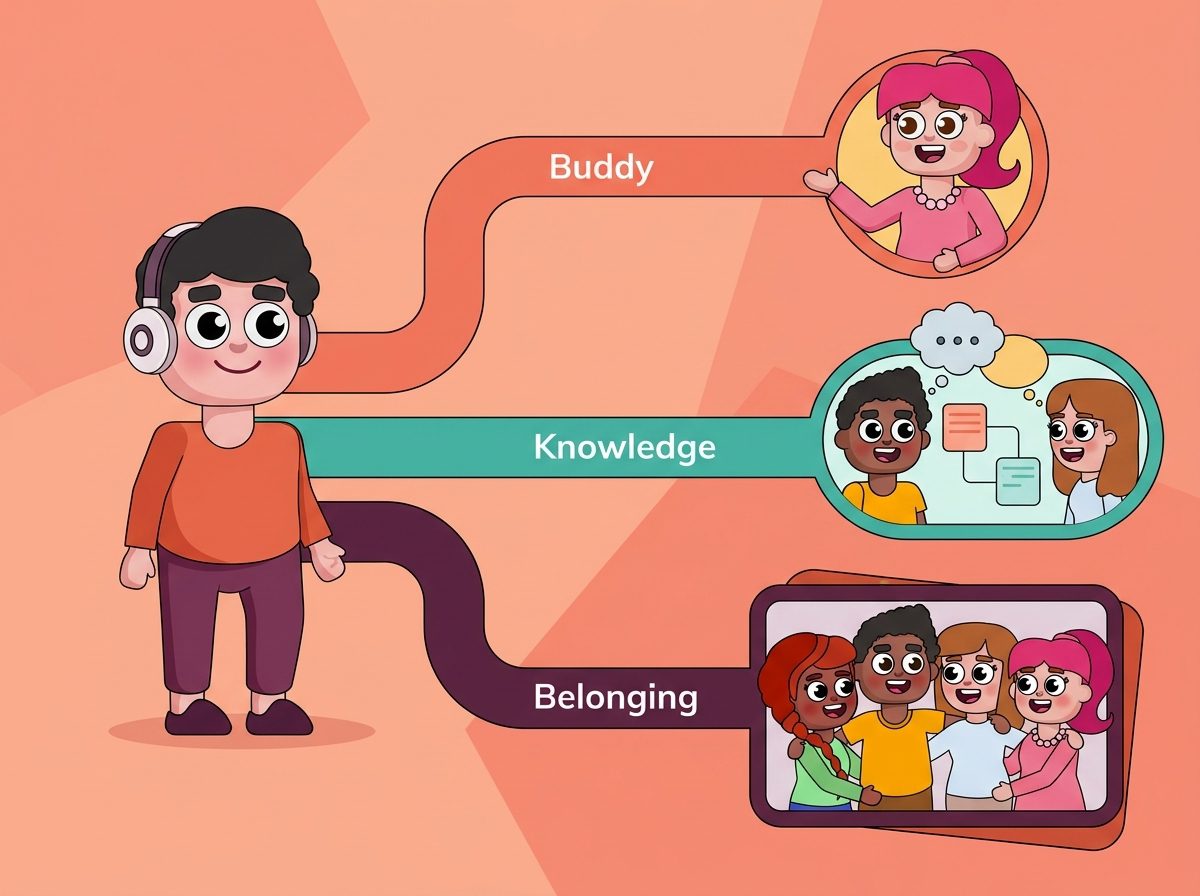
A durable new hire connection plan usually has three layers. The first layer is the onboarding buddy. This person helps the new hire decode the basics: where to ask questions, which channels matter, how team rituals work, and what “good” looks like in the first month.
The second layer is a knowledge connection. This may be a teammate in another function, a senior individual contributor, or a hidden expert who understands a key workflow. The goal is not social bonding alone. The goal is to shorten the distance between the new hire and the knowledge they need to do useful work.
The third layer is a belonging connection. This may be a peer with a similar location, work style, employee resource group, or career path. It gives the new hire a lower-pressure relationship that makes the company feel navigable. For remote and hybrid teams, this layer can be the difference between “I attend meetings” and “I know how to participate here.”
Keep the admin work small
People teams often avoid structured connection programs because they imagine a heavy coordination burden. The fix is to standardize the program design before you automate the matches. Define the match types, the cadence, the reminder language, and the success signals once. Then reuse the pattern by role, cohort, department, or location.
For example, every new hire could receive a buddy match in week one, a knowledge-sharing match in week two, and a cross-team connection in week four. Managers can receive a short reminder explaining what each match is for, while employees receive simple conversation prompts. The plan stays human, but the coordination does not depend on one HR manager remembering every follow-up.
LEAD.bot works inside Slack and Microsoft Teams, so connection programs can run where employees already communicate. That matters because a plan that requires another portal, another login, or another manual export is easier to ignore. The smoother the workflow, the more likely each match turns into a real conversation.
Measure whether relationships are forming
A connection plan should not stop at “match sent.” Match count is an activity metric. It tells you that introductions happened, not whether employees found useful context or built trust.
Use lightweight check-ins to learn what is working. Ask whether the new hire knows who to contact for common questions, whether the buddy relationship is useful, whether they have met someone outside their immediate team, and whether they feel comfortable asking for help. These questions are simple, but they reveal whether your organizational network is becoming easier to navigate.
Pulse surveys can help you spot patterns before they become retention problems. If one department’s new hires consistently report weak cross-team access, you can adjust the matching plan. If remote hires need more peer support, you can add a second belonging connection. For more on this feedback loop, see how pulse surveys strengthen employee connection programs.
Make the plan repeatable, then improve it
The best new hire connection plans are specific enough to run consistently and flexible enough to learn from. You do not need a complicated system on day one. Start with one cohort, three match types, and a 30-day rhythm. Write down why each match exists. Give employees simple prompts. Ask for feedback after the first month.
From there, improve the matching rules. Add skill-based matches for roles that need faster knowledge transfer. Add cross-department connections for teams affected by silos. Add mentoring pairs for employees who need career guidance after the initial ramp. The plan should become more intentional as you learn how work really moves through the company.
When connection is designed this way, onboarding becomes more than a checklist. New hires find people faster, managers carry less of the relationship burden, and knowledge moves through trust paths instead of private guesswork. LEAD.bot helps teams make that rhythm repeatable, so every new employee gets more than a welcome message: they get a practical network that keeps working after week one.