Set-and-Forget Employee Connection Programs for Busy People Teams
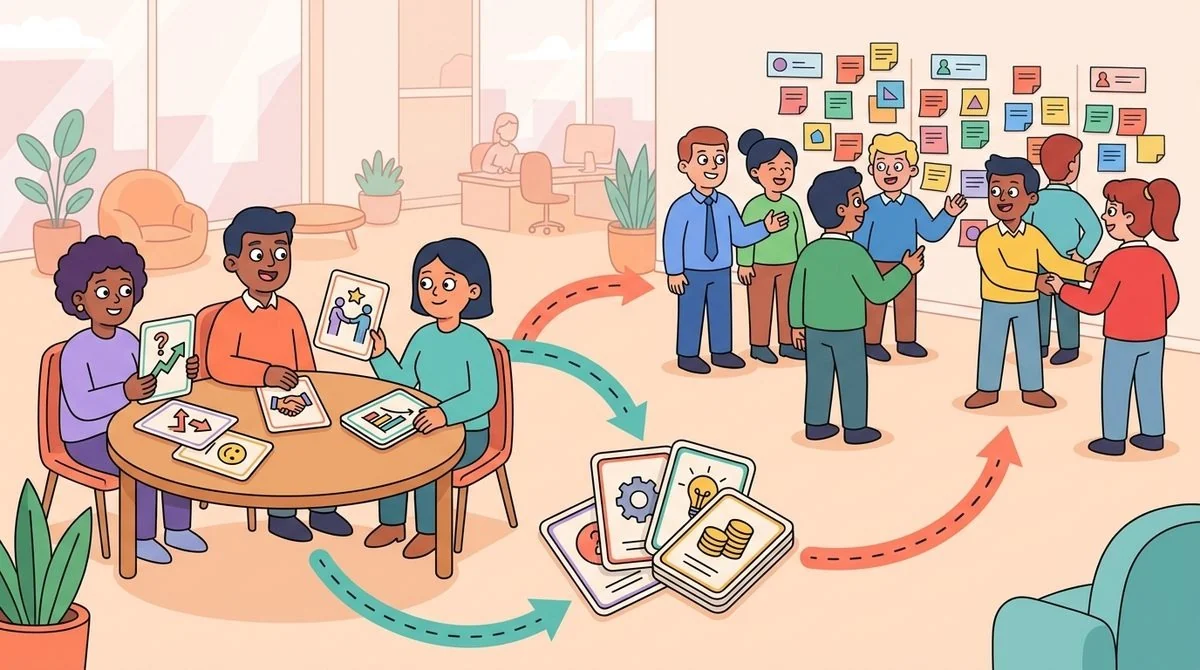
Set-and-forget employee connection programs work when automation handles the repetitive coordination, while people still get matched for a clear purpose. The goal is not to send more reminders or celebrate more dates; it is to help employees meet the right colleagues for onboarding, knowledge sharing, mentoring, and everyday team connection.
For many People teams, the pressure is obvious. You want new hires to find onboarding buddies, remote employees to build trust, managers to spot isolation earlier, and cross-functional teams to share knowledge before work slows down. But you do not have hours each week to manually pair employees, chase participation, rebuild invite lists, and prove whether the program is helping.
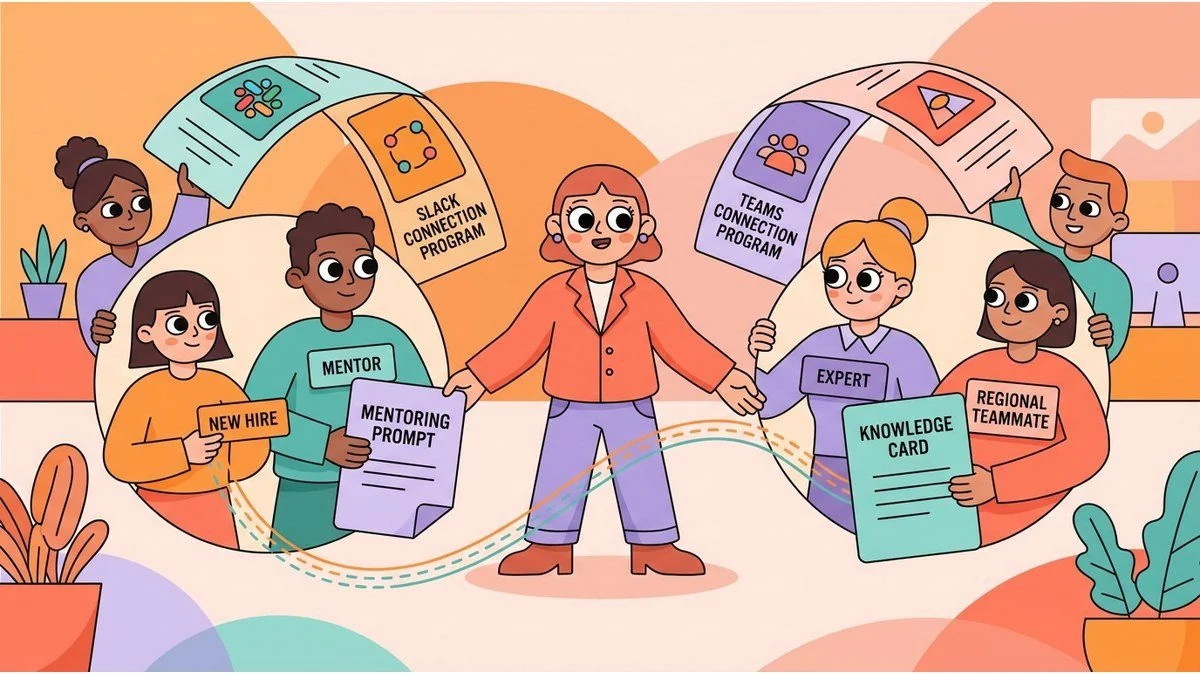
That is where a structured connection program beats a one-off social campaign. With LEAD.bot, you can run employee matching, virtual coffee chats, onboarding buddy paths, celebrations, pulse surveys, and knowledge-sharing programs inside Slack and Microsoft Teams. The practical win is simple: the system carries the admin load, while your team keeps the human moments.
Start with the connection outcome, not the event
Most connection programs get messy because they begin with an activity: a coffee chat, a birthday post, a welcome message, a mentoring session. Those are useful moments, but they are not the outcome. Before you automate anything, decide what the program is supposed to improve.
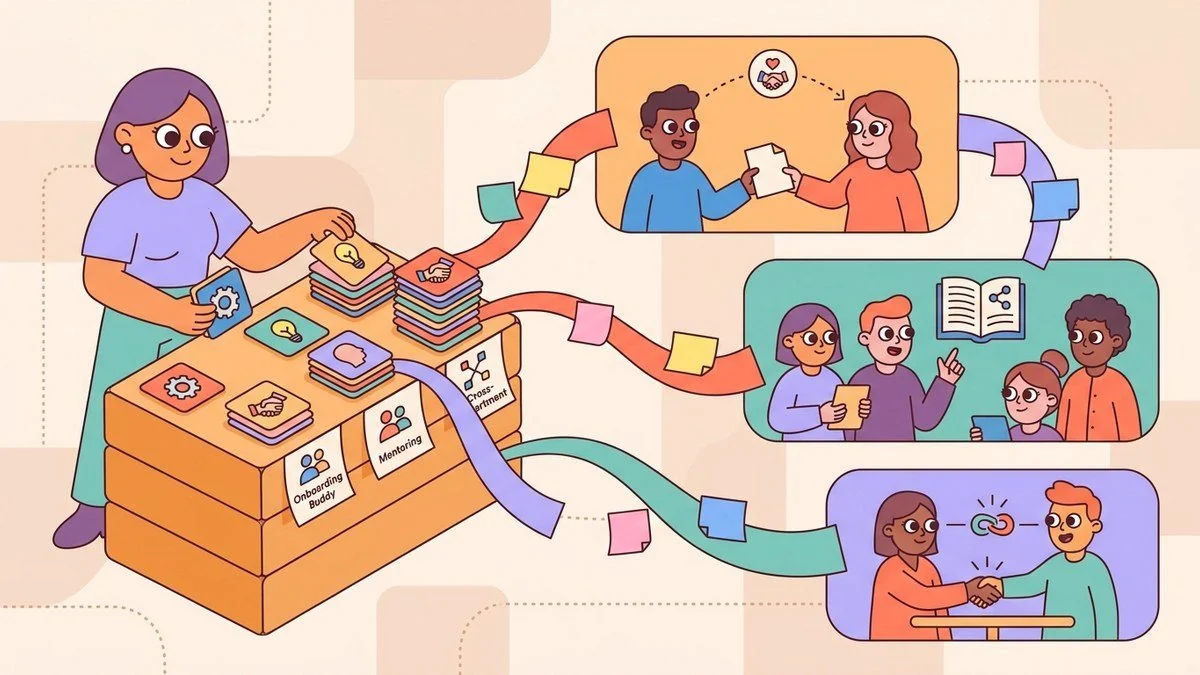
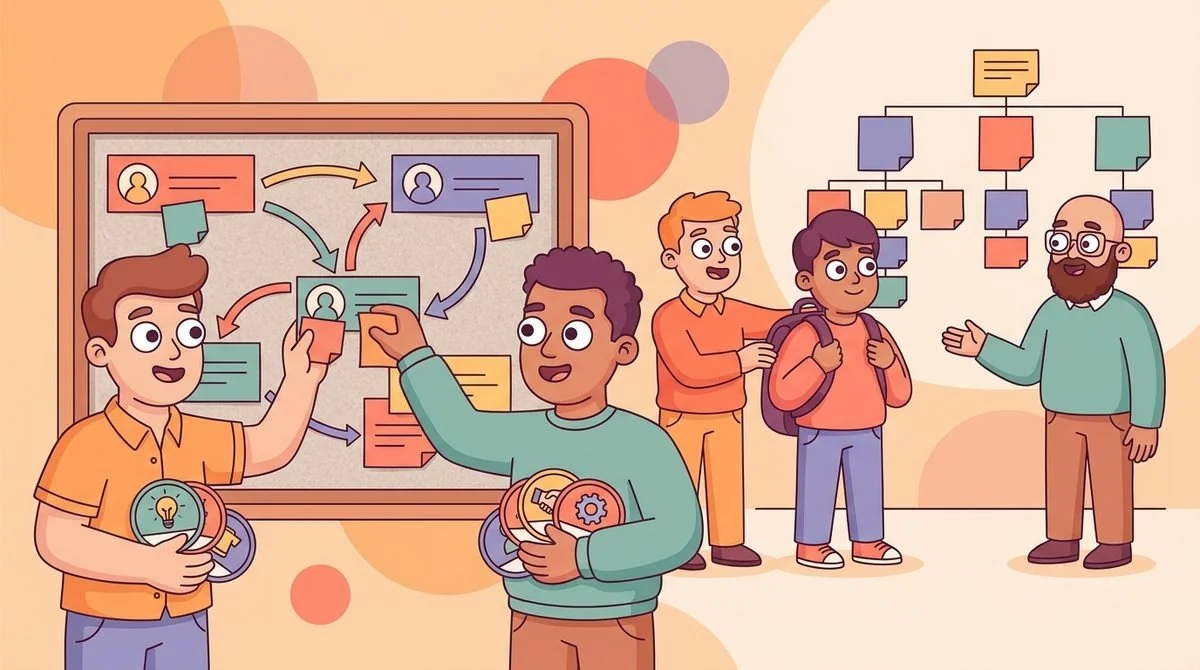
For example, a new hire program might aim to speed up employee integration. A knowledge-sharing program might help employees find hidden experts across departments. A team connection program might reduce regional silos. A mentoring program might strengthen peer learning or reverse mentorship. Each outcome needs a slightly different matching rule, cadence, and follow-up.
If you skip this step, automation can create noise. Employees receive cheerful messages, but the relationships do not help them do better work. If you define the outcome first, you can design matches that feel relevant. A new hire meets someone who understands the team culture. A project lead meets a colleague with practical knowledge from another region. A remote employee gets a low-pressure conversation that makes the company feel less fragmented.
Automate the repeatable work people teams should not have to own manually
The best employee connection programs do not require your People team to become a scheduling desk. Manual matching breaks down as soon as the company grows, adds locations, or runs several programs at once. You start with good intentions, then end up in spreadsheets, calendar reminders, incomplete lists, and awkward follow-ups.
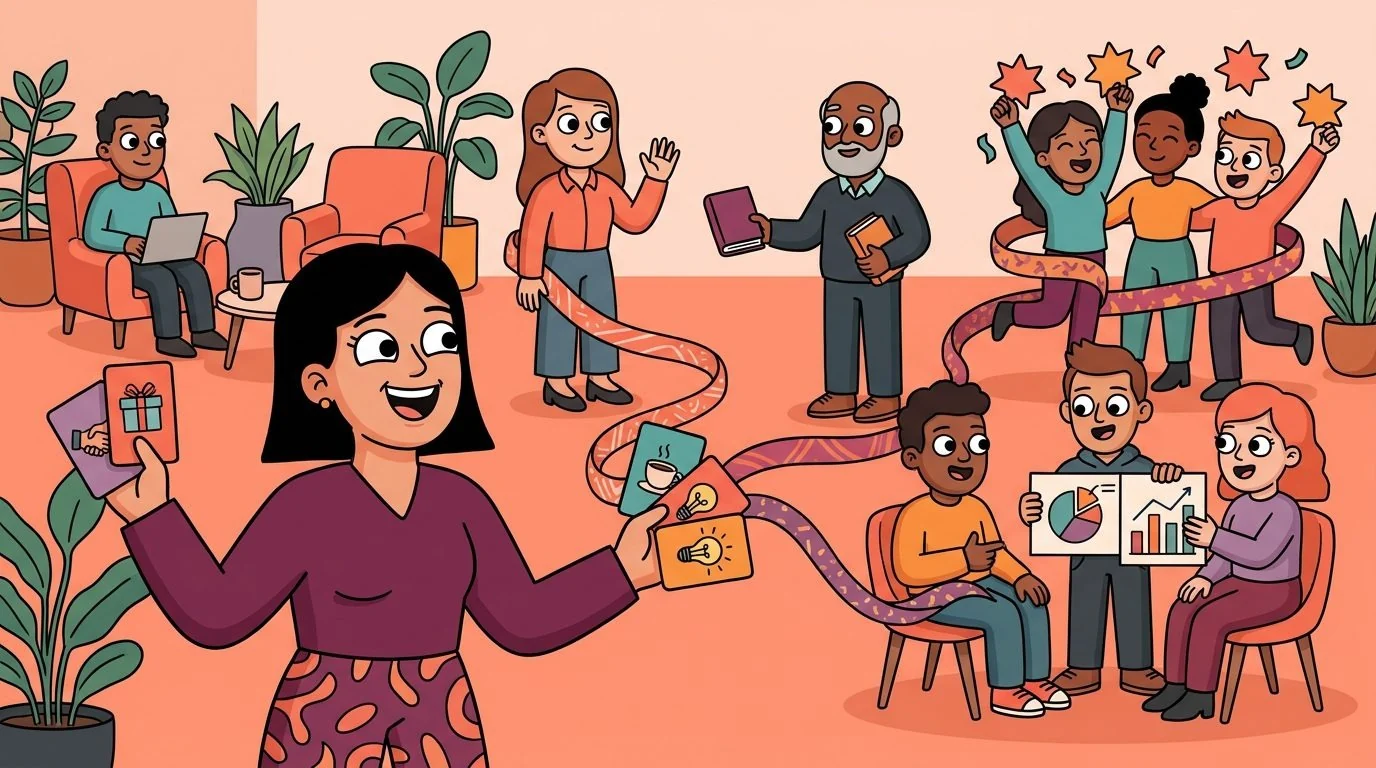
Set-and-forget automation should cover the repeatable steps: enroll the right audience, create matches, send chat-native prompts, rotate participants, pause people who are unavailable, and keep basic participation visibility. This is especially useful for programs that run continuously, like onboarding buddies, mentoring pairs, cross-team coffee chats, employee milestones, and pulse check-ins.
Automation also makes the program more consistent. A new hire who starts in July should not receive a weaker connection experience than someone who starts during a quieter month. A distributed employee should not miss out because their manager forgot to make an introduction. When the workflow runs in Slack or Microsoft Teams, the connection happens where employees already work.
If you want a deeper playbook for removing manual coordination, see how to run employee connection programs without manual matching.
Pair celebrations with useful trust paths
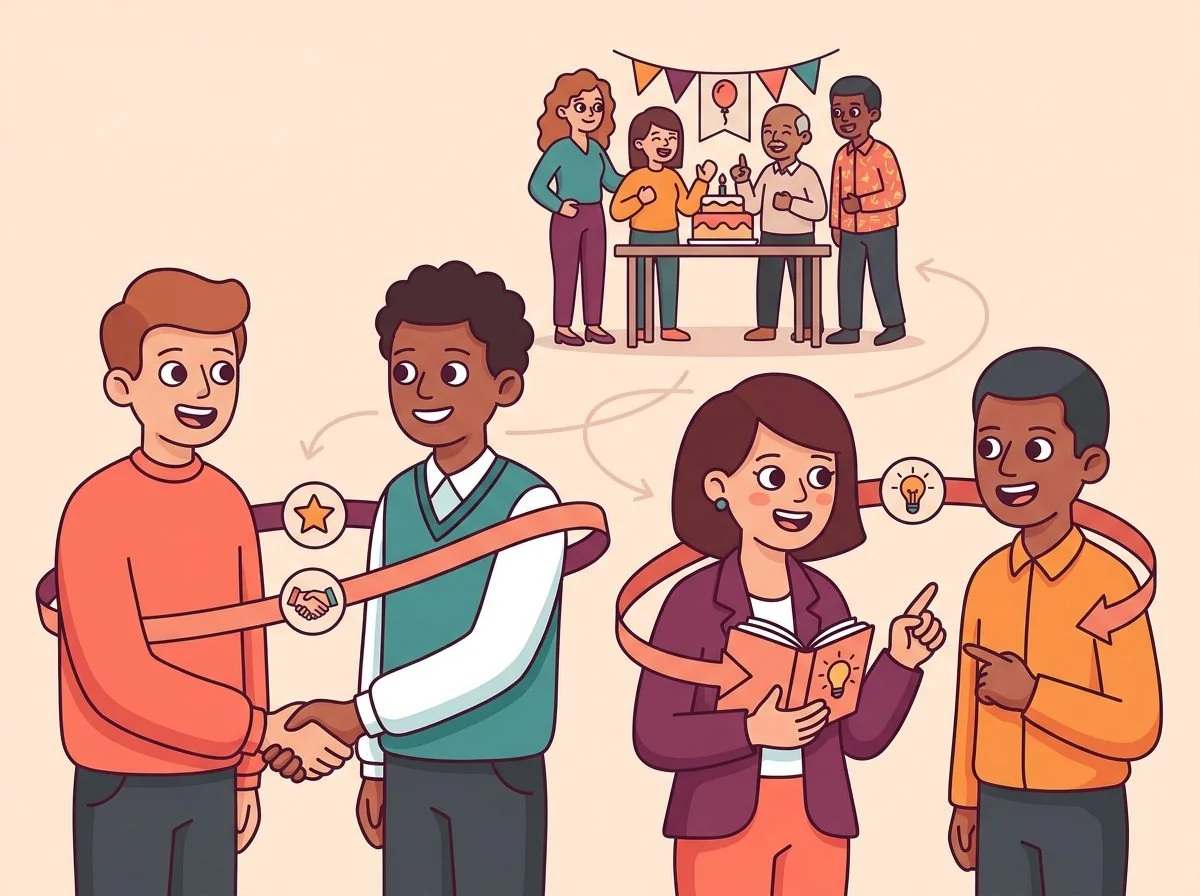
Celebrations are a good entry point for team connection. Birthdays, work anniversaries, promotions, and new hire welcomes give employees a reason to notice each other. But celebration automation by itself is not enough. A card or announcement can make someone feel seen for a moment; a smart connection can help them build trust that lasts beyond that moment.
The stronger approach is to connect milestones to a useful next step. A new hire welcome can trigger an onboarding buddy match. A work anniversary can invite an employee into a knowledge-sharing conversation about what they have learned. A promotion can introduce the person to peers who recently made a similar transition. A team celebration can become a bridge into cross-functional collaboration rather than a post that disappears by the afternoon.
This matters because connection is cumulative. Employees build trust through repeated, relevant interactions, not through one broadcast message. LEAD.bot helps People teams combine lightweight celebrations with structured matching, so recognition becomes part of a broader employee experience instead of a standalone ritual.
For a related example, read how to turn employee milestones into team connection.
Use smart matching to protect the human experience
People do not want random meetings that feel like another calendar obligation. They want conversations that have a reason to exist. Smart matching protects the human experience because it uses practical context: team, location, role, interests, skills, seniority, start date, or program goal.
This does not mean every match needs to be complex. Sometimes random cross-team pairing is enough. But for onboarding, mentoring, knowledge sharing, and trust-building, a little structure goes a long way. You can match new hires with buddies who understand their function. You can connect employees across departments without pairing people who already work together every day. You can route someone toward a colleague who knows a process, market, tool, or customer segment they need to understand.
The result is a program that feels more personal without asking HR to handcraft every introduction. Employees experience the match as thoughtful. People teams experience the workflow as manageable.
Measure whether connection is becoming organizational network health
A set-and-forget program still needs visibility. Otherwise, you may automate a process without knowing whether it is strengthening the organization. The right metrics are not vanity numbers. Look for signs of organizational network health: participation, repeat engagement, cross-team reach, onboarding buddy coverage, knowledge-sharing activity, and whether isolated groups are getting more connected over time.
Pulse surveys can add the employee voice layer. Ask whether people know who to go to for help, whether they feel connected to colleagues outside their immediate team, and whether new hires have enough informal support. These questions turn connection from a feel-good activity into a practical operating signal.
LEAD.bot supports this broader view by combining matching, pulse surveys, celebrations, and relationship intelligence. You can run programs that feel human to employees while giving People teams enough insight to improve them.
A simple rollout plan
Start with one use case. If onboarding is the biggest pain, launch an onboarding buddy program first. If departments are too siloed, start with cross-team matching. If engagement feels flat, connect milestone celebrations to lightweight peer conversations.
Then define the audience, cadence, match rules, conversation prompt, and success measure. Keep the first version simple enough to run for a full cycle without constant edits. After that, review participation and feedback, adjust the matching logic, and expand into the next program.
The best employee connection systems do not ask People teams to choose between warmth and scale. They use automation to remove coordination work, then use purposeful matching to create better human moments. That is the real promise of set-and-forget connection: less admin for HR, more useful trust paths for employees, and a healthier organizational network over time.